What a Custom Conveyor Pulley Really Means
A custom conveyor pulley is a drum assembly made to the geometry and duty of one specific conveyor, rather than pulled from a shelf. The pulley is the part that turns the belt, sets its path, and carries the tension at the head, tail, or bend of the line. Because every conveyor has its own belt width, shaft load, and material, the pulley is usually the last component to be finalized and the first place where a mismatch shows up as belt tracking problems or premature cover wear.
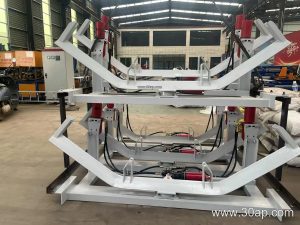
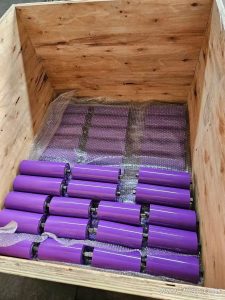
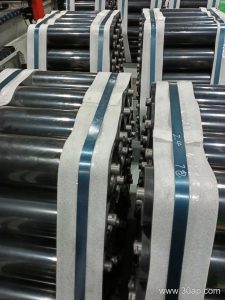
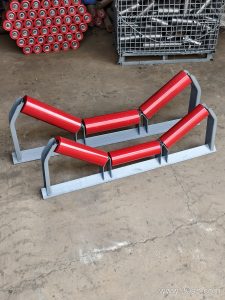
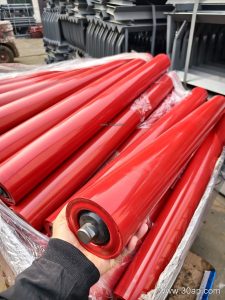
In a quarry feeding a primary crusher, or in a coal handling section of a power plant, the pulley works with the conveyor belt, the idler roller sets, and the conveyor bracket that holds the bearing housing. A custom unit is sized so those neighbors fit without shims or field modification.
How the Drum Is Put Together
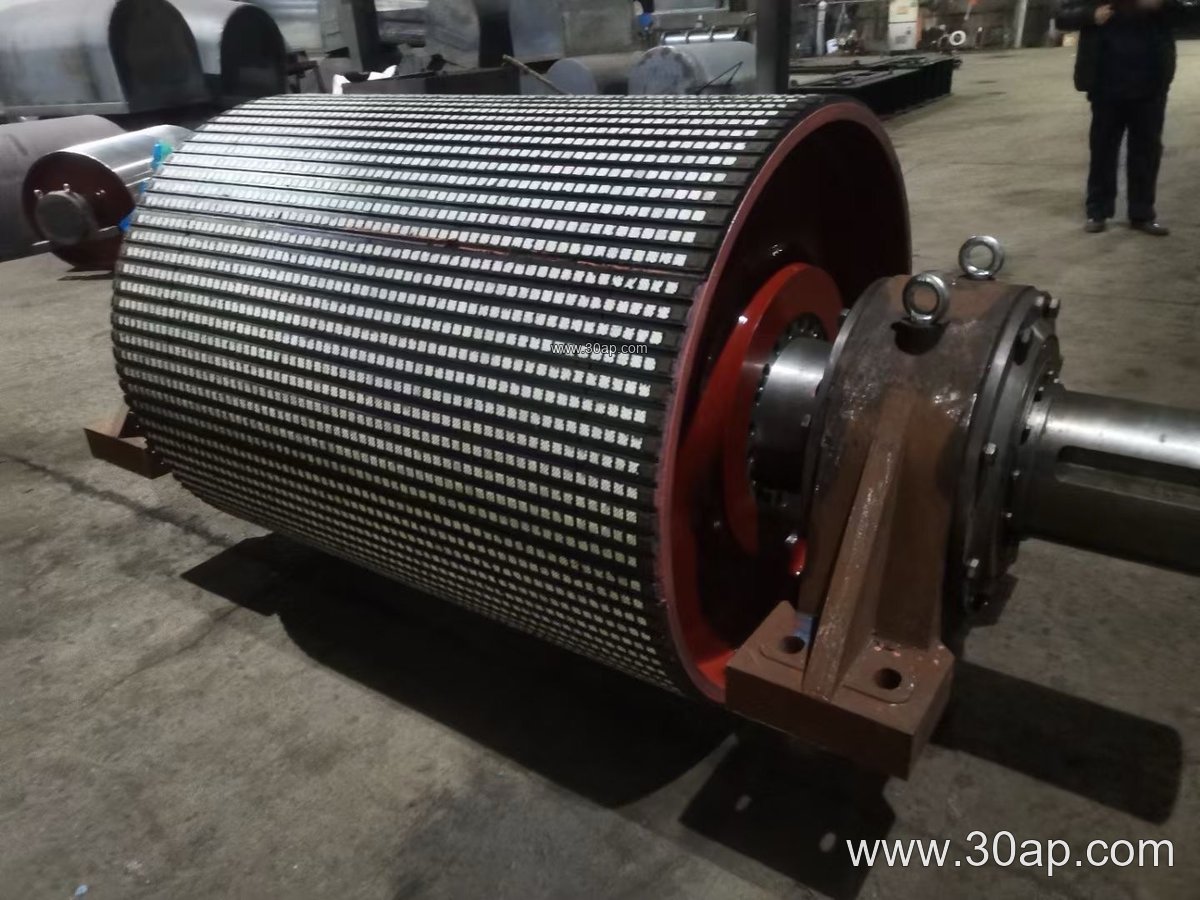
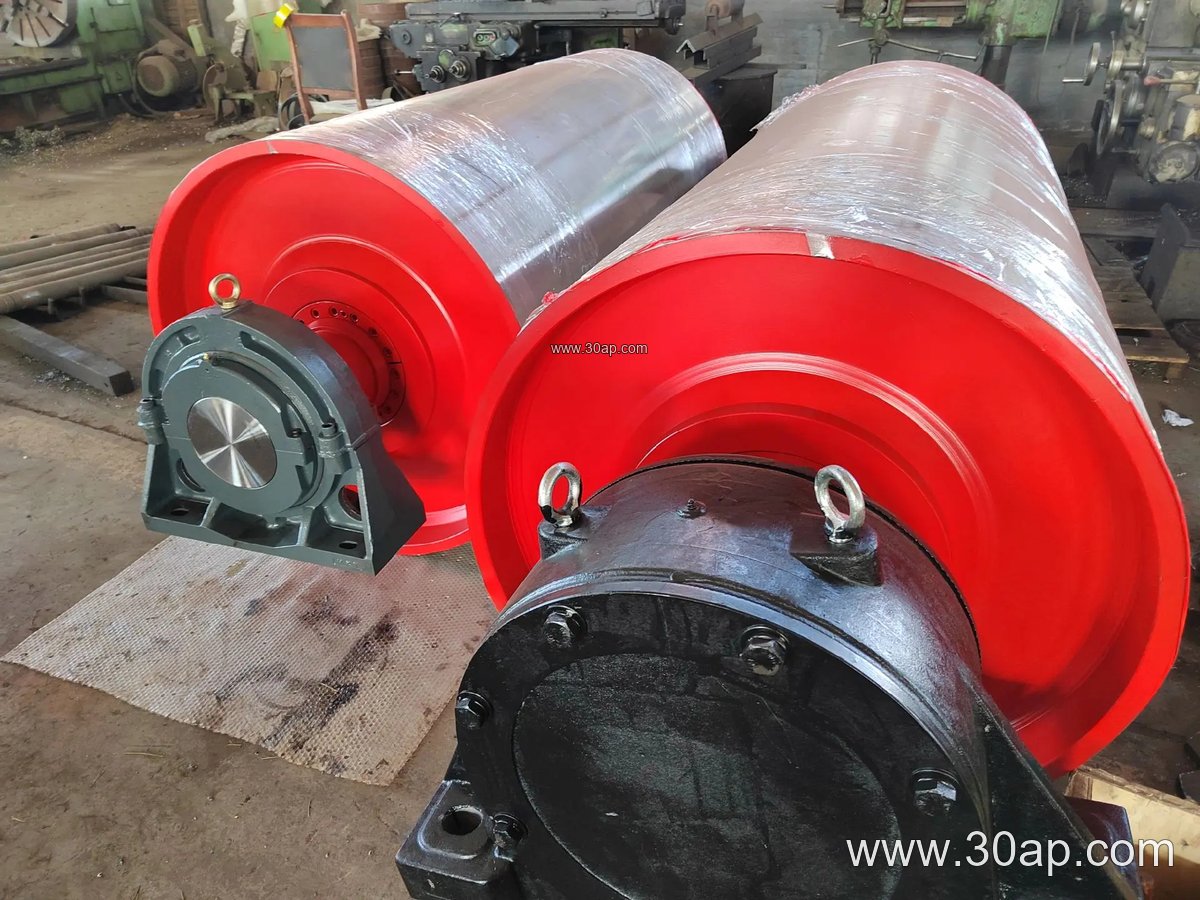
The core is a steel shell, usually machined at the ends and welded to end discs. The shaft passes through the discs or is welded to them, depending on the design and the torque to be transmitted. Bearings sit in housings that bolt to the conveyor bracket, and the lagging is applied to the shell face to grip the belt.
Typical build choices include:
- Shell diameter selected for belt stiffness and wrap angle, not for appearance.
- Shaft diameter set by torque and bending load, often in the range of Ø50 to Ø200 mm on heavy lines.
- Lagging in plain, hot-vulcanized rubber, cold-bonded rubber, diamond groove, chevron groove, or ceramic tile.
- Lagging thickness commonly 8, 10, 12, 15, or 20 mm depending on grip and wear.
None of these values are universal. A B800 tail pulley and a B1400 head pulley can share a shaft size only if the load calculation says so.
Drive, Tail, and Bend Are Different Jobs
The drive pulley, also called the head pulley, transmits torque to the belt and often discharges the material. Its lagging needs grip, so diamond or ceramic surfaces are common where the belt is wet or dusty. The tail pulley supports the return side and sets belt tension at the loading end; a wing-type or self-cleaning face helps in sticky material. The bend pulley changes belt direction without driving, so its diameter and bearing choice follow the wrap angle and the belt’s flexibility.
These three are not interchangeable. A bend pulley used as a drive would slip; a drive pulley used as a tail would add unnecessary cost and mass. A custom conveyor pulley is specified by position first, then by size. On a copper ore or iron ore line, the head pulley may carry a heavy-duty rubber lagging, while the bend pulleys stay plain to save weight.
Matching the Pulley to the Belt
Belt width drives face width, and face width is normally a little wider than the belt. Common references are B500 with about 600 mm face, B800 with about 950 mm, B1000 with about 1150 mm, and B1200 with about 1400 mm. Diameter is a separate decision: B1200 × Ø1000 or B800 × Ø500 are both realistic combinations, but neither is a rule.
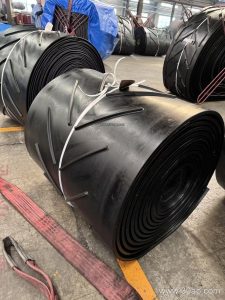
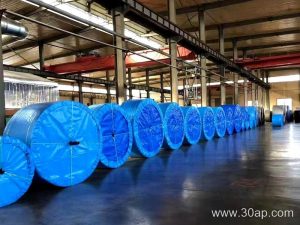
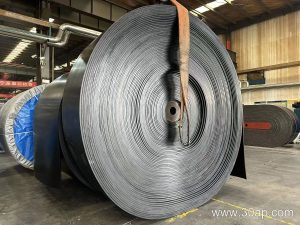
The belt type matters as much as the width. An EP conveyor belt or a multi-ply fabric core belt behaves differently from a steel cord conveyor belt, and a chevron or corrugated sidewall belt needs clearance at the pulley edges. Where the material is hot, a heat resistant conveyor belt calls for a lagging and shell that tolerate temperature. Where the line handles coal underground, a flame retardant conveyor belt and anti-static properties are part of the safety picture.
Sizes and Surface Options Buyers Should Confirm
Custom work usually starts from a short data sheet. The table below shows the kind of reference values that appear in a pulley inquiry; they are examples, not fixed supply promises.
| Item | Common reference values |
|---|---|
| Belt width | B400, B500, B650, B800, B1000, B1200, B1400, B1600, B1800, B2000 |
| Pulley diameter | Ø200, Ø250, Ø315, Ø400, Ø500, Ø630, Ø800, Ø1000, Ø1250, Ø1400 |
| Shaft diameter | Ø50, Ø60, Ø70, Ø80, Ø90, Ø100, Ø120, Ø140, Ø160, Ø180, Ø200 |
| Lagging thickness | 8, 10, 12, 15, 20 mm |
| Face width | About belt width plus 100 to 200 mm, by design |
| Surface | Plain, hot-vulcanized rubber, cold-bonded rubber, diamond, chevron, ceramic |
A buyer should confirm the shaft material, bearing type, keyway, and balancing class, and should state the belt tension and the material being carried. A pulley for a cement plant clinker line and one for a port ship loader may look similar but carry very different loads.
Where Custom Pulleys Earn Their Cost
Retrofit work is the classic case. An existing conveyor bracket may not accept a standard housing, or a new belt width may need a face that no catalog drum offers. In a sand and gravel plant, a wider head pulley can raise capacity without rebuilding the frame. In a steel plant or sintering line, heat and abrasion may call for a ceramic lagging on the drive and a plain face on the bend pulleys.
Maintenance is the other reason. A pulley built to the actual load lasts longer between lagging replacements, and a replaceable lagging sheet shortens downtime. Buyers should ask how the lagging is bonded, how the bearing is lubricated, and whether the shaft end is prepared for the existing coupling.
Before You Order
Send the belt width, the pulley position on the conveyor, the belt speed, the material, and the ambient conditions. State whether the line runs a fabric core belt or a steel cord belt, and whether the environment is wet, dusty, or hot. Ask for a drawing that shows the face width, the diameter, the shaft, and the mounting centers. A custom conveyor pulley is a small part of the conveyor budget but a large part of its reliability, so the drawing review is worth the time.