What a Steel Plant Conveyor Belt Has to Handle
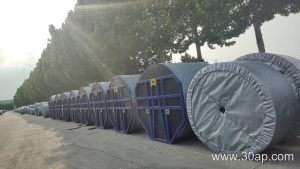
A steel plant conveyor belt is a heavy-duty bulk material conveyor belt built for one of the harshest material handling environments in industry. Sinter, coke, pellets, limestone, iron ore, slag and hot finished product all move through a steelworks on belt conveyors, often across long routes with little tolerance for stoppage. The belt is the wearing component in that chain, and it is expected to keep carrying load while abrasive dust, heat, oil, and sharp edges work against it.
The same product appears under a few equivalent names in procurement documents, such as steelworks conveyor belt or steel mill conveyor belt. These describe the same item: a fabric or steel cord carcass covered with rubber compounds selected for the duty. For general background on carcass styles used across heavy industry, see rubber conveyor belt references before narrowing to the steel plant specification.
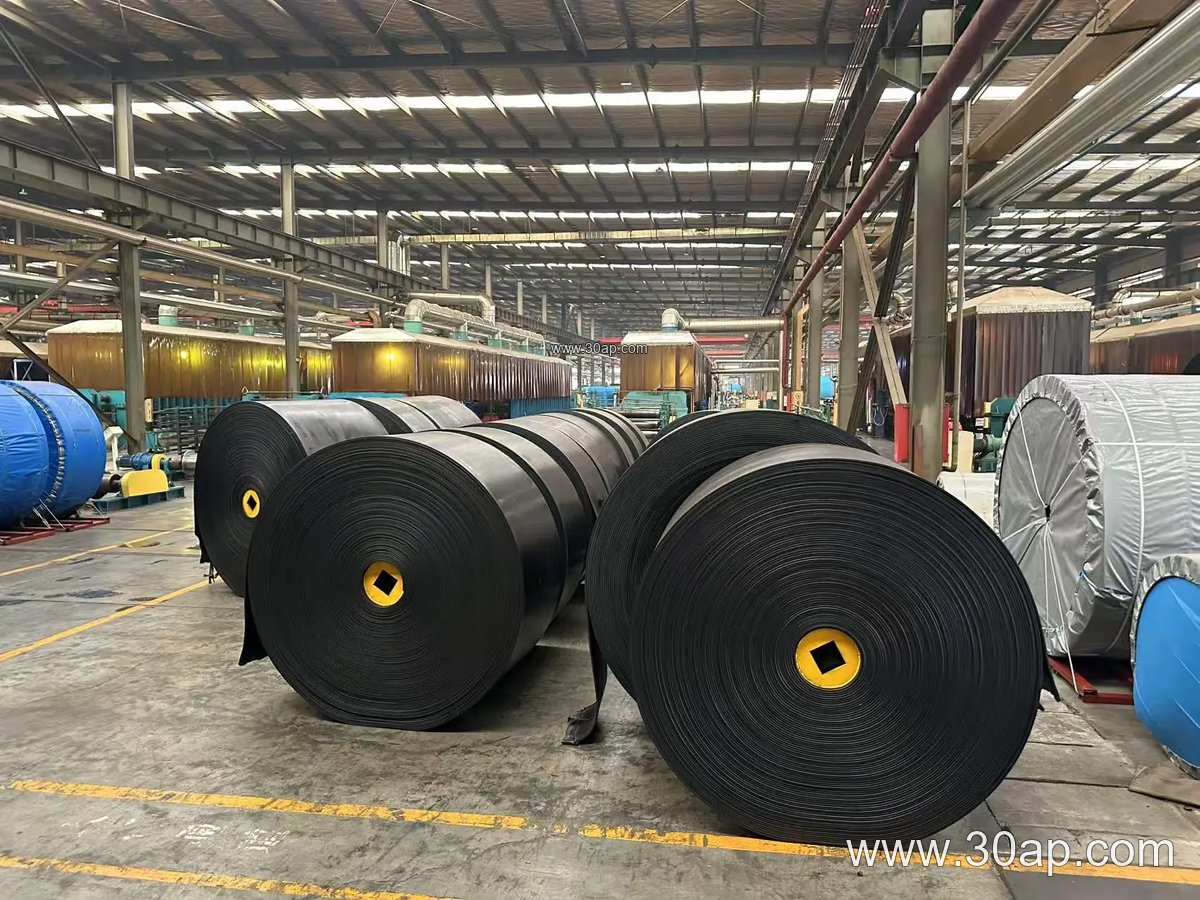
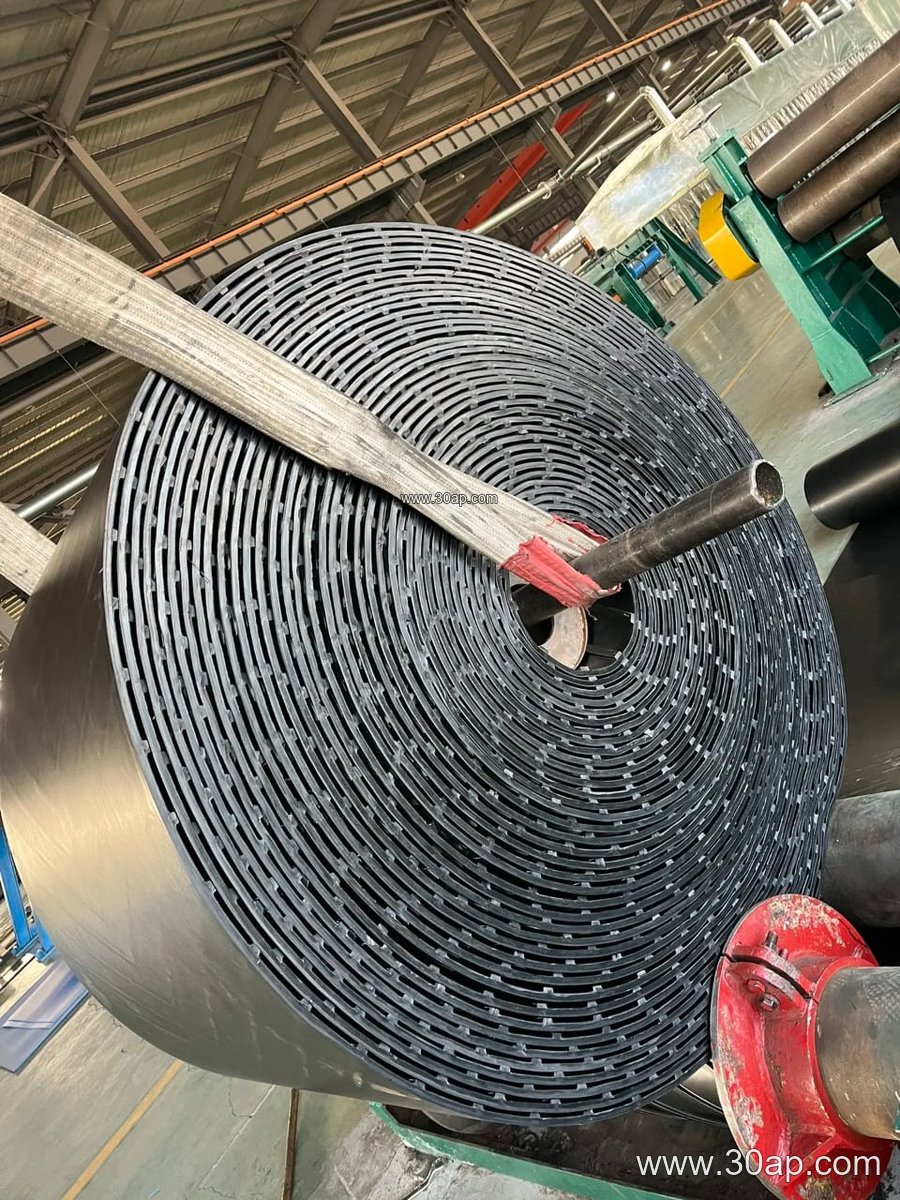
Construction and Carcass Options
The carcass carries tension and impact. In a steel plant, two families are common:
- Fabric core designs — EP (polyester/nylon) or NN (nylon/nylon) plies. An EP conveyor belt with two to six plies is often chosen for medium-length runs, transfer points and screening areas.
- Steel cord designs — a single layer of brass-plated steel cords, used where tension is high and stretch must stay low, such as main trunk lines from stockyard to blast furnace charging.
Cover compounds are graded for the local hazard rather than the whole plant. A heat resistant conveyor belt may serve sinter or coke discharge, while an abrasion resistant conveyor belt suits ore and limestone handling. Oil resistant grades appear around mill scale and lubricated equipment, and flame retardant conveyor belt grades are specified for enclosed galleries and coal handling. Anti-static properties are frequently requested alongside flame resistance in dusty zones.
Typical Reference Data
The values below are common industry references, not universal specifications. Final figures follow the conveyor design and the manufacturer’s data sheet.
| Parameter | Common reference range |
|---|---|
| Belt type | EP, NN, steel cord, heat resistant, abrasion resistant, flame retardant |
| Fabric strength grades | EP200, EP315, EP400, EP500, EP630, EP800, EP1000, EP1250, EP1600 |
| Steel cord grades | ST1000, ST1250, ST1600, ST2000, ST2500 |
| Belt width | B500, B650, B800, B1000, B1200, B1400, B1600, B1800, B2000 |
| Cover thickness | 3+1.5 mm, 4+2 mm, 5+2 mm, 6+2 mm, 8+3 mm |
| Number of plies | 2 to 6 for fabric cores |
A wide belt is not automatically matched to a single pulley diameter, and shaft size is set by the conveyor designer, not by belt width alone. Treat every row above as a starting point for discussion.
Where It Runs in the Plant
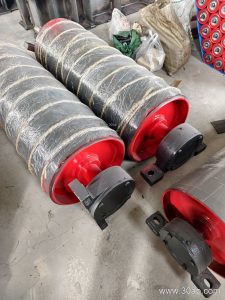
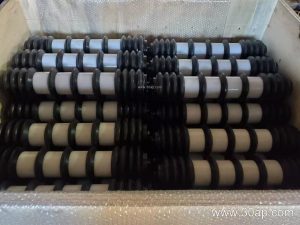
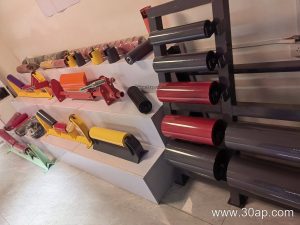
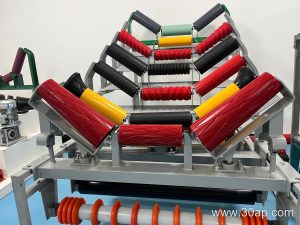
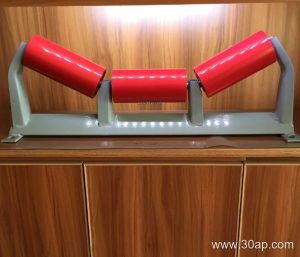
Routes inside a steelworks differ sharply. Stockyard and ore yard lines see coarse, sharp feed and benefit from impact resistant covers at transfer chutes. Sinter and coke lines combine heat with abrasion, so a high temperature conveyor belt compound is often paired with a robust carcass. Coal handling for boilers and coke ovens typically calls for flame retardant and anti-static grades. Finished product and scale handling may need oil resistance. In each case the belt works with conveyor pulleys, idler rollers and conveyor brackets, and misalignment or a seized idler can damage an otherwise correct belt choice. Belt scrapers, skirt rubber and loading chute geometry matter as much as the belt itself.
Buyer Checklist
- Confirm the actual material, lump size, temperature at the loading point and any oil or chemical contact.
- State the duty clearly: continuous main line or intermittent transfer service.
- Provide belt width, center distance, incline angle and throughput so the tension class can be verified.
- Ask for cover compound data and carcass grade together, not belt type alone.
- Specify flame retardant and anti-static requirements where galleries or coal dust are present.
- Plan splicing method and spare belt length at the ordering stage.
For a steel plant, the practical answer is rarely one belt grade for the whole site. Mapping each conveyor to its real conditions, then selecting carcass, cover and width to match, keeps the system running and simplifies spare-parts planning.