What a Vertical Guide Roller Does on a Conveyor
A vertical guide roller is a small-diameter, vertically mounted roller fixed to the conveyor structure, usually at the edges of the belt path or near a transfer point. Its job is not to carry the main material load — that belongs to the troughing idlers and return idlers — but to keep the belt edges in line, absorb sideways thrust, and prevent the belt from rubbing against the frame. In a quarry conveyor or a cement plant reclaim line, a few well-placed vertical guide rollers can mean the difference between a belt that runs centered and one that climbs the structure and gets damaged.
The roller is often called a belt edge guide roller or vertical side guide roller, and both names refer to the same component. It should not be confused with a conveyor pulley: drive pulleys, tail pulleys, and bend pulleys transmit power and set belt tension, while a vertical guide roller only touches the belt edge and steers it.
Construction and Mounting
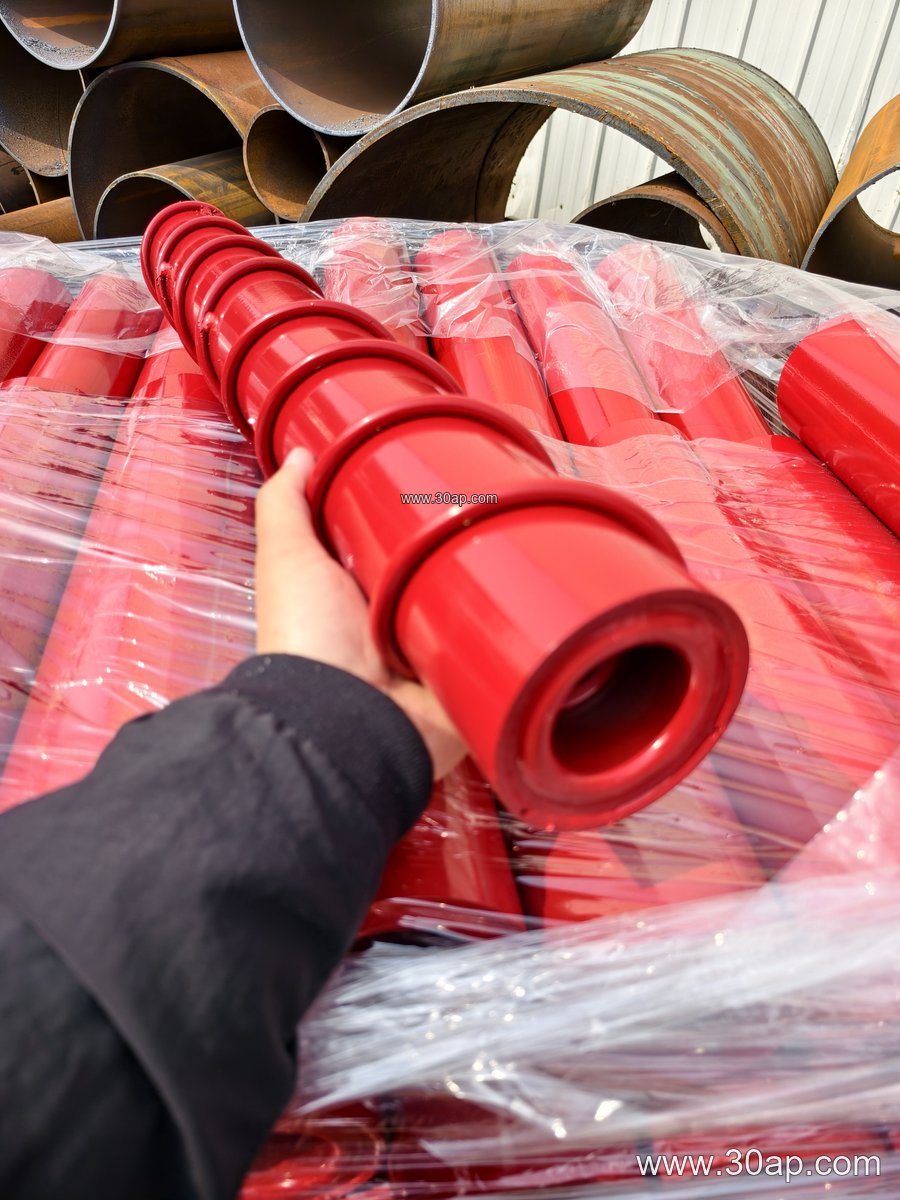
Most vertical guide rollers use a steel tube shell with a sealed bearing inside, mounted on a short shaft that is clamped to a conveyor bracket or a fabricated stand. Common shell diameters sit in the smaller range, such as Ø63 mm, Ø76 mm, Ø89 mm, or Ø108 mm, while the roller length is short — often 100 mm to 200 mm — because it contacts only the belt edge zone. The bearing size is selected with the load and shaft design, and typical choices include 6204, 6205, or 6305; no single bearing is tied to one shell diameter.
Surface options vary with the duty. A plain steel shell suits light guidance, a nylon or rubber-covered roller reduces edge wear on a rubber conveyor belt, and a ceramic-faced version may be chosen where abrasive dust is heavy. Sealing matters more than people expect: in a coal mining conveyor or a power plant coal handling system, fine dust and moisture attack bearings quickly, so a labyrinth seal or a well-greased triple-lip arrangement is worth specifying.
Where It Fits in the Conveyor Layout
Vertical guide rollers are commonly placed just before the loading point, along the approach to a conveyor pulley, and on the return side where belt wander is likely. In a stone crushing plant, the belt leaving the crusher discharge can shift sideways under uneven feed; a pair of vertical guides at the frame edge keeps the belt centered without adding much friction. In an iron ore or copper ore terminal, the same roller type protects the belt edge on long inclined runs.
- Before and after transfer chutes, to correct edge contact
- Near head and tail pulleys, to guide the belt into the pulley center
- On the return strand where the belt tends to drift
- At the edges of a skirted conveyor belt loading zone
They are not a substitute for a self-aligning idler roller or a training idler set; those correct belt tracking over a longer section, while the vertical guide handles local edge control.
Selection Notes for Buyers
Start with the belt width. A guide roller for a 650 mm or 800 mm belt is small, but on a 1400 mm or 1600 mm wide belt the edge forces are larger and the bracket and shaft need more stiffness. Belt speed, material abrasiveness, and ambient conditions also matter. A heavy-duty mining conveyor belt carrying coarse rock may call for a rubber-covered guide roller, while a food grade conveyor belt line would need a smooth, cleanable surface.
| Parameter | Typical Range | Notes |
|---|---|---|
| Shell diameter | Ø63, Ø76, Ø89, Ø108 mm | Small diameters suit edge contact |
| Roller length | 100–200 mm | Depends on bracket and belt edge zone |
| Bearing | 6204, 6205, 6305 | Selected by load and shaft |
| Surface | Steel, nylon, rubber, ceramic | Match to abrasion and belt type |
| Mounting | Conveyor bracket or stand | Adjustable position preferred |
Ask for the mounting dimensions, shaft material, and sealing arrangement, not just the shell size. A guide roller that fits the bracket but has a weak seal will fail early in a dusty cement plant or a wet tunnel mucking line.
Maintenance and Common Mistakes
Check the roller for free rotation at each inspection. A seized vertical guide roller becomes a fixed wear block and can shave the belt edge quickly. Keep the bracket bolts tight, since a loose guide drifts out of position and stops guiding. Avoid pressing the roller hard against the belt; a small clearance or light contact is usually enough, and excessive preload adds drag and heat.
Pair the guide roller with the right belt construction. An abrasion resistant conveyor belt or a heat resistant conveyor belt used in a sinter plant or cement kiln area will behave differently at the edges, and a flame retardant conveyor belt in an underground coal mining conveyor needs guides that do not create spark or heat risk. For long overland lines using a steel cord conveyor belt, edge guidance is usually light because the belt is stiff, while a multi-ply fabric core belt may need more frequent adjustment.
Finally, treat the guide roller as one part of the tracking system: troughing idlers set the belt shape, pulleys set the tension path, and vertical guides fine-tune the edge. Get all three right and the belt runs quietly through the plant.