What a Trough Idler Bracket Does on a Conveyor
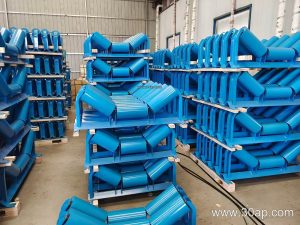
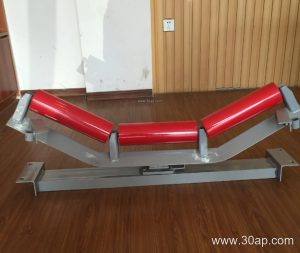
A trough idler bracket is the steel support that holds the angled carrying idlers in the shape of a trough, so the conveyor belt curves upward at both edges and keeps bulk material centered during transport. On a quarry conveyor belt or a cement plant feed line, this bracket is the quiet component that decides how well the belt tracks, how much material spills, and how long the idler roller bearings last. The bracket itself does not move; it simply positions the idlers at the correct trough angle and keeps them there under load.
Also called a troughing idler bracket or troughing frame, this part is distinct from the return bracket that supports the belt on its way back. Both belong to the same conveyor bracket family, but they serve different positions on the conveyor structure.
How the Bracket Is Built
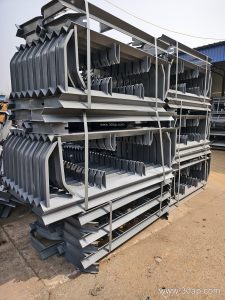
Most trough idler brackets are fabricated from angle steel, channel steel, or folded steel plate. The frame usually includes a base beam, two or three inclined mounting pads, and drilled holes that accept the idler shaft ends. The trough angle is fixed into the geometry of the bracket, which is why the angle must be chosen before fabrication rather than adjusted later on a welded frame.
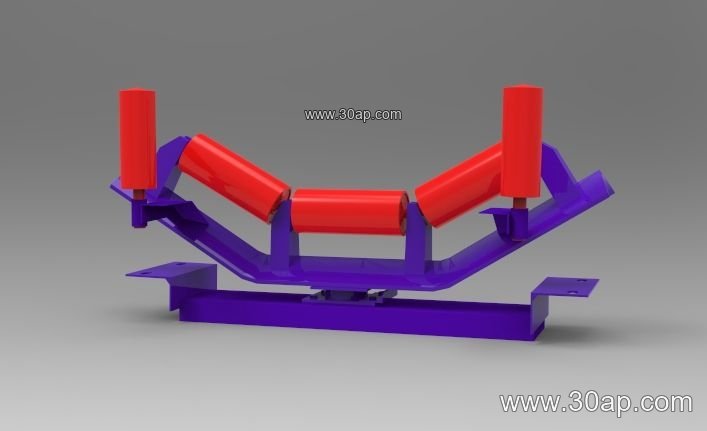
Typical reference dimensions used in design work include:
- Belt widths from B500 up to B2200, with B800, B1000, B1200 and B1400 being common in aggregate and coal handling
- Trough angles of 20, 30, 35 and 45 degrees
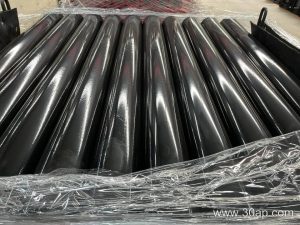
- Idler diameters of Ø89, Ø108, Ø133, Ø159 and Ø194
Mounting hole spacing and beam length change with belt width and trough angle, so these are determined by the conveyor design rather than treated as universal constants. A B800 frame at 35 degrees with Ø108 idlers is a familiar combination in a sand and gravel line, while a B1200 frame at 45 degrees with Ø133 idlers suits a heavier iron ore or coal mining conveyor belt duty.
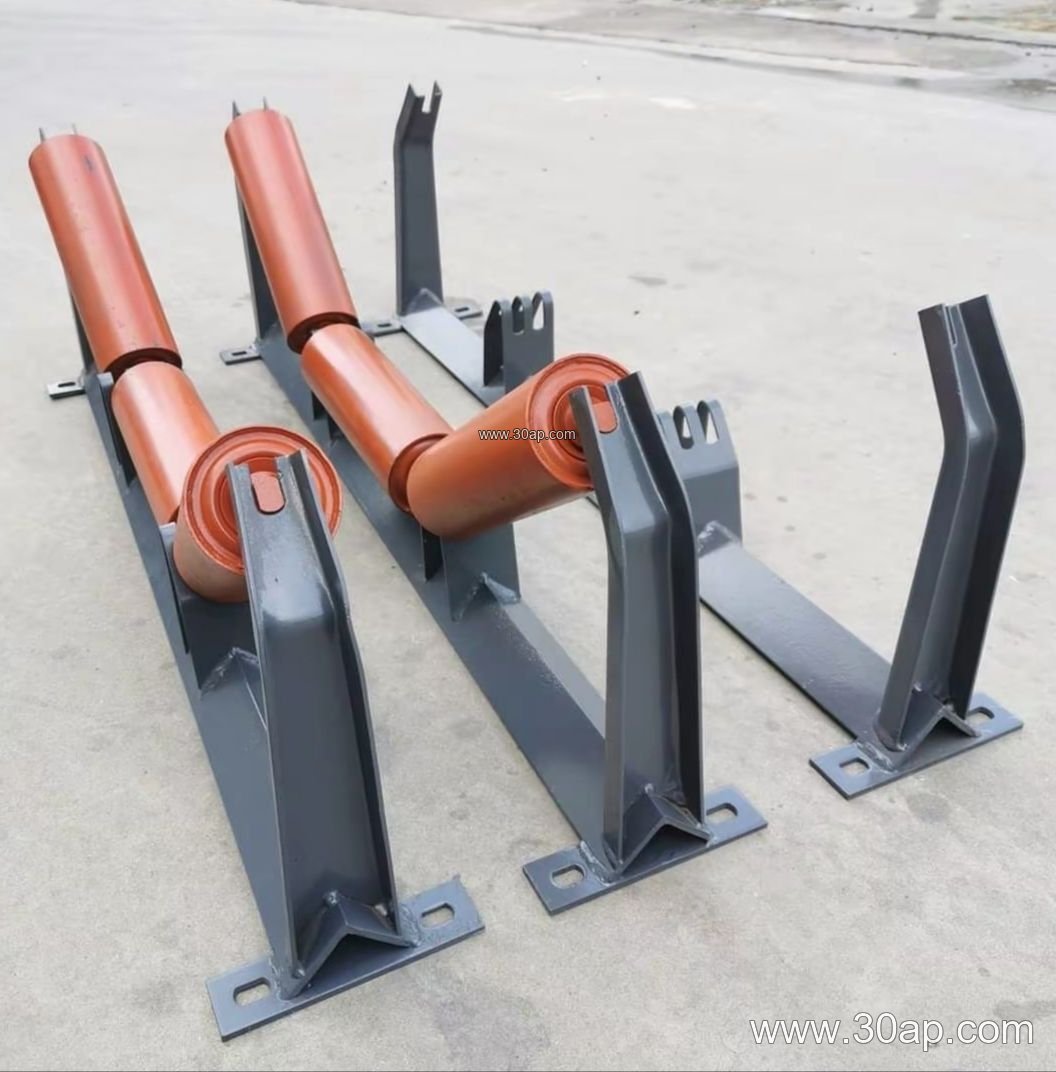
Fixed, Adjustable and Transition Brackets
A fixed troughing bracket is welded or bolted to a set angle and offers simple, rigid support. An adjustable bracket allows the trough angle to be changed between positions, which helps during commissioning or when material characteristics change. Transition brackets sit near the head or tail and guide the belt gradually from a flat profile into the trough, reducing edge stress on the conveyor belt.
For comparison, a V-type return bracket supports the belt from below and is not a substitute for the carrying trough frame. Each bracket type has its own place along the conveyor line.
Where These Frames Are Used
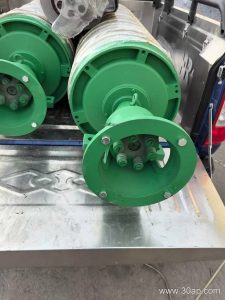
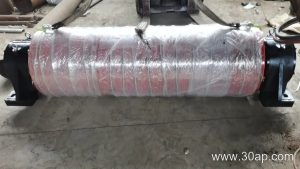
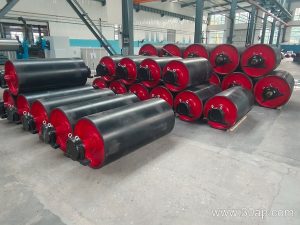
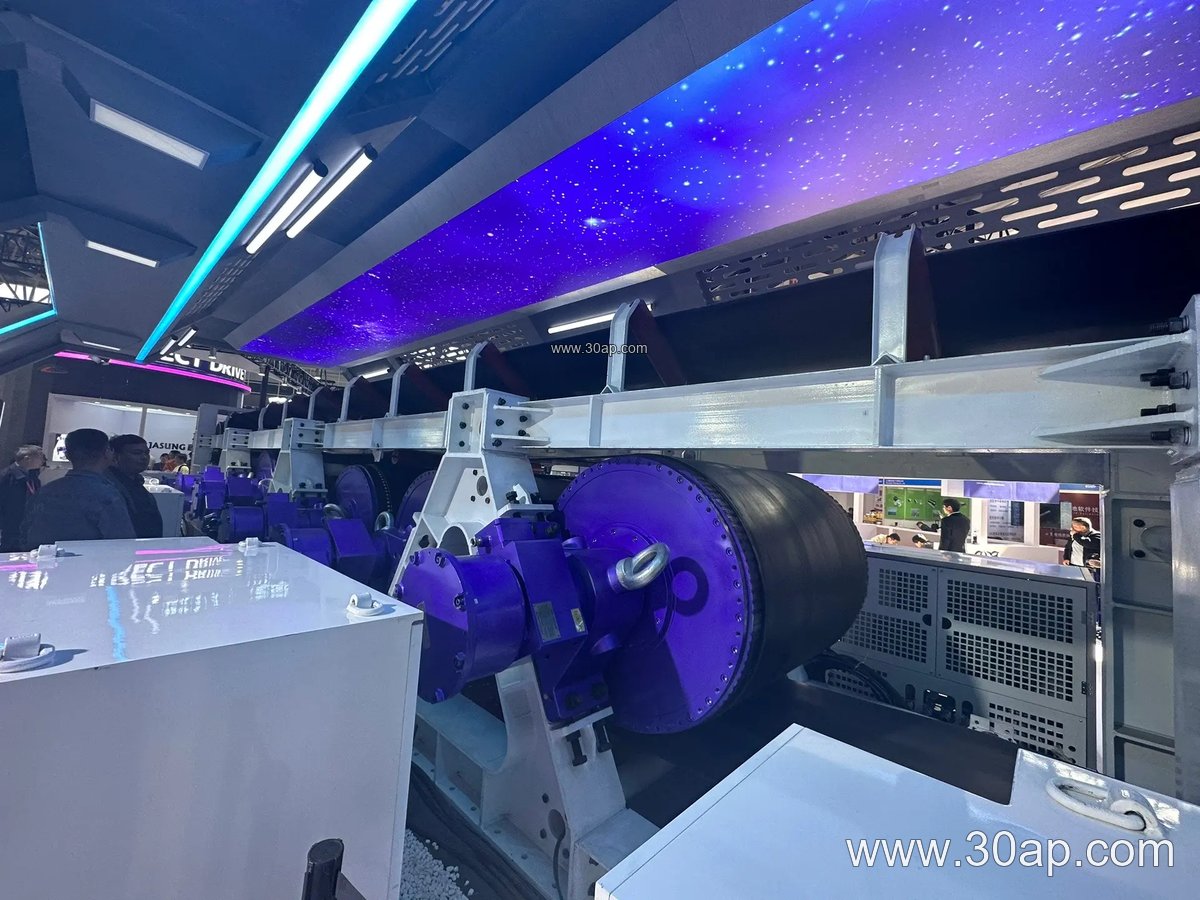
You will find trough idler brackets in limestone mines feeding a crusher, in power plant coal handling galleries, in cement kiln feed systems, and in port shiploading conveyors. In a typical transfer point, the bracket works alongside the idler roller set, the conveyor pulley at the drive end, and the conveyor belt itself. The frame must be aligned with the pulley centerline so the belt does not drift toward one side.
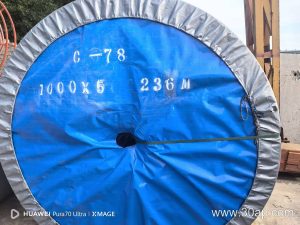
Heavy-duty mining conveyor belt installations often specify thicker frames and larger idler diameters, while lighter aggregate conveyor belt lines can use smaller sections. Selecting the bracket to match the belt width, trough angle and roller size keeps the whole assembly consistent. For broader system planning, see the conveyor bracket range at www.com/conveyor-bracket and the belt options at www.com/ep-conveyor-belt.
Buyer Checklist Before Ordering
Confirm the belt width, the required trough angle, and the idler shaft diameter before requesting a quote. Ask whether the frame is welded or bolted, what surface treatment is applied, and whether the mounting holes match your existing stringer spacing. If the conveyor runs an EP conveyor belt or a multi-ply fabric core belt in a dusty environment, check that the bracket profile leaves enough clearance for material build-up. For abrasive duties such as a copper ore conveyor belt, a robust folded steel plate design is often preferred over a light angle frame.
Finally, verify the bracket height relative to the pulley and the take-up position. A frame that is too high or too low can cause belt edge contact and premature wear, even when all other components are correct.
Installation and Maintenance Notes
Install brackets square to the conveyor centerline and at equal spacing along the carrying side. Check bolt tightness after the first week of operation, because vibration on a coal mining conveyor belt can loosen fasteners. Inspect for bent frames, worn mounting holes and corrosion, especially in wash-down or coastal port environments. Replacing a damaged trough idler bracket early prevents the idler roller from sitting at the wrong angle and protects the belt from tracking problems.