What a Self-Aligning Idler Does on a Conveyor
A conveyor belt self-aligning idler is a training idler designed to keep the belt centered on its run. When a belt drifts toward one side, the self-aligning idler responds by pivoting slightly, which steers the belt back toward the center line. This correction happens continuously and mechanically, without an operator touching the conveyor. In bulk handling plants, a misaligned belt can spill material, rub against the frame, and wear out edges quickly, so this idler subtype earns its place at points where tracking tends to wander.
Buyers often see the same product called a self-training idler or a belt training idler. These are accurate equivalent names for the same item, while a standard carrying idler or a return idler should not be confused with it. Drive pulleys, tail pulleys, and bend pulleys are separate components that transmit or redirect belt tension, and they are never substitutes for a self-aligning idler.
How the Self-Aligning Idler Is Built
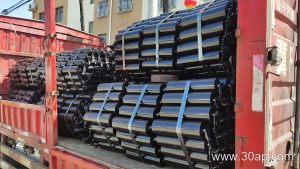
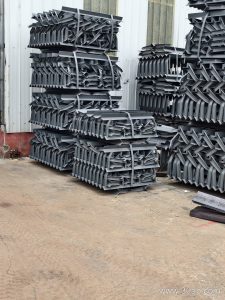
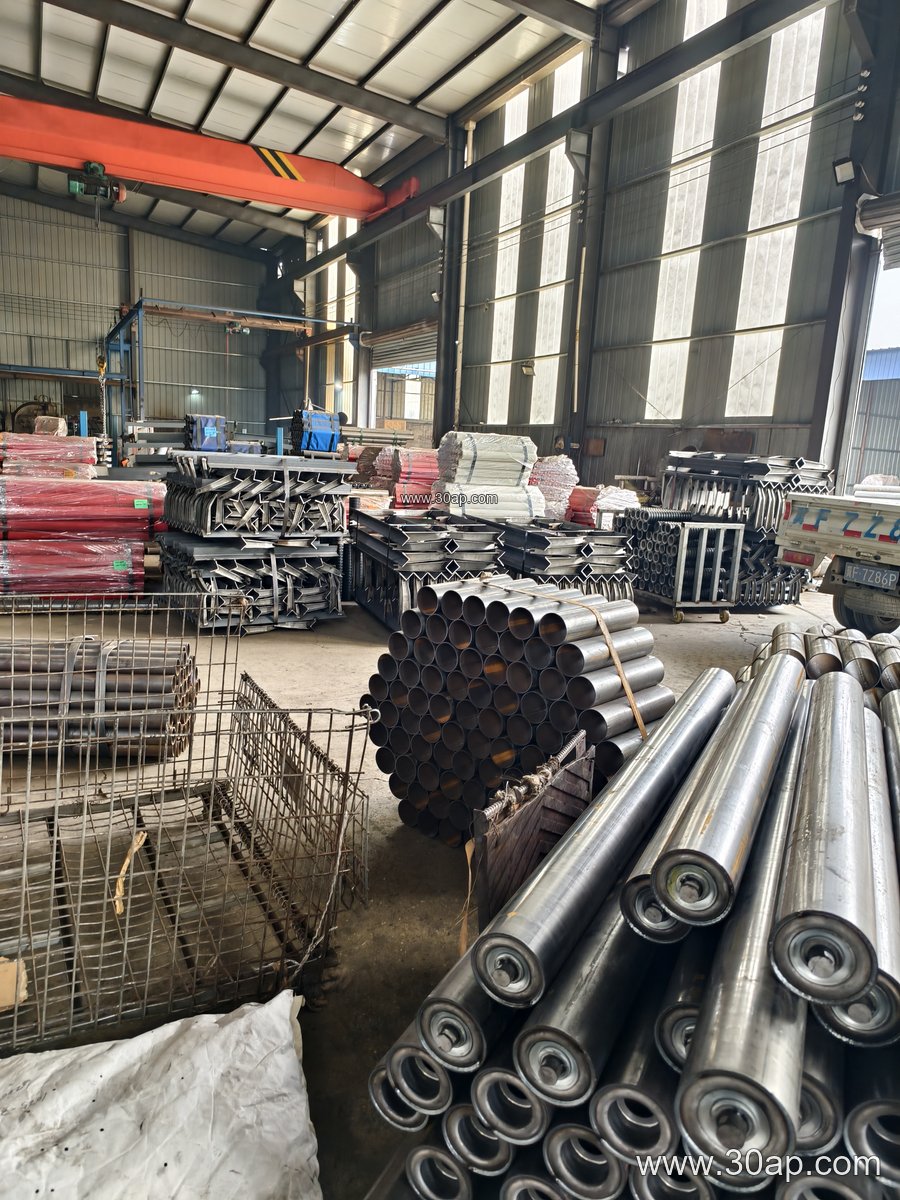
The working part is a roller set mounted on a pivoting frame. The frame sits on a base that allows a small rotation about a vertical axis. In a friction self-aligning idler, the roller surface contacts the belt edge or the belt underside, and any sideways force turns the frame so the rollers angle against the direction of drift. A conical self-aligning idler uses tapered rollers that create a natural centering effect as the belt runs. Some designs add a small forward tilt, commonly around 1.5 to 2 degrees, to help the roller guide the belt.
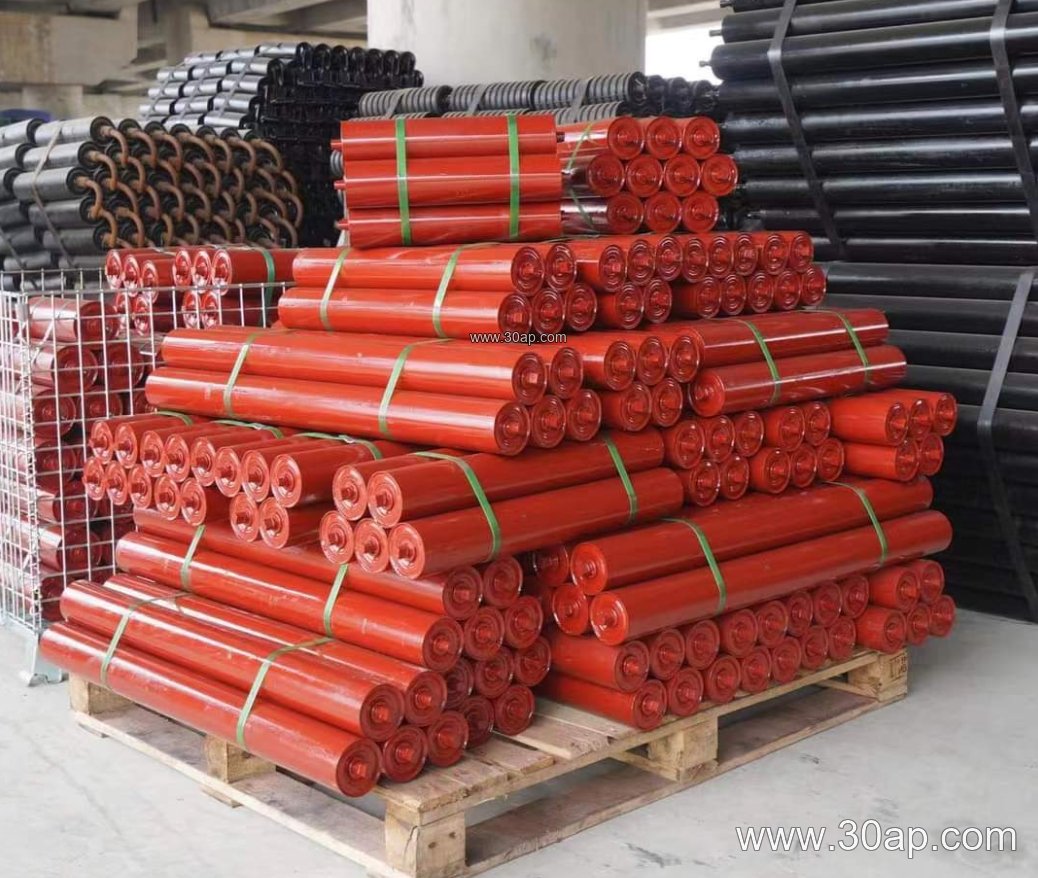
Rollers are usually steel tube, sometimes with a nylon, ceramic, or rubber ring surface for grip or wear protection. Bearings such as 6204, 6205, 6305, 6306, 6308, or 6310 appear across the range, and the correct bearing depends on load and roller diameter rather than on belt width alone. Common roller diameters include Ø63, Ø76, Ø89, Ø102, Ø108, Ø127, Ø133, Ø159, Ø178, Ø194, and Ø219, chosen according to belt tension and the size of the material being carried.
The idler mounts on a conveyor bracket that must be sturdy enough to resist the pivoting force. A weak bracket lets the frame wobble, and tracking correction becomes unreliable. Alignment during installation matters just as much: the idler should sit square to the belt center line and at the same height as neighboring idlers.
Typical Sizes and Arrangements
The self-aligning idler usually appears as a two-roller or three-roller arrangement. Roller length changes with belt width, trough angle, and the type of roller set. The following examples are common reference values, not fixed pairings, and side rollers or center rollers can differ within one set.
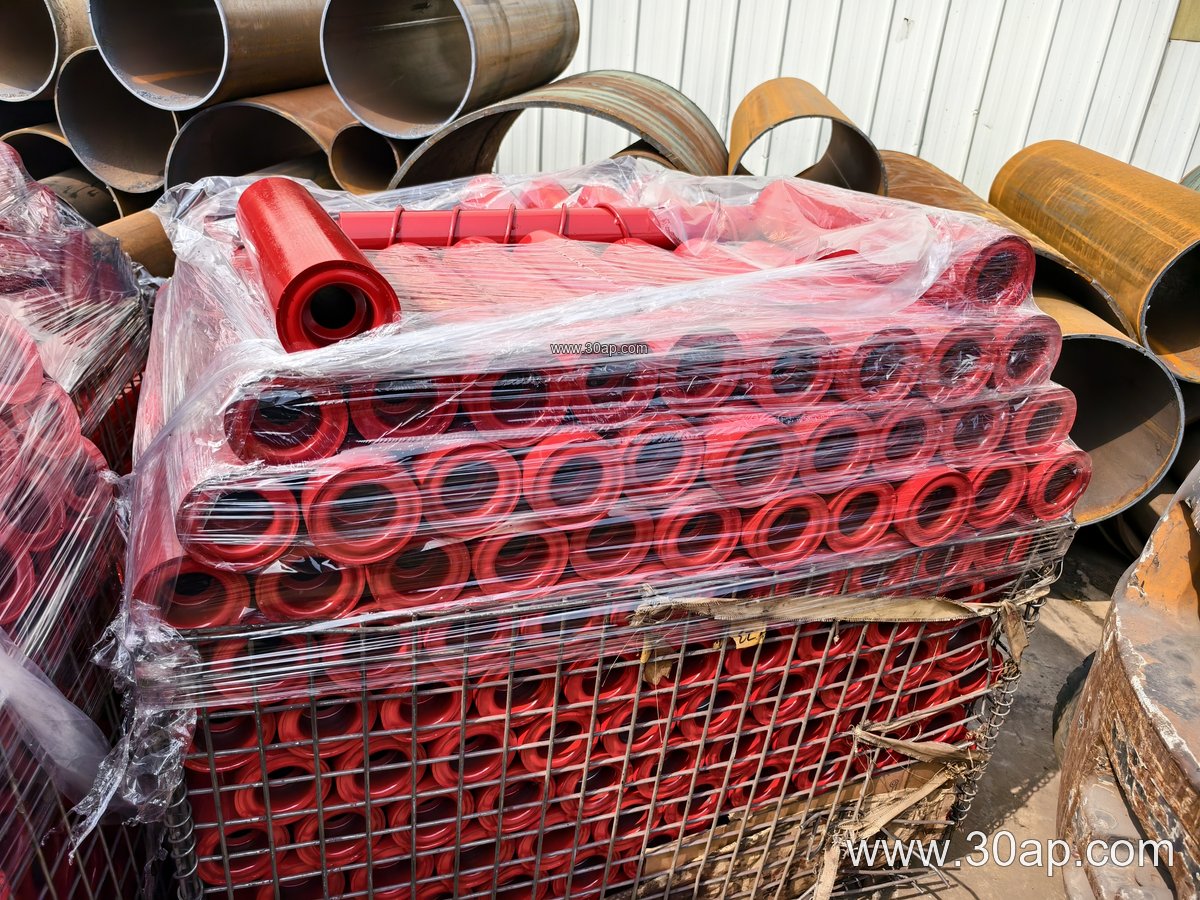
| Belt width | Common roller length (three-roller trough set) |
|---|---|
| B500 | about 200 mm |
| B650 | about 250 mm |
| B800 | about 315 mm |
| B1000 | about 380 mm |
| B1200 | about 465 mm |
| B1400 | about 530 mm |
| B1600 | about 600 mm |
| B1800 | about 670 mm |
| B2000 | about 750 mm |
Trough angles of 20, 30, 35, and 45 degrees are common. A wider belt does not enforce one particular roller diameter, and a given belt width should not be tied to a single shaft size. Selection should follow the conveyor design, belt tension, material load, and the manufacturer’s data. For heavy-duty mining conveyor belt duty, larger rollers and stronger frames are often preferred, while a quarry conveyor belt or aggregate conveyor belt with moderate loading may use mid-range sizes.
Where It Is Used
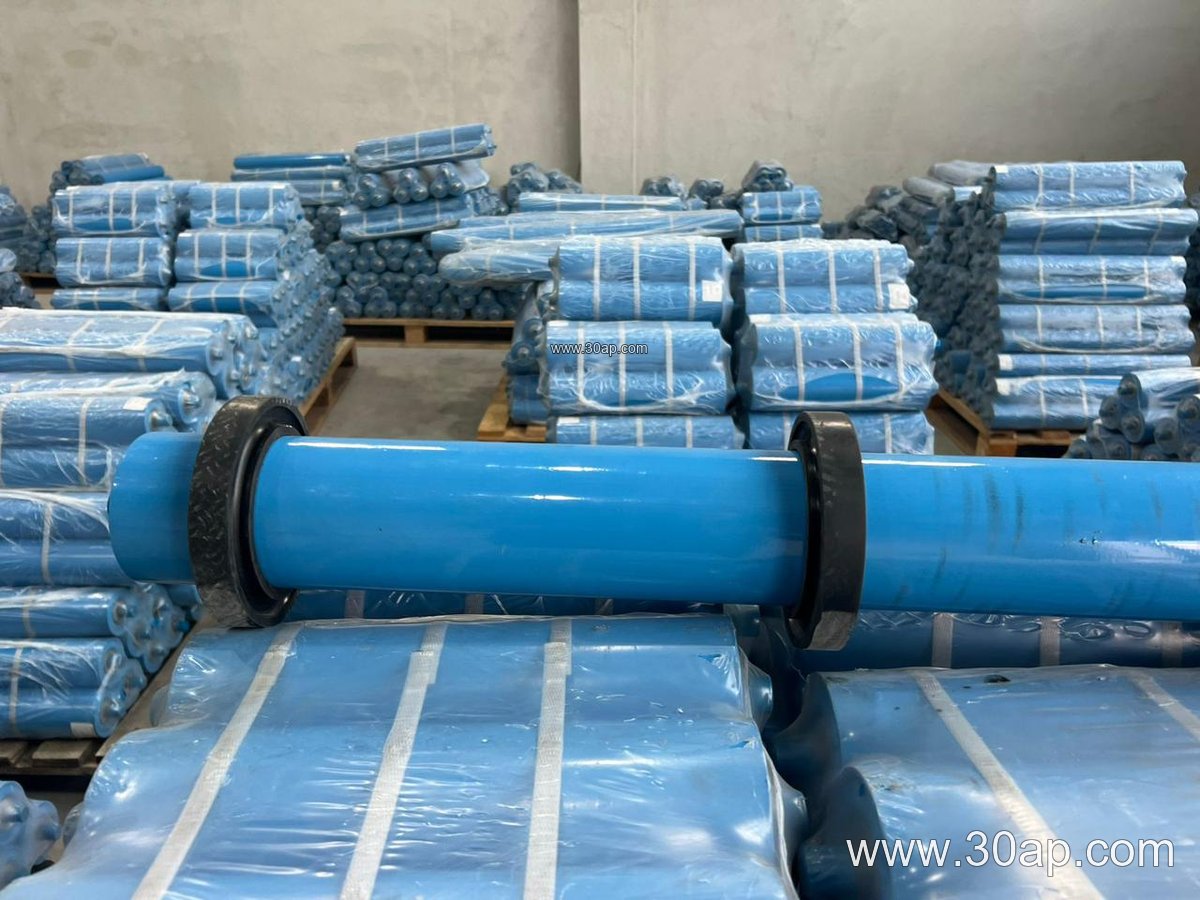
Self-aligning idlers are common in a coal mining conveyor belt system, especially on long transfer runs where the belt has time to drift. They also appear in cement plants, power plant coal handling, and iron ore or copper ore circuits. In a crushing and screening line, a self-aligning idler placed after a transfer point helps the belt settle back to center before it reaches the next pulley. Port and ship loading conveyors use them on long inclined runs where wind and off-center loading disturb tracking.
The idler works with many belt constructions, including EP conveyor belt, NN conveyor belt, steel cord conveyor belt, and multi-ply fabric core conveyor belt. Abrasion resistant conveyor belt and flame retardant conveyor belt grades are common in mines, while heat resistant conveyor belt grades suit cement and sinter lines. The idler itself does not change the belt compound, but matching roller surface and bearing protection to the environment keeps both components running longer.
What a Buyer Should Check
- Mounting position: place self-aligning idlers at intervals along the carrying run, after loading points, and before critical pulleys. Too few units leave long unsupported spans where drift builds up.
- Frame and bracket quality: confirm that the pivoting mechanism moves freely and that the conveyor bracket fits the existing stringer spacing.
- Roller surface: rubber rings improve grip on wet or dusty belts, while plain steel suits cleaner duty. Ceramic or nylon surfaces may help where wear is severe.
- Sealing and bearings: dusty sites such as a coal preparation plant or limestone quarry need well-sealed bearing housings. Ask about the bearing size and lubrication approach.
- Clearance: check that the pivoting frame has room to move without hitting the belt edge, skirt rubber, or frame members.
- Spare parts: keep replacement rollers and pivot parts on hand, since a seized self-aligning idler can itself become a tracking problem.
Routine inspection is simple. Watch the belt for edge contact, listen for roller noise, and check that the frame still pivots. A self-aligning idler that has stopped moving should be repaired promptly rather than left in place, because a locked frame acts like an ordinary idler and no longer corrects drift. With correct placement and reasonable maintenance, this idler subtype reduces edge damage and spillage across mining, cement, power, and aggregate operations.