What a Conveyor Carrying Bracket Does
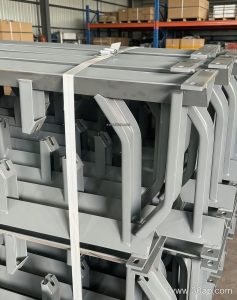
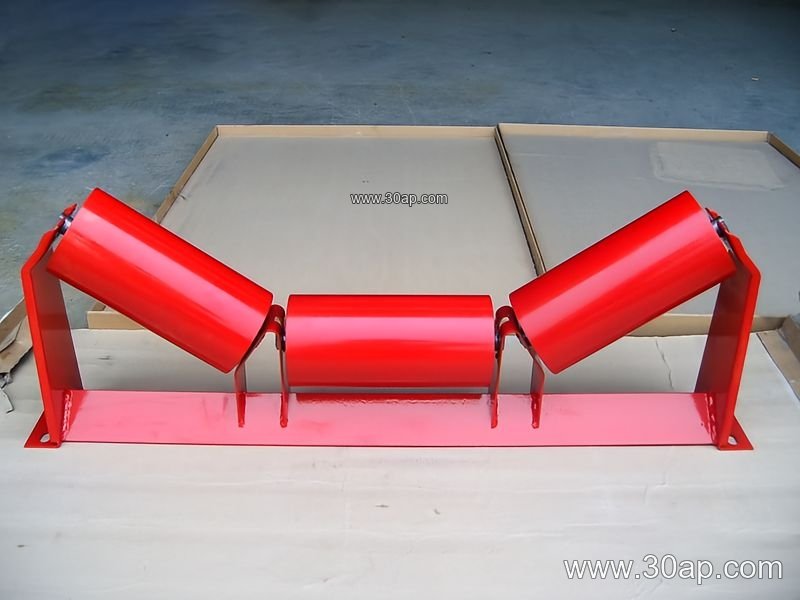
A conveyor carrying bracket is the structural support that holds the carrying-side idler rollers at the correct angle under a loaded belt. On a troughing station, the bracket keeps the three-roll arrangement in shape so the belt forms a stable trough and the material stays centered. In a quarry or a cement plant, a weak or misaligned bracket shows up quickly as belt wander, spillage and uneven roller wear. The part is simple, but it sits at the heart of everyday conveying reliability.
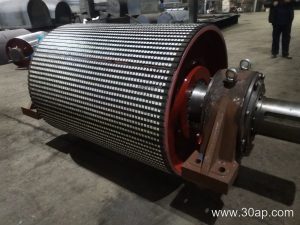
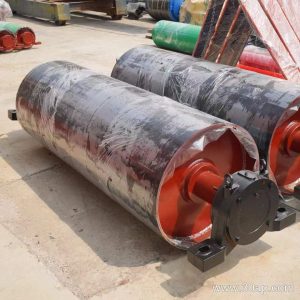
The same component is also called a carrying idler bracket or troughing bracket. It is not a pulley and should never be confused with a conveyor pulley: drive pulleys, tail pulleys and bend pulleys transmit or redirect belt tension, while the carrying bracket only supports the troughing idlers. That distinction matters when ordering spares, because the two product families use different drawings and different loads.
How the Bracket Is Built
Most carrying brackets are fabricated from angle steel, channel steel or folded steel plate. The bracket is bolted to the conveyor frame or to a cross beam, and its inclined faces carry the side rollers while the center seat carries the middle roller. Installation hole spacing and beam length are determined by belt width and trough angle, so they should be confirmed against the conveyor drawing rather than assumed.
- Frame material: angle steel or channel steel for general duty; folded plate for heavier sections
- Trough angle: commonly 20, 30, 35 or 45 degrees; adjustable brackets can move between these angles
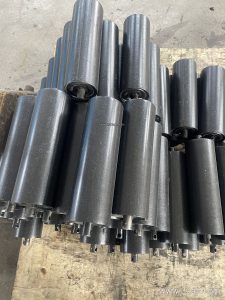
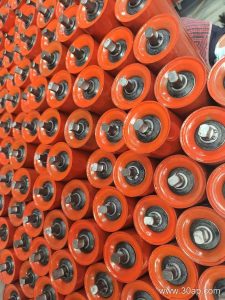
- Roller diameter: usually Ø89, Ø108, Ø133, Ø159 or Ø194 depending on load and belt width
- Belt width range: B500 up to B2200, with B800, B1000 and B1200 the most common in bulk handling
Typical combinations such as B800 / 35 degrees / Ø108 or B1200 / 45 degrees / Ø133 appear in many plants, but they are examples, not fixed rules. A given belt width can work with more than one trough angle and more than one roller diameter, and the shaft size must come from the idler drawing, not from the belt width alone.
Where Carrying Brackets Are Used
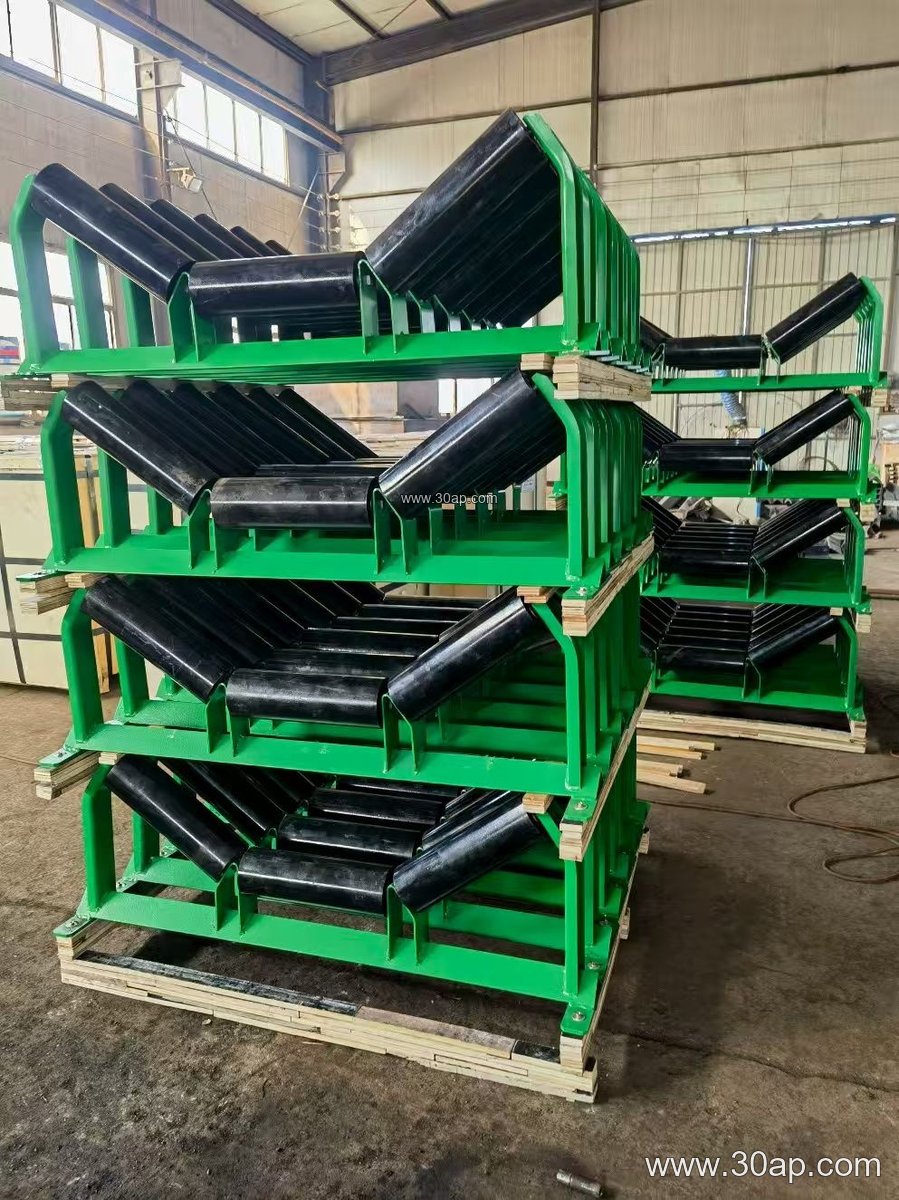
In a coal preparation plant or a power plant coal yard, carrying brackets line the long overland runs that feed the boiler or the stockpile. In an iron ore or limestone operation, they support the belt through crusher feed and screening circuits where impact and abrasion are constant. Aggregate and sand lines use them on every standard troughing station, while a port or ship loading system relies on them along the boom and transfer points.
Because the carrying bracket works together with the conveyor belt and the idler roller, matching the bracket to the belt duty matters. A heavy-duty mining conveyor belt carrying coarse rock needs a stiffer bracket and larger rollers than a smooth EP conveyor belt moving sized material. Where a flame retardant conveyor belt is required underground, the bracket finish and clearances should also suit the mine environment.
Matching the Bracket to Trough Angle and Roller Size
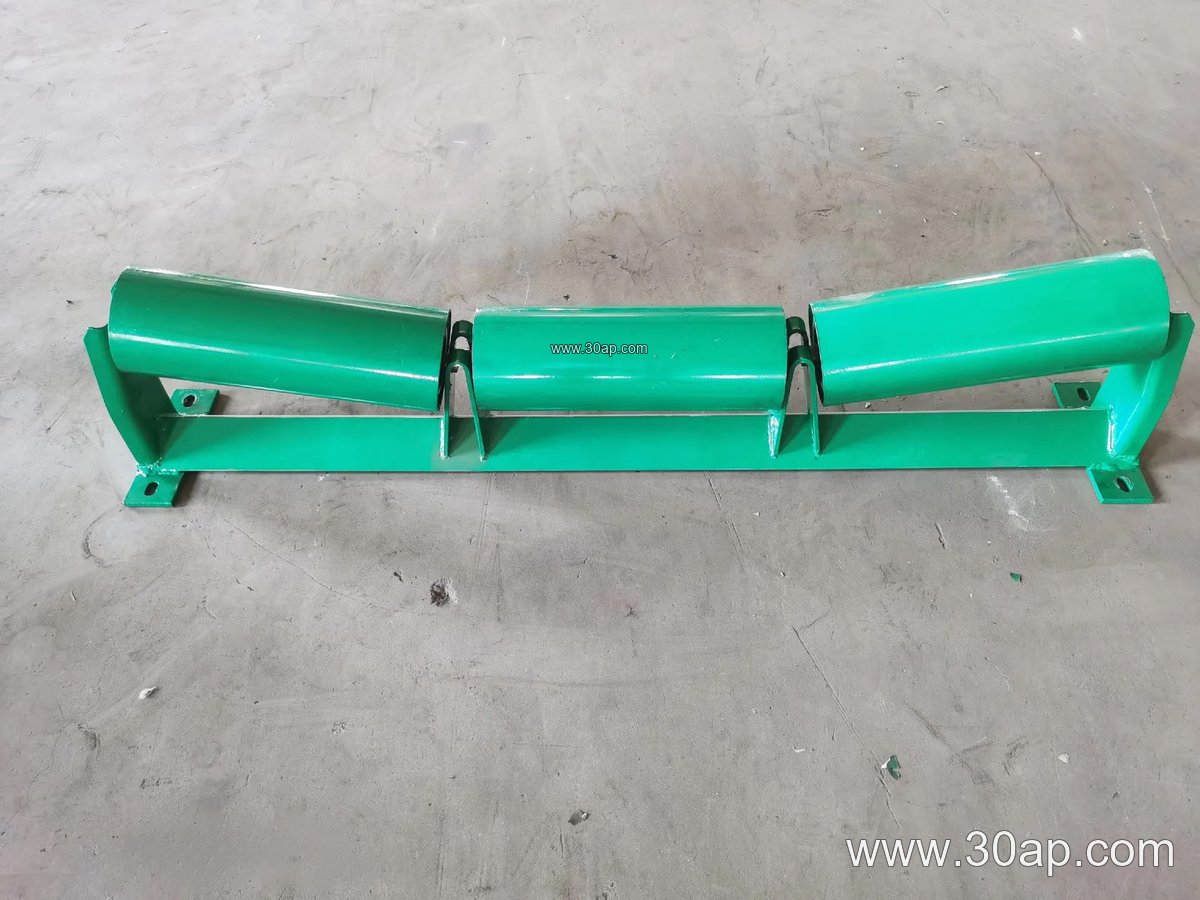
Trough angle controls how deep the belt sits and how much material it can hold. A 20 or 30 degree trough suits moderate capacity and easier belt training; 35 and 45 degree troughs increase capacity on wide belts. Adjustable brackets allow the maintenance team to fine-tune the angle, while fixed brackets keep a single setting for the life of the station. Forward-leaning brackets, usually around 1.5 to 2 degrees, help keep the belt centered on long runs.
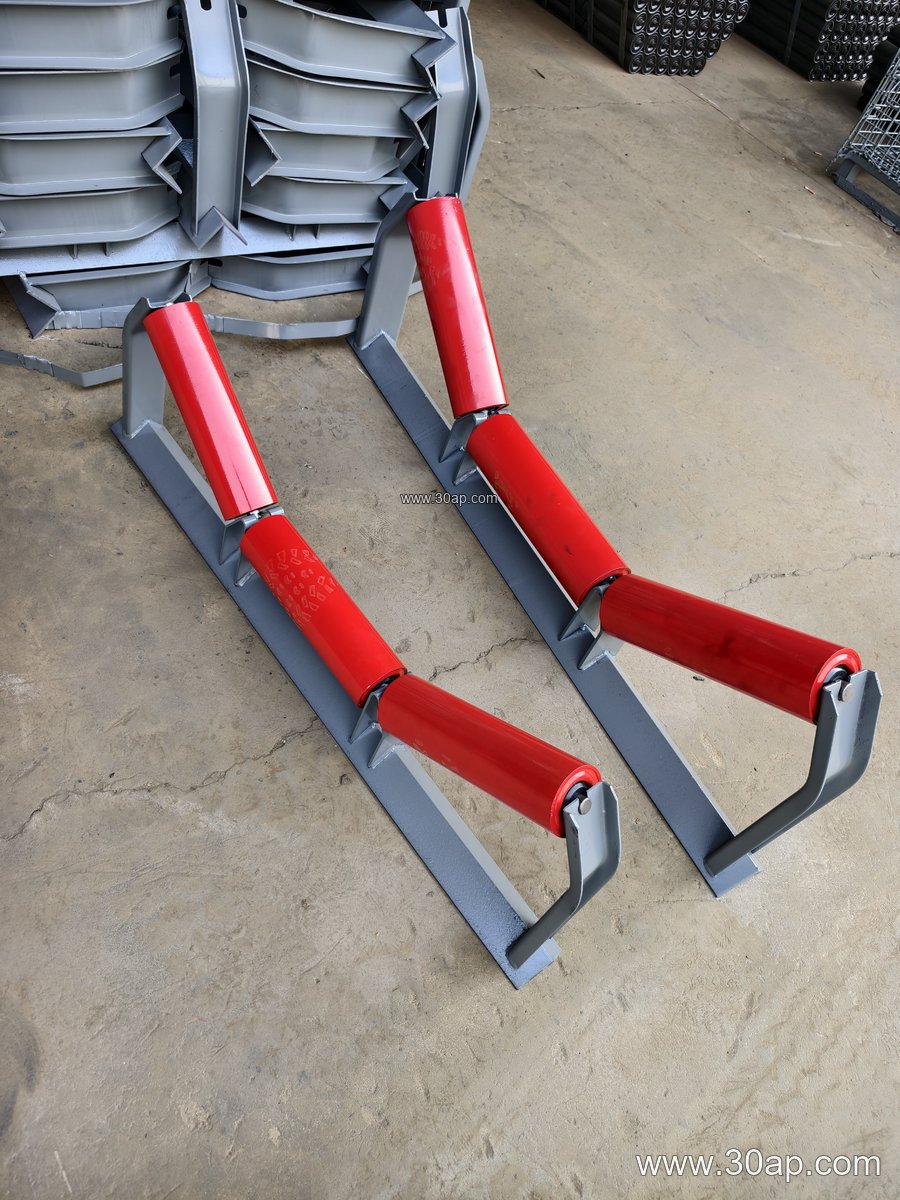
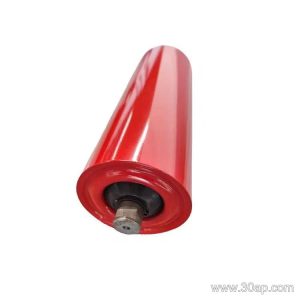
Roller diameter should follow load and belt speed, not belt width alone. Heavier material and wider belts generally call for Ø133 or Ø159 rollers, while lighter duties may use Ø89 or Ø108. The bracket seat must match the roller shaft and the frame hole pattern, so the drawing should always be checked before a batch is fabricated.
What Buyers Should Confirm
- Belt width and trough angle, for example B650 / 30 degrees or B1400 / 35 degrees
- Roller diameter and shaft end type, so the bracket seat fits the idler roller
- Frame material and finish, especially for dusty or wet locations
- Fixed or adjustable design, and whether forward lean is required
- Hole spacing and beam length, taken from the conveyor drawing
Buyers should also ask how the bracket fits the existing conveyor bracket layout at transition and return stations, since mixing bracket types on one frame can cause uneven belt support. A short site measurement of the cross beam and hole centers avoids most fitting problems.
Installation and Maintenance Notes
Check bracket alignment after every belt splice or roller change. Loose bolts, bent angle steel and worn seats are common causes of belt misalignment, and they are easy to correct before they damage the belt edge. Keep spare brackets in the warehouse for the widths and angles actually used on site, and record the roller diameter with each spare so the right idler roller is fitted.
For conveyors handling abrasive bulk material, inspect carrying brackets at the same interval as the idlers. Early replacement of a distorted bracket is cheaper than replacing a damaged conveyor belt, and it keeps the whole troughing line running straight.