What an EP800 Conveyor Belt Is
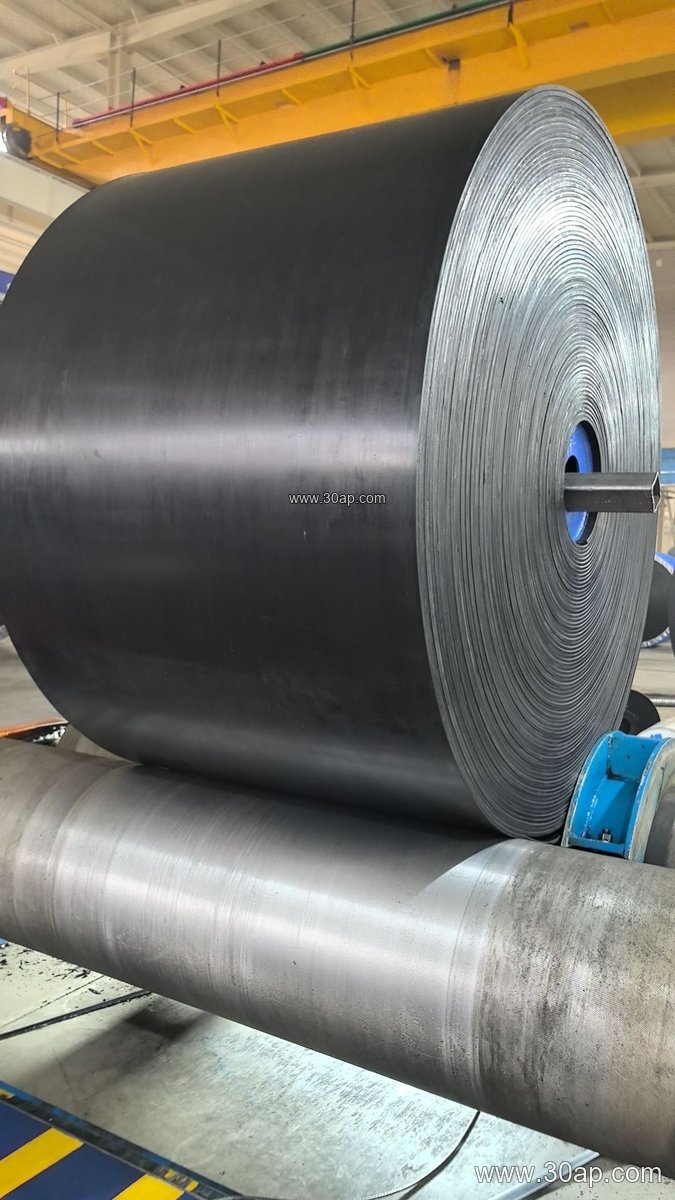
An EP800 Conveyor Belt is a fabric-core rubber belt built on polyester (E) and nylon (P) warp and weft yarns, with a nominal tensile strength of 800 N/mm per ply. It sits in the middle-upper range of the EP family, above EP630 and below EP1000, which makes it a practical choice for long conveying lines and demanding bulk material flows. Buyers often describe the same product as an EP800 rubber conveyor belt or an EP fabric core conveyor belt, and all three names refer to the same construction.
The carcass is the load-bearing part. Multiple plies of EP fabric are bonded with rubber skim compound, then covered on both faces with abrasion-resistant rubber. A typical EP800 belt may use 3 to 5 plies, depending on the duty and the safety margin the designer wants. The number of plies is a design decision, not a fixed rule.
Construction and Cover Options
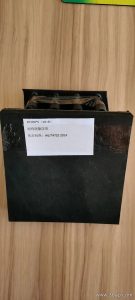
The belt body consists of the EP fabric carcass, skim rubber between plies, and top and bottom covers. Cover thickness is usually written as top plus bottom, for example 4+2 mm, 5+2 mm, 6+2 mm or 8+3 mm. Heavier covers suit sharp, abrasive rock; thinner covers suit cleaner, lighter materials.
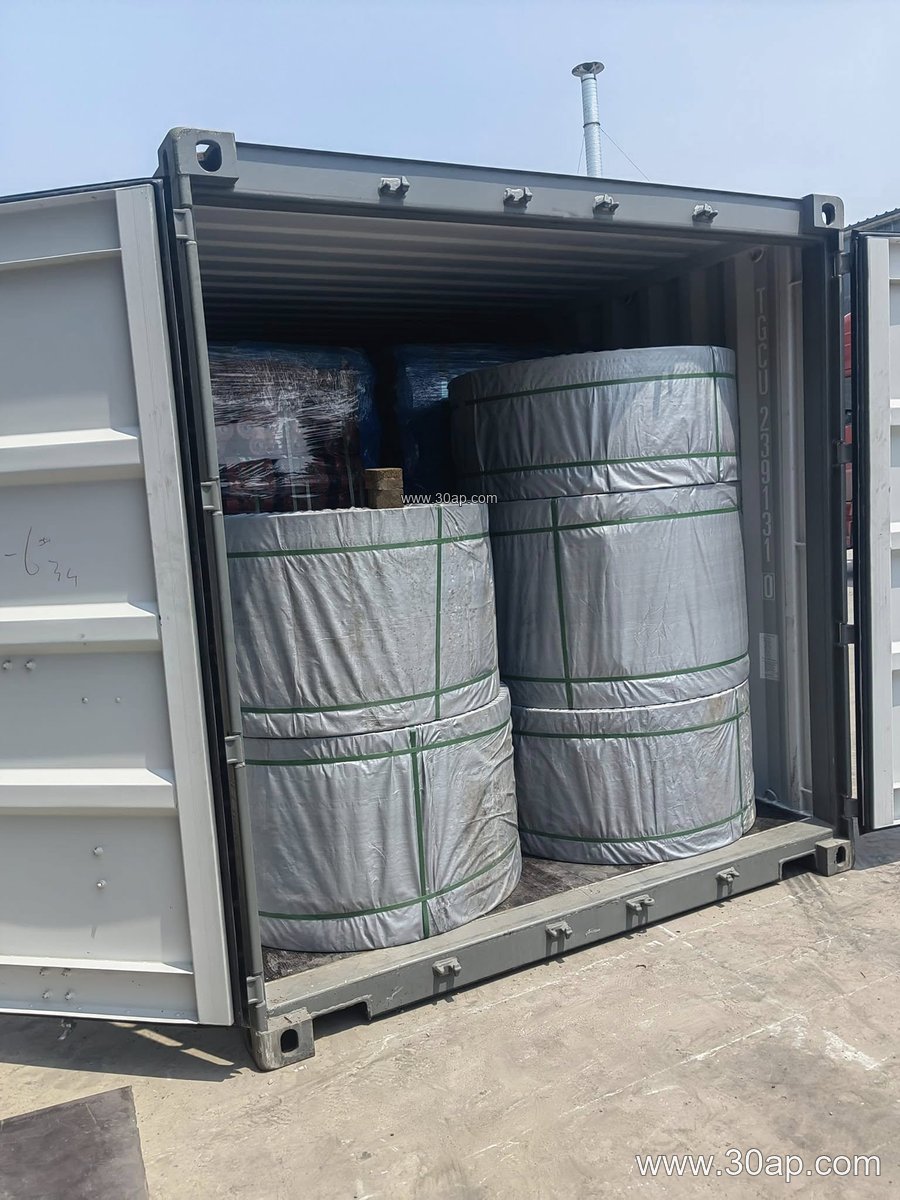
| Parameter | Common Range |
|---|---|
| Nominal strength | EP800 (800 N/mm per ply) |
| Carcass plies | 3 to 5 plies, by design |
| Belt width | B650, B800, B1000, B1200, B1400, B1600, B1800 |
| Cover thickness | 4+2 mm, 5+2 mm, 6+2 mm, 8+3 mm |
| Surface forms | Plain, chevron, corrugated sidewall, skirted |
Surface form changes the application rather than the strength class. A chevron conveyor belt adds cleats to control material on inclines, while a corrugated sidewall belt with skirts handles steep lifts. These are variants of the same base product, not replacements for the EP800 carcass.
Where It Fits in the Plant
EP800 belts appear in mines, coal preparation plants, cement works, power stations, quarries and sand and gravel yards. A quarry conveyor belt moving crushed stone from a crusher to a screening tower often uses this strength class, and a cement plant conveyor belt carrying clinker or limestone is another typical duty. Port and ship loading conveyors also use it where moderate strength and good abrasion resistance are needed.
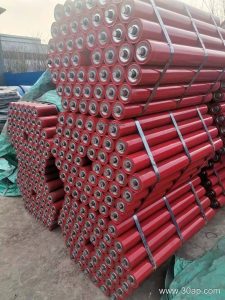
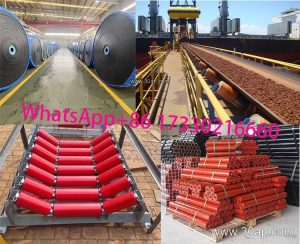
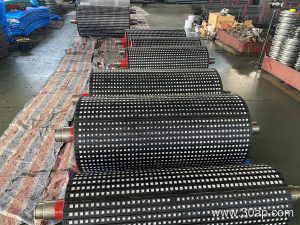
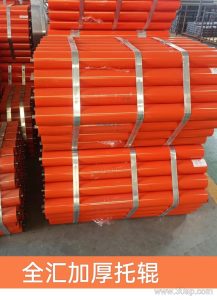
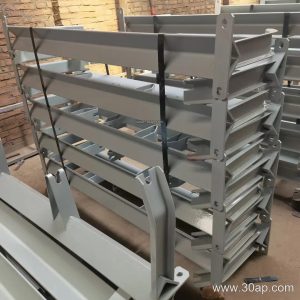
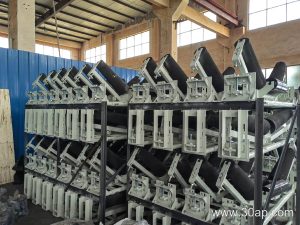
The belt runs on a conveyor pulley at the head and tail, supported by idler rollers along the carry and return sides, all mounted on a conveyor bracket and frame. The drive pulley, tail pulley and bend pulley each do a different job and are not interchangeable. Matching belt width to pulley face width, and belt tension to pulley shaft and bearing capacity, belongs in the conveyor design, not in a simple size chart.
Selection Points for Buyers
- Confirm the required strength class and ply count with the conveyor designer, since EP800 is one point in a wider range that includes EP630 and EP1000.
- Choose cover compound for the duty: abrasion resistant for rock and ore, heat resistant near hot clinker, oil resistant for oily scrap, flame retardant for underground coal mining conveyors.
- State belt width in millimetres, such as 800mm, 1000mm or 1200mm, and check it against the pulley and idler roller arrangement.
- Decide whether a plain belt is enough or whether a chevron or sidewall profile is needed for the incline.
- Ask for the splice method and edge condition, because joint quality affects belt life as much as the carcass.
For heavy-duty mining conveyor belts, buyers sometimes compare EP fabric core with steel cord conveyor belt constructions. Steel cord belts carry higher tensions over long distances, while EP800 remains a straightforward, repairable option for many plant conveyors.
Installation and Maintenance Notes
Correct tracking starts with aligned pulleys and square idler roller frames. Check belt tension after the first days of running, inspect splices for edge separation, and watch for cover wear near loading points where impact is highest. Keeping the belt clean and the conveyor bracket structure free of built-up material reduces misalignment. Store spare belts flat and away from direct sunlight and ozone sources.
An EP800 Conveyor Belt is not a universal answer for every line, but when the duty matches its strength and cover grade, it delivers reliable service across mining, cement, power and aggregate operations.