What a Ceramic Lagged Pulley Does on a Conveyor
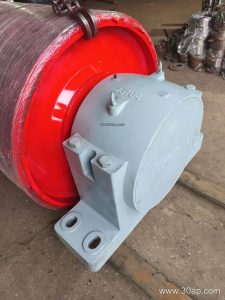
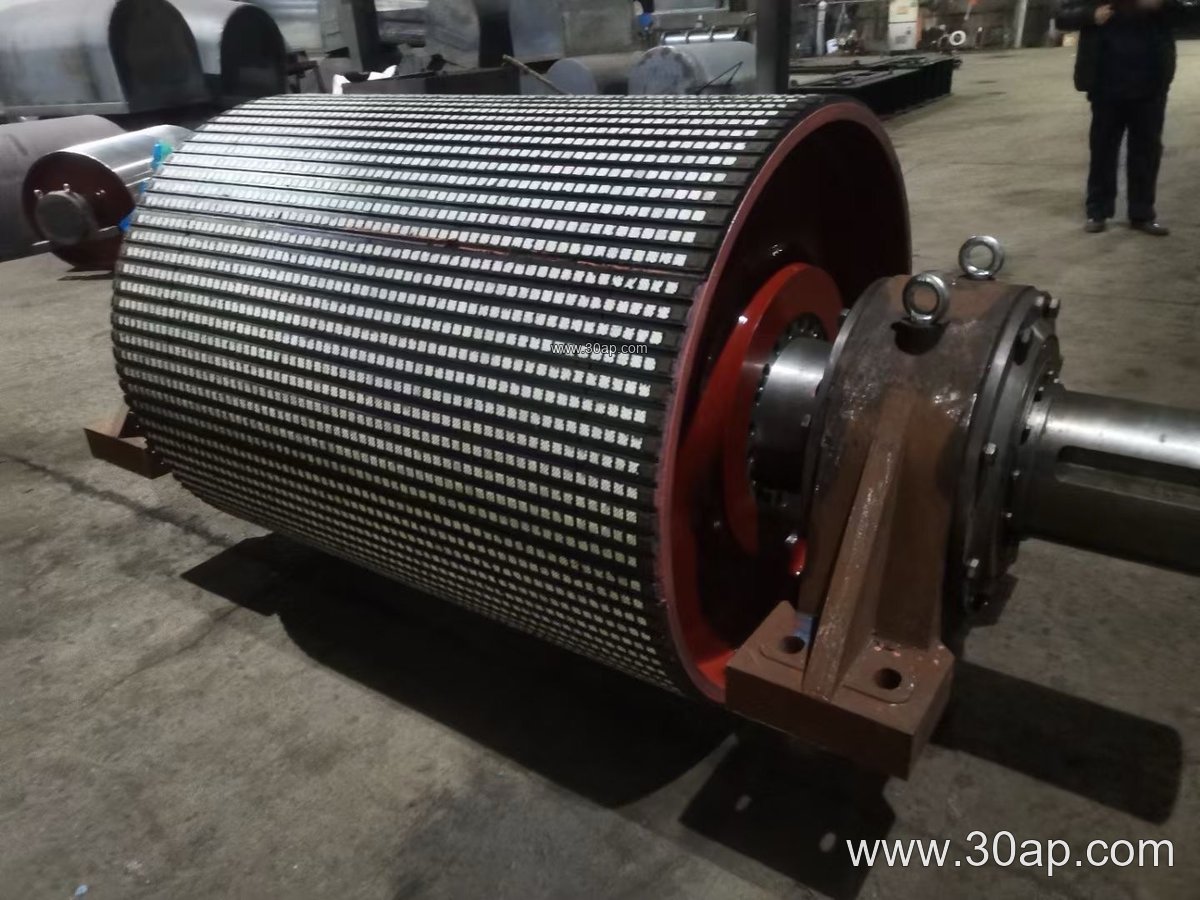
The conveyor ceramic lagged pulley is a conveyor pulley whose shell is covered with embedded ceramic tiles instead of plain rubber. It sits at the point where the belt needs the most grip, usually the drive position, and it converts motor torque into belt motion without relying on friction alone. In a quarry or a cement plant, where dust and moisture constantly work against traction, that difference matters. For a broader look at the pulley family, see www.beltconveyorpulley.com/conveyor-pulley.
Ceramic lagging is not a universal upgrade. It is chosen when slip is a real risk and when the belt can tolerate the harder surface. A smooth-faced or rubber-lagged shell remains the right answer for many lighter duties.
How the Ceramic Surface Is Built
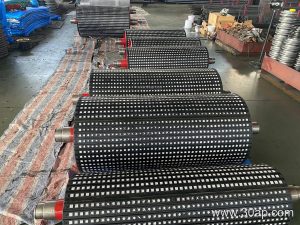
The shell is machined, then covered with a rubber or polymer bonding layer into which ceramic tiles are vulcanized or bonded. The tiles are usually small, raised, and arranged in a pattern that leaves channels between them. Those channels let water and fine grit escape instead of being trapped under the belt, which is why the grip holds up in wet or dirty conditions.
- Ceramic tiles provide the wear surface and the bite.
- Bonding layer absorbs shock and keeps tiles in place.
- Shell and hub carry the torque; shaft size follows load, not belt width.
Because the tiles are hard, they resist abrasion from sand, clinker, and crushed stone far better than rubber alone. The trade-off is that a poorly finished ceramic face can scuff a belt, so the pattern and edge treatment should be checked before installation.
Where It Fits in the Plant
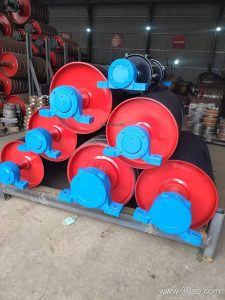
Drive pulleys on a quarry conveyor, a cement plant clinker line, or a power plant coal handling system are the classic locations. The same shell type can appear on a tension pulley or a bend pulley when the layout creates high wrap angles and the belt tends to slip under load. It is not a substitute for a tail pulley or a drive pulley by name; each position has its own job, and only the lagging surface is being compared here.
Typical service conditions include:
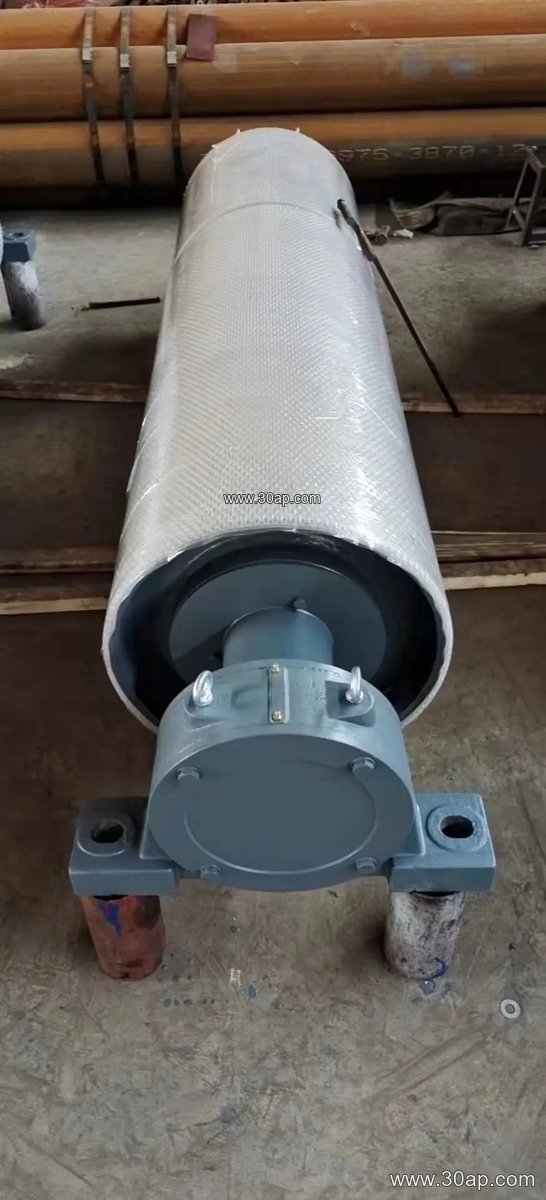
- Wet, dusty aggregate lines where rubber lagging glazes over.
- Heavy-duty mining conveyor belt runs with high starting torque.
- Steep or high-tension layouts on an abrasion resistant conveyor belt.
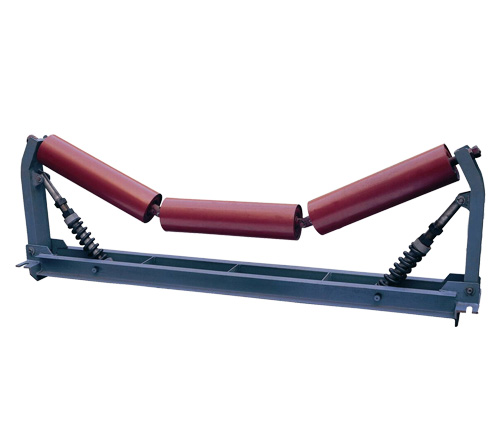
In a sand and gravel plant or a crushing and screening circuit, a ceramic lagged drive pulley paired with a well-tracked conveyor belt and properly aligned idler roller sets reduces the chance of belt slip during start-up.
Common Sizes and Surface Options
Dimensions follow the conveyor design. The table below shows reference combinations, not fixed rules.
| Belt width | Typical pulley face | Reference diameter | Lagging thickness |
|---|---|---|---|
| B500 | about 600 mm | Ø250 to Ø400 | 8 to 12 mm |
| B800 | about 950 mm | Ø400 to Ø630 | 10 to 15 mm |
| B1000 | about 1150 mm | Ø500 to Ø800 | 12 to 15 mm |
| B1200 | about 1400 mm | Ø630 to Ø1000 | 12 to 20 mm |
| B1400 | about 1600 mm | Ø800 to Ø1250 | 15 to 20 mm |
These are common ranges, not a matching chart. A B800 belt can run on a Ø500 or a Ø630 pulley depending on wrap angle and tension, and shaft diameter is set by torque and bearing load, with Ø80 to Ø160 being usual in this class. Surface choices include plain, diamond, herringbone, and ceramic; ceramic is the hardest and the least forgiving.
Buyer Checklist Before Ordering
- Confirm the pulley position: drive, tail, bend, or tension. Each has different demands.
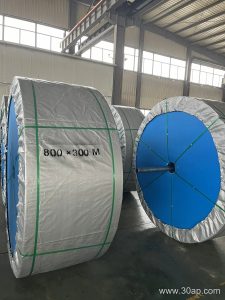
- Give the belt type and width, for example an EP conveyor belt or a steel cord conveyor belt, so the lagging pattern suits the cover.
- State the environment: wash-down, coal dust, clinker heat, or coastal humidity.
- Check belt cover hardness; a very soft cover may wear faster against ceramic tiles.
- Ask how tiles are bonded and how edges are finished.
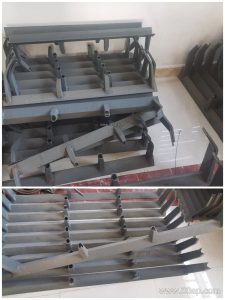
- Match the conveyor bracket and bearing housing to the shaft before delivery.
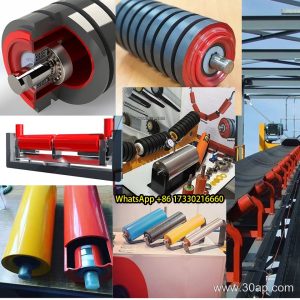
For related components such as www.beltconveyorpulley.com/conveyor-idler and www.beltconveyorpulley.com/conveyor-bracket, keep the same load assumptions used for the pulley. A ceramic lagged pulley is a wear part with a long life when specified correctly, and an expensive mistake when chosen only because it sounds stronger. Match it to the belt, the duty, and the position.