What an Impact Resistant Idler Does
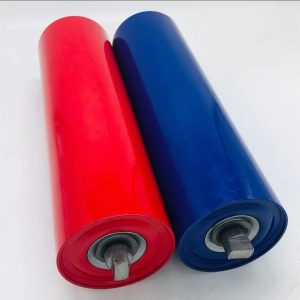
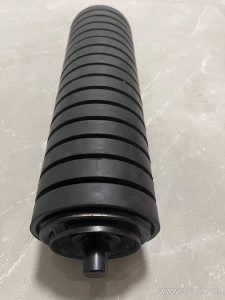
An impact resistant idler is a specialised idler roller placed at conveyor loading points where falling material would otherwise damage a standard carrying roller. Instead of a rigid steel shell alone, this roller uses shock-absorbing elements such as rubber rings or a resilient surface to cushion the drop. It is still a idler roller in function, but its role is to protect the conveyor belt and the roller body from repeated impact.
In a quarry, limestone mine, or crushing and screening line, large lumps of rock can strike the belt with considerable force. A standard troughing idler may dent, seize, or wear through quickly. The impact resistant version absorbs that energy and keeps the belt supported.
How It Is Built
Most impact resistant idlers share the basic structure of a conventional carrying roller: a shaft, bearing housings, seals, and a shell. The difference lies in the outer surface and sometimes the bearing selection. Common surface forms include rubber rings, which are fitted over the shell in a series of discs. These rings deform slightly under impact and then return to shape.
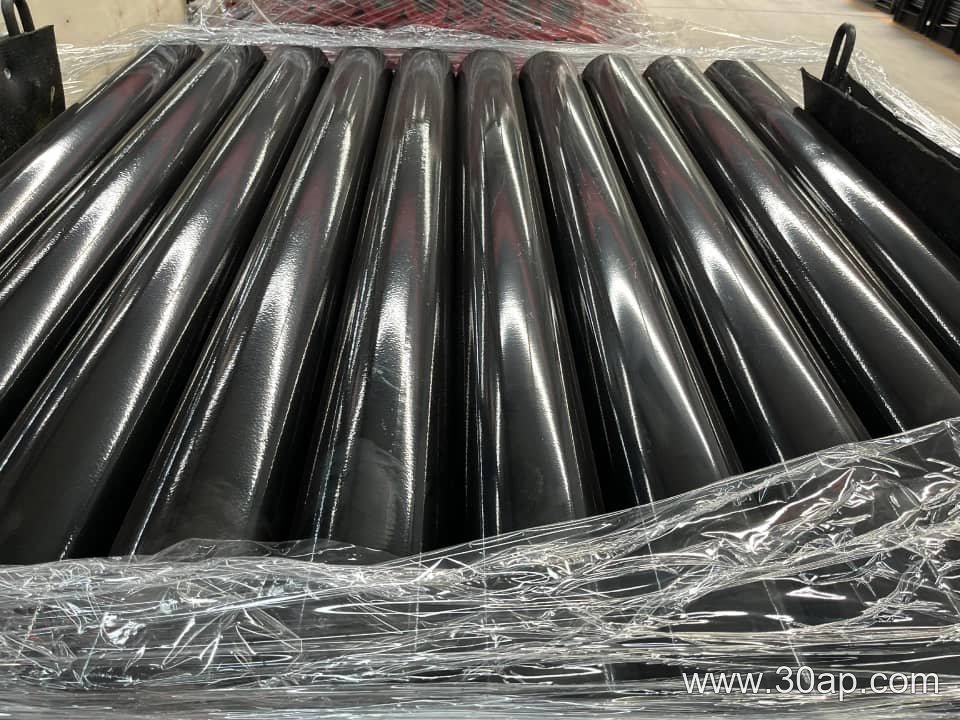
Bearing sizes are chosen to suit the load and speed. Typical bearings for conveyor rollers include 6204, 6205, 6305, 6306, 6308, and 6310. The correct bearing depends on the roller diameter, belt speed, and load, not on belt width alone. Seals are important because dust from coal, cement, or aggregate will destroy bearings quickly if it enters the housing.
Where It Is Used
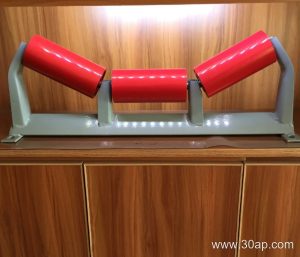
Impact resistant idlers are common at transfer points in coal mines, power plant coal handling systems, cement plants, and port bulk terminals. They are also used in tunnel muck removal and sinter plants where material is dropped from one conveyor to another. In these locations, the idler sits directly under the chute or loading skirt, often as part of a three-roll troughing set.
They are not a replacement for drive pulleys, tail pulleys, or bend pulleys. Those are conveyor pulleys that transmit power or change belt direction. An impact resistant idler is a carrying roller, and its job is to support the belt and material while absorbing shock.
Common Types and Sizes
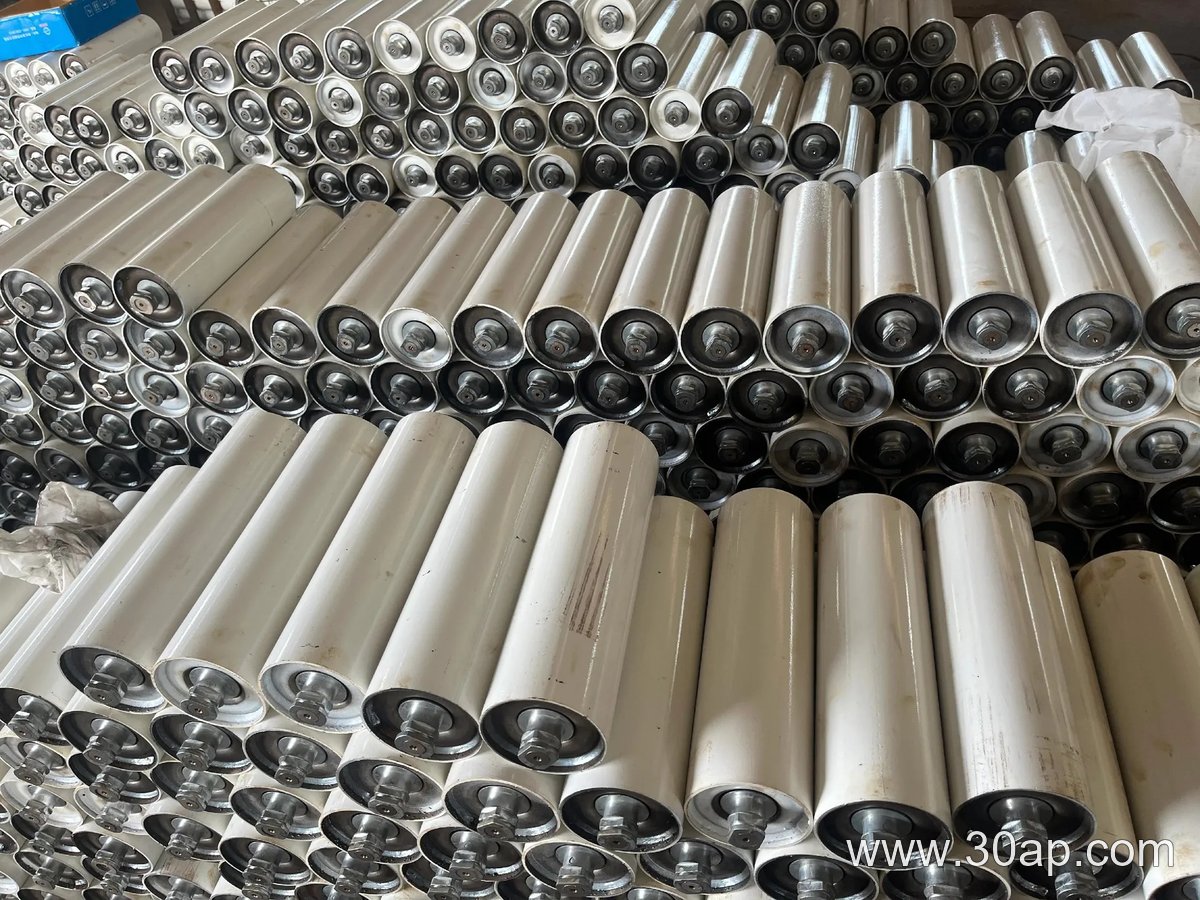
The impact resistant idler is usually supplied as a rubber ring impact idler or a buffer idler. It can be arranged as a single roller, a two-roll set, or a three-roll troughing set. The trough angle is often 20, 30, 35, or 45 degrees, depending on the belt and material.
Roller diameter and belt width are selected together. Common roller diameters include Ø63, Ø76, Ø89, Ø102, Ø108, Ø127, Ø133, Ø159, Ø178, Ø194, and Ø219 mm. Belt widths range from B400 to B2400. The table below gives typical roller lengths for three-roll troughing sets, but these are examples only. Side rollers and centre rollers can differ, and the final length is determined by belt width, trough angle, and roller group design.
| Belt Width | Typical Roller Length for Three-Roll Troughing Set |
|---|---|
| B500 | 200 mm |
| B650 | 250 mm |
| B800 | 315 mm |
| B1000 | 380 mm |
| B1200 | 465 mm |
| B1400 | 530 mm |
| B1600 | 600 mm |
| B1800 | 670 mm |
| B2000 | 750 mm |
What a Buyer Should Check
- Confirm the belt width and trough angle at the loading point.
- Check the roller diameter and shaft size required by the existing conveyor bracket.
- Ask about the rubber ring hardness and thickness if the material is heavy or sharp.
- Verify bearing size and seal type for dusty or wet conditions.
- Ensure the idler is not ordered as a substitute for a drive, tail, or bend pulley.
For a coal mine or cement plant, the impact resistant idler is a wear part that protects the conveyor belt. Selecting the right roller diameter, bearing, and surface form will extend service life and reduce downtime.