What a Port Conveyor Pulley Does in a Bulk Terminal
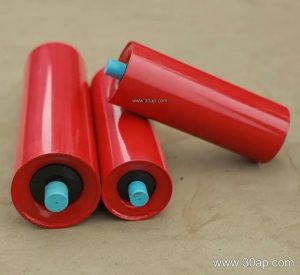
A port conveyor pulley is the cylindrical drum that turns a conveyor belt at the head, tail, or bend points of a bulk handling line. In a terminal that moves iron ore, coal, fertilizer, or grain between ship loaders, stockpiles, and silos, these drums carry the full belt tension and the weight of the material. The pulley is not a passive part; it transfers drive torque, sets belt tracking, and protects the belt from slip and misalignment. A well-matched drum keeps a ship loading conveyor belt running smoothly through long shifts, while a poorly specified one causes belt edge damage and unplanned stops.
Buyers often use the shorter term port conveyor drum or terminal belt pulley for the same assembly. The name changes, but the function does not: grip the belt, guide it, and keep the cargo moving.
Construction and Surface Options
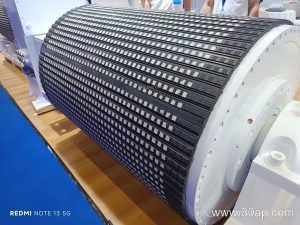
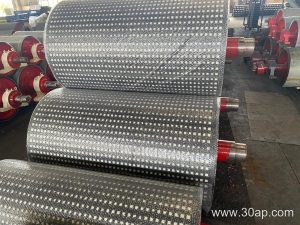
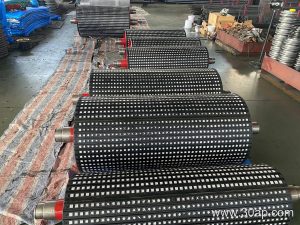
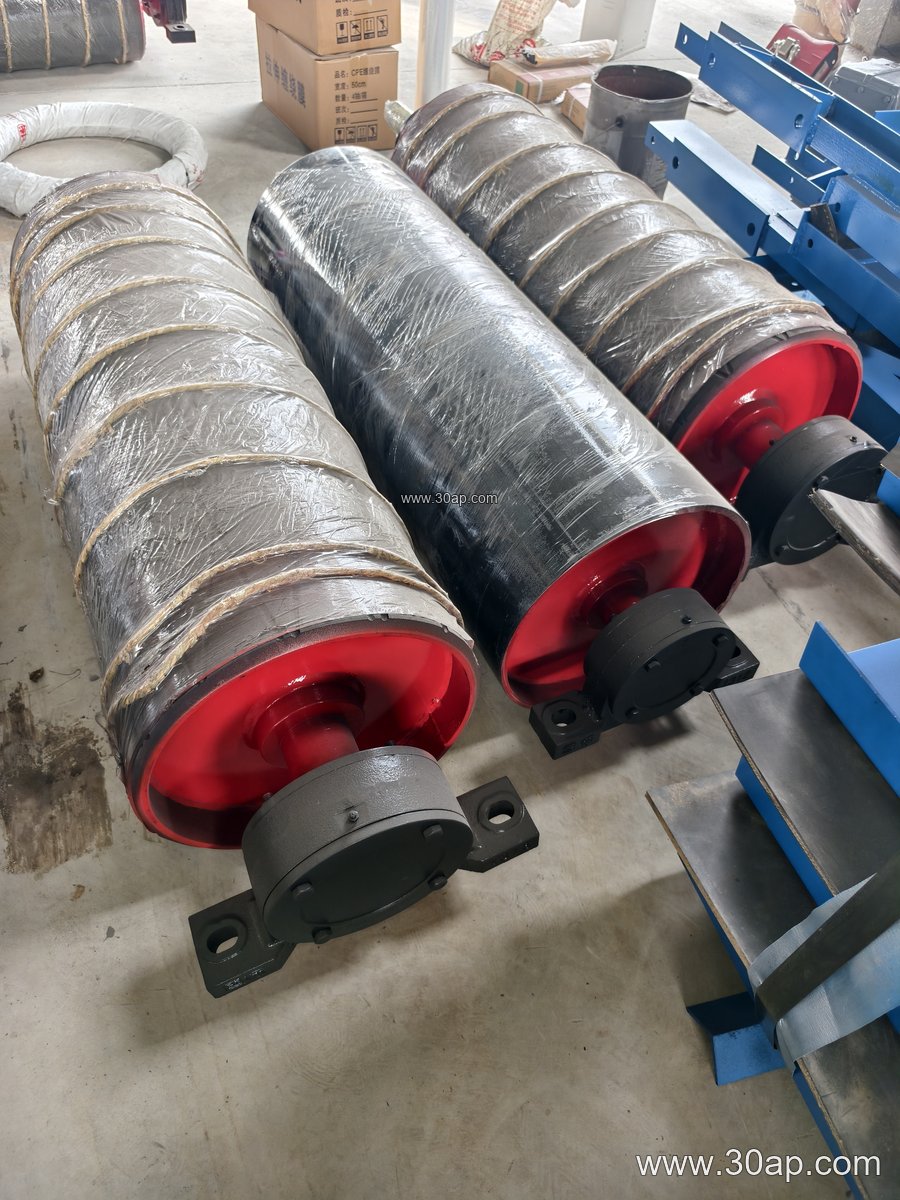
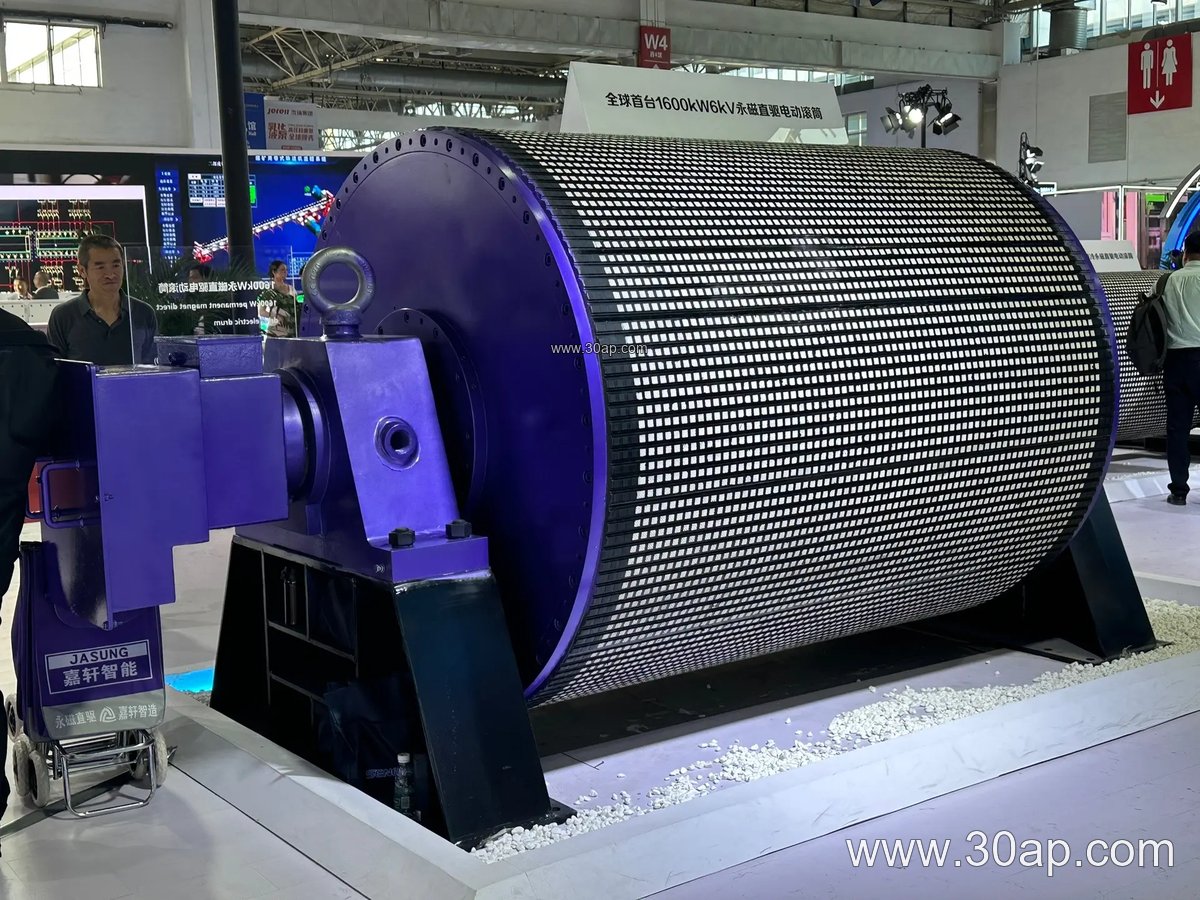
Most units are built from a welded steel shell, a shaft, end discs, and bearing housings mounted on a conveyor bracket. The shell is machined to reduce runout, and the surface is finished according to the duty. Common surface forms include plain, hot-vulcanized rubber, cold-bonded rubber, diamond grooving, herringbone grooving, and ceramic lagging. Lagging thickness is usually 8, 10, 12, 15, or 20 mm, chosen by slip risk and belt speed rather than by habit.
On the drive side, lagging improves friction between drum and belt. On bend and tail positions, a plain or lightly lagged surface may be enough. The table below shows typical reference combinations; these are examples, not fixed rules.
| Belt width (B) | Approx. shell face width | Example diameter | Typical surface |
|---|---|---|---|
| B800 | about 950 mm | Ø500 | Diamond lagging |
| B1000 | about 1150 mm | Ø630 | Hot-vulcanized rubber |
| B1200 | about 1400 mm | Ø1000 | Ceramic lagging |
| B1400 | about 1600 mm | Ø800 | Herringbone grooving |
| B1600 | about 1800 mm | Ø1250 | Plain or rubber lagging |
Shaft diameter is set by torque and bearing load, not by belt width alone. Common shaft sizes run from Ø50 to Ø200 mm, and the final value should come from the conveyor designer’s calculation.
Where It Fits in the Terminal
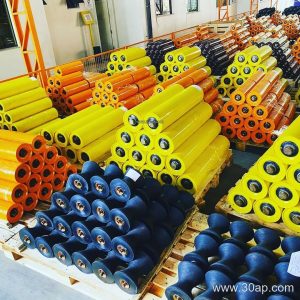
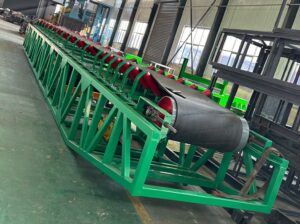
In a port stockyard, the drive pulley sits at the discharge end of a ship loader or stacker line, while tail and bend pulleys guide the return strand. A second common site is a coal or ore transfer house, where several conveyors meet and the belt must change direction without losing tension. The drum works together with the conveyor belt, idler roller sets, and conveyor bracket frames, so alignment across the whole structure matters as much as the pulley itself.
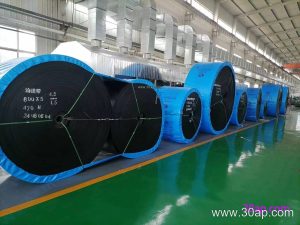
Heavy-duty mining conveyor belt and steel cord conveyor belt grades are common on these lines because impact and abrasion are high. Where dust is a concern, a flame retardant conveyor belt or anti-static conveyor belt may be specified for the same route. The drum must suit the belt’s tension rating and stiffness, especially with a steel cord conveyor belt that needs a larger diameter for a given load.
Drive, Tail, and Bend Positions Are Not Interchangeable
A drive pulley is designed to transmit power and usually carries the heaviest lagging and the largest shaft. A tail pulley mainly guides and tensions the belt, so its load profile differs. A bend pulley changes belt direction in a confined space and is sized for wrap angle and clearance. Treating these positions as one part can lead to slip at the drive or belt lift at a bend.
When comparing, note that a snub or take-up drum may look similar, but its duty and bearing arrangement are different. Specify the position, wrap angle, and belt tension before choosing the shell and lagging.
What Buyers Should Confirm Before Ordering
- Belt width and type, including whether an EP conveyor belt, NN conveyor belt, or steel cord conveyor belt is used.
- Belt tension and drive power, which set shell thickness and shaft size.
- Position: head, tail, bend, or take-up, with the expected wrap angle.
- Lagging form and thickness, matched to slip risk and cargo.
- Bearing type, sealing for dust and salt air, and bracket interface.
- Balance grade and runout tolerance for high-speed lines.
Abrasion resistant conveyor belt and heat resistant conveyor belt routes may need different lagging compounds, so share the full duty with the supplier. For terminal projects, ask for a drawing review of the drum, shaft, and bracket before production.
Maintenance Notes
Check lagging wear, bolt torque, and bearing temperature on a regular schedule. Worn lagging raises slip risk, and a glazed surface on a drive pulley can reduce grip even when the belt tension is correct. Keep the belt cleaner and the idler roller frames aligned so the drum does not have to correct tracking alone. Small checks at each shutdown extend the service life of the whole conveyor line.