What a Highly Wear-Resistant Idler Does on the Line
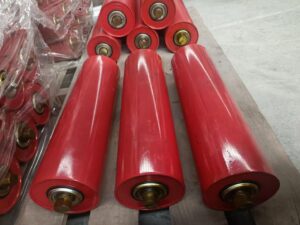
A highly wear-resistant idler is a carrying or return roller built to keep its shape and surface quality when abrasive bulk material passes over the belt day after day. In a quarry, limestone mine, or sand and aggregate line, the belt is not the only part that wears; every roller under it is working against grit, dust, and fine stone. A standard roller may develop a worn shell, a flattened contact face, or a damaged bearing seat long before the structure around it fails. The wear-resistant version is made for that environment.
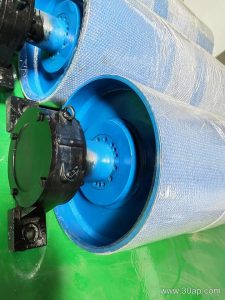
The same product is also called a wear-resistant conveyor idler or abrasion-resistant idler roller. These names describe the same item, not a different category. It should not be confused with a conveyor pulley at the drive, tail, or bend position, which performs a different job and is not interchangeable with a roller.
How the Roller Is Built
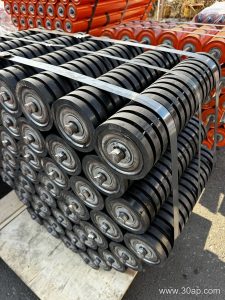
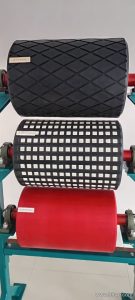
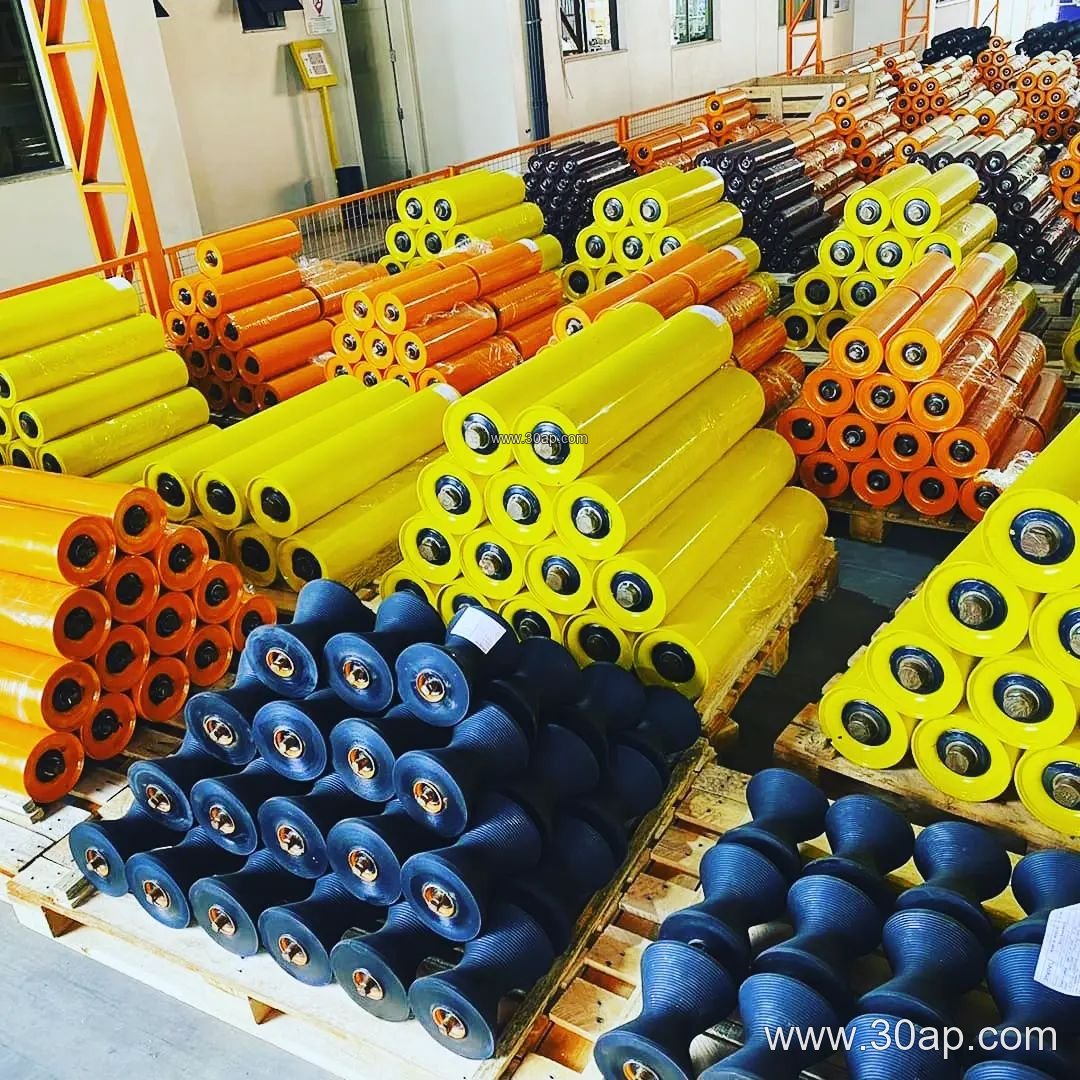
Most of the wear resistance comes from the shell and the bearing protection. Common shell options include thick-wall steel tube, nylon, ceramic-lined tube, and rubber rings. A ceramic or rubber-covered surface is often chosen where fines are sharp and the belt tends to slip or vibrate. The bearing housing and seal matter just as much, because fine dust that reaches the bearing will shorten the roller life regardless of shell quality.
Typical bearing sizes used in this family include 6204, 6205, 6305, 6306, 6308, and 6310. These are reference sizes, not a fixed match to any one diameter. The roller diameter and shaft are selected from the load, belt speed, and frame design rather than from belt width alone.
Common Sizes and Arrangements
The table below shows typical reference values for troughing idlers. They are common examples, not mandatory combinations.
| Item | Common Reference Range |
|---|---|
| Roller diameter | Ø63, Ø76, Ø89, Ø102, Ø108, Ø127, Ø133, Ø159, Ø178, Ø194, Ø219 mm |
| Belt width | B400, B500, B650, B800, B1000, B1200, B1400, B1600, B1800, B2000, B2200, B2400 |
| Trough angle | 20°, 30°, 35°, 45° |
| Idler set form | single roll, two-roll, three-roll troughing |
| Roller length, three-roll troughing | about 200 mm at B500, 250 mm at B650, 315 mm at B800, 380 mm at B1000, 465 mm at B1200, 530 mm at B1400, 600 mm at B1600, 670 mm at B1800, 750 mm at B2000 |
Side rollers and center rollers can differ in length, and the figures above are only common examples. The actual roller length follows belt width, trough angle, and the idler set design.
Where It Fits in the Conveyor
Wear-resistant rollers are usually placed on the carrying side where the belt is loaded and where material impact is heaviest. In a stone crushing plant or a cement plant, the first few sets after the feed point take the most punishment. Impact idlers with rubber rings are sometimes used at the loading zone, while the wear-resistant troughing idlers continue along the main run. On the return side, a V-type or flat return roller with a hardened surface can reduce buildup of sticky fines.
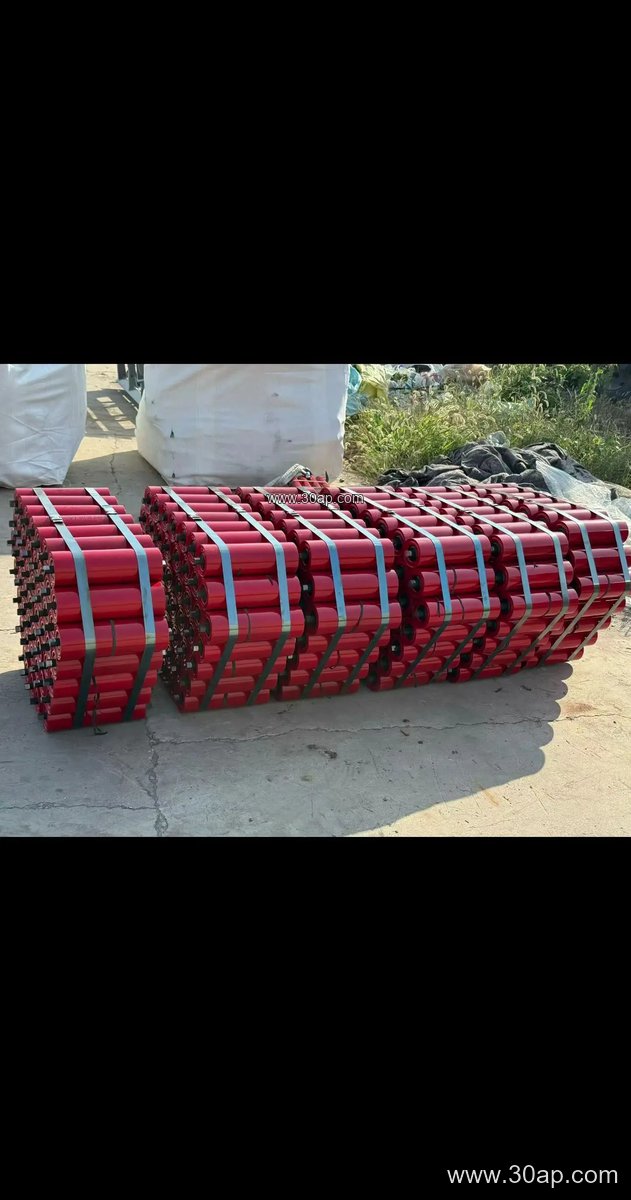
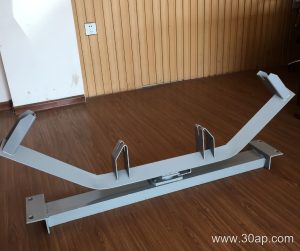
These rollers work together with the conveyor belt, the conveyor pulley at each end, and the conveyor bracket that holds the frame. A well-aligned frame and correct spacing keep the load evenly spread and reduce uneven shell wear. In coal handling or power plant coal yards, flame retardant and anti-static properties of the belt are separate concerns from roller wear, but both affect overall reliability.
What a Buyer Should Check
- Shell material and wall thickness, matched to the abrasiveness of the material.
- Seal design and bearing size for the expected dust level.
- Roller diameter and length against the actual belt width and trough angle.
- Set form: single, two-roll, or three-roll, and whether transition or impact sets are needed.
- Balance and runout, since a wobbling roller wears both shell and belt edge.
For a new line, it helps to review the whole conveyor layout, including the Rubber Conveyor Belt specification, the idler spacing, and the pulley arrangement, before locking in roller sizes. A roller that is oversized for the frame adds cost without benefit, while an undersized one may fail early in a hard rock or iron ore application.
Maintenance Notes
Check for seized rollers, worn shells, and loose brackets during routine walks. Replace a damaged roller before it damages the belt. Keeping the belt tracking straight and the load centered will extend roller life more than any single upgrade. In dusty cement or aggregate service, cleaning around the frame also helps the seal last longer.
Choosing a Heavy-Duty Mining Conveyor Belt and a matched set of wear-resistant idlers together gives a more predictable service window than upgrading only one part. The same logic applies on a quarry line or a port transfer point, where abrasive material and continuous operation put every component under steady stress.