What a Feed-End Pulley Does
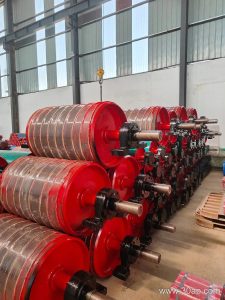
A feed-end pulley is the rotating drum at the loading end of a belt conveyor. Material drops onto the conveyor belt just behind or above this pulley, and the belt then carries the load toward the discharge point. Because the belt wraps around it, the pulley must guide the belt smoothly while absorbing the forces created by the incoming material and the belt tension. In many layouts, the feed-end pulley works as a tail pulley, but the term is defined by its position and duty rather than by a single mechanical style.
An accurate equivalent name is the feed-end drum. The word “drum” and “pulley” describe the same cylindrical assembly in this context. It should not be confused with a drive pulley, which transmits power, or a bend pulley, which only changes the belt direction. A tail pulley can be a feed-end pulley, yet the two terms are not automatically interchangeable in every conveyor design.
Construction and Key Components
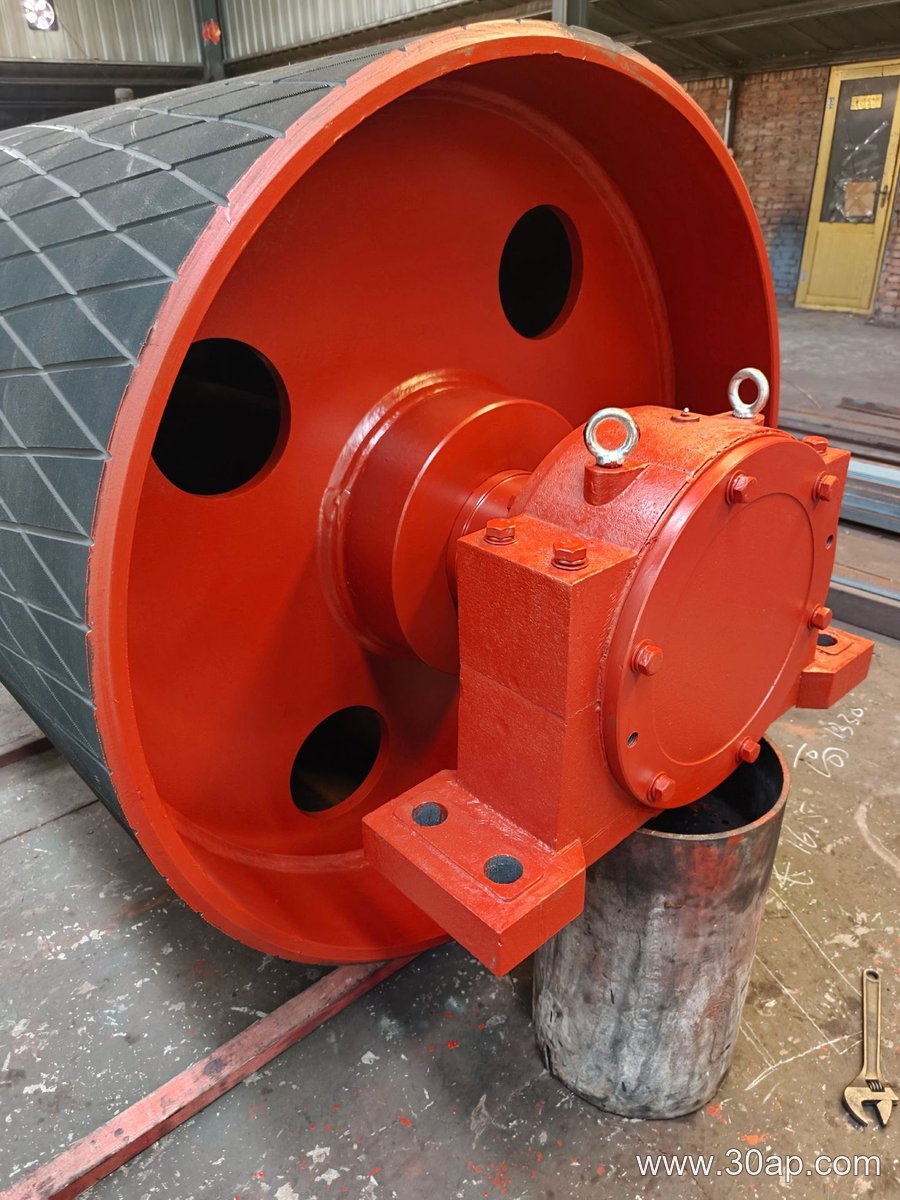
The core of a feed-end pulley is a cylindrical shell. Common shell materials include carbon steel and, for more demanding duties, abrasion-resistant steel. The shell is supported by end discs welded to a shaft or, in some designs, mounted on a hub. The shaft transfers the belt load to the conveyor bracket or frame.
Bearings are fitted at each end, usually in plummer blocks or housed units. Sealing matters at the feed end because dust and fines from the loaded material can enter the bearing cavity. A good seal arrangement extends service life and reduces maintenance.
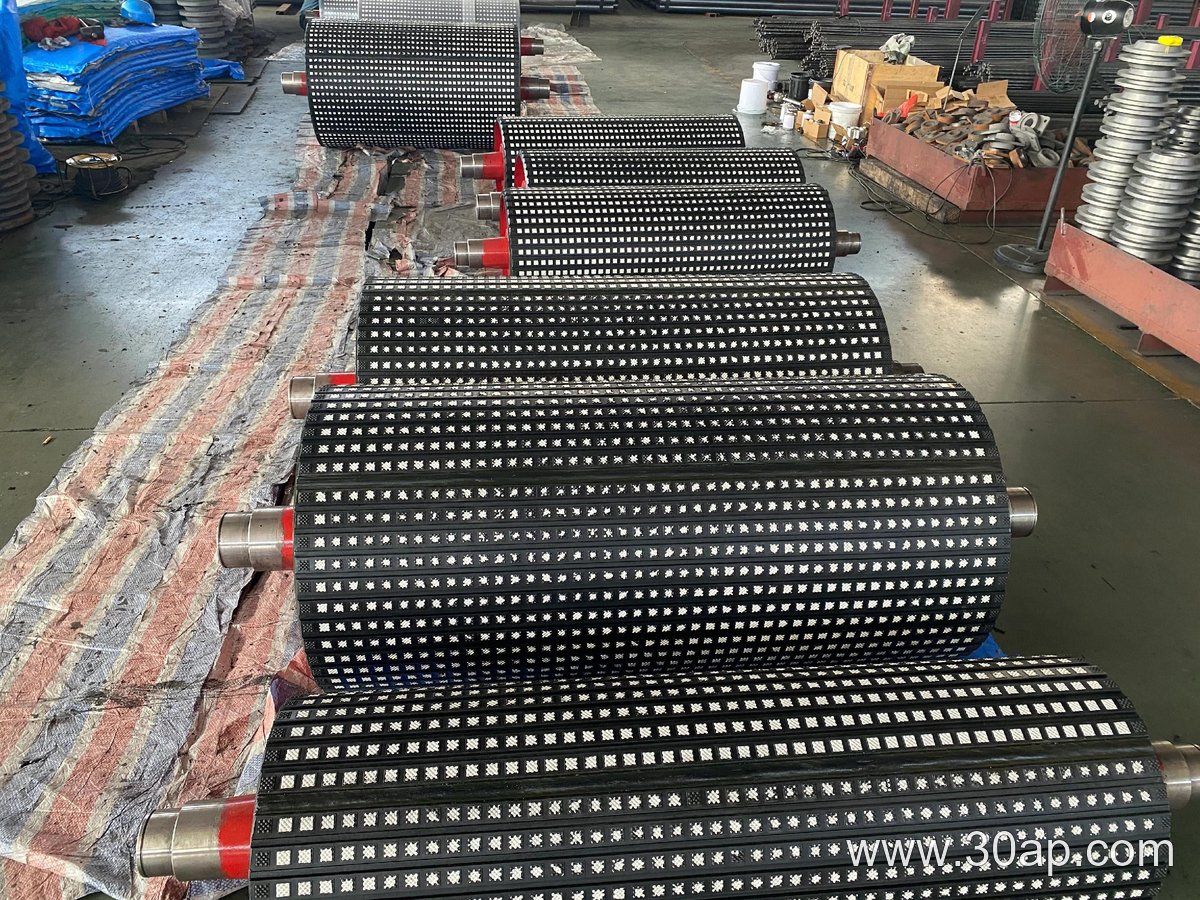
Surface condition also affects performance. A feed-end pulley may be supplied with a plain finish, rubber lagging, or a ceramic lagging. Plain steel is common where the pulley mainly guides the belt. Rubber lagging can improve grip and reduce belt slip in wet or dusty conditions. The surface choice should match the belt, the material, and the environment rather than follow a default rule.
Where It Fits in a Conveyor
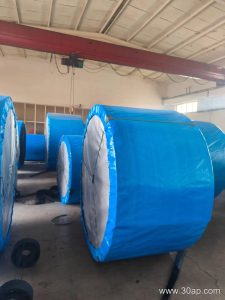
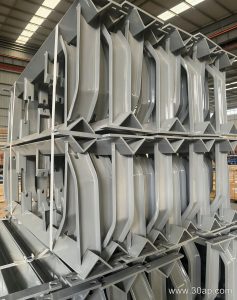
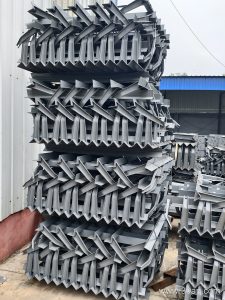
The feed-end pulley sits at the loading station. In a typical arrangement, a chute or hopper deposits material onto the belt near this pulley. The belt then runs forward over idler rollers toward the head or drive pulley. Because the belt is often supported by a conveyor belt and idlers on the carrying side, the feed-end pulley must be aligned with the belt path to avoid edge damage and mistracking.
Applications vary widely. A sand and gravel line may use a feed-end pulley at the start of a transfer conveyor. A fertilizer plant may use one where prills or granules are loaded onto a belt. In both cases, the pulley handles the same basic job: turning the belt while keeping the load centered and moving.
Choosing the Right Size
Diameter and face width are selected from the conveyor design, not from a single universal table. The face width is usually slightly wider than the belt. For example, a B800 belt often runs on a pulley with a face width around 950 mm, while a B1200 belt may use a face width near 1400 mm. These are common reference values, not fixed pairings. A B1200 conveyor might use a pulley diameter of Ø1000 in one project and a different diameter in another, depending on belt tension, wrap angle, and space.
Shaft diameter follows torque and load. Common shaft sizes include Ø50, Ø60, Ø70, Ø80, Ø90, Ø100, Ø120, Ø140, Ø160, Ø180, and Ø200. A larger belt width does not automatically mean a specific shaft diameter. The engineer calculates the required shaft based on the actual forces.
Lagging thickness is also project-specific. Common values include 8 mm, 10 mm, 12 mm, 15 mm, and 20 mm. Thicker lagging is not always better; it adds weight and cost, and it may not suit every pulley diameter.
Maintenance and Selection Tips
- Check belt tracking at the feed point. Misalignment often starts where material loads off-center.
- Inspect lagging for wear, cuts, or embedded material that can damage the belt.
- Lubricate bearings according to the manufacturer’s schedule, and keep seals clean.
- Verify that the pulley face width matches the belt and that the conveyor bracket is square to the frame.
- When replacing a feed-end pulley, confirm the shaft diameter, bearing centers, and lagging type before ordering.
A feed-end pulley is not a generic spare part. Its duty at the loading zone means it must tolerate impact, dust, and continuous belt motion. Buyers should share the belt width, expected load, environment, and available space with the supplier so the pulley can be built for the application. A drive pulley, tail pulley, and bend pulley each have different roles; treating them as interchangeable can lead to poor tracking, premature wear, and unplanned downtime.