What a Conveyor Take-Up Pulley Does
A conveyor take-up pulley is the drum that maintains working tension in a conveyor belt as it stretches, contracts, and settles under load. It is not a drive drum and not a tail drum, although it may sit near the tail end or in a separate tensioning station along the return run. Its job is to hold the belt against the drive pulley so that torque transfers without slip, and to keep sag between the carrying idler roller and return idler roller within an acceptable range.
In a quarry, a cement plant, or a power plant coal yard, the take-up pulley is often the component that quietly decides whether the whole line tracks well. If tension is too low, the belt slips on the drive pulley and wanders off the pulleys. If tension is too high, shaft bearings, the belt splice, and the conveyor pulley lagging wear faster than they should. The tensioning drum is therefore a setting to be adjusted, not a fitting to be chosen once and forgotten.
Construction and Common Surface Forms
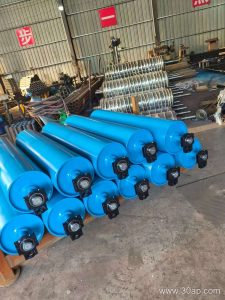
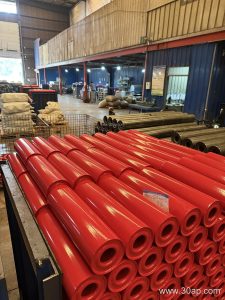
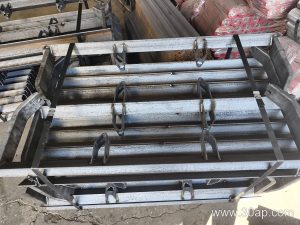
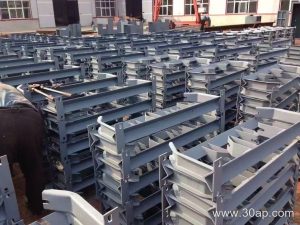
The take-up drum is usually a welded steel shell with machined end discs, a through shaft, and bearing housings mounted in a sliding frame or a pivoted arm. Because the drum moves during tensioning, the frame, guide rails, and conveyor bracket must allow travel without binding. Grease points and bearing seals deserve attention, since this drum often sits in a dusty area where the tail end of a crusher conveyor or a bulk material conveyor belt discharges.
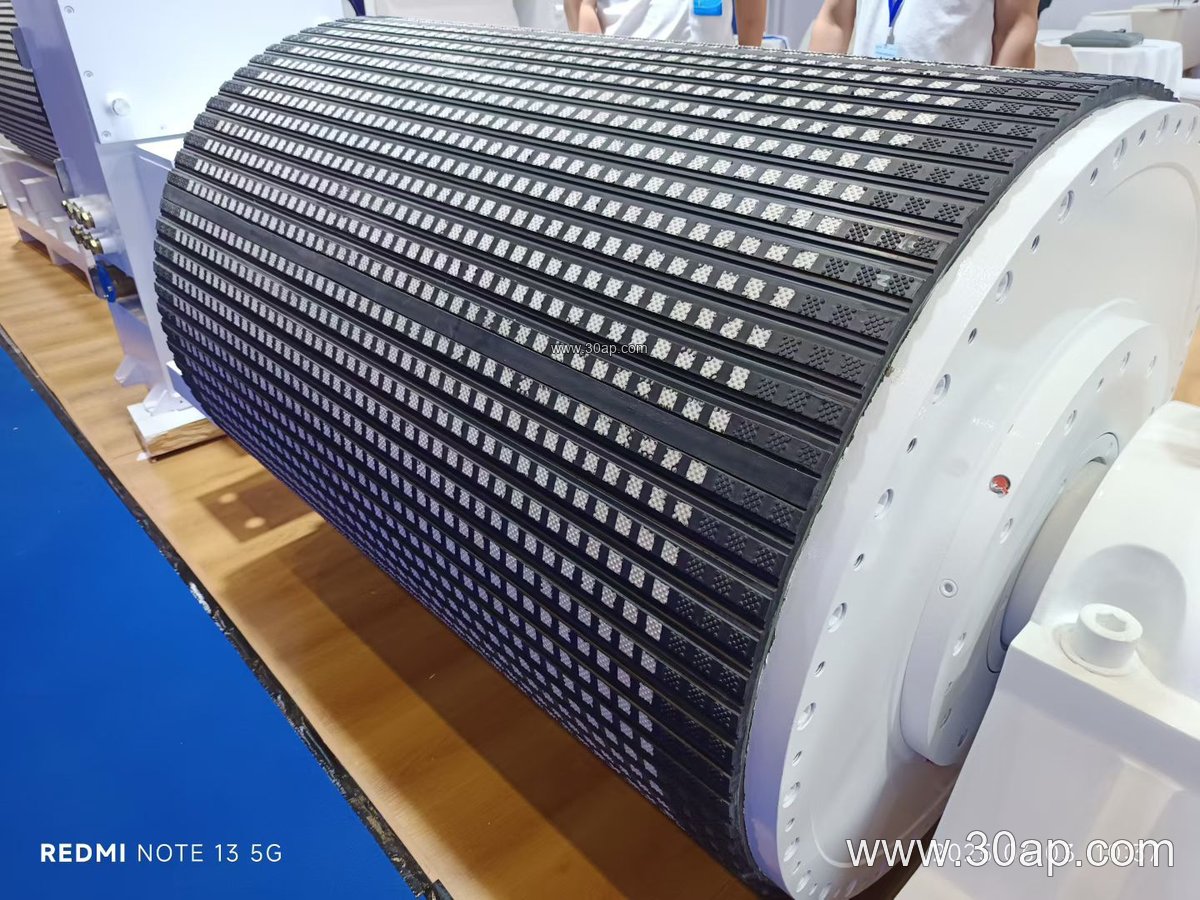
Surface treatment depends on the contact duty. A bare machined face may be used where the drum only guides the return strand. Rubber lagging, applied as cold bonded rubber or hot vulcanized rubber, improves grip and protects the shell. Diamond lagging and ceramic lagging are more common on drive pulleys, but a tensioning drum on a steep or wet line can also benefit from a textured face. Plain lagging is often enough for a flat return strand.
| Parameter | Common reference values | Notes |
|---|---|---|
| Belt width | B650, B800, B1000, B1200, B1400, B1600 | Selected from the conveyor design |
| Drum diameter | Ø315, Ø400, Ø500, Ø630, Ø800, Ø1000 | Set by belt tension and bending radius |
| Face width | Often wider than the belt, e.g. B800 about 950 mm | Confirmed against the frame |
| Shaft diameter | Ø80, Ø100, Ø120, Ø140, Ø160 | Determined by torque and load |
| Lagging thickness | 8, 10, 12, 15 mm | Plain or rubber covered |
Combinations such as B800 × Ø500 or B1200 × Ø1000 appear in real layouts, but no single belt width fixes one drum diameter. Shaft size follows calculated torque and bearing load, not belt width alone.
Tensioning Arrangements in Practice
Take-up pulleys appear in several arrangements. A gravity take-up uses a weighted carriage on vertical guides, giving fairly constant tension. A screw take-up moves the bearing housings along a short slide and is adjusted by maintenance staff. An automatic winch or hydraulic take-up responds to load changes. In each case the pulley itself is similar; what changes is the carriage, the travel distance, and the control method.
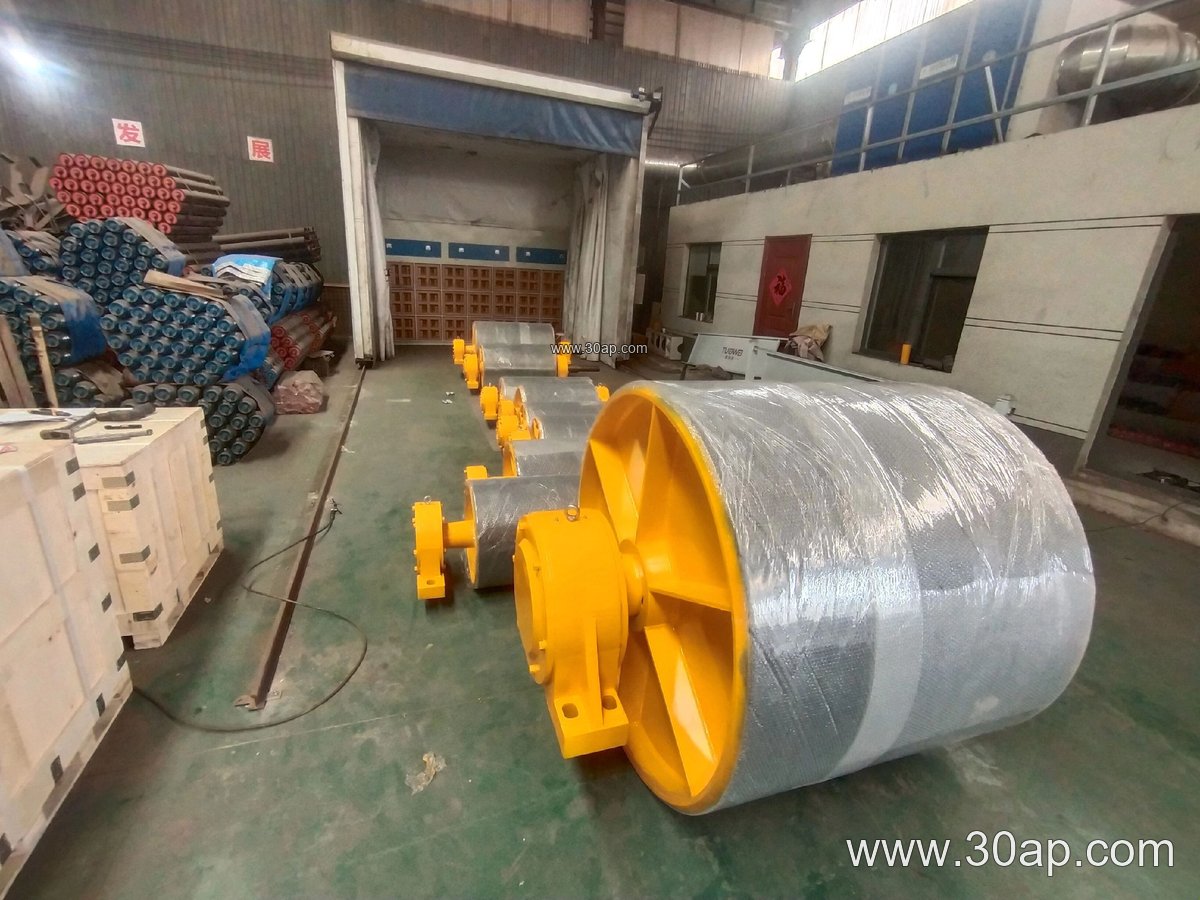
Position matters. A take-up drum placed on the return strand just behind the tail pulley is easy to reach during shutdowns. One placed further along the return run may need additional bend pulleys to route the belt into the tensioning carriage. Those bend pulleys are separate components with their own duties and should not be treated as substitutes for the tensioning drum.
Matching the Drum to the Belt and the Duty
The belt and the tensioning drum work as a pair. A heavy-duty mining conveyor belt with a steel cord carcass needs a larger bending radius and higher tension than a lightweight fabric core conveyor belt on a short transfer. On a long overland line carrying iron ore or copper ore, the take-up travel must allow for the elastic stretch of a high strength conveyor belt plus seasonal temperature change. In a coal mining conveyor belt installation, flame retardant conveyor belt and anti-static conveyor belt properties are specified for safety, while the take-up drum must still provide stable tension so the belt does not rub or slip.
Where a pipe conveyor belt or a corrugated sidewall conveyor belt is used, the tensioning drum is usually a plain cylindrical pulley, because the belt profile is handled elsewhere in the line. The same applies to an EP conveyor belt or NN conveyor belt on an aggregate conveyor belt duty: the take-up drum is a smooth or lagged cylinder, and the belt construction is chosen separately.
What Buyers Should Confirm
- Belt width and the required face width, plus the actual shaft diameter from the conveyor design.
- Drum diameter and whether a larger diameter is needed to reduce belt bending stress.
- Lagging type and thickness, and whether the face should be plain, rubber covered, or grooved.
- Bearing type, housing style, and how the pulley will slide or pivot in the take-up frame.
- Travel distance, so the carriage has room for belt stretch and splice take-up.
- Environmental conditions such as dust, moisture, heat, or cold that affect bearing seals and lagging.
A take-up pulley is a small part of the conveyor cost but a large part of its reliability. Buying one that matches the belt, the frame, and the tensioning method avoids the common cycle of repeated adjustment, belt mistracking, and premature splice failure.