What an Anti-Slip Lagged Pulley Does
An anti-slip lagged pulley is a conveyor pulley whose shell is covered with a high-friction lagging layer to maintain grip between the pulley face and the conveyor belt. This rubber or ceramic covering prevents belt slip under high torque or wet conditions, protecting both the belt and the pulley from premature wear. In bulk handling operations such as a limestone quarry or a coal washing plant, this pulley is often the drive pulley that transmits power to the belt. It is not a tail pulley or a bend pulley; those serve different positions in the conveyor frame.
The lagging is the key feature. Common surface forms include diamond pattern, herringbone, and plain rubber, with thickness options such as 8 mm, 10 mm, 12 mm, 15 mm, and 20 mm. A diamond lagging provides effective water evacuation, while ceramic lagging offers superior abrasion resistance for high-tension drives. The pulley body may be welded steel or cast iron, and the shaft diameter is determined by torque and load rather than belt width alone.
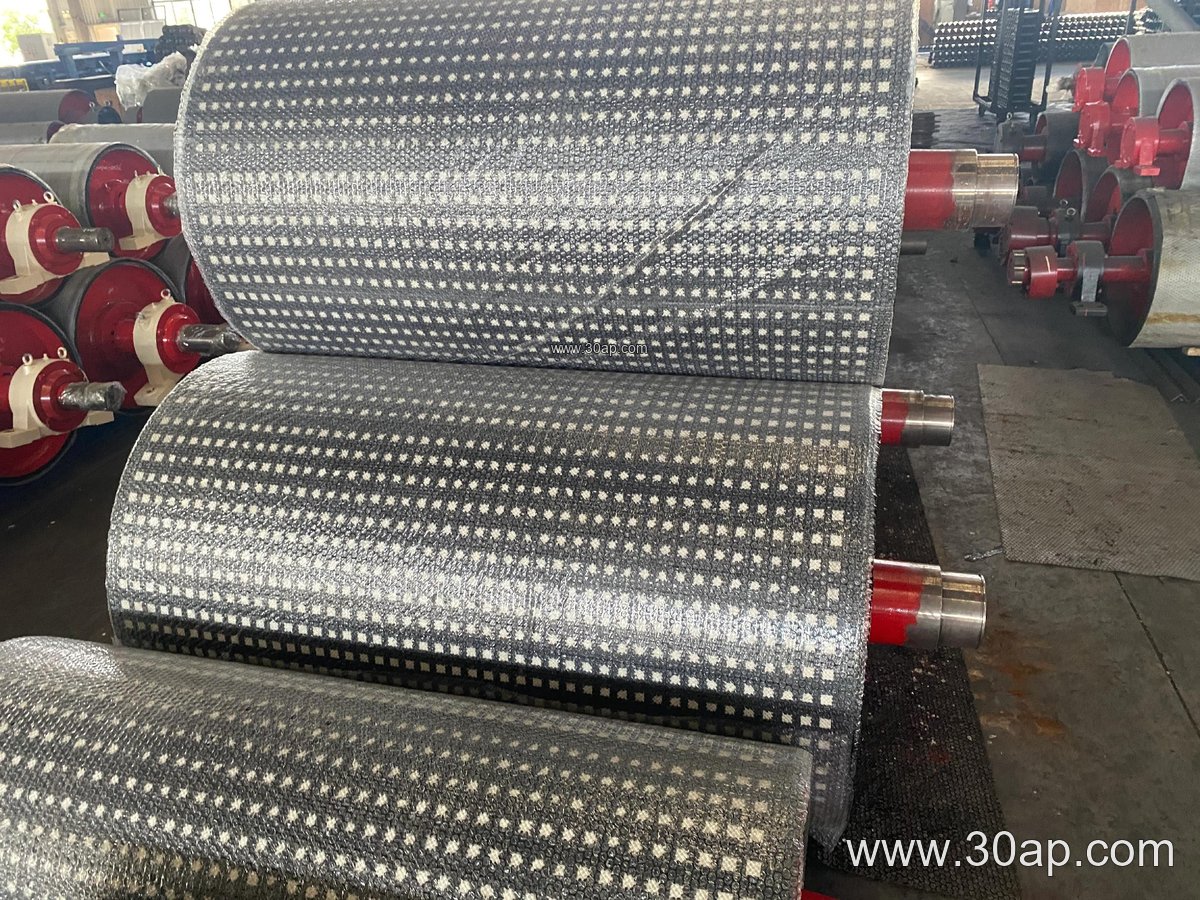
Construction and Surface Options
A typical anti-slip lagged pulley combines a cylindrical shell, end discs, a shaft, and a lagging layer bonded by hot vulcanization or cold adhesive. The pulley face width usually exceeds the belt width—for example, a B800 belt often runs on a pulley with about 950 mm face width, and a B1200 belt on roughly 1400 mm. Diameter selection depends on belt speed, tension, and space; common drive pulley diameters include Ø500, Ø630, Ø800, and Ø1000. Larger diameters reduce belt bending stress and are often used with high-strength conveyor belts such as EP200 or steel cord belts.
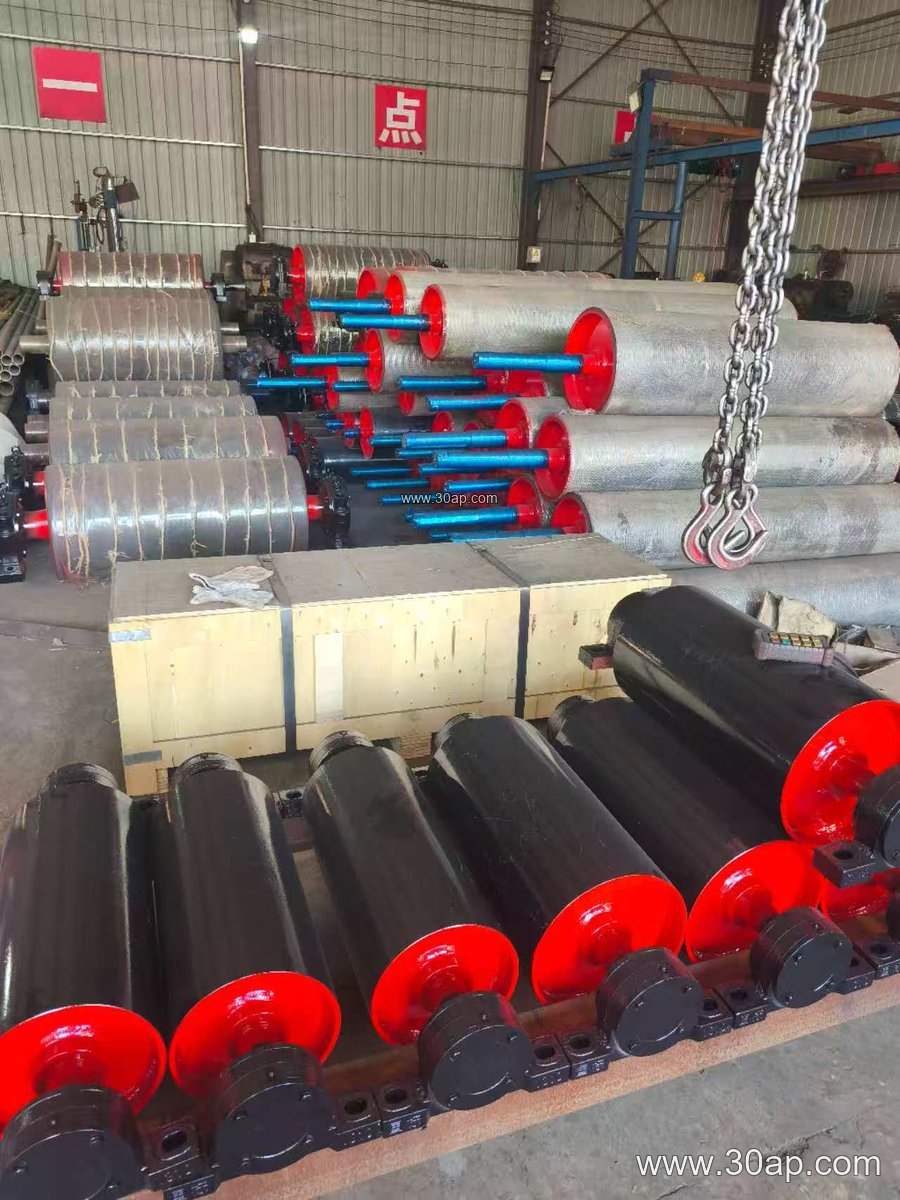
The table below lists representative combinations; these are common examples, not fixed pairings.
| Belt Width | Pulley Face Width (approx.) | Common Pulley Diameter | Lagging Thickness |
|---|---|---|---|
| B500 | 600 mm | Ø400, Ø500 | 10 mm |
| B650 | 750 mm | Ø500, Ø630 | 10–12 mm |
| B800 | 950 mm | Ø500, Ø630, Ø800 | 12–15 mm |
| B1000 | 1150 mm | Ø630, Ø800, Ø1000 | 15 mm |
| B1200 | 1400 mm | Ø800, Ø1000 | 15–20 mm |
| B1400 | 1600 mm | Ø1000, Ø1250 | 15–20 mm |
| B1600 | 1800 mm | Ø1250, Ø1400 | 20 mm |
Shaft diameters commonly range from Ø50 to Ø200, selected according to drive torque, radial load, and bearing size. A lagged pulley is often paired with a fabric core conveyor belt or steel cord conveyor belt, and the lagging friction helps transmit power without excessive belt tension.
Where It Is Used
Drive pulleys with anti-slip lagging are essential in industries where belt slip can cause downtime or fire risk. In a coal mining conveyor system, a flame retardant conveyor belt may run over a lagged drive pulley to maintain traction in wet, dusty conditions. In a cement plant, an abrasion resistant conveyor belt carrying clinker benefits from a diamond-lagged pulley that sheds fine dust. The same principle applies to iron ore terminals, power plant coal yards, and aggregate crushing lines, where a heavy-duty mining conveyor belt demands reliable grip.
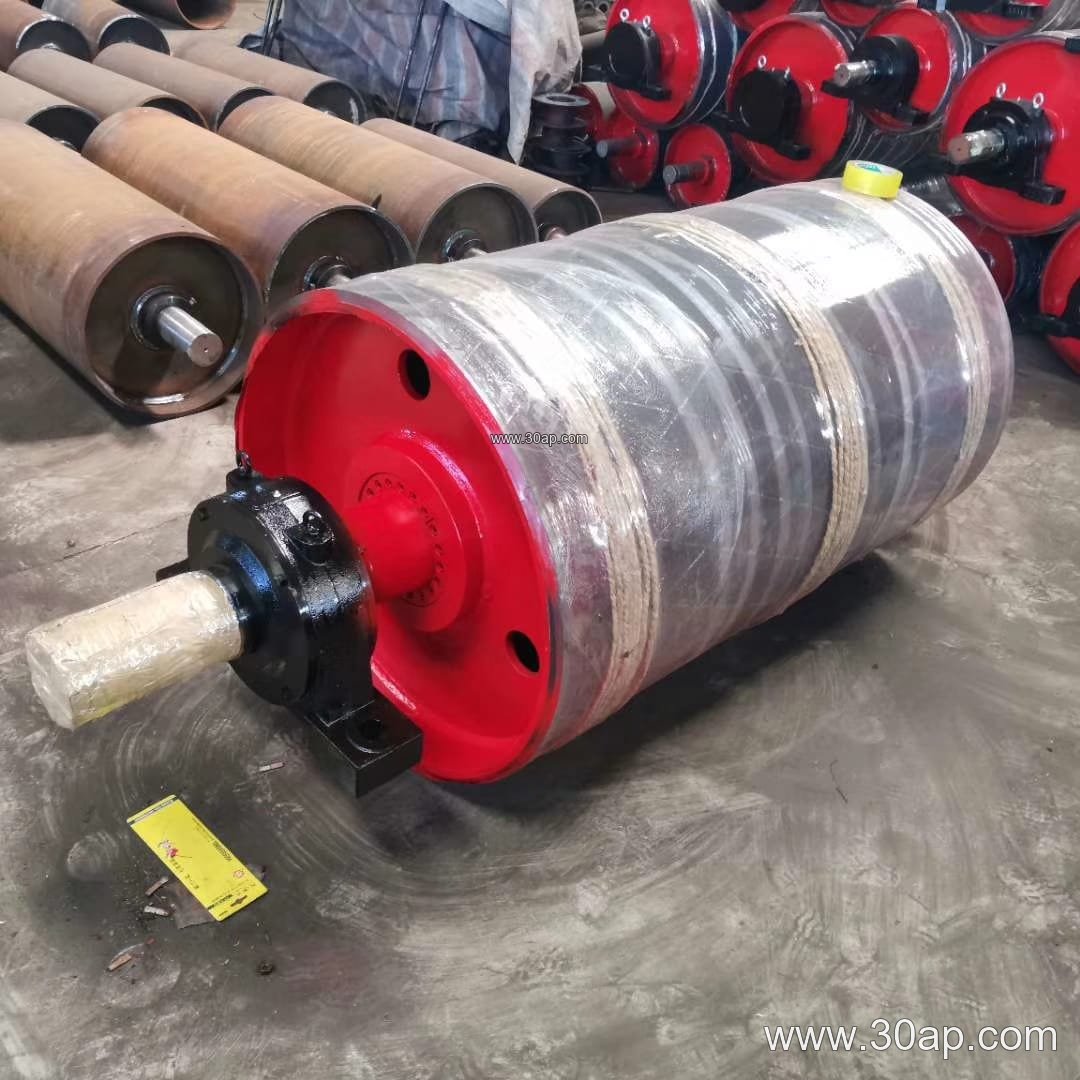
While the drive pulley is the primary application, an anti-slip lagged pulley can also serve as a tension pulley or a snub pulley in some layouts. However, tail pulleys and bend pulleys usually use plain or lightly lagged surfaces; they guide the belt rather than transmit torque. Idler rollers and conveyor brackets support the belt along the run but do not provide drive traction. Proper alignment and matching of pulley lagging to belt cover grade help extend the life of both components.
Buyer Checklist
- Confirm the pulley position: drive, tension, or snub. Do not substitute a tail pulley or bend pulley for a drive pulley.
- Specify belt width and required face width; face width typically exceeds belt width by 100–200 mm.
- Select lagging type and thickness based on material abrasion, moisture, and torque. Diamond lagging suits wet conditions; ceramic lagging suits high-wear iron ore or copper ore service.
- Provide shaft diameter based on torque and load, not belt width alone. Common shaft sizes range from Ø50 to Ø200.
- Match pulley diameter to belt construction; a steel cord conveyor belt may require a larger diameter than a multi-ply fabric core belt.
- Consider the conveyor belt type in use—EP conveyor belt, NN conveyor belt, or heat resistant conveyor belt—and verify lagging compatibility with belt cover.
An anti-slip lagged pulley is a focused solution for traction, not a universal replacement for every pulley in the conveyor. By selecting the right lagging surface and dimensions, operators in quarry, mining, and cement sectors can reduce belt slip, lower maintenance, and keep material moving.