What a Ceramic-Lined Pulley Is
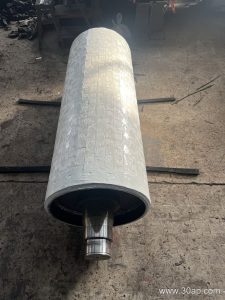
A ceramic-lined pulley is a conveyor pulley whose shell is fitted with ceramic tiles, usually bonded into a rubber or epoxy backing, to create an extremely hard and abrasion-resistant contact surface. In many plants this product is simply called a ceramic lagged pulley or ceramic rubber lagged drum. It is not a different pulley position by itself; the ceramic lining is a surface treatment applied to a drive pulley, tail pulley, or bend pulley where belt slip and abrasive wear are concerns.
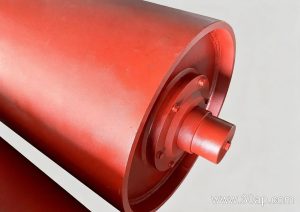
The ceramic layer is not meant to replace the pulley’s structural role. The shell, shaft, hubs, and bearing arrangement still carry the belt tension and torque. The lining only changes how the shell face interacts with the conveyor belt.
How the Lining Is Built
Most ceramic-lined pulleys use small alumina tiles set in a patterned layout. The tiles may be square, rectangular, or dimpled, and they are embedded in a rubber layer that provides flexibility and cushioning. The rubber also fills the gaps between tiles, which helps shed fine material and reduces the chance of the belt riding on loose grit.
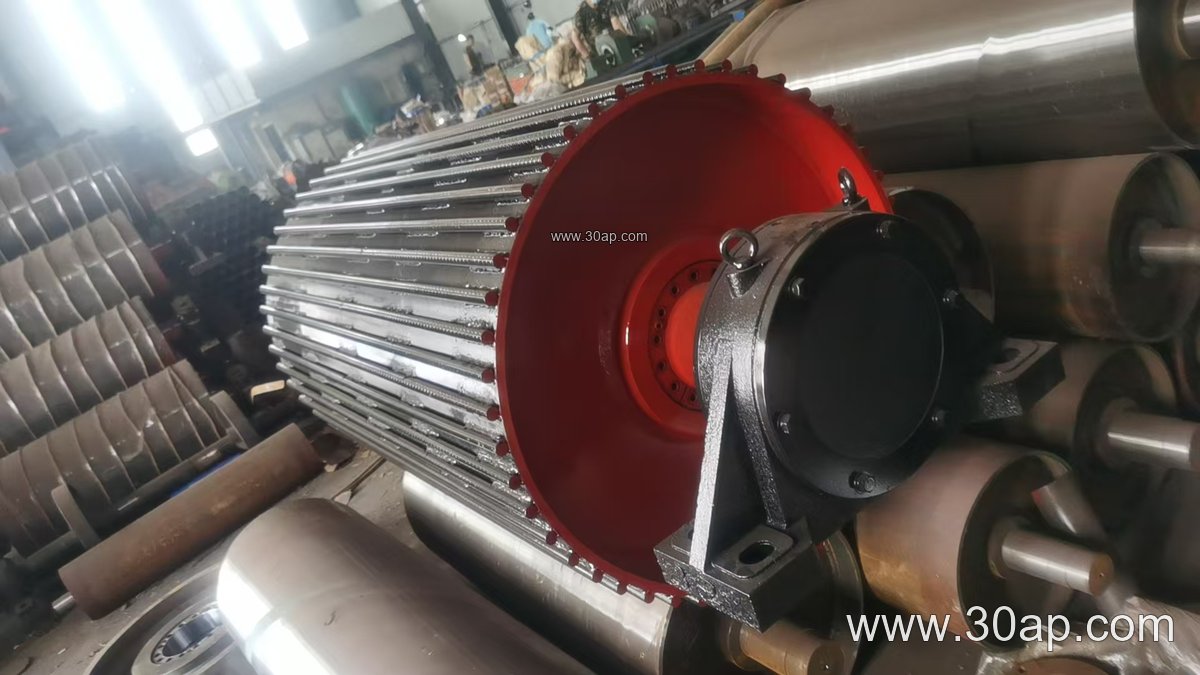
Typical lining thicknesses are in the range of 8 mm to 20 mm, with 10 mm, 12 mm, and 15 mm being common choices. The tile pattern can be flat, grooved, or diamond-oriented depending on the grip required. Because the ceramic is harder than steel, the surface resists polishing and grooving far better than plain steel in dusty, wet, or gritty service.
- Ceramic tiles provide the wear face
- Rubber or epoxy backing absorbs impact and holds the tiles
- Shell and shaft carry the mechanical load
- End discs and hubs transfer torque to the belt
Where It Fits in a Conveyor
Ceramic lining is most often specified on the drive pulley, where torque transfer depends on friction between the shell and the belt. It is also used on tail pulleys in dusty primary crushing circuits, and on bend pulleys that see a lot of fine abrasive carryback. In a quarry or sand and aggregate line, a ceramic-lined drive pulley can help hold grip when the belt is damp and coated with stone dust. In a coal preparation plant or a power plant coal handling system, the same surface helps resist the polishing effect of fine coal and ash.
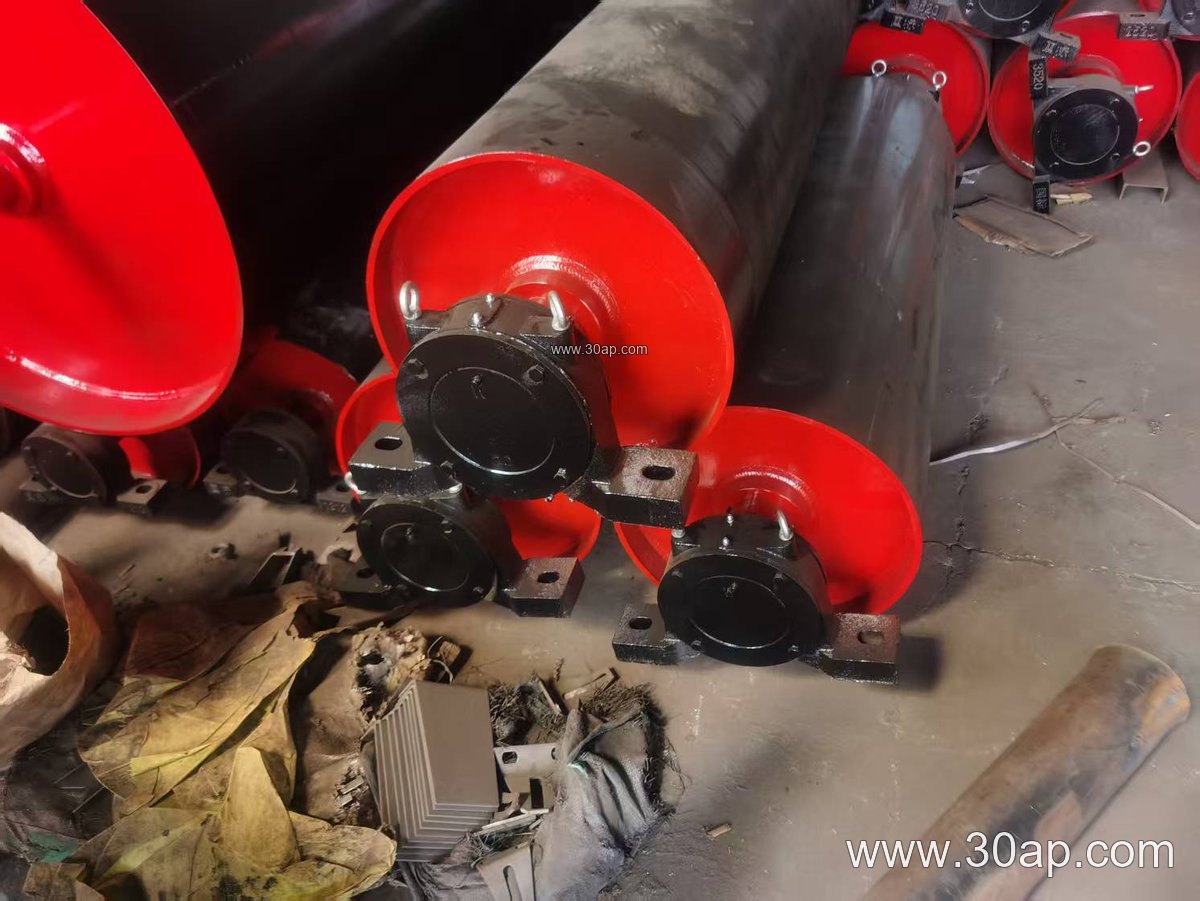
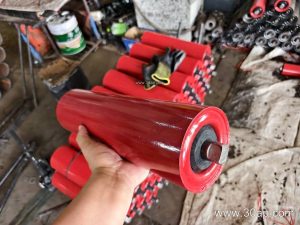
The pulley works together with the conveyor belt, the idler roller set, and the conveyor bracket that fixes the bearing housing. A ceramic surface does not correct poor belt tracking, misalignment, or inadequate take-up tension, so those issues still need attention.
Matching the Pulley to the Belt and Duty
Buyers usually start from the belt width and the required shaft load. Shell face width is normally a little wider than the belt, for example a B800 belt may run on a shell face of about 950 mm, and a B1200 belt on about 1400 mm. Diameter is selected from torque, belt speed, and the space available, not from belt width alone. Common combinations include B800 x Ø500, B1200 x Ø1000, and B1400 x Ø800, but these are references, not fixed rules.
| Parameter | Common Reference Range |
|---|---|
| Belt width | B400 to B2400 |
| Pulley diameter | Ø200 to Ø1800 |
| Lining thickness | 8, 10, 12, 15, 20 mm |
| Shaft diameter | Ø50 to Ø200, by torque and load |
| Surface form | Ceramic tile in rubber backing, plain or patterned |
Shaft diameter should be confirmed by the pulley designer from torque, bearing span, and load. It is not safe to pick a shaft size from belt width alone.
Buyer Checklist
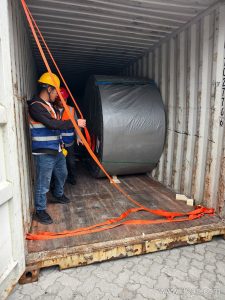
Before ordering, confirm the pulley position, the belt width, the belt type, and the operating environment. A heavy-duty mining conveyor belt running ore may need a thicker ceramic layer than a lighter aggregate conveyor belt. If the belt is a steel cord conveyor belt or a high-tension EP conveyor belt, the pulley shell and shaft must be sized for the higher tension. Heat resistant conveyor belt and flame retardant conveyor belt service may also affect the backing compound chosen for the lining.
Ask for the tile size, the backing material, the lining thickness, and the balance grade. Check that the face width and the shaft diameter match the drawing, and confirm how the lining is bonded and finished at the edges. For replacement work, measure the existing conveyor pulley, the bearing centers, and the keyway before choosing a ceramic-lined unit.
Ceramic lining is a wear and grip decision, not a universal upgrade. Used on the right drive, tail, or bend pulley, it can extend service life and reduce slip in dusty plants such as cement works, iron ore handling, and limestone quarries.