What the Conveyor Head Pulley Does
The conveyor head pulley is the powered drum at the discharge end of a belt conveyor. It turns under motor and gearbox torque, grips the conveyor belt through friction, and throws material off the belt trajectory into a chute, stockpile, or transfer point. In a quarry, cement plant, or coal handling system, this pulley is often called the drive pulley or discharge pulley. It is not a tail pulley, bend pulley, or take-up pulley; those serve different positions and duties. The head pulley is the one that transmits the main driving force to the belt.
Construction and Key Components
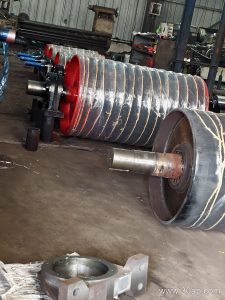
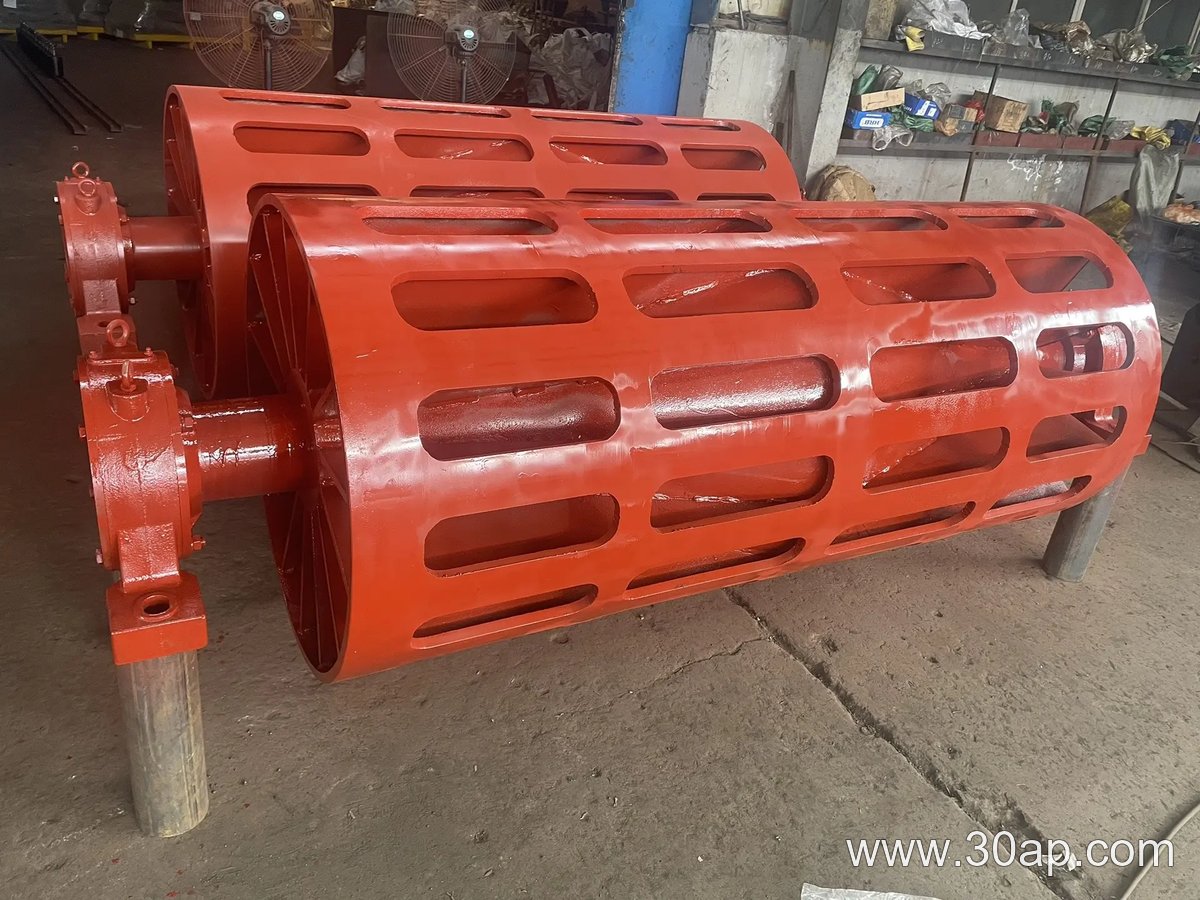
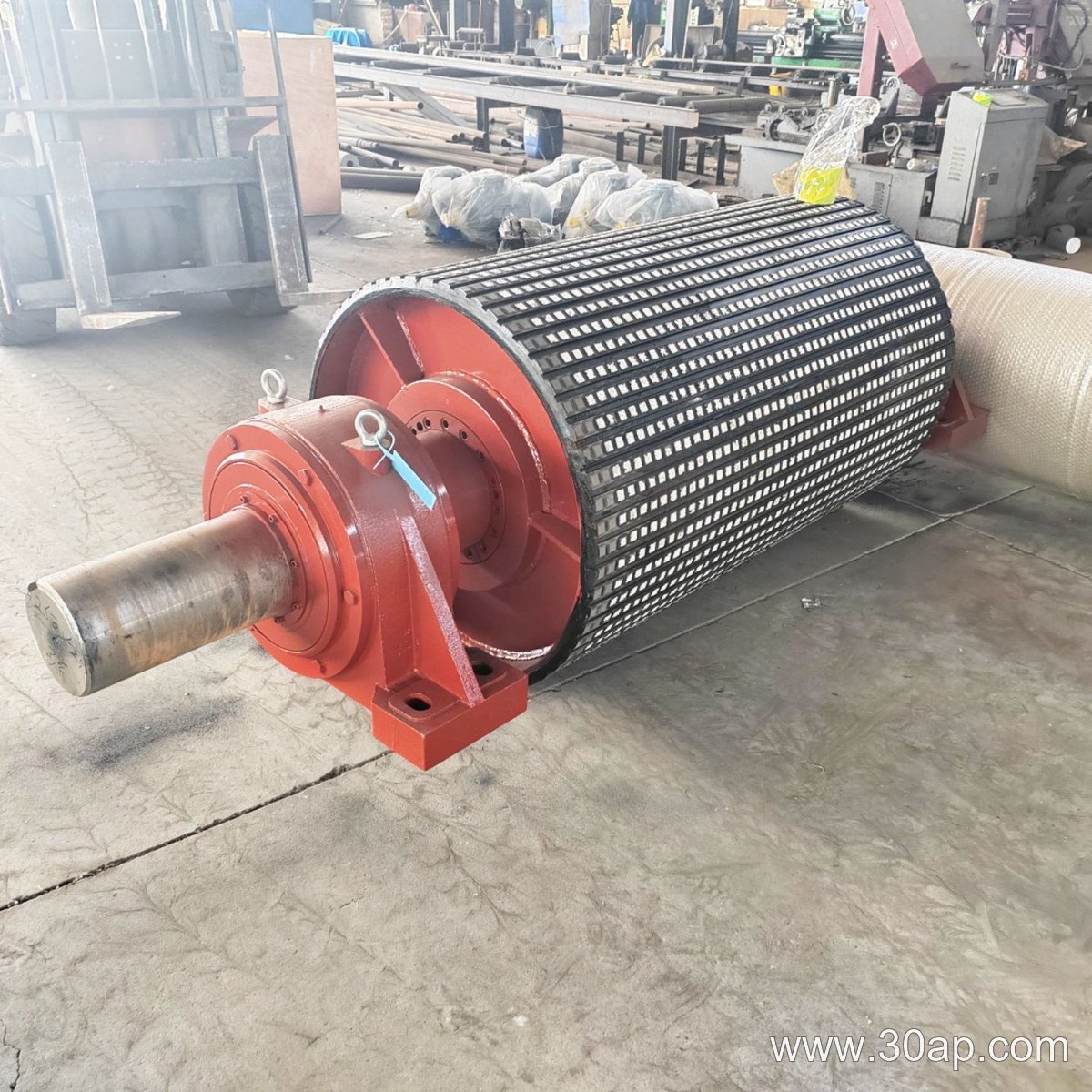
A typical head pulley is built around a cylindrical shell, two end discs, a shaft, and a locking assembly or keyed connection. The shell may be seamless pipe or rolled plate. The shaft is sized by torque and bending load, not simply by belt width. Common shaft diameters include Ø50, Ø60, Ø70, Ø80, Ø90, Ø100, Ø120, Ø140, Ø160, Ø180, and Ø200 mm. The pulley face width is usually slightly wider than the belt, for example a B800 belt often uses a face around 950 mm, while a B1200 belt may use about 1400 mm. The bearing housings and conveyor bracket are mounted on the conveyor frame, and the pulley rotates on spherical roller bearings or equivalent.
Surface Options and Grip
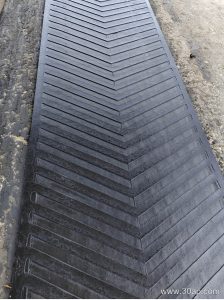
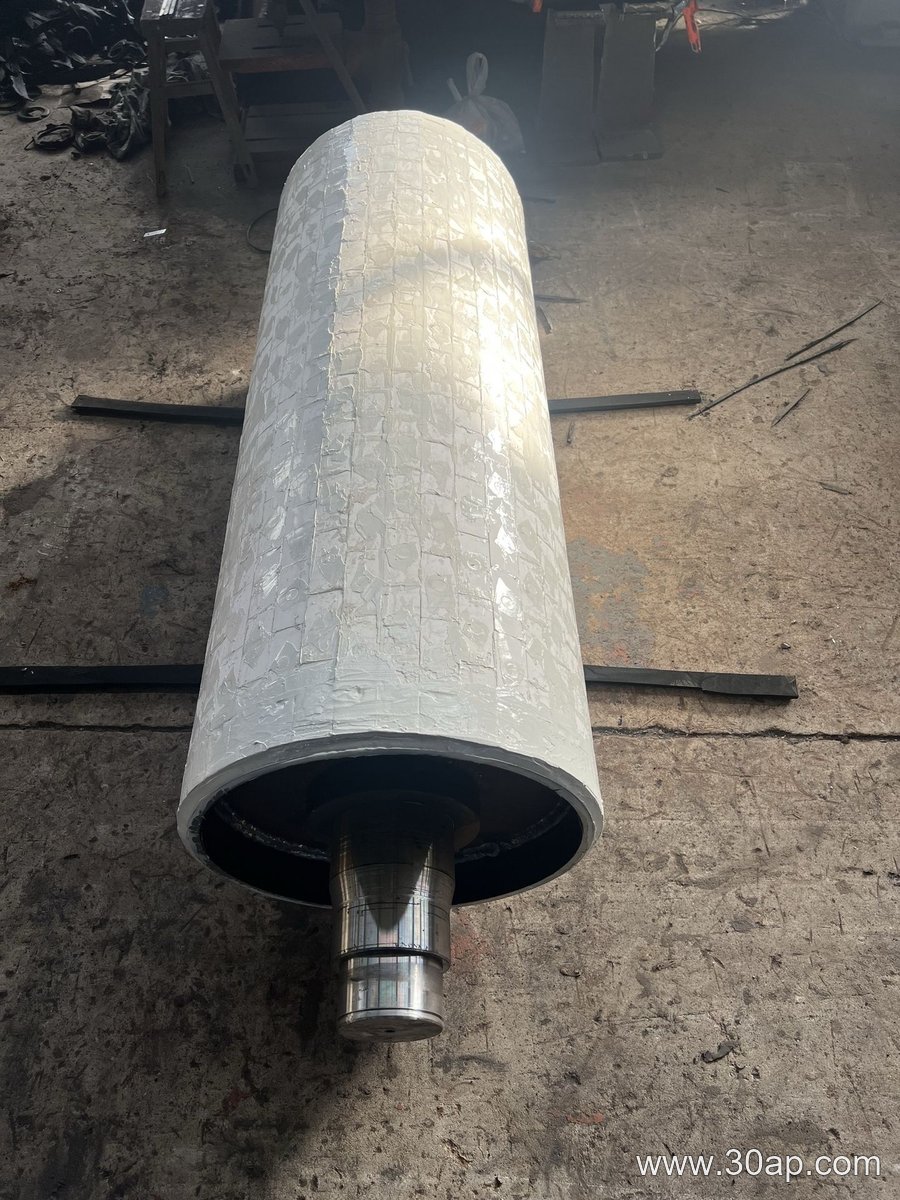
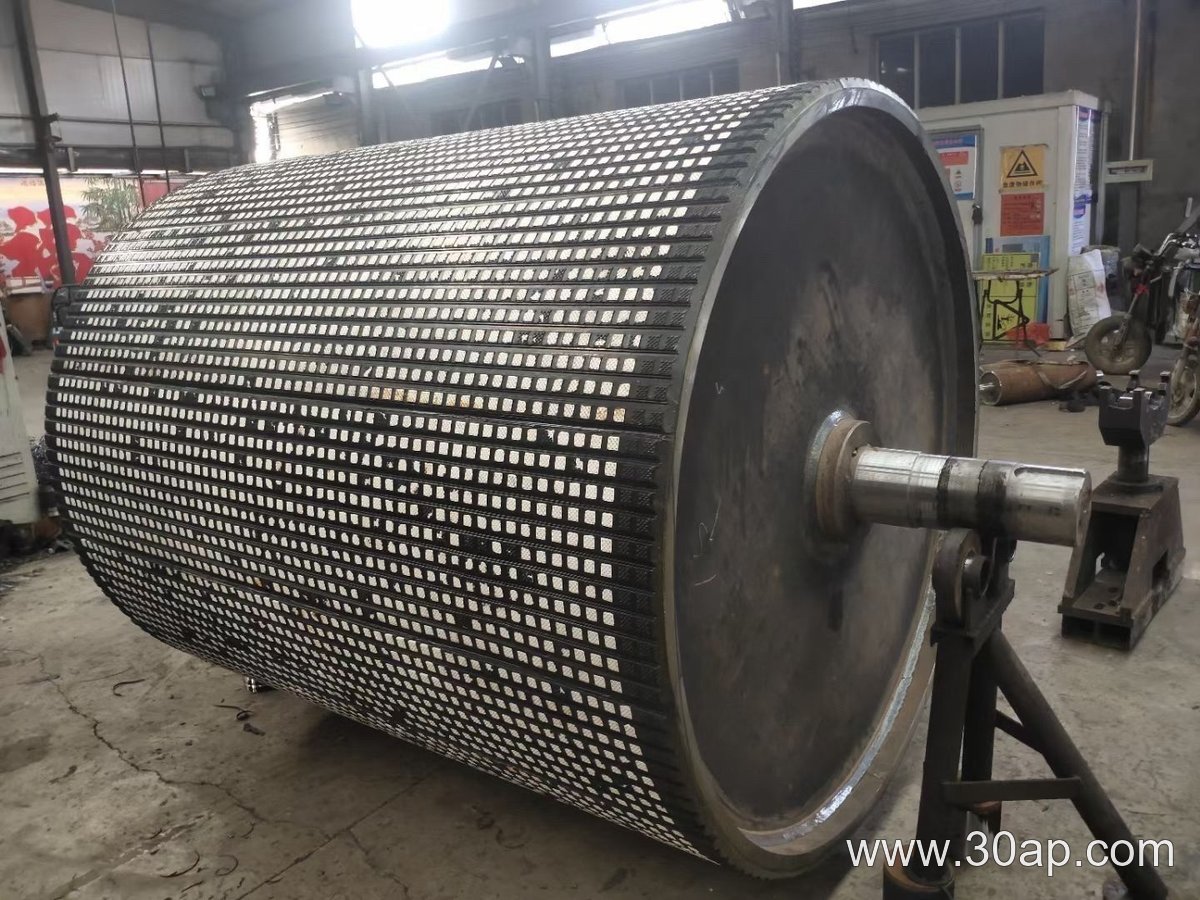
The surface of a head pulley can be plain, rubber lagged, or ceramic lagged. Lagging improves friction between the drum and the conveyor belt, reducing slip under load. Common lagging types include cold-bonded rubber, hot vulcanized rubber, diamond grooved rubber, herringbone rubber, and ceramic tile. Lagging thickness is often 8, 10, 12, 15, or 20 mm. A smooth surface may be enough for light-duty conveyors, but a lagged head pulley is typical in mining, coal preparation, and aggregate lines where moisture, dust, or high torque demand reliable traction.
How Belt Width and Pulley Diameter Relate
Belt width and pulley diameter are related by design, but they are not locked in a one-to-one match. A B650 belt might run on a Ø500 head pulley in one conveyor and a Ø630 in another, depending on belt tension, wrap angle, and material load. The following table lists common combinations for reference only; actual selection must follow the conveyor design.
| Belt Width | Typical Pulley Face Width | Common Diameter Range |
|---|---|---|
| B400 | about 500 mm | Ø200 to Ø400 |
| B500 | about 600 mm | Ø250 to Ø500 |
| B650 | about 750 mm | Ø315 to Ø630 |
| B800 | about 950 mm | Ø400 to Ø800 |
| B1000 | about 1150 mm | Ø500 to Ø1000 |
| B1200 | about 1400 mm | Ø630 to Ø1250 |
| B1400 | about 1600 mm | Ø800 to Ø1400 |
| B1600 | about 1800 mm | Ø1000 to Ø1600 |
These values are common references, not universal rules. A larger diameter increases belt wrap and reduces bending stress on the belt, but it also takes more space and adds rotating mass. Diameters such as Ø200, Ø250, Ø315, Ø320, Ø400, Ø500, Ø630, Ø800, Ø1000, Ø1250, Ø1400, Ø1600, and Ø1800 mm appear across different conveyor sizes. A B1200 × Ø1000 head pulley is a typical heavy-duty combination, while a B800 × Ø500 unit is common in lighter or shorter conveyors.
Where It Is Used
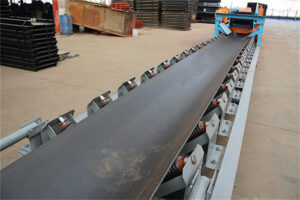
The head pulley appears in many bulk material handling systems. In a limestone quarry or sand and gravel plant, it drives the main discharge belt. In a coal washing plant or power station coal yard, it handles abrasive and wet material. In a cement plant, it may move clinker or raw meal. In a fertilizer or grain silo facility, a smaller head pulley with a smooth or light rubber surface may be sufficient. The surrounding equipment usually includes the conveyor belt, idler rollers, and a conveyor bracket that holds the bearing housing. The head pulley works with these components but remains the main drive element at the discharge point.
What Buyers Should Check
- Confirm the required belt width, pulley face width, and shaft diameter for the actual conveyor design.
- Specify the lagging type and thickness if slip risk is high, for example 10 mm diamond rubber or 15 mm ceramic lagging.
- Check the mounting dimensions, bearing type, and whether the conveyor bracket matches the existing frame.
- Ask for the balancing grade and runout tolerance if the pulley will run at high speed.
- Provide the material type, tonnage, and environmental conditions so the supplier can recommend a suitable surface and diameter.
A well-matched conveyor head pulley keeps the belt tracking, reduces downtime, and supports stable discharge in demanding industries such as mining, cement, and power generation. Selection should always be based on the actual conveyor duty rather than a fixed rule of thumb.