What a Coal Mine Conveyor Idler Does Underground
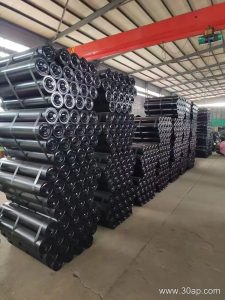
A coal mine conveyor idler is the rotating roller that supports and guides the conveyor belt along the entire length of a underground coal mining conveyor. In a typical coal face or main haulage drift, hundreds of these idler rollers work together, and each one carries a share of the coal load while letting the belt move with low friction. Because underground coal mining conveyor systems run continuously and are difficult to access, the reliability of every conveyor idler directly affects how many tons of coal reach the surface each shift.
The working environment is the main reason these rollers are built differently from general-purpose idlers. Coal dust, moisture, acidic mine water and occasional impact from lump coal all attack the bearing cavity. A well-sealed coal mine conveyor idler protects its bearings from fine dust and keeps grease inside, which is what separates a long-service roller from one that seizes within months.
Structure and Common Materials
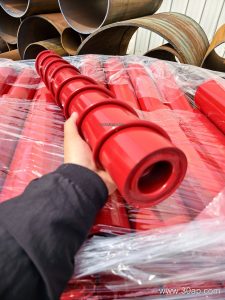
Most coal mine conveyor idlers share a simple structure: a steel tube shell, a shaft, bearing housings at both ends, a sealing arrangement and a bearing. The shell is usually welded steel pipe, and the surface may be plain steel, nylon-coated, ceramic-covered or fitted with rubber rings for impact zones. Bearings commonly used in this product family include 6204, 6205, 6305, 6306, 6308 and 6310, matched to the roller diameter and load rather than to belt width alone.
Sealing is the detail buyers should examine closely. A multi-stage labyrinth seal with a grease retention lip is common on underground mining conveyor idlers, because a single dust lip is rarely enough in a coal mine. The shaft ends are usually flattened or machined to fit a conveyor bracket, and the bracket type must match the frame design on site.
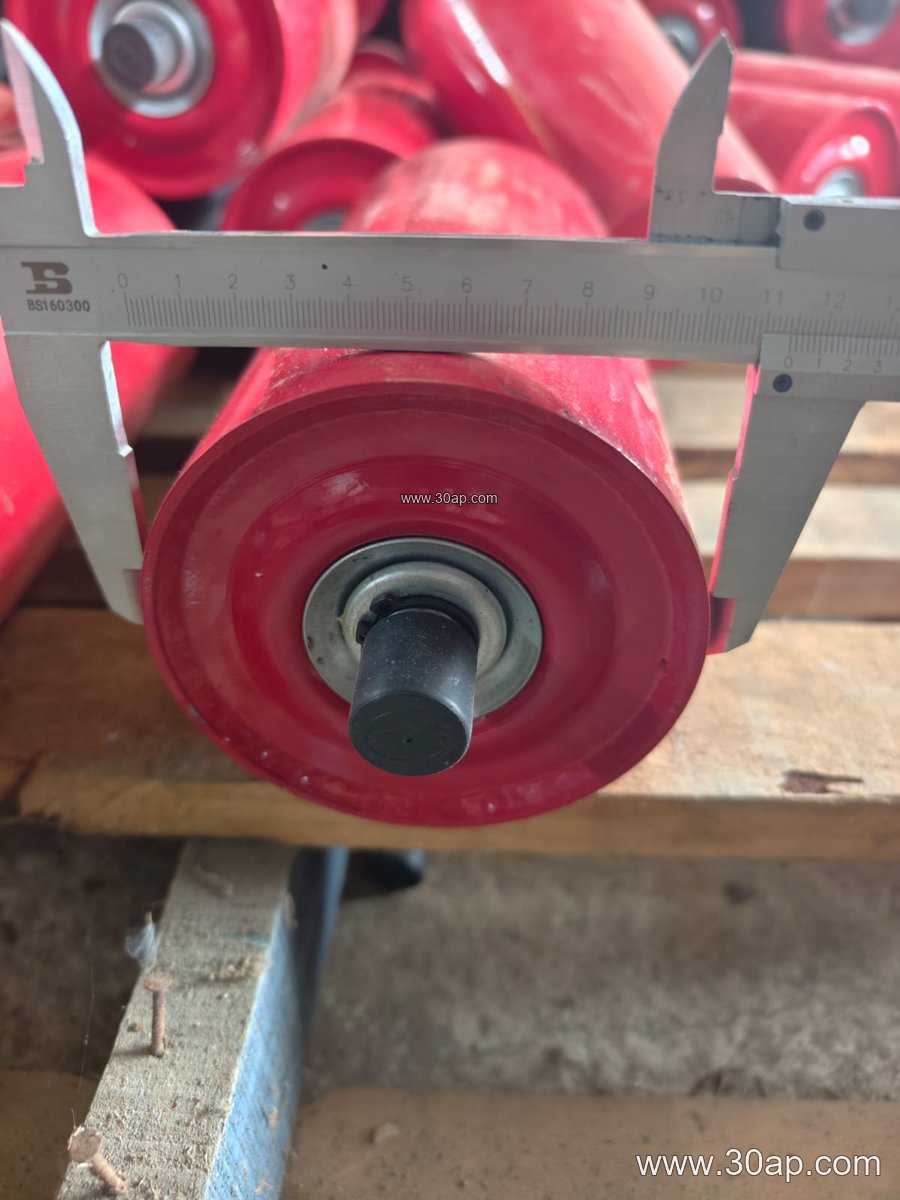
Typical Roller Diameter Reference
The table below shows common diameter options and where they usually appear. These are reference values, not fixed rules, and the final choice depends on load, belt speed and frame design.
| Roller Diameter | Typical Use |
|---|---|
| Ø63 / Ø76 / Ø89 | Light return runs, small belt widths |
| Ø102 / Ø108 / Ø127 | General carrying idlers on medium belts |
| Ø133 / Ø159 / Ø178 | Heavy-duty main haulage, high load sections |
| Ø194 / Ø219 | Large belt widths and high-capacity trunk conveyors |
Belt widths from B400 up to B2400 appear in coal mining conveyors, and roller length follows belt width, trough angle and idler arrangement. For a three-roll trough set, common roller lengths are roughly 200 mm at B500, 250 mm at B650, 315 mm at B800, 380 mm at B1000, 465 mm at B1200, 530 mm at B1400, 600 mm at B1600, 670 mm at B1800 and 750 mm at B2000. Side rollers and the center roller can differ, so these figures should be read as examples only.
Trough Angles and Idler Arrangements
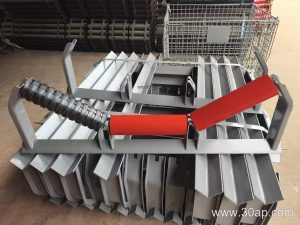
Trough angle shapes how the coal sits on the belt. Common angles are 20, 30, 35 and 45 degrees. A deeper trough holds more material and reduces spillage on steep or curved drifts, while a shallower angle suits wide, flat belts and easier belt training. Three-roll trough sets are the standard for carrying runs, while single-roll and two-roll sets appear on narrower or special frames.
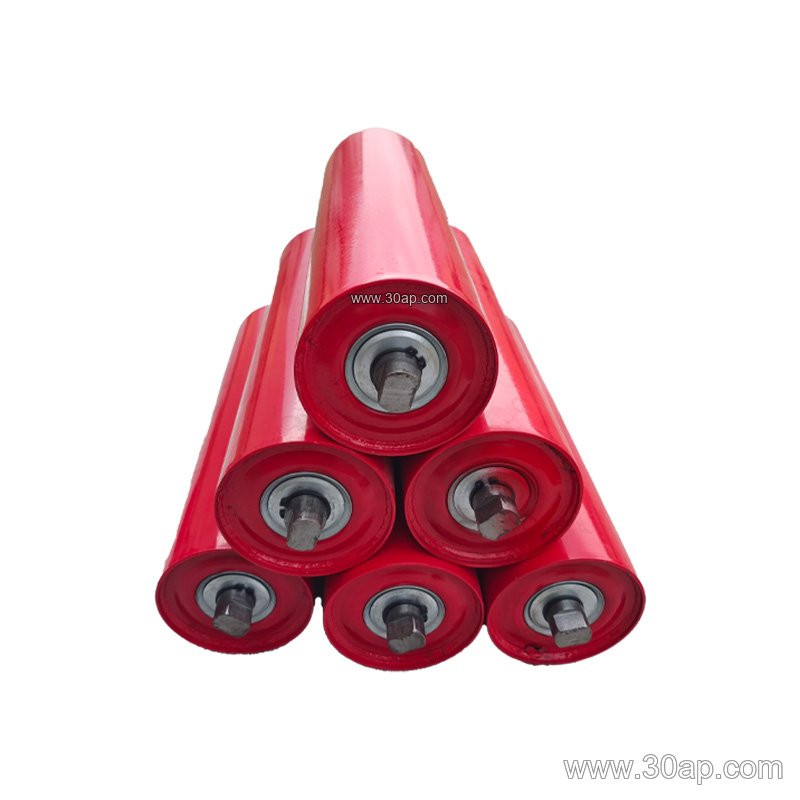
Transition idlers sit between the tail pulley and the first full trough set, gradually shaping the belt. Impact idlers with rubber rings are placed under the loading point to absorb the strike of lump coal. On the return side, flat return rollers, V-type return rollers and spiral rollers handle the empty belt; spiral rollers are sometimes chosen to shed sticky fines. Self-aligning idlers, including friction and tapered types, are used where belt misalignment is a recurring problem.
Where These Idlers Are Used
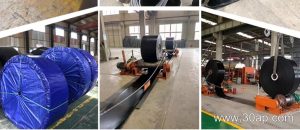
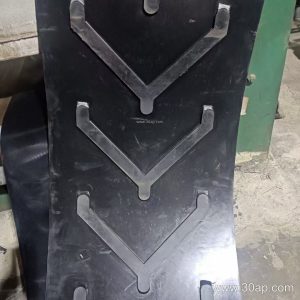
Beyond underground coal mining conveyors, this roller family appears in coal preparation plants and power plant coal handling systems, where dust and fines are constant. The same design logic carries over to quarry conveyor lines and cement plant raw material transport, although the sealing and flame requirements differ. In coal service, the belt itself is often a flame retardant conveyor belt or a PVG conveyor belt, and the idler must work with that belt without marking or overheating it.
For anyone sourcing a complete conveyor package, the idler is only one part. A conveyor pulley at the drive and tail ends, a suitable conveyor belt such as an EP conveyor belt or steel cord conveyor belt, and correctly sized conveyor brackets all need to match. Buyers can review roller options together with belt and pulley data at https://www.jsmsconveyor.com/coal-mine-conveyor-idler so the whole system is specified as one unit.
What Buyers Should Confirm Before Ordering
- Belt width and trough angle, so roller length and frame fit are correct.
- Roller diameter and shell thickness for the expected load and belt speed.
- Seal design and bearing size for dust and water conditions underground.
- Surface form: plain steel, nylon, ceramic or rubber rings, depending on impact and wear.
- Shaft end and bracket detail, since a roller that does not fit the frame is useless on site.
Maintenance matters as much as selection. Seized rollers increase belt drag and can damage the belt cover, so a planned inspection route and spare roller stock keep a coal mine conveyor running. Matching the idler to the actual duty, rather than copying a neighboring installation, is the most reliable way to extend service life.