What a V-Type Idler Bracket Does
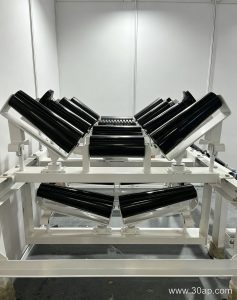
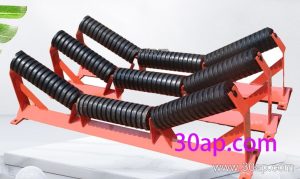
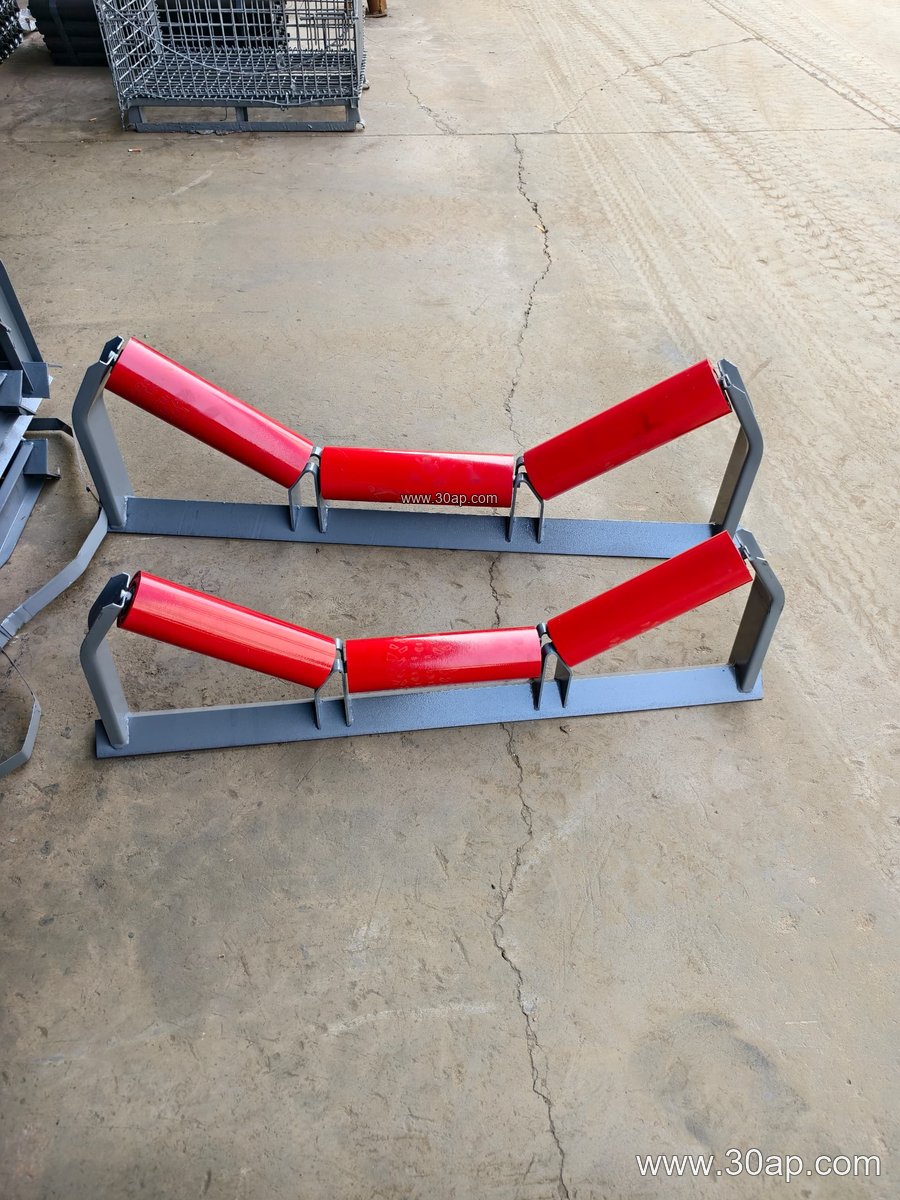
A V-Type Idler Bracket is the return-side support component that holds two idler rollers in a shallow V arrangement beneath the carrying run of a conveyor belt. Instead of a single flat roller, the bracket cradles the belt in a V trough, which encourages the belt to center itself and helps shed loose material that would otherwise build up on the return strand. In quarry, cement plant and coal handling circuits, this self-cleaning geometry is often the reason engineers specify a V-return bracket rather than a plain flat return bracket.
The bracket is a fabricated steel assembly, usually built from angle or channel section with folded plate gussets. Two inclined mounting faces locate the idler roller shafts, and the whole frame bolts to the conveyor stringer or cross member. Because the rollers sit at an angle, the belt rests in a slight trough that resists drift and reduces edge damage.
Construction and Mounting Details
Fabrication is straightforward but the tolerances matter. Common materials are angle steel, channel steel and folded steel plate, welded into a rigid frame. Mounting hole spacing and cross-member length change with belt width and V angle, so these dimensions are determined per design rather than fixed across a range. Buyers should confirm hole patterns against the actual stringer layout before ordering.
- Frame: welded angle or channel, with folded plate reinforcement
- Roller seats: inclined faces sized for the chosen roller diameter
- Finish: painted or galvanized, depending on the environment
- Mounting: bolted to stringers, with slotted holes on adjustable versions
Related hardware usually includes a conveyor bracket set, the idler roller pair and the fasteners that tie the assembly to the frame. On a long overland conveyor, the return bracket spacing follows the catenary sag of the belt and is normally shorter than the carrying-side idler spacing.
Where It Fits in the Conveyor Line
The V-Type Idler Bracket belongs on the return side, between the tail pulley and the drive pulley. It is not a substitute for a bend pulley, a drive pulley or a tail pulley, and it does not replace the troughing brackets on the carrying side. Its job is to support the empty or lightly loaded belt and to keep it tracking.
Typical installations include limestone quarries, iron ore plants and aggregate crushing lines where fines drop from the belt and would otherwise pack around flat return rollers. In a coal preparation plant or a power station coal yard, the V shape also helps limit material accumulation that could rub against the belt. When the belt is a heavy-duty mining conveyor belt carrying abrasive ore, the return bracket must be robust enough to tolerate occasional impact from lumps that fall back onto the return strand.
Matching the Bracket to Belt Width and Roller Diameter
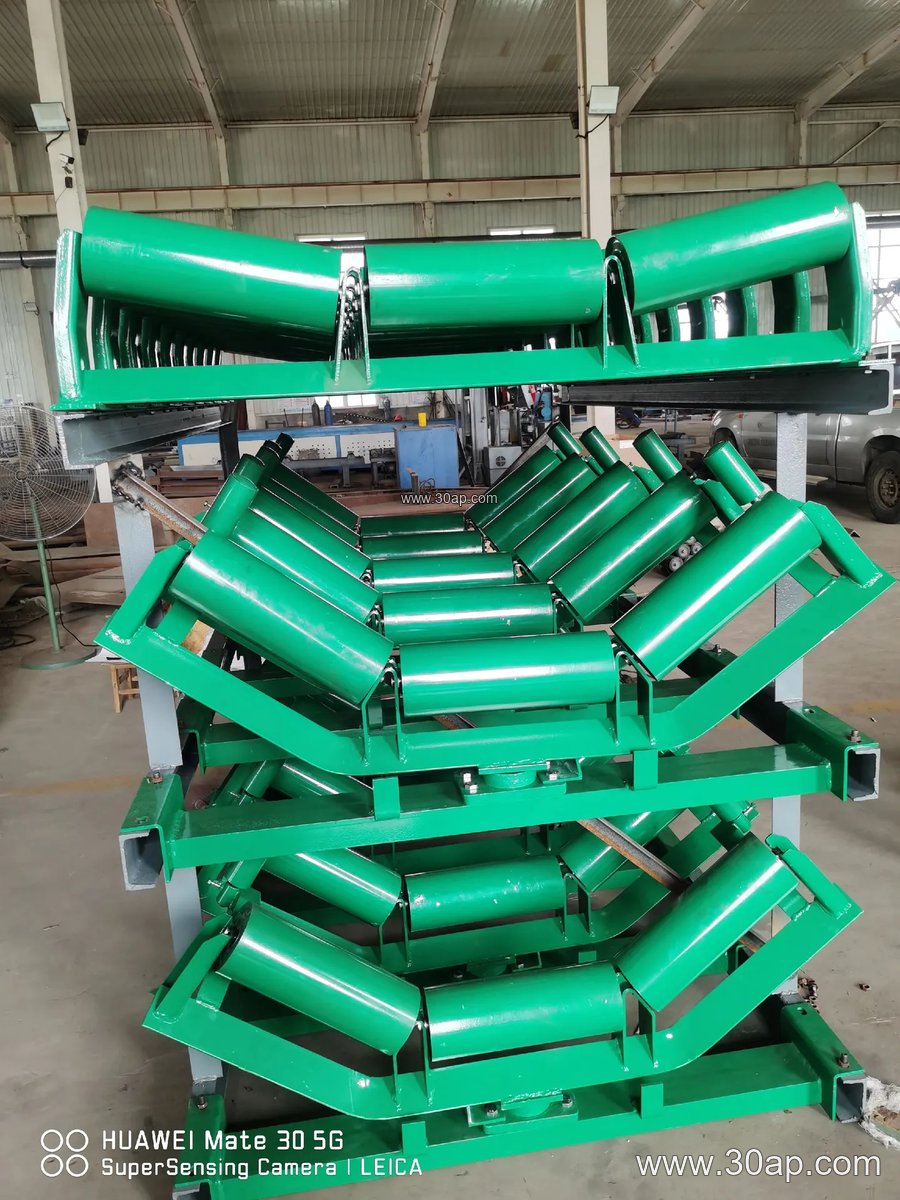
Selection starts with belt width and the return roller diameter already used on the conveyor. Common belt widths run from B500 through B2000 and beyond, and common return roller diameters include Ø89, Ø108, Ø133, Ø159 and Ø194. A B800 return bracket with Ø108 rollers is a frequent combination in medium-duty plants, while a B1200 line may use Ø133 rollers. These are typical pairings, not fixed rules, and the final choice depends on belt tension, load and the existing roller inventory.
Roller diameter should suit the belt speed and the mass of the return strand. Wider belts generally need larger rollers and heavier brackets, but the exact match is set by the conveyor designer. When a plant uses a steel cord conveyor belt on a high-tension main line, the return bracket and its fixings must be checked for the higher loads involved. On a fabric core conveyor belt line, standard fabricated brackets are usually adequate.
Buyer Checklist
- Confirm belt width, V angle and roller diameter before ordering
- Check mounting hole spacing and stringer bolt pattern
- Decide between fixed and adjustable versions for easier alignment
- Match the finish to the environment, for example wet or dusty service
- Verify that the bracket suits the return roller type already stocked
Adjustable brackets allow small changes in roller position to correct belt tracking, while fixed brackets are simpler and cheaper where alignment is already good. Neither type should be used to compensate for a badly aligned drive pulley or tail pulley.
Maintenance Notes
Inspect the bracket for loose bolts, bent frames and worn roller seats during routine walk-arounds. Material build-up between the V rollers and the bracket should be cleared before it hardens. On abrasive duty, such as a crusher conveyor belt handling rock, check the roller seats for wear and replace damaged brackets rather than attempting field straightening. Keeping the return side clean and aligned extends the life of both the belt and the idler roller set.