What a Conveyor Idler Frame Does on a Belt System
A conveyor idler frame is the structural support that holds idler rollers in the correct position under and along the conveyor belt. It keeps the belt profile stable, guides the belt path, and transfers the load from the material and belt into the conveyor structure. In a quarry, cement plant, or power plant coal yard, the frame is often the quiet workhorse that determines how well the belt tracks and how long the rollers last.
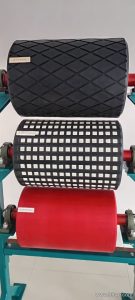
The frame is not a pulley. Drive pulleys, tail pulleys, and bend pulleys are separate components that transmit power or change belt direction. A conveyor idler frame only carries idler rollers and does not drive the belt. Mixing these roles leads to wrong spare parts and poor maintenance planning.
Construction and Common Materials
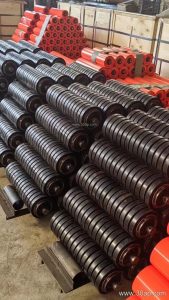
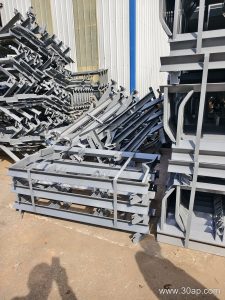
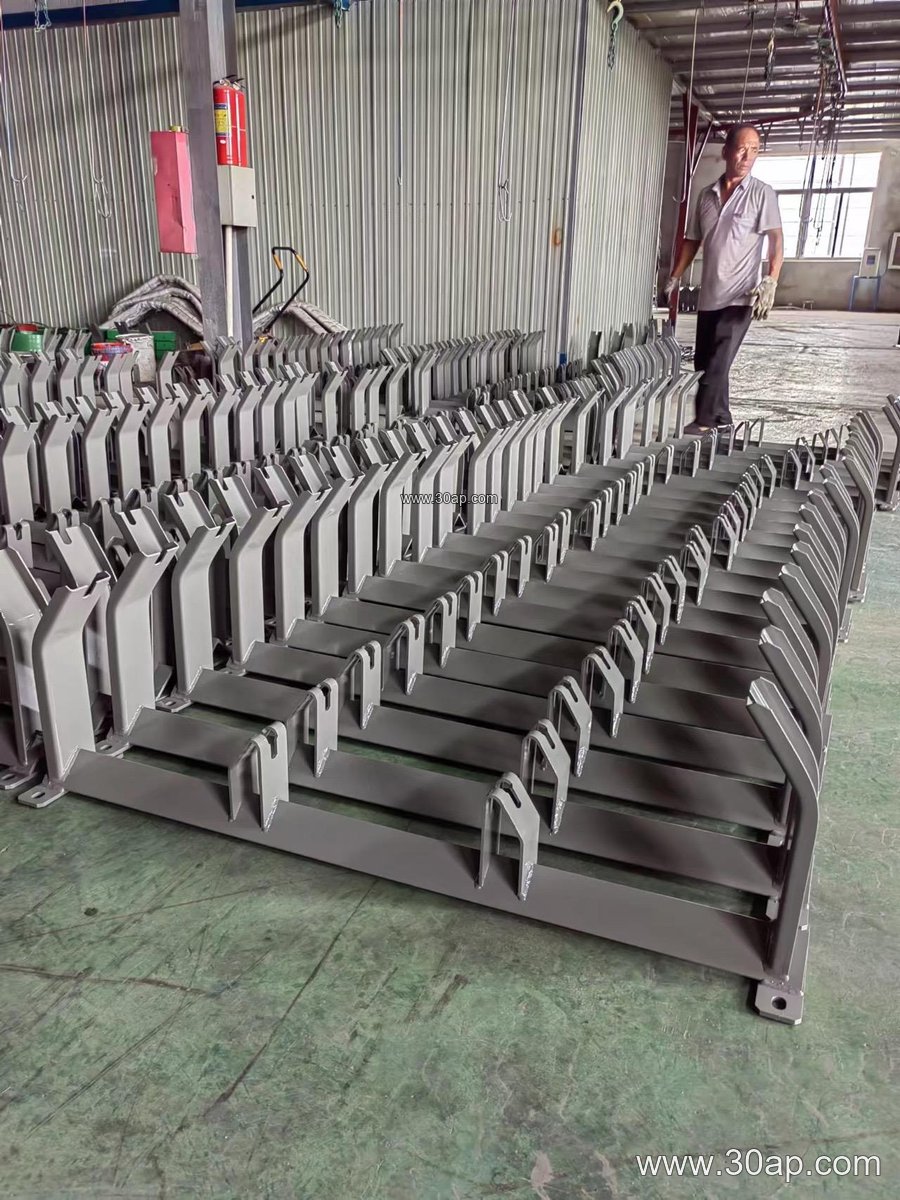
Most frames are fabricated from angle steel, channel steel, or folded steel plate. The choice depends on load, belt width, and environmental conditions. A heavy-duty mining conveyor belt in an iron ore plant may call for a reinforced frame, while a light aggregate line can use a simpler folded design. The frame usually includes mounting slots or holes for the idler roller shaft, and the hole spacing and beam length vary with belt width and trough angle. There is no single fixed dimension that fits every conveyor.
Surface treatment matters in wet or corrosive settings. Paint, galvanizing, or powder coating can extend service life, but the buyer should confirm the actual finish rather than assume it. The frame should also be checked for squareness and weld quality, because a twisted frame causes misalignment and edge wear on the conveyor belt.
Types and Where They Fit
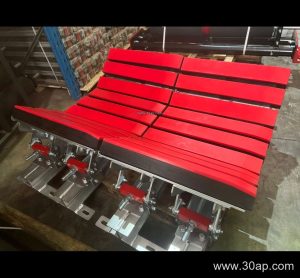
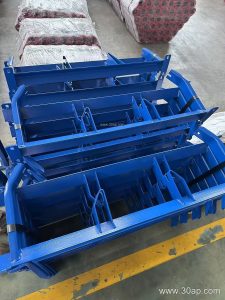
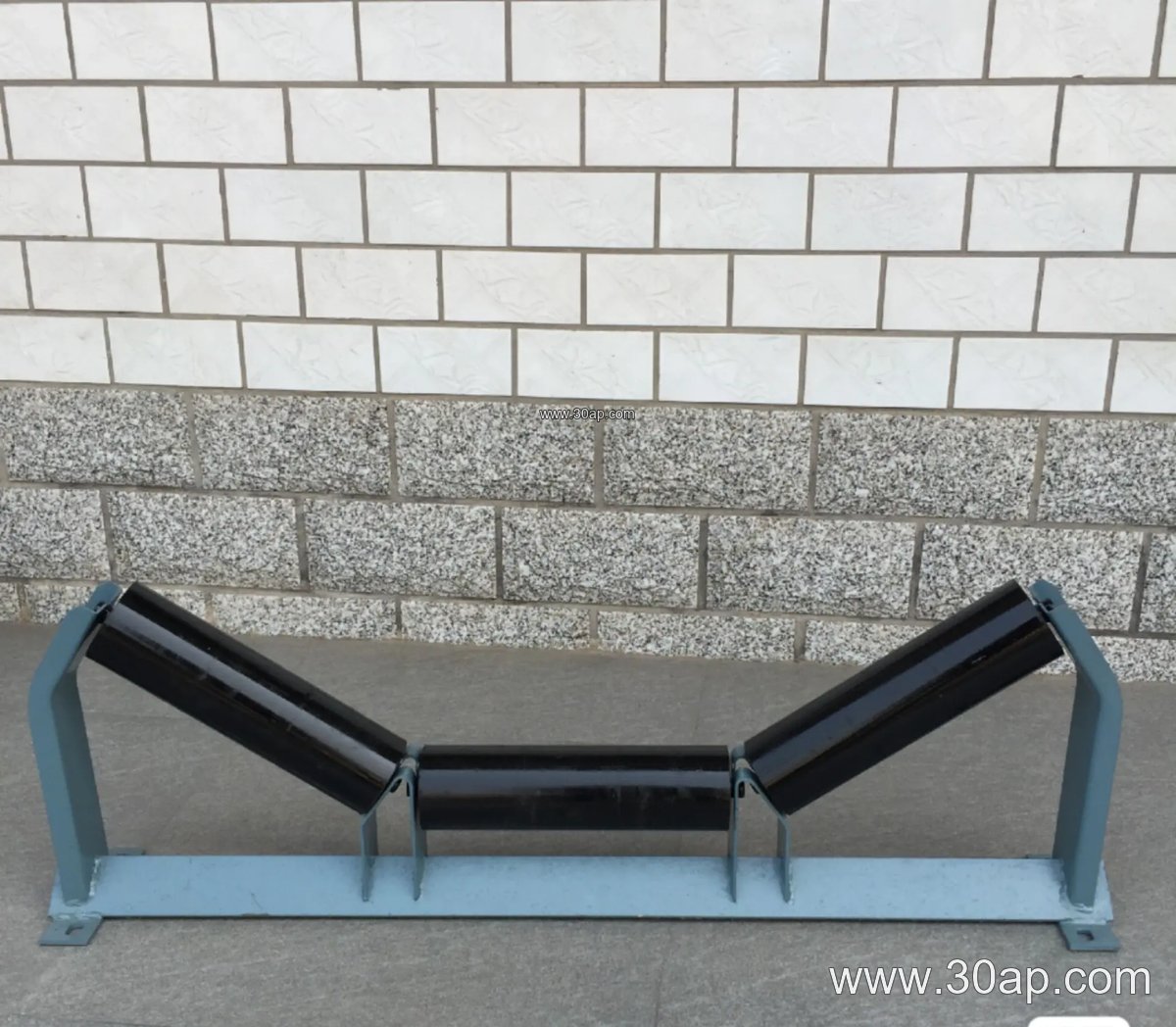
Different positions on the conveyor use different frame styles. Troughing frames support the carrying side and set the trough angle. Return frames support the belt on its way back. Impact frames are used at transfer points where material falls onto the belt. Self-aligning frames help correct belt drift, and transition frames ease the belt from flat to troughed. Adjustable frames allow the trough angle to be changed within a range, which is useful when a conveyor handles more than one material or belt condition.
- Troughing idler frame: carrying side, commonly 20, 30, 35, or 45 degrees.
- Return frame or V-return frame: supports the empty belt.
- Impact frame: reinforced for loading zones.
- Self-aligning frame: assists belt tracking.
- Transition frame: gradual change of belt profile.
For example, a B800 conveyor with a 35-degree trough may use a Ø108 idler roller, but the same belt width could also run a different roller diameter and trough angle depending on the design. A B1200 frame with 45 degrees and Ø133 rollers is another common combination, not a rule. In a sand and gravel line, a B650 frame with 30 degrees and Ø89 rollers may be sufficient, while a coal mining conveyor belt with heavy loads may need a more robust frame and larger roller diameter.
Matching Frame, Roller, and Belt
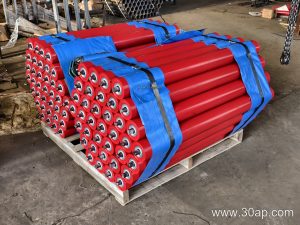
The frame, idler roller, and conveyor belt form a system. A frame that is too light for the belt tension may deflect, and a roller that is too small for the load may wear quickly. Buyers should provide belt width, material weight, belt speed, and the expected trough angle so the supplier can recommend a suitable frame. The conveyor bracket or mounting detail should also match the existing structure.
Common belt widths include B500, B650, B800, B1000, B1200, B1400, B1600, B1800, B2000, B2200. Roller diameters often range from Ø89 to Ø194. These are reference values, not fixed pairings. The actual selection depends on load and design. For abrasive materials such as iron ore or copper ore, an abrasion resistant conveyor belt and a sturdy frame reduce downtime. In a cement plant, heat resistant conveyor belt may be needed near clinker areas, and the frame should tolerate the same environment.
Buyer Checklist
Before ordering, confirm the belt width, trough angle, roller diameter, mounting hole spacing, and frame material. Ask for the drawing and check that the frame fits the conveyor bracket and the idler roller shaft. For replacement work, measure the existing beam length and hole centers rather than relying on the belt width alone. In a port or ship loading facility, consider corrosion protection. In an underground coal mining conveyor, flame retardant conveyor belt and fire resistant conveyor belt are often specified, and the frame should be easy to inspect and replace.
Quality checks include weld integrity, hole alignment, and consistent angle. A well-made frame helps the belt run centered, reduces spillage, and extends the life of the idler roller. It is a small part of the conveyor but a key one for reliable bulk material handling.