What a Welded Pulley Is
A welded pulley is a conveyor pulley whose shell is joined to the end discs and hub assembly by welding rather than by a bolted or shrunk-fit construction. In heavy bulk handling, this welded drum-style conveyor pulley often serves as the head or drive pulley, transmitting torque from the shaft into the belt through friction on the shell surface. Because the shell, discs and hubs form one continuous welded unit, the pulley can carry high radial loads and resist the fatigue that comes from repeated belt tension cycles in a quarry, limestone mine or iron ore plant.
The same product is also called a welded conveyor drum or welded drum pulley. Those are equivalent names for the same item, not a different component category.
How the Assembly Is Built
Typical construction starts with a rolled steel shell, machined end discs, a through shaft or stub shafts, and a hub welded to each disc. Longitudinal or circumferential welds close the shell, and the discs are welded to both shell and hub. After welding, the shell is usually machined or ground to control runout, then balanced for the intended belt speed.
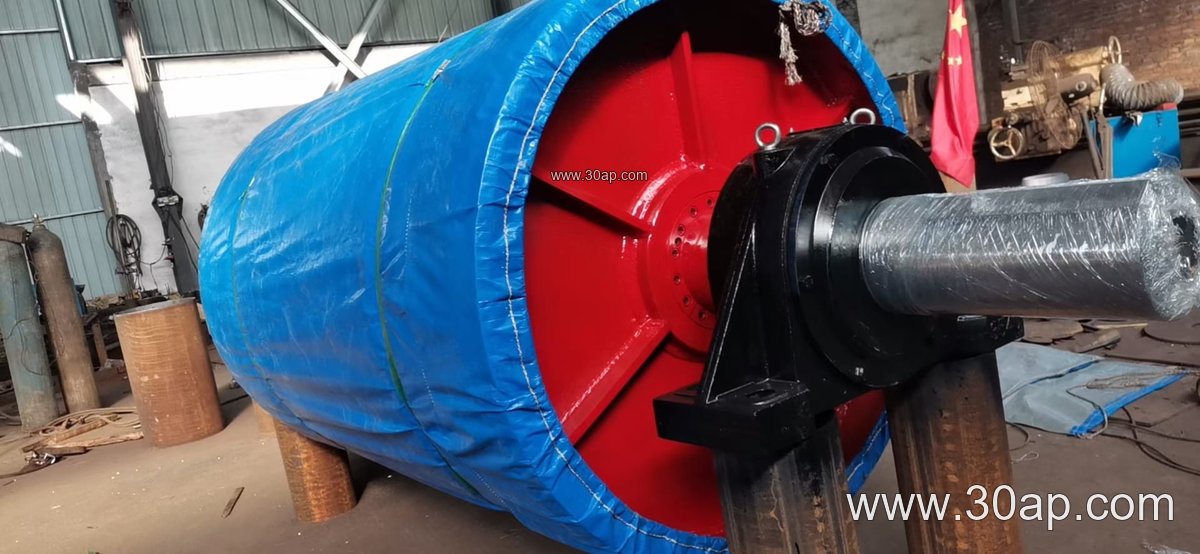
- Shell: rolled carbon steel plate, thickness chosen for belt tension and load
- Discs and hubs: welded to the shell and keyed or shrunk to the shaft
- Shaft: sized by torque and bearing load, not by belt width alone
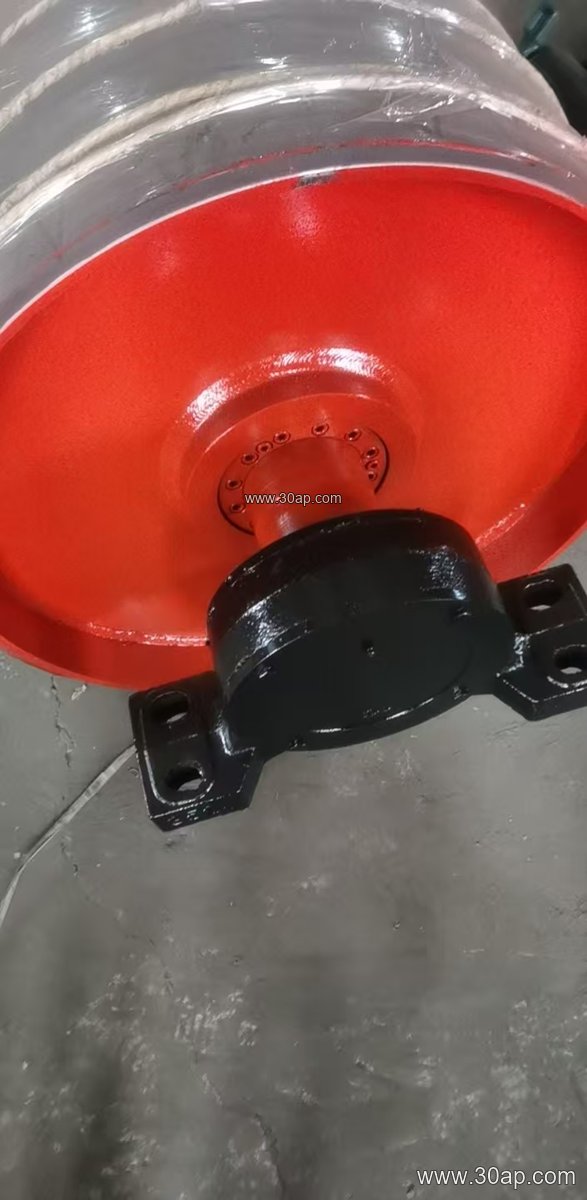
- Surface: plain, rubber lagged, diamond lagged or ceramic lagged
- Bearings and housing: pillow block or flanged type, with seals suited to dusty duty
Welding quality matters because the heat-affected zone becomes the fatigue-critical region. A well-built welded pulley uses controlled welding sequences, stress relief where needed, and non-destructive inspection of critical seams.
Where It Fits in a Conveyor
In a crushing and screening line, the welded pulley at the discharge end pulls the loaded belt and often carries the highest tension. In a coal preparation plant or underground coal mining conveyor, flame retardant conveyor belts and anti-static conveyor belts are common, and the pulley surface must match the friction and fire-safety requirements of the installation. A cement plant clinker line may use heat resistant conveyor belts, while a power plant coal yard typically runs abrasion resistant conveyor belts on long overland routes.
Drive, tail and bend pulleys are not interchangeable. A welded pulley used as a drive pulley needs lagging for grip and a shaft sized for full torque; a tail pulley mainly guides and tensions the belt return; a bend pulley changes belt direction with modest wrap. When an article compares a welded drive pulley with a tail pulley, the comparison is about position and duty, not about swapping one subtype for another.
Common Sizes and Surface Options
Below are reference ranges often seen in catalogues and project specifications. They are common values, not mandatory combinations.
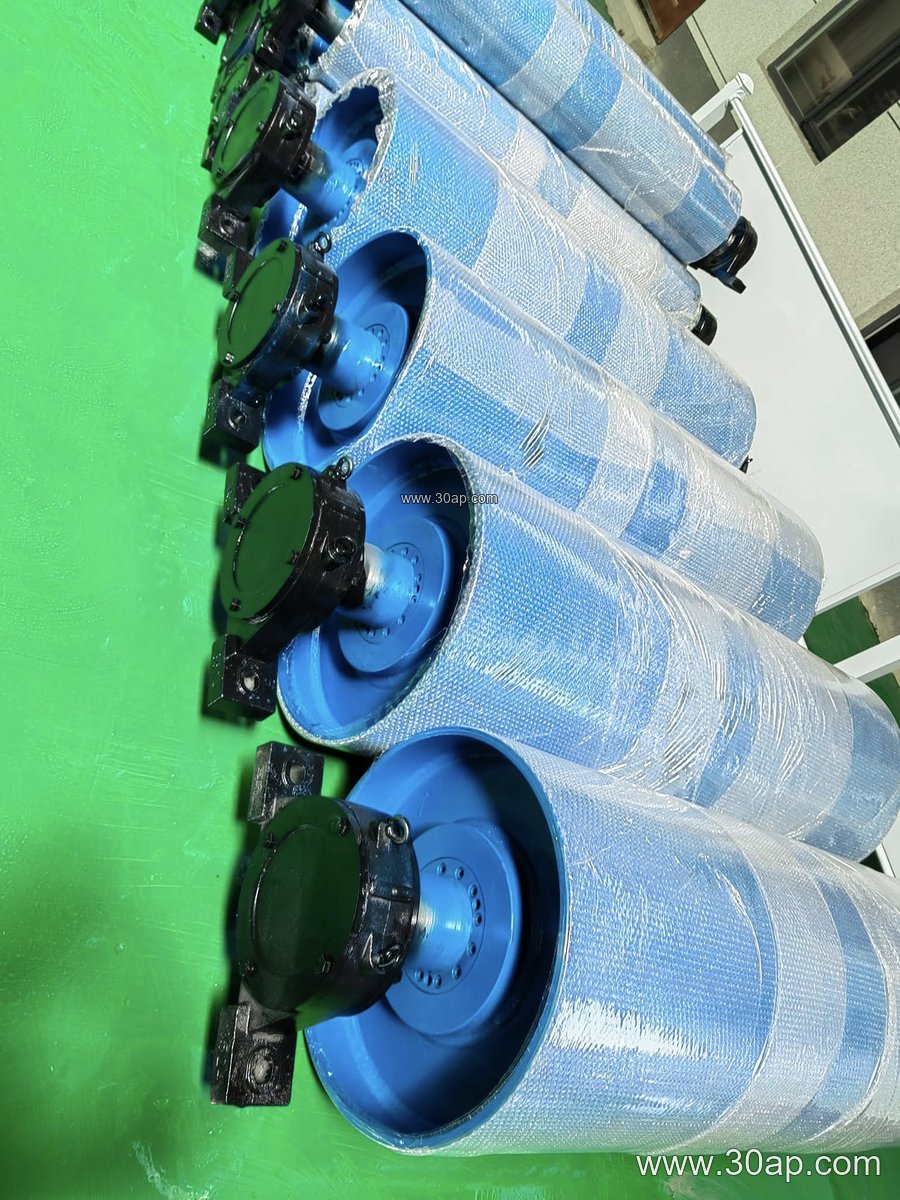
| Item | Common reference values |
|---|---|
| Belt width (B) | B400, B500, B650, B800, B1000, B1200, B1400, B1600, B1800, B2000 |
| Pulley diameter | Ø200, Ø250, Ø315, Ø400, Ø500, Ø630, Ø800, Ø1000, Ø1250, Ø1400 |
| Shell face width | Typically wider than belt width, e.g. B800 around 950 mm, B1200 around 1400 mm, B1400 around 1600 mm |
| Shaft diameter | Ø50, Ø60, Ø70, Ø80, Ø90, Ø100, Ø120, Ø140, Ø160, Ø180, Ø200 |
| Lagging thickness | 8, 10, 12, 15, 20 mm |
| Surface form | Plain, hot vulcanised rubber, cold bonded rubber, diamond, chevron, ceramic, flat rubber |
Examples such as B800 × Ø500, B1200 × Ø1000 or B1400 × Ø800 appear in real projects, but no single belt width is tied to one diameter. Shaft diameter is determined by torque and bearing load; it should never be assumed from belt width alone.
Buyer Checklist
- Confirm the pulley position: drive, tail, bend or take-up, because duty and lagging differ.
- State belt type and tension so the shell and shaft can be sized correctly.
- Choose lagging to suit the material: diamond or ceramic for wet, dusty ore; plain for light duty.
- Check that the face width clears the belt and that the shaft matches the bearing housing and conveyor bracket.
- Ask about weld inspection, runout tolerance and balancing for high-speed drives.
- Match the pulley to the belt: a steel cord conveyor belt and a multi-ply fabric core conveyor belt impose different demands on shell stiffness and lagging grip.
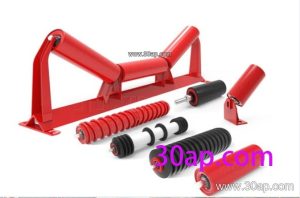
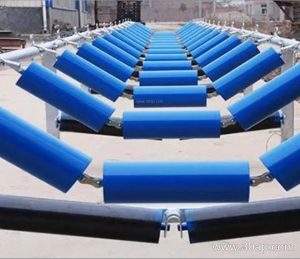
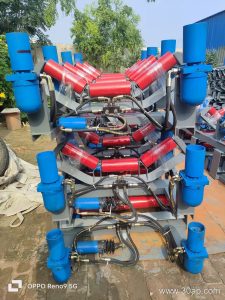
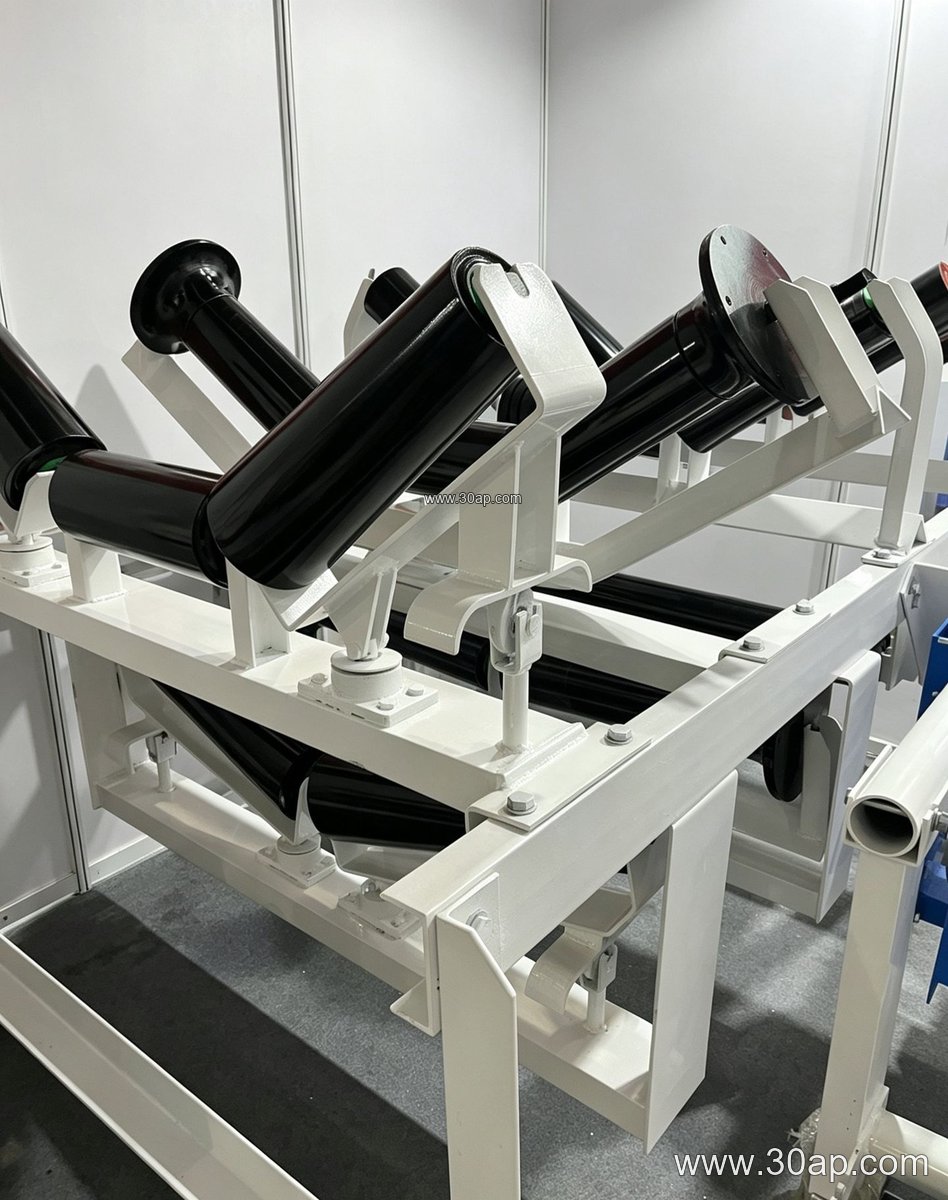
On a quarry conveyor belt line, a welded pulley works alongside the idler roller set and the conveyor bracket frames. The pulley is the driven or guiding element, while the idlers support the belt. Keeping that division clear helps buyers specify the right component and avoid mixing pulley subtypes.
For more on matching conveyor drums with rubber conveyor belt, EP conveyor belt and NN conveyor belt selections, review the belt tension data before finalising the welded pulley drawing.