What a Heavy-Load Idler Is
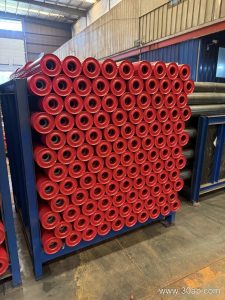
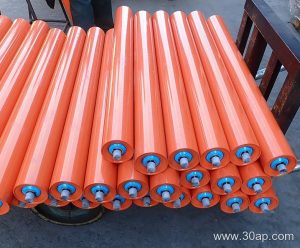
A heavy-load idler is a robust carrying or return roller built to support high belt tensions and severe material loads in bulk handling conveyors. Unlike standard idlers, this roller uses thicker wall tubing, larger shaft diameters, and reinforced bearing housings to withstand continuous shock and abrasion. In quarry, mining, and cement plant operations, the heavy-load idler keeps the conveyor belt tracking smoothly under piles of crushed rock, clinker, or ore.
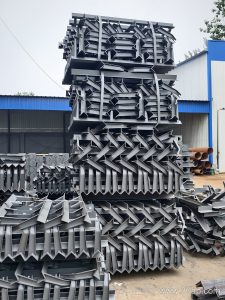
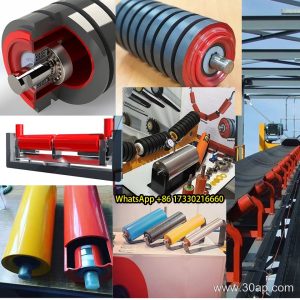
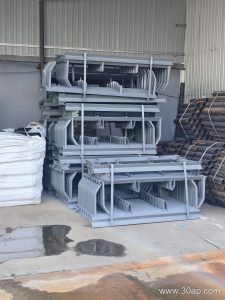
Common configurations include three-roll troughing sets for the carrying side and single or V-return rolls underneath. The roller surface may be plain steel, nylon, or rubber-disc cushioned, depending on whether impact absorption or material carryback is the main concern.
Construction and Key Components
Heavy-load idlers are typically assembled with deep-groove ball bearings such as 6305, 6306, 6308, or 6310, seated in pressed or machined housings. The roller shell is often made from seamless steel tube with diameters ranging from Ø89 up to Ø219 mm. Shaft ends are machined to fit conveyor brackets securely, and seals are selected to keep out dust and water in dirty environments.
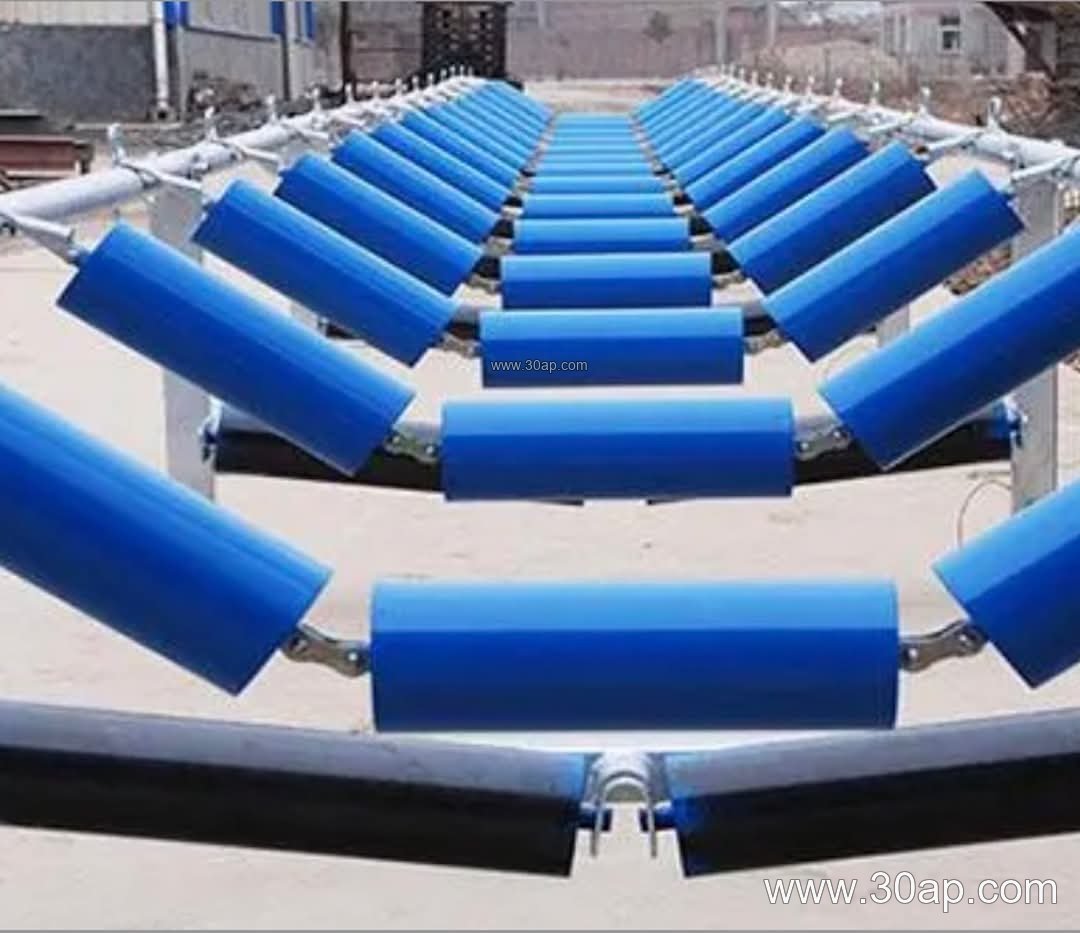
For high-impact zones below crushers or transfer points, rubber-disc impact rolls are used instead of plain steel rolls. These cushion the conveyor belt and reduce the risk of puncture or edge damage. In load-carrying sections, three-roll troughing sets with 20°, 30°, 35°, or 45° trough angles help center the material and prevent spillage.
Where Heavy-Load Idlers Are Used
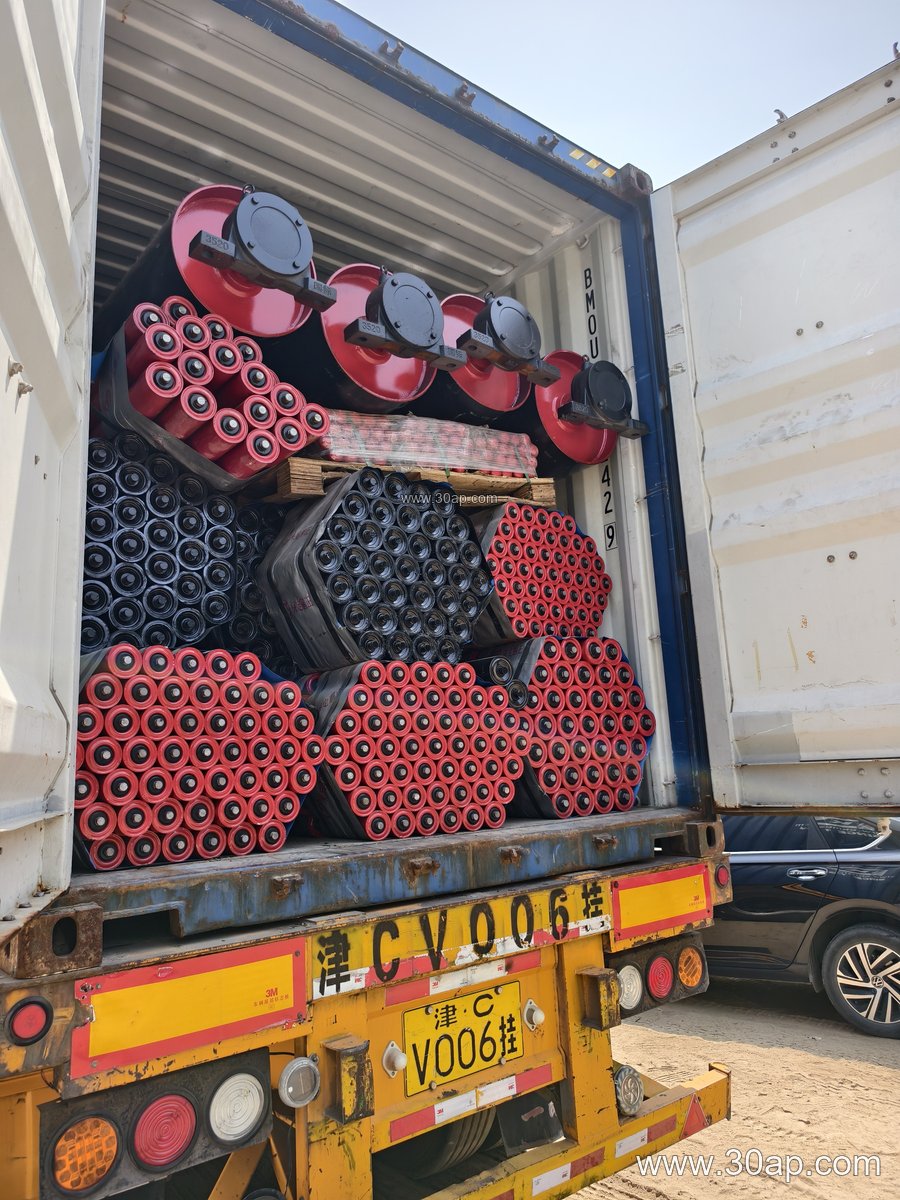
These rollers appear in primary crushing circuits at limestone mines, coal washing plants, and sinter plants where the belt carries sharp, heavy lumps. They are also common in port bulk terminals and power plant coal yards, especially on inclined conveyors that experience high belt pull. In sand and gravel lines, heavy-load idlers support the belt after screening and before stockpiling.
When selecting a heavy-load idler for a specific conveyor, the belt width and speed matter as much as the load. For instance, a B1000 belt may use a three-roll troughing set with 380 mm roll length, while a B1400 belt might use 530 mm rolls. These figures are common references, not fixed rules; the final choice depends on the conveyor profile, material lump size, and support spacing.
Specification and Selection Guide
Buyers should match the idler to the belt width, trough angle, and load conditions. The table below shows typical reference values for heavy-load troughing idlers. Actual roll length and bearing size are determined by the conveyor designer.
| Belt Width | Common Roll Length (three-roll troughing) | Typical Roller Diameter | Common Bearing |
|---|---|---|---|
| B500 | 200 mm | Ø89–Ø108 | 6204 / 6205 |
| B650 | 250 mm | Ø89–Ø127 | 6205 / 6305 |
| B800 | 315 mm | Ø108–Ø133 | 6305 / 6306 |
| B1000 | 380 mm | Ø108–Ø159 | 6306 / 6308 |
| B1200 | 465 mm | Ø127–Ø159 | 6308 / 6310 |
| B1400 | 530 mm | Ø133–Ø178 | 6308 / 6310 |
| B1600 | 600 mm | Ø159–Ø194 | 6310 |
| B1800 | 670 mm | Ø159–Ø219 | 6310 |
| B2000 | 750 mm | Ø178–Ø219 | 6310 |
Heavy-load idlers may be supplied with forward-tilted rolls (about 1.5° to 2°) for better belt training, but this is optional and depends on the application. Trough angles of 30° or 35° are common in mining and quarry duty, while 45° may be used where material containment is critical.
Maintenance and Buyer Checklist
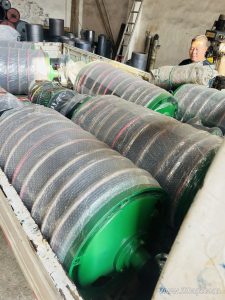
Regular inspection of the idler roller for seal wear, abnormal noise, and shell wear extends service life. In dusty plants, sealed-for-life bearings reduce maintenance frequency. Buyers should confirm the shaft diameter and bracket spacing match the existing conveyor frame. A heavy-load idler is not interchangeable with a drive pulley, tail pulley, or bend pulley—those are separate components with different functions.
When replacing idlers, check the conveyor belt condition and alignment. Worn idlers can cause belt mistracking, edge damage, and increased power draw. Keep spare rolls on hand for critical circuits such as primary crushing and ship loading. Properly sized heavy-load idlers help maintain steady material flow in the toughest bulk handling environments.