What a Polyurethane Idler Is and Where It Fits
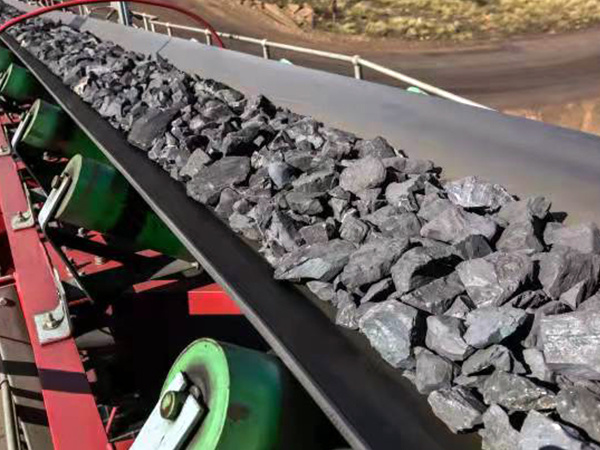
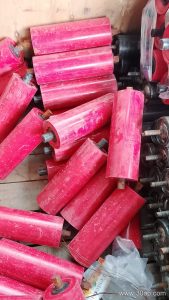
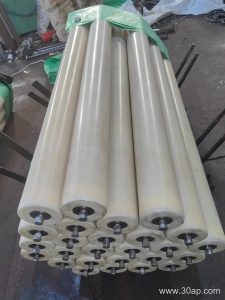
A polyurethane idler is a conveyor idler roller whose outer surface is made of polyurethane rather than steel, rubber, or nylon. It sits under the conveyor belt on the carrying or return side and supports the belt and the material load. The polyurethane layer can be a solid cast body or a sleeve bonded to a steel core. Because polyurethane is elastic and resistant to abrasion, this idler is often chosen where the belt runs at high speed, where fine abrasive dust is present, or where noise and belt wear need to be reduced. In a sandstone aggregate line, a cement plant, or a coal handling system, the polyurethane idler can replace a standard steel roller in selected positions without changing the conveyor frame.
The product is not a drive pulley, tail pulley, or bend pulley. Those are conveyor pulleys that transmit power or change belt direction. The polyurethane idler is a free-rotating roller that supports the belt. It may be used together with conveyor brackets and a conveyor pulley on the same conveyor, but each has its own role.
Construction and Common Forms
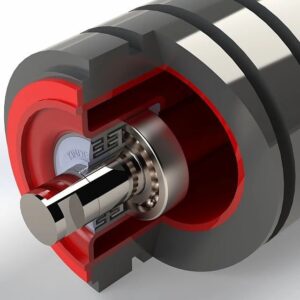
A typical polyurethane idler consists of a steel shaft, bearing housings, bearings, a sealing system, and a polyurethane outer layer. The layer may cover the full roller face or be formed as rings. Common bearing sizes include 6204, 6205, 6305, 6306, 6308, and 6310, selected according to load and roller diameter rather than a fixed rule. Seals are important in dusty sites such as a limestone mine or a power plant coal yard, because fine particles can enter the bearing cavity and shorten service life.
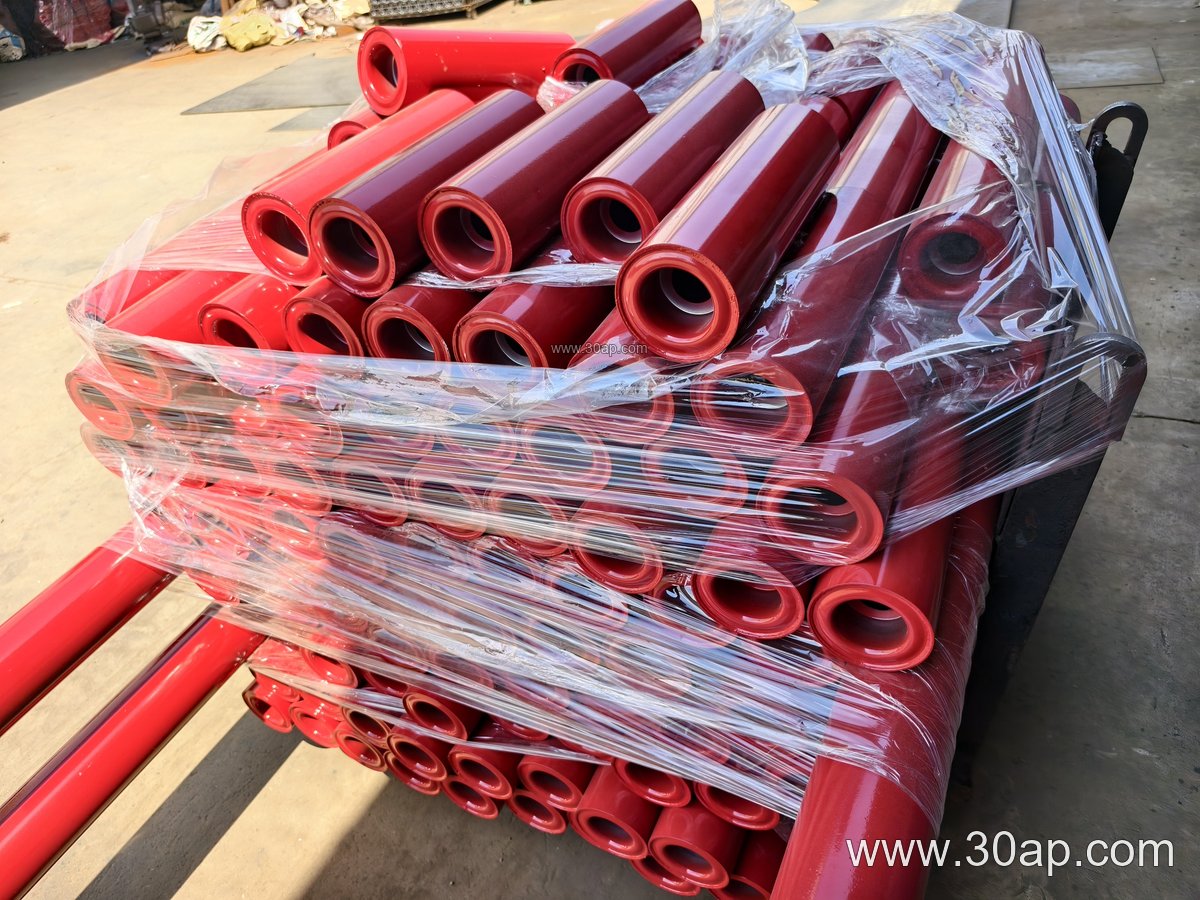
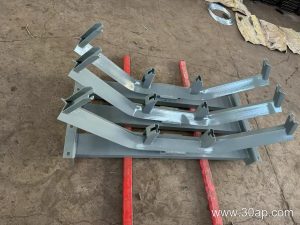
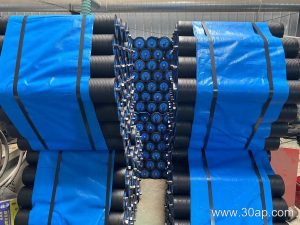
The idler can be supplied in the same group forms as other idlers: single roller, two-roller, and three-roller trough sets. For a three-roller trough set, the side rollers are inclined at a trough angle of 20, 30, 35, or 45 degrees. The polyurethane surface may be smooth or profiled. A V-shaped return idler with polyurethane covering is also possible for belt training on the return strand.
Reference Dimensions for Selection
The table below gives common reference values. These are not fixed combinations and should be confirmed against the actual conveyor design. Roller length changes with belt width, trough angle, and idler group form; side rollers and center rollers can differ.
| Belt width | Common roller diameter range | Example roller length for three-roller trough set | Common trough angle |
|---|---|---|---|
| B500 | Ø63 to Ø108 | about 200 mm | 20–35 degrees |
| B650 | Ø76 to Ø133 | about 250 mm | 20–35 degrees |
| B800 | Ø89 to Ø159 | about 315 mm | 20–45 degrees |
| B1000 | Ø102 to Ø178 | about 380 mm | 20–45 degrees |
| B1200 | Ø108 to Ø194 | about 465 mm | 20–45 degrees |
| B1400 | Ø127 to Ø219 | about 530 mm | 30–45 degrees |
| B1600 | Ø133 to Ø219 | about 600 mm | 30–45 degrees |
| B1800 | Ø159 to Ø219 | about 670 mm | 30–45 degrees |
| B2000 | Ø178 to Ø219 | about 750 mm | 30–45 degrees |
These values are examples only. A B800 belt does not require one specific pulley diameter, and a given belt width does not define a single shaft diameter. The shaft size follows the bearing bore, load rating, and bracket design.
Applications and Practical Notes
Polyurethane idlers are used in abrasive and moderately corrosive environments. In a copper mine or iron ore plant, the elastic surface can absorb impact and reduce belt cover wear at transfer points. In a fertilizer or grain handling line, a smooth polyurethane surface may help avoid material buildup. In a tunnel spoil conveyor, the idler should be selected with adequate sealing because water and grit are common.
For a buyer, the important points are the belt width, the idler group form, the roller diameter, the shaft and bearing size, the sealing arrangement, and the mounting dimensions that match the conveyor bracket. The polyurethane hardness and thickness should be specified for the duty. It is also useful to state whether the idler is for the carrying side or the return side, and whether a training effect is needed. A polyurethane idler is not a substitute for a drive pulley or a bend pulley; it is a support roller. When compared with a rubber-covered return idler, the polyurethane version often offers better abrasion resistance and lower weight, but the final choice depends on the material and operating conditions.