What an Impact Idler Set Does
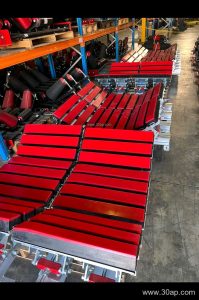
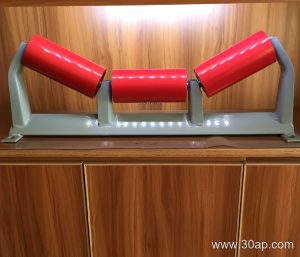
An impact idler set is the group of rollers installed at a conveyor’s loading point, where bulk material drops onto the belt. Instead of a standard steel troughing roll, this set uses rubber-ring or otherwise cushioned rollers to absorb the energy of falling rock, ore, clinker, or aggregate. The goal is simple: protect the conveyor belt from impact damage, reduce bounce and spillage, and keep the belt tracking steadily as the load settles.
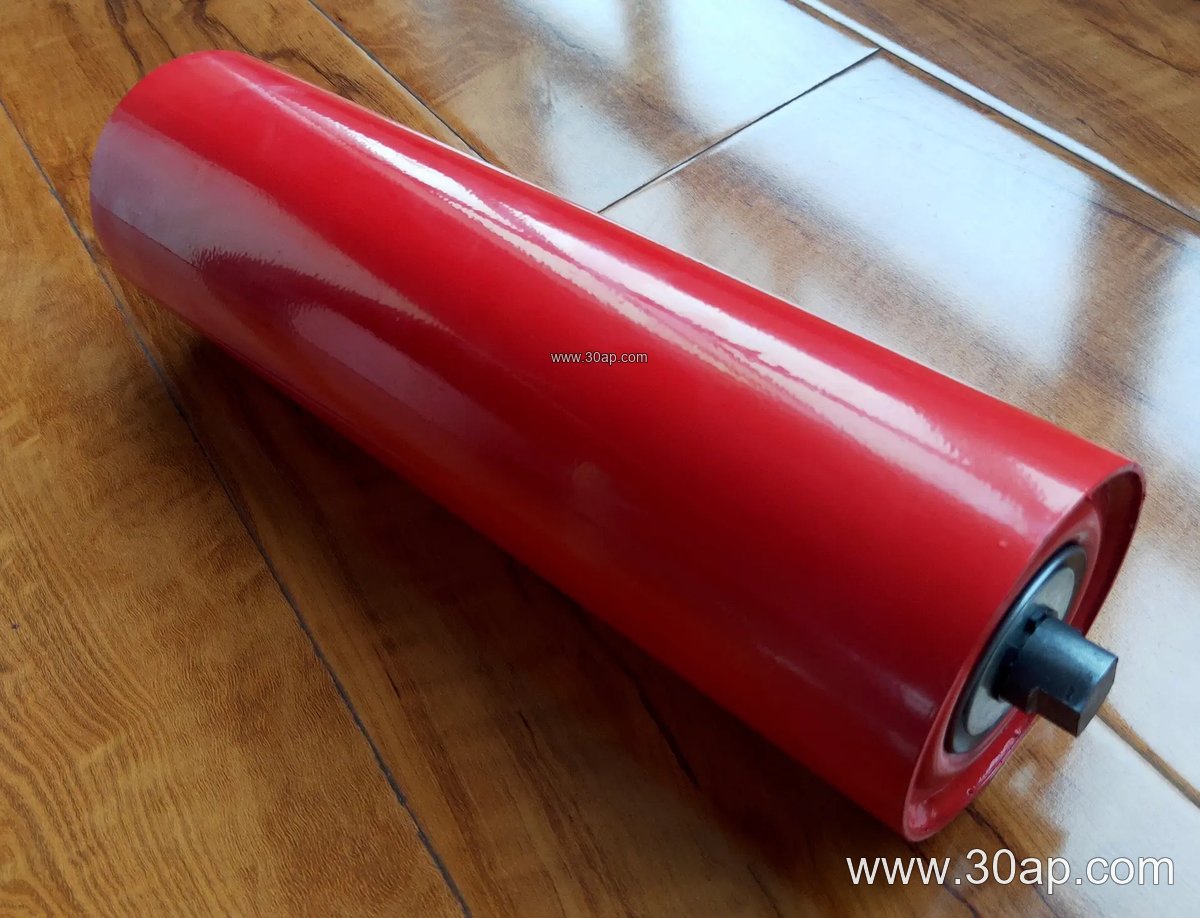
The set is usually built as a three-roll troughing assembly, though two-roll and single-roll arrangements exist for narrower belts or special chute layouts. Each roller is fitted with a resilient surface, commonly a stack of rubber rings or a rubber sleeve, mounted on a steel shaft with sealed bearings. The frame, often a sturdy bracket assembly, holds the rolls at the trough angle required by the conveyor design.
Construction Details That Matter
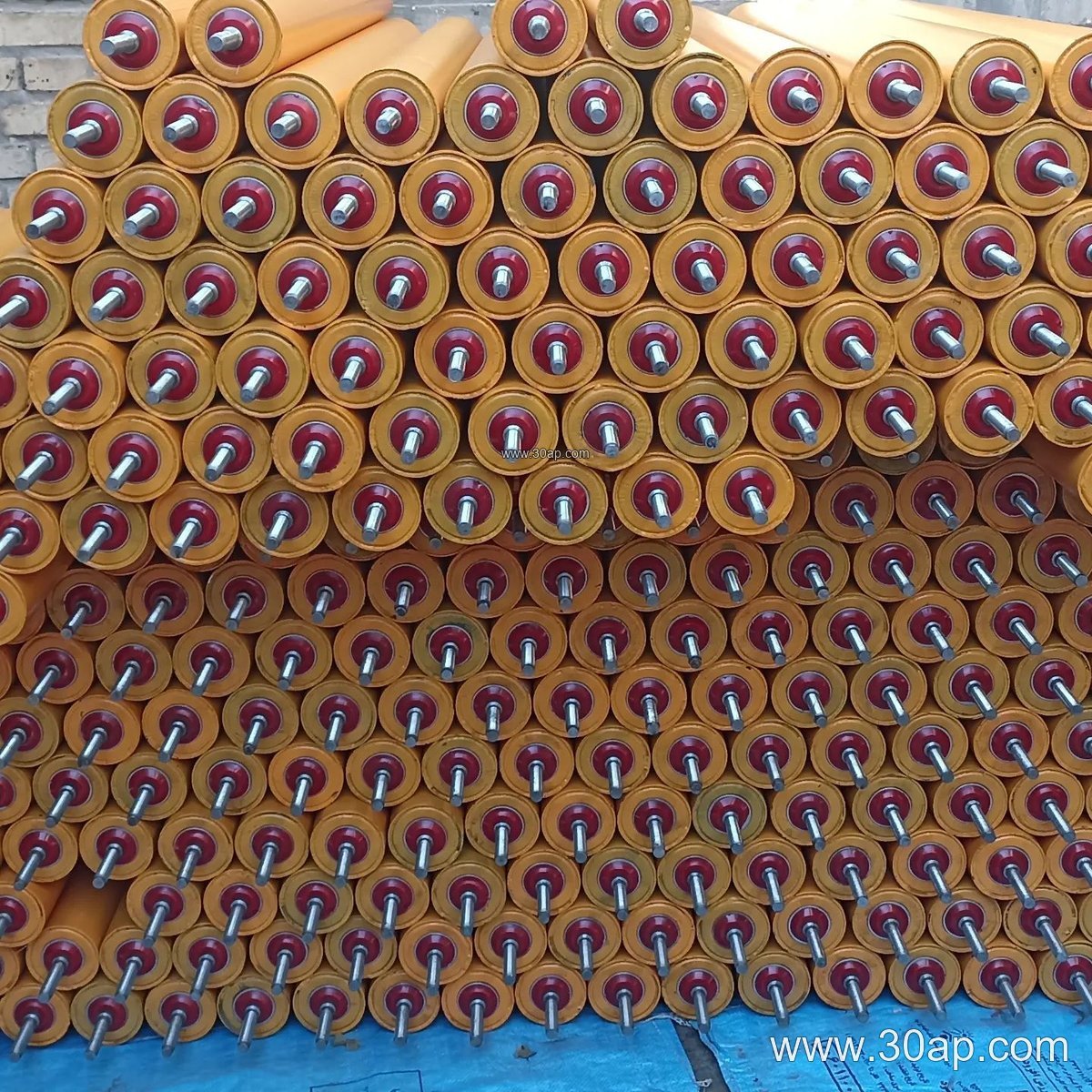
Buyers should look at three areas: the roller surface, the bearing arrangement, and the frame. Rubber-ring rollers are the most common form because the rings can be replaced or compressed slightly under load. Roller diameters for impact stations tend to be larger than those on the carrying run, since a bigger roll gives more room for cushioning and a lower rotational speed. Common roll diameters in this family include Ø89, Ø108, Ø127, Ø133, Ø159, and Ø178 mm, with the final choice depending on belt width, drop height, and lump size.
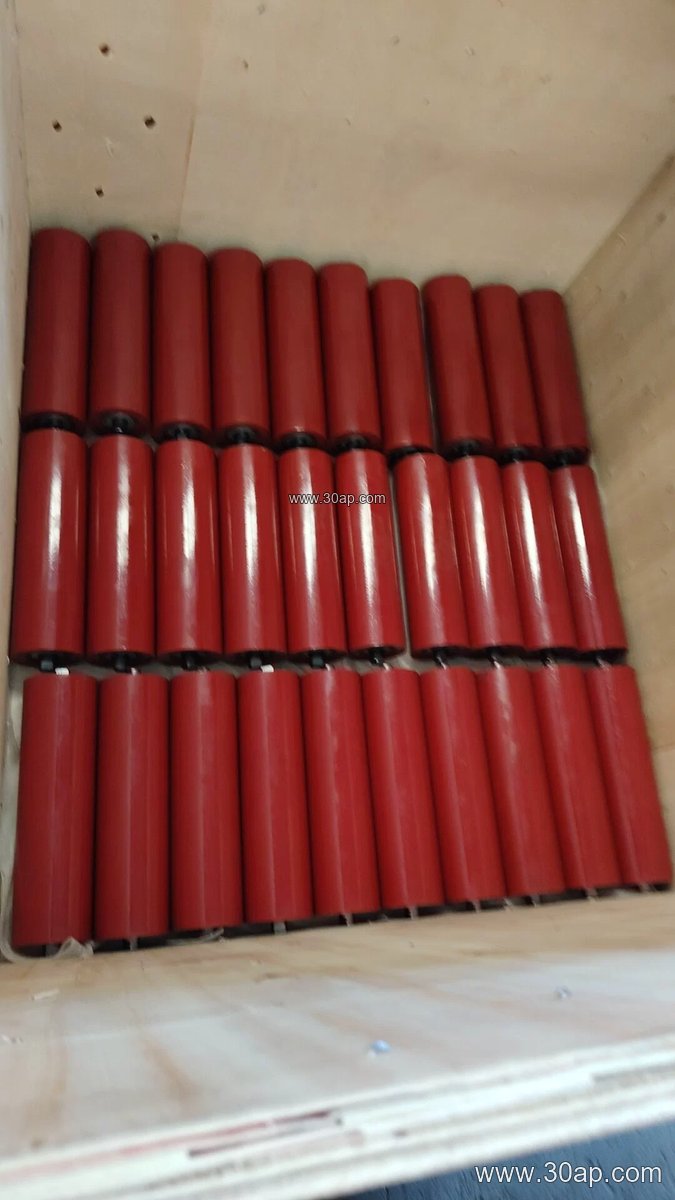
Bearings are typically 6204, 6205, 6305, 6306, or 6308 in sealed housings, but the bearing number should not be assumed from belt width alone. Roll length follows the belt width and trough angle; a three-roll set on a B800 belt often uses rolls around 315 mm long, while a B1200 set may use rolls near 465 mm. These are common examples, not fixed pairings. Side rolls and center rolls can differ in length, and the frame is designed around the actual trough geometry.
Where These Sets Are Used
Impact stations are found wherever material enters a conveyor with force. In a limestone quarry or aggregate line, the primary crusher discharge is a classic location. In a coal washing plant or power station coal yard, transfer chutes drop fuel onto long conveying runs, and a cushioned set reduces belt punctures and edge damage. Cement plants use them under clinker coolers and at kiln feed transfer points, where hot, abrasive lumps arrive with speed.
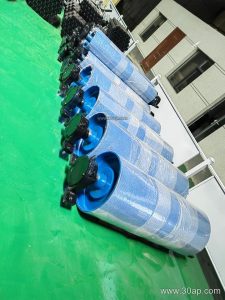
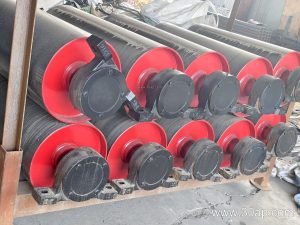
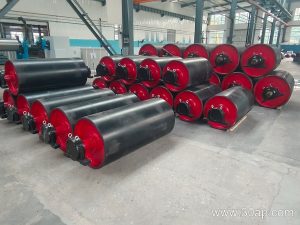
The set works alongside other components: the conveyor belt itself, the carrying idler rollers along the run, the conveyor pulley at the head and tail, and the conveyor bracket that fixes everything to the stringer. A well-placed impact set protects an abrasion resistant conveyor belt or a heavy-duty mining conveyor belt from repeated shock loads. In dusty, wet, or corrosive environments, sealed bearings and rubber surfaces also help the station survive longer between inspections.
Choosing the Right Configuration
Selection starts with the duty, not with a catalogue number. A buyer should know the belt width, the maximum lump size, the drop height, the throughput, and the material’s abrasiveness. From there, the trough angle (commonly 20, 30, 35, or 45 degrees) and the number of rolls can be matched to the belt’s natural trough. Impact sets are not interchangeable with return rollers or with a bend pulley; each has a distinct role in the conveyor layout.
Practical checks during selection include:
- Confirming the roller diameter suits the frame height and belt clearance.
- Checking that the bearing seal type matches the dust and moisture level.
- Verifying the roll length and trough angle against the actual belt width.
- Allowing enough impact stations in series to spread the load at high drop points.
Maintenance and Buyer Notes
Inspect the station regularly for worn rubber rings, flat spots, and loose brackets. A roller that stops turning will wear a flat area into the belt and can cause tracking problems. Replacing rings or complete rollers early is usually cheaper than replacing a damaged belt or a scored conveyor pulley. Lubrication is generally not required for sealed bearings, but contamination checks are worthwhile in coal, cement, and ore handling.
When requesting a quote, describe the application rather than only a size. Mention the belt width, the material, the drop height, and the ambient conditions. That helps a supplier propose a sensible impact idler set instead of a generic roll. For related conveyor components, buyers often review options such as an EP conveyor belt or a flame retardant conveyor belt at the same time, since belt grade and impact protection work together. A balanced conveyor design considers the belt, the idlers, the pulleys, and the structure as one system.