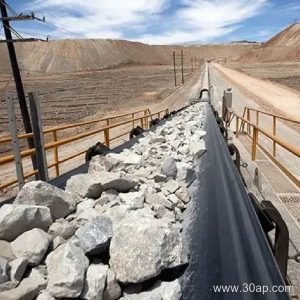
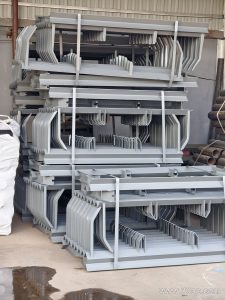
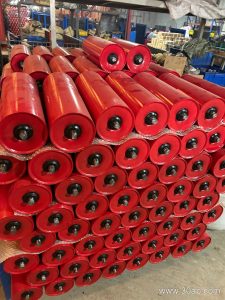
What a Stone Conveyor Pulley Does on a Bulk Handling Line
A stone conveyor pulley is the rotating drum that drives, tensions, or redirects the conveyor belt in a quarry, aggregate plant, or mineral processing line. Unlike a carrying idler roller that simply supports the belt, this pulley transmits torque or changes belt direction at critical points along the conveyor structure. In a typical stone crushing circuit, you will find the drive pulley at the head, a tail pulley at the feed end, and one or more bend pulleys in the tension take-up area. Each position demands a different design approach, and treating them as interchangeable often leads to premature belt wear or pulley failure.
Construction Details That Matter in Abrasive Conditions
The core is usually a welded steel drum with machined end discs, mounted on a through shaft or stub shafts. The shaft diameter is determined by torque and radial load, not by belt width alone. Common shaft sizes range from Ø50 mm on small units up to Ø200 mm on heavy-duty head pulleys. The pulley face width typically exceeds the belt width to allow for belt tracking variation: for example, a B800 belt often runs on a pulley with roughly 950 mm face width, while a B1200 belt may use a 1400 mm face. These are reference proportions, not fixed pairings.
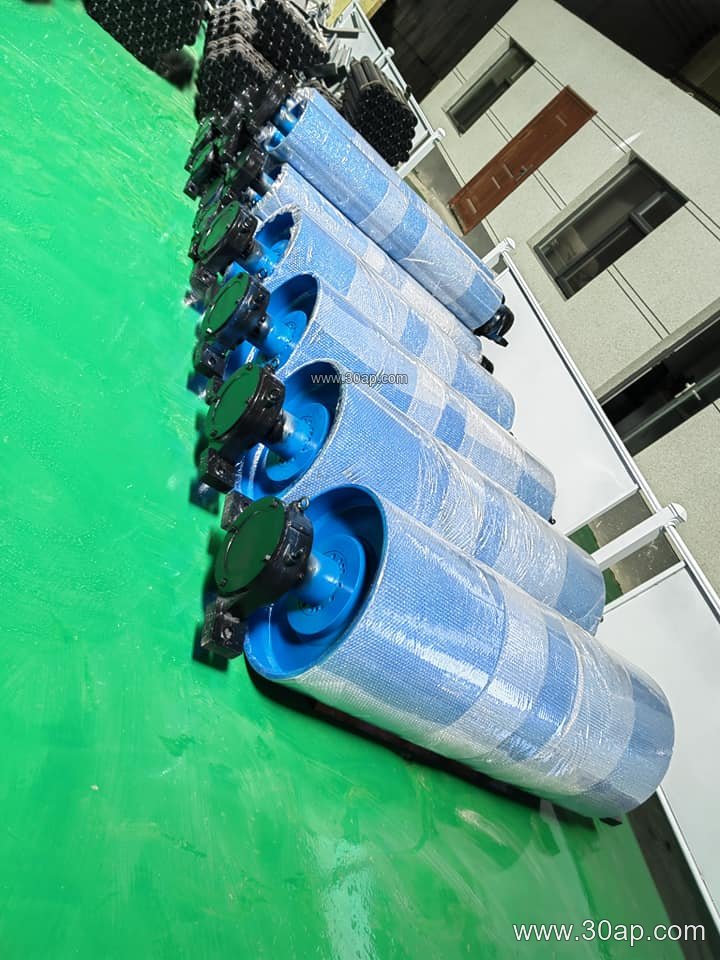
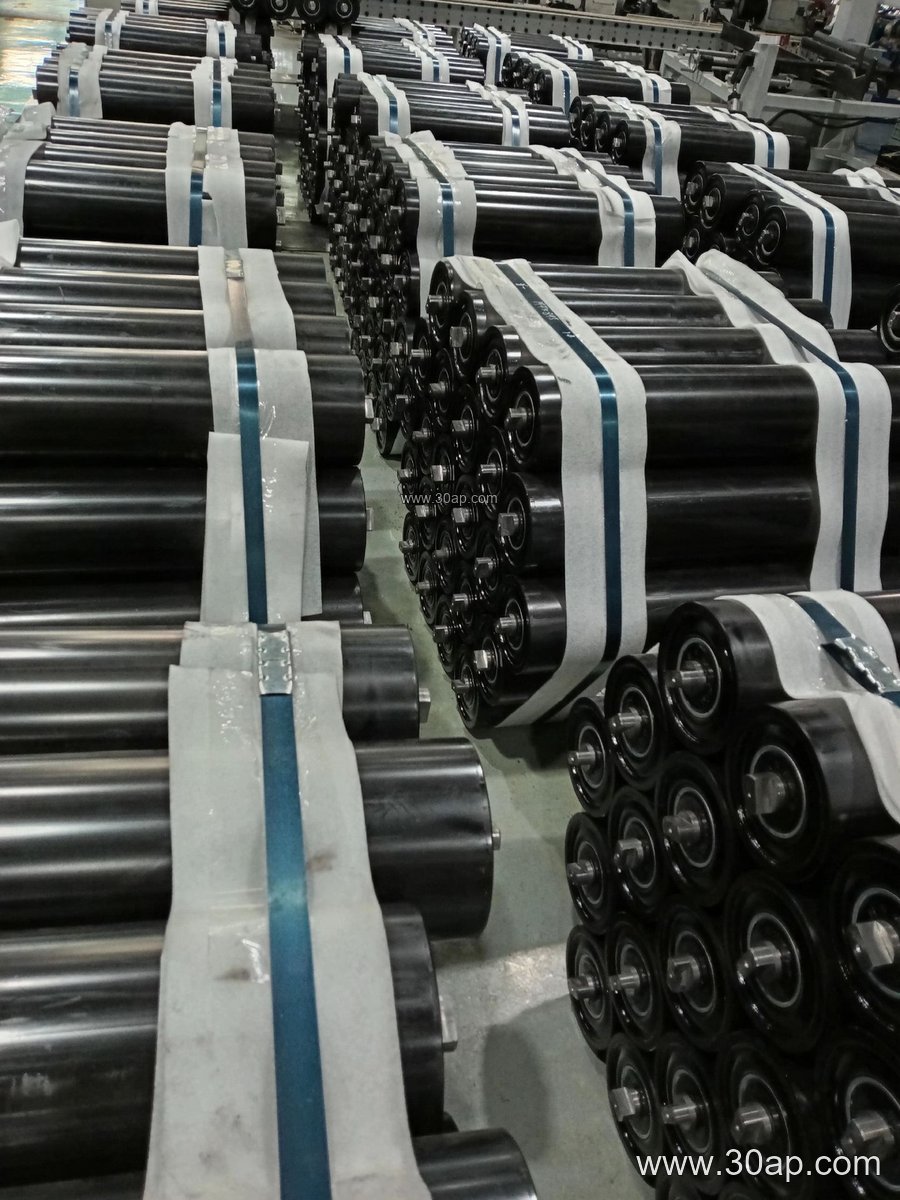
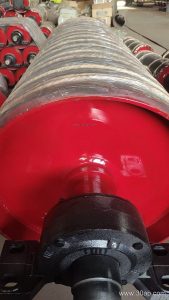
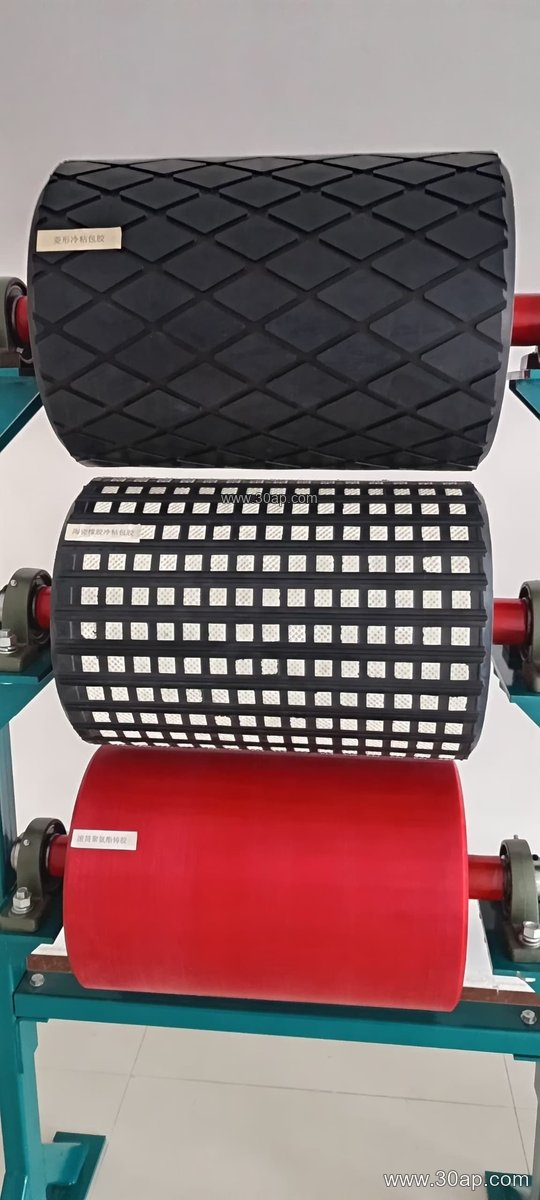
Surface treatment is a key decision for stone applications. Smooth face pulleys are sometimes used on non-drive positions, but abrasive stone and gravel rapidly polish a plain steel shell, reducing grip. Rubber lagging—applied as cold-bonded sheet, hot-vulcanized, or molded diamond and herringbone patterns—improves friction and cushions the belt. Ceramic lagging offers high wear resistance where sharp rock fragments are present. Lagging thickness commonly falls in the 8 mm to 20 mm range depending on duty.
Matching Pulley Position to the Application
At the head of a secondary crushing conveyor, the drive pulley must handle high torque and often receives the dirtiest side of the belt. A diamond-grooved rubber lagging helps shed water and fine dust. At the tail, a smooth or lightly lagged wing pulley can reduce material buildup, though wing pulleys are a separate subtype used mainly for self-cleaning—not a replacement for a standard tail drum in every case. Bend pulleys in the take-up zone usually see lower torque but must tolerate constant tension; a flat rubber surface is often sufficient. For a relevant comparison, a conveyor pulley with ceramic lagging may outlast a plain rubber version in a primary jaw crusher discharge, but the same ceramic surface can be unnecessarily aggressive on a light-duty sand conveyor.
Common Reference Dimensions and Surface Forms
The table below gives typical reference values for stone conveyor pulleys. Actual selection depends on belt tension, speed, and material lump size. No single diameter is mandatory for a given belt width.
| Belt width (reference) | Pulley face width (approx.) | Common pulley diameters | Typical lagging |
|---|---|---|---|
| B500 | 600 mm | Ø250, Ø315, Ø400 | 8–12 mm rubber |
| B650 | 750 mm | Ø315, Ø400, Ø500 | 10 mm rubber or diamond |
| B800 | 950 mm | Ø400, Ø500, Ø630 | 10–15 mm rubber |
| B1000 | 1150 mm | Ø500, Ø630, Ø800 | 12–15 mm rubber or ceramic |
| B1200 | 1400 mm | Ø630, Ø800, Ø1000 | 15 mm diamond or ceramic |
| B1400 | 1600 mm | Ø800, Ø1000, Ø1250 | 15–20 mm rubber |
| B1600 | 1800 mm | Ø1000, Ø1250, Ø1400 | 15–20 mm ceramic or plain |
These combinations are illustrative. A B1200 belt might run on a Ø1000 drive pulley in one plant and a Ø800 tail pulley in another, depending on tension and space constraints. Shaft diameters are likewise load-based: Ø80, Ø100, Ø120, and Ø140 are common in medium-duty stone conveyors, but they are not derived from belt width alone.
Buyer Checklist for Stone Conveyor Pulley Procurement
- Confirm the pulley position (drive, tail, bend, take-up) and whether it must transmit torque or only redirect the belt.
- Specify belt width, pulley face width, and required diameter based on belt tension calculations—not on a catalog shortcut.
- Choose lagging type and thickness according to material abrasiveness and moisture. Sharp limestone or granite favors thicker rubber or ceramic; a clean gravel line may use standard diamond rubber.
- Verify shaft diameter and bearing size against the actual radial load, and check that the conveyor bracket and bearing housing match the shaft end.
- Ask for dynamic balancing data on high-speed drive pulleys, and confirm that the lagging is bonded to a properly prepared shell.
In a sand and gravel plant or a cement clinker line, the stone conveyor pulley is a wear part as much as a drive component. Keeping spare lagging and monitoring belt tracking around the tail and bend positions will extend service life more reliably than upgrading one pulley in isolation.