What a Turning Pulley Does on a Conveyor
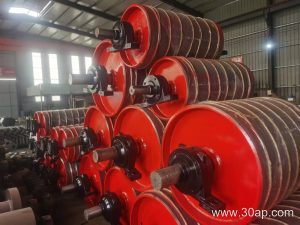
A turning pulley is the drum that changes the path of a conveyor belt, most often at the tail or in a tensioning station where the belt must reverse direction before returning to the carrying run. In plant language it is also called a bend pulley, and that second name is the accurate equivalent for the same component. It is not a drive pulley, not a tail pulley in the strict sense, and not a snub pulley, even though these drums share a similar cylindrical form.
In a limestone quarry or a cement clinker line, the turning pulley usually sits where space is tight and the belt has to be routed around an obstacle. Its job is simple to describe and demanding to execute: guide the belt smoothly, keep tension stable, and avoid the tracking problems that appear when a drum is too small or badly aligned.
Construction and Surface Options
The body is normally a steel shell welded to end discs, with a shaft running through hubs or welded to the discs. Shell thickness, hub design, and shaft diameter are chosen from the belt tension and the load the drum carries, not from belt width alone. A common mistake among buyers is to assume that a B800 belt must take a specific shaft size; shaft diameter is determined by torque and bearing load, so the same belt width can appear with different shaft dimensions on different machines.
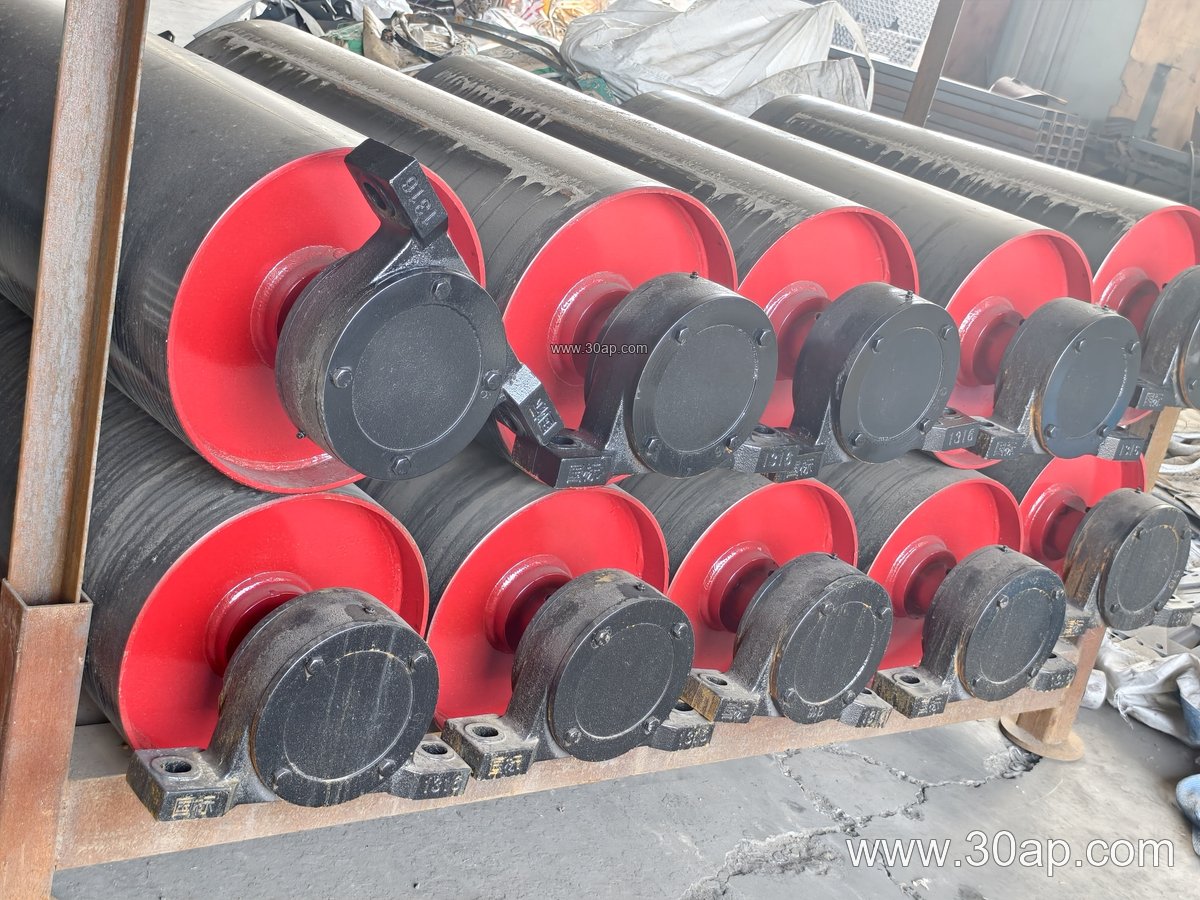
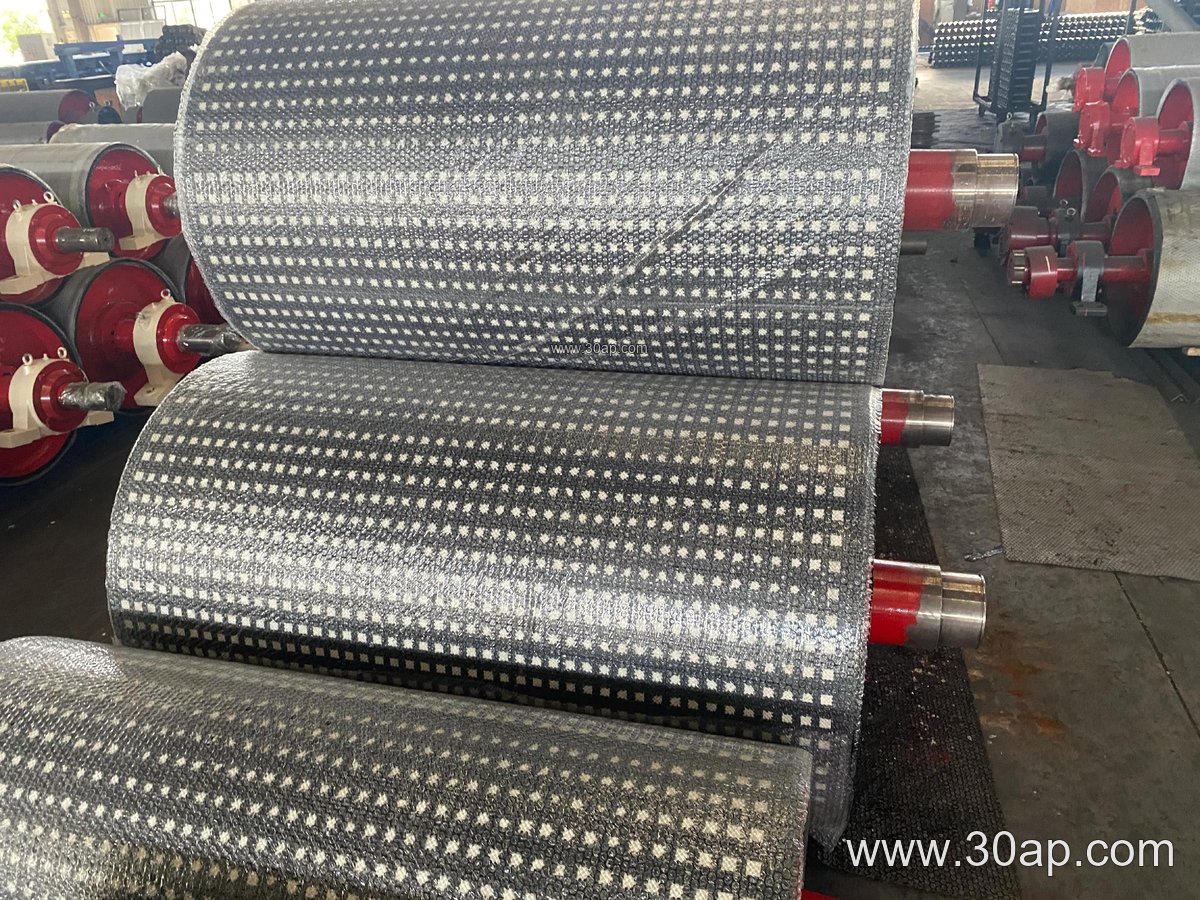
Surface finish matters more on a turning pulley than many people expect. A plain face is adequate where the belt wraps at a generous angle and contamination is low. Rubber lagging, applied by cold bonding or hot vulcanizing, improves grip and protects the shell. Diamond or herringbone patterns help shed water and fine dust, while ceramic lagging suits abrasive duty in iron ore or sinter plants. Common lagging thicknesses are 8, 10, 12, 15, and 20 mm, selected according to wear conditions.
- Plain face for clean, lightly loaded return sections
- Cold-bonded or hot-vulcanized rubber for general grip
- Diamond or herringbone pattern for wet or dusty service
- Ceramic tiles for highly abrasive bulk materials
Matching the Drum to Belt Width and Diameter
Face width is normally a little wider than the belt so that the belt is fully supported without overhang. Reference values often quoted in design sheets include B400 with roughly 500 mm face, B650 with about 750 mm, B1000 with about 1150 mm, and B1400 with about 1600 mm. Diameter is a separate decision, driven by the wrap angle, belt carcass flexibility, and the space available for the assembly. Typical drums range from Ø200 up to Ø1800 on large installations, and combinations such as B800 × Ø500 or B1200 × Ø1000 are common in aggregate and coal handling.
| Parameter | Common reference range | Notes |
|---|---|---|
| Belt width | B400 to B2400 | Face width usually exceeds belt width |
| Drum diameter | Ø200 to Ø1800 | Set by wrap angle and belt flexibility |
| Shaft diameter | Ø50 to Ø200 | Determined by torque and bearing load |
| Lagging thickness | 8, 10, 12, 15, 20 mm | Chosen for grip and abrasion |
These figures are reference data, not a fixed matching rule. A given belt width may run on more than one drum diameter depending on the conveyor layout.
Where It Fits in the Plant
In a coal preparation plant, the turning pulley is often found in the tensioning take-up, where it keeps the belt wrapped around the drive without letting slack develop. In a sand and gravel line, it may appear at a transfer point to route the belt around a chute. Similar duties arise in power plant coal handling, port bulk terminals, and tunnel muck removal, where the belt path is rarely a straight line.
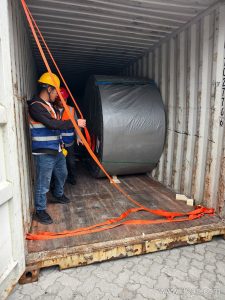
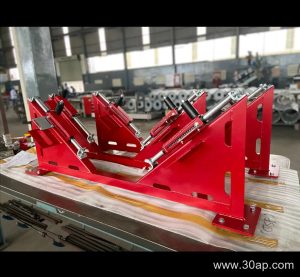
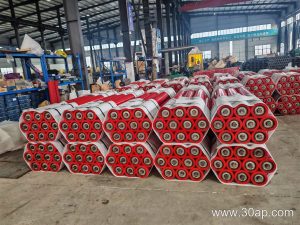
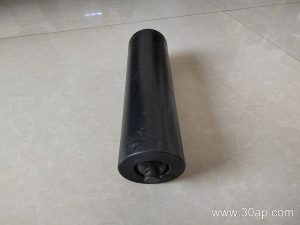
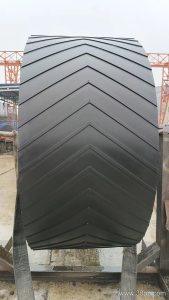
The drum works with the conveyor belt, the idler roller sets that support the belt, and the conveyor bracket that holds the bearing housings. Misalignment between the pulley and the idlers is a frequent cause of edge wear, so installation measurements deserve as much attention as the drum specification.
Buyer Checklist
Before ordering, confirm the belt width and the required face width, the drum diameter that suits the wrap angle, the shaft diameter and bearing type, and the lagging surface for the material being handled. Ask how the pulley will be balanced and how the lagging is bonded. State the position in the conveyor, since a turning pulley in a tensioning station sees different loads from one used only to redirect the belt. Provide the belt speed and the expected tension so the supplier can size the shell and shaft properly, and keep spare idler rollers and brackets in mind when planning maintenance access around the drum.