What Rubber Pulley Lagging Does on a Conveyor
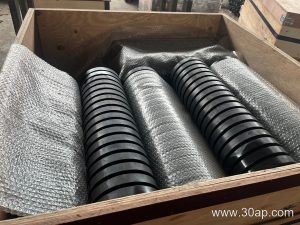
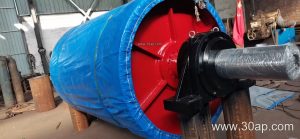
Rubber pulley lagging is the rubber layer bonded to the shell of a conveyor pulley where the belt makes contact. Its job is straightforward: raise friction between the pulley face and the belt so torque passes without slip, and shield the steel shell from abrasive material, moisture, and belt wander. On a drive pulley, that friction is what actually moves the loaded belt. On a tail or bend pulley, the lagging mainly protects the shell and helps the belt track cleanly.
In a quarry, a cement plant, or a power plant coal yard, a slipping drive pulley quickly turns into belt damage, spillage, and unplanned downtime. Lagging is a small component with an outsized effect on conveyor reliability.
How the Lagging Is Built and Applied
Most lagging is supplied either as pre-formed rubber strips with a molded surface, or as uncured rubber sheet that is applied and vulcanized in place. The common attachment methods are hot vulcanized bonding, cold bonded adhesive systems, and cast or sprayed rubber. Hot vulcanized lagging generally gives the strongest bond and is often chosen for high-torque drive pulleys in mining and aggregate duty.
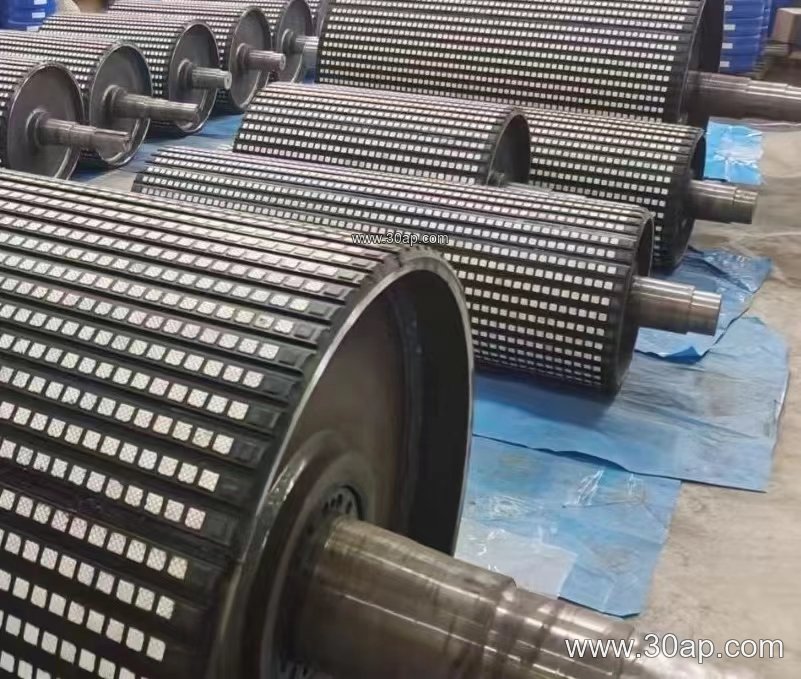
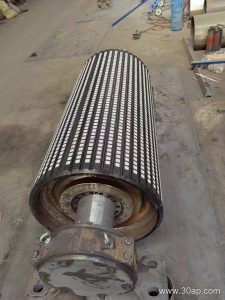
Surface form matters as much as the compound. Plain (smooth) lagging suits light duty and cleaning-friendly positions. Diamond grooved lagging sheds water and fines and is a common general-purpose choice. Herringbone patterns improve traction directionally. Ceramic-lagged pulleys embed hard tiles in rubber for very high-wear drive positions. Thickness commonly runs 8, 10, 12, 15, or 20 mm, selected by torque, belt tension, and abrasion severity.
Where It Fits in the Conveyor Layout
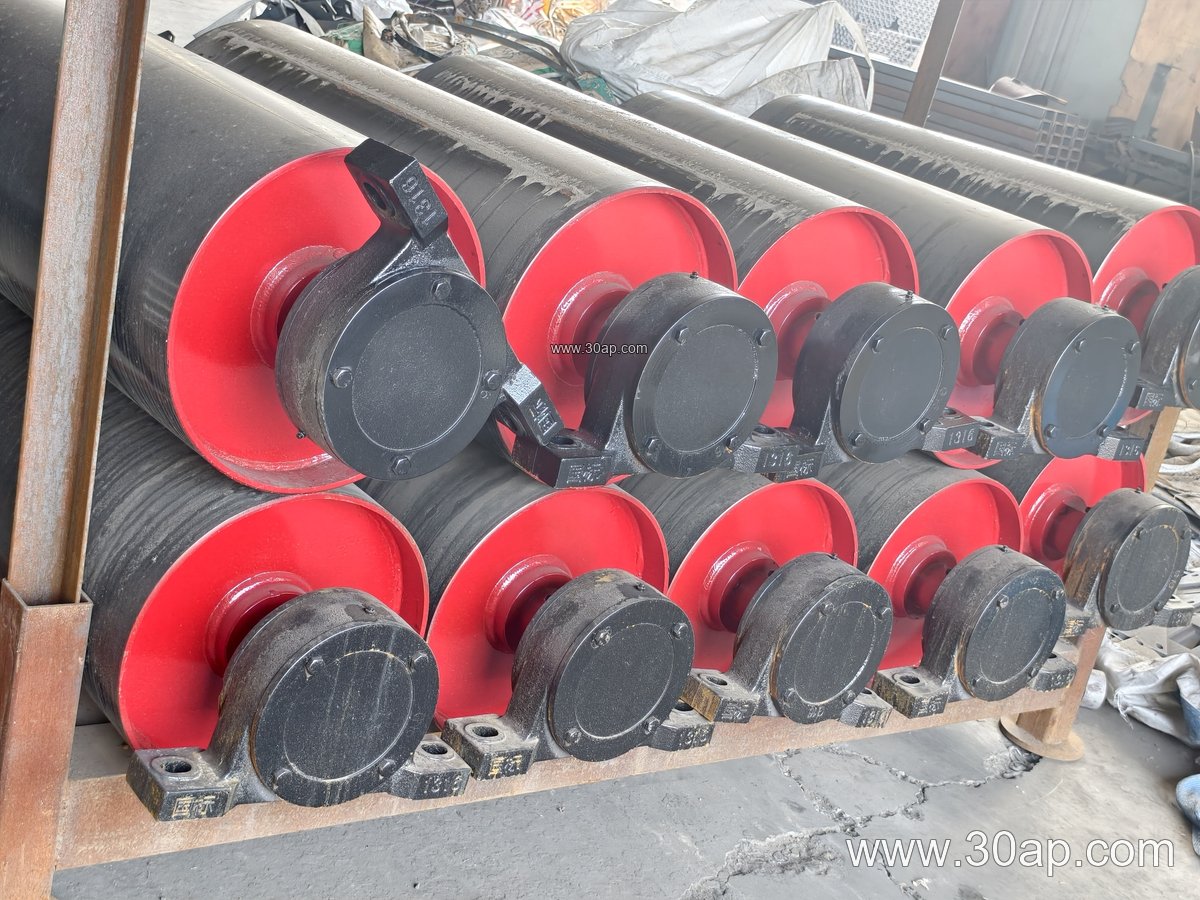
Lagging appears on several pulley types, and the requirement differs by position:
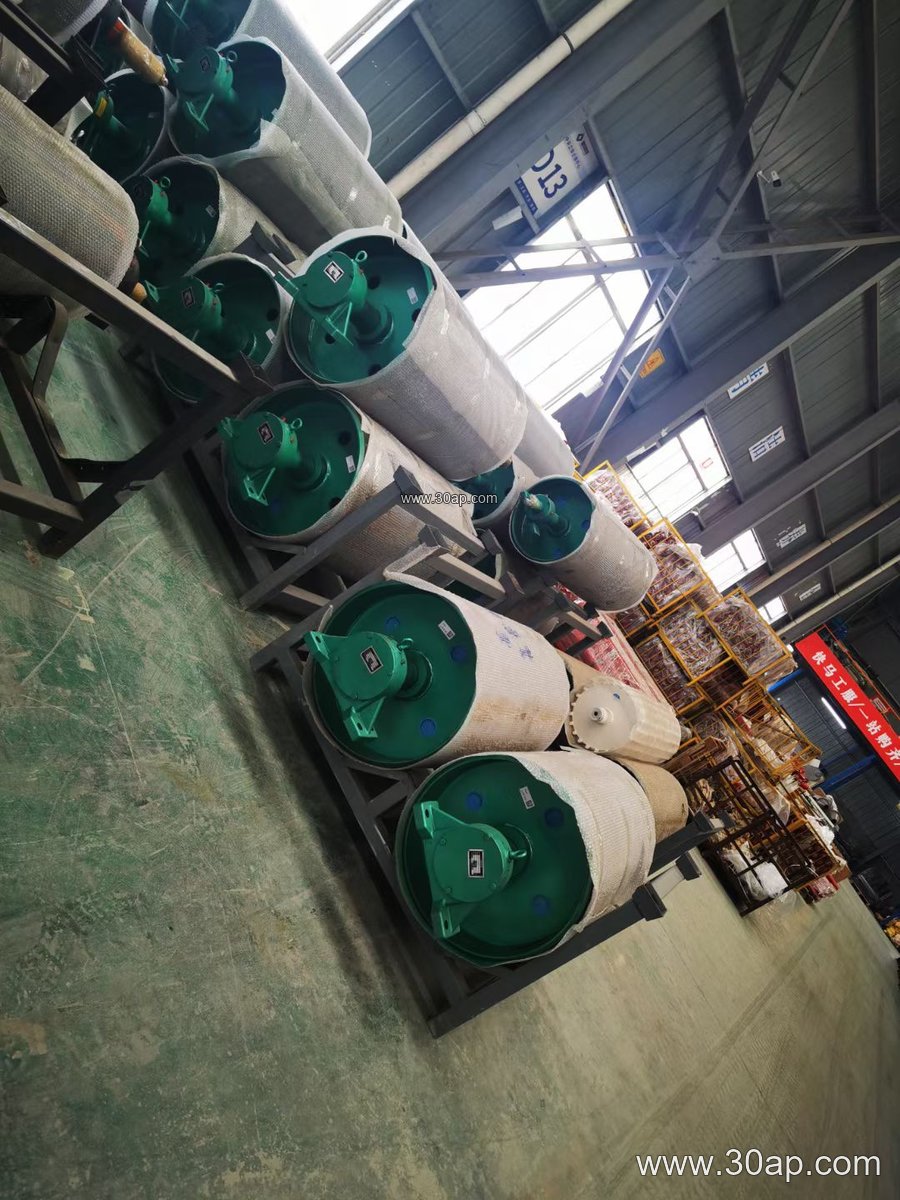
- Drive or head pulley: highest traction demand; usually diamond, herringbone, or ceramic lagging in a thicker gauge.
- Tail pulley: often plain or lightly grooved lagging to resist fines buildup and protect the shell.
- Bend and take-up pulleys: moderate wrap angles; plain or diamond lagging is typical, with thickness chosen to keep the belt path stable.
- Snub or pressure pulleys: thin lagging where space is tight.
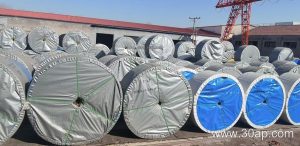
A bend pulley is not a substitute for a drive pulley, and lagging specified for one position should not be assumed correct for another. The same conveyor may carry an abrasion resistant conveyor belt on the carrying side and a thinner belt on the return, and lagging must suit the actual contact conditions at each pulley.
Sizing Notes for Buyers
Lagging is ordered by pulley face width, shell diameter, and thickness. Face width usually exceeds belt width so the belt is fully supported. Reference combinations such as B800 × Ø500 or B1200 × Ø1000 are common starting points, but belt width does not dictate a single pulley diameter. Shaft diameter is set by torque and load, not by belt width alone. Typical shaft sizes range from Ø50 to Ø200 depending on drive duty.
| Belt width (B) | Typical pulley face width | Common lagging thickness |
|---|---|---|
| B650 | approx. 750 mm | 8–10 mm |
| B800 | approx. 950 mm | 10–12 mm |
| B1000 | approx. 1150 mm | 10–15 mm |
| B1200 | approx. 1400 mm | 12–15 mm |
| B1400 | approx. 1600 mm | 12–20 mm |
| B1600 | approx. 1800 mm | 15–20 mm |
These figures are indicative only; final dimensions come from the pulley drawing and the conveyor design.
Selection and Maintenance Pointers
Match the rubber compound to the environment. In a coal handling plant, flame retardant and anti-static properties may be required for the belt and for components in the same area, so confirm the specification with the pulley supplier. In a fertilizer or chemical plant, oil and chemical resistance matter. In a crushing and screening circuit, high abrasion resistance and impact tolerance dominate. A heavy-duty mining conveyor belt running at high tension will usually justify premium lagging on the drive pulley.
Inspect lagging for groove wear, glazing, chunking, and bond failure at each shutdown. Worn diamond grooves lose water-shedding ability; polished rubber loses friction. Re-lagging a drive pulley before slip begins is far cheaper than replacing a damaged belt. Keep the pulley face clean and check that the conveyor bracket and take-up are aligned so the belt runs centered.
For matching components, see the conveyor pulley and conveyor belt ranges at conveyoraccessories.com, and confirm lagging dimensions against your pulley drawing before ordering.