What a Conveyor Leg Does on a Belt System
A conveyor leg is the vertical support that carries the weight of a conveyor frame, the belt, the material load, and the idler rollers down to the floor or foundation. In a typical trestle or gallery structure, the leg works together with a conveyor bracket and a horizontal stringer to form a rigid support station. Get the leg design right and the belt runs true; get it wrong and the whole frame starts to move, tilt, or vibrate.
Legs are used wherever a conveyor needs elevation, such as a cement plant clinker line, a coal handling gallery at a power station, or a crushing and screening circuit in a quarry. They are also common on short transfer conveyors in a batching plant or a fertilizer granulation building.
How a Conveyor Leg Is Built
Most legs are fabricated from angle steel, channel steel, or folded steel plate. A simple single-post leg is common on narrow frames, while H-shaped or A-shaped legs are used where the frame is wider or the load is heavier. The leg usually ends in a base plate with anchor holes, and the top is fitted with a connection plate or bracket that matches the stringer.
Key features a buyer should check:
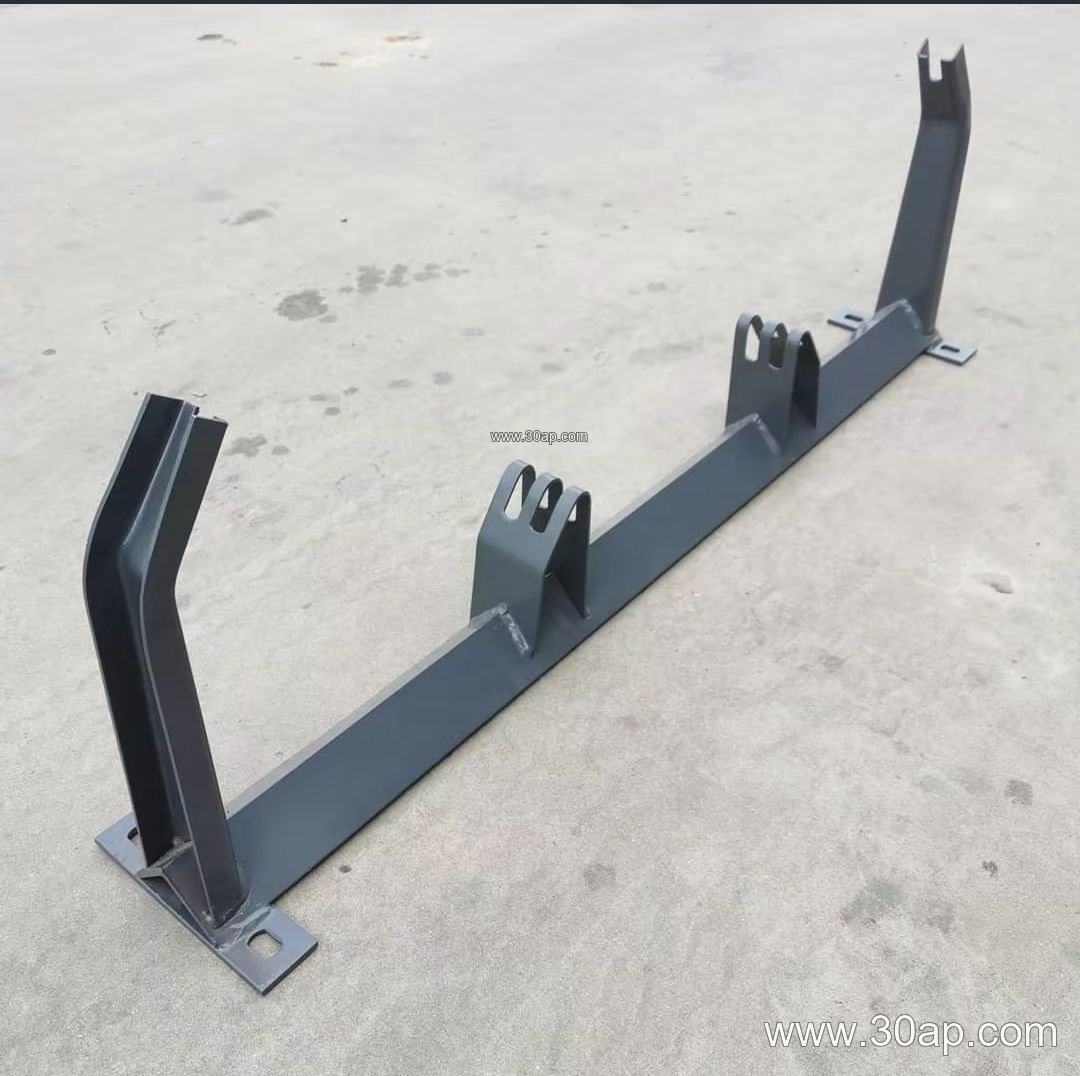
- Section size and steel thickness, which set the vertical load capacity
- Base plate dimensions and anchor hole spacing
- Top connection detail, bolts or welded, and its fit with the conveyor bracket
- Height and whether the leg is fixed or adjustable
- Surface treatment, such as painting or hot-dip galvanizing, for dusty or damp sites
Adjustable legs use slotted holes or a telescopic section so the frame height can be trimmed during installation. This is useful on uneven ground or where a transition section needs fine alignment.
Matching the Leg to Belt Width and Roller Size
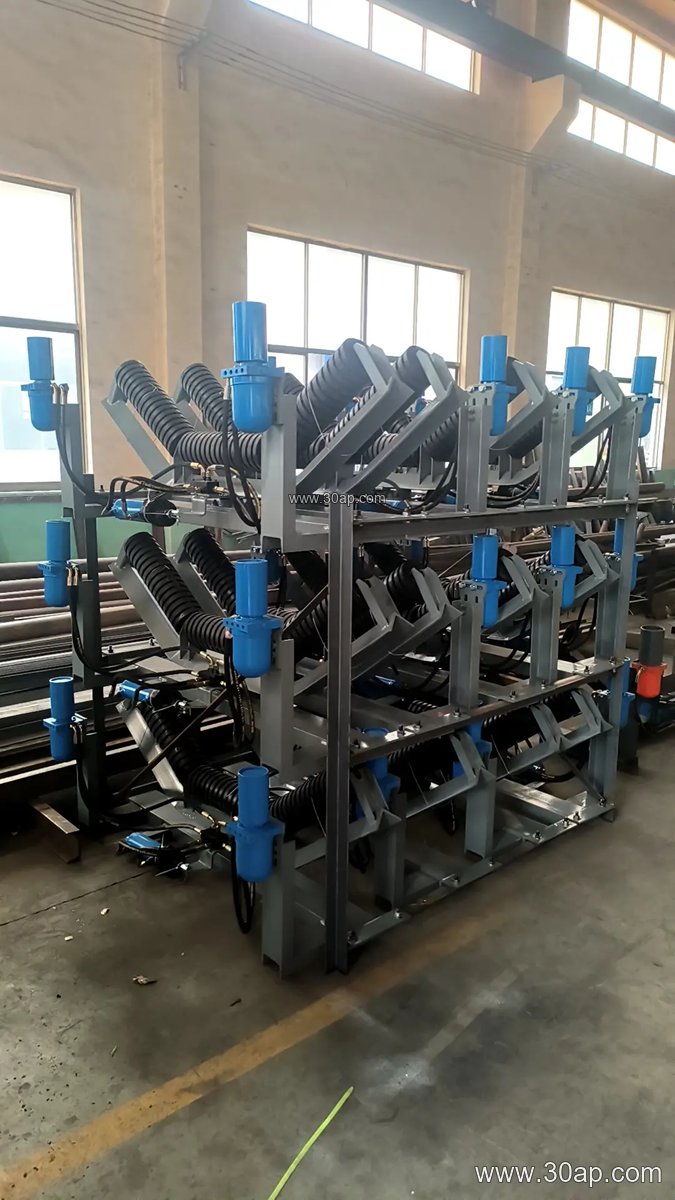
A leg is never chosen in isolation. Its span and height follow the belt width, the trough angle, and the diameter of the idler roller used at that station. The table below gives common reference combinations; actual values are set by the frame design.
| Belt width | Trough angle | Roller diameter | Typical leg role |
|---|---|---|---|
| B650 | 30 degrees | Ø89 | Light gallery support |
| B800 | 35 degrees | Ø108 | Standard trestle leg |
| B1000 | 35 degrees | Ø133 | Main haulage frame |
| B1200 | 45 degrees | Ø133 | Heavy load station |
| B1400 | 35 degrees | Ø159 | High capacity line |
| B1600 | 45 degrees | Ø159 | Mine or port conveyor |
| B1800 | 35 degrees | Ø194 | Large trunk conveyor |
These are reference pairings only. A B1000 frame can be built with different roller diameters depending on load and speed, and the leg height will change with the trough angle. Installation hole spacing and crossbeam length vary with belt width and trough angle, so they should be confirmed on the drawing rather than assumed.
Where Legs Fit in the Support Chain
The leg sits below the stringer; above it, the conveyor bracket holds a set of idler rollers that shape the conveyor belt into a trough. At a transition point, a shorter or adjustable leg may be used to ease the belt from flat to troughed. At a bend station, the leg supports the frame around a bend pulley, but the leg itself is still a structural part, not a pulley substitute. Drive pulleys, tail pulleys, and bend pulleys each have their own duties and are never swapped for one another.
On a typical cement plant or coal yard conveyor, you will see legs spaced at regular intervals along the trestle, with taller legs near the head and shorter ones near a transfer tower. In a sand and gravel line, legs often sit on concrete plinths to keep the frame clear of spillage.
Buyer Checklist
- Confirm belt width, trough angle, and roller diameter before ordering.
- State fixed or adjustable height and the adjustment range needed.
- Provide the anchor hole pattern or ask for a base plate drawing.
- Check the steel section and finish against the site environment.
- Ask how the leg connects to the conveyor bracket and stringer.
A well-matched conveyor leg keeps the frame square, the belt centered, and the idler rollers working as intended. Treat it as part of the whole support system, and the conveyor will run more quietly and wear more evenly.