What a Motor-Driven Pulley Does on a Conveyor
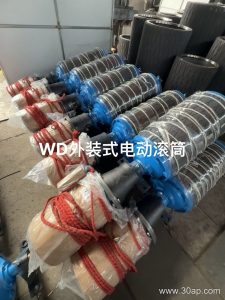
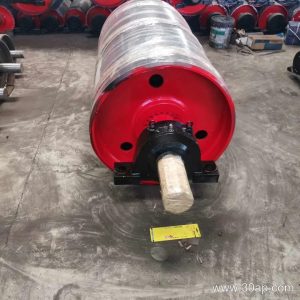
A motor-driven pulley is a conveyor pulley with the drive unit built inside the shell. Instead of mounting a gearbox and motor beside the pulley and linking them with a coupling, the motor and gearing sit within the drum, so the pulley itself turns the conveyor belt. In many plants the same component is simply called a motorized pulley or an electric drum. It is a distinct subtype from a drive pulley that is driven externally, and it should not be confused with a tail pulley, bend pulley or tension pulley, which serve different positions and functions.
Because the drive is enclosed, the unit suits conveyor layouts where space around the head end is tight. It is common in sand and gravel lines, cement plants, coal handling in power stations, and small to medium belt conveyors feeding crushers or screens.
How the Unit Is Built
Inside the shell there is usually an electric motor, a set of planetary or helical gears, bearings and a lubrication arrangement. The shell surface may be plain, rubber lagged or ceramic lagged. Lagging improves grip between the drum and the conveyor belt, which matters when the belt carries wet or dusty material. Common lagging styles include diamond grooving and herringbone patterns.
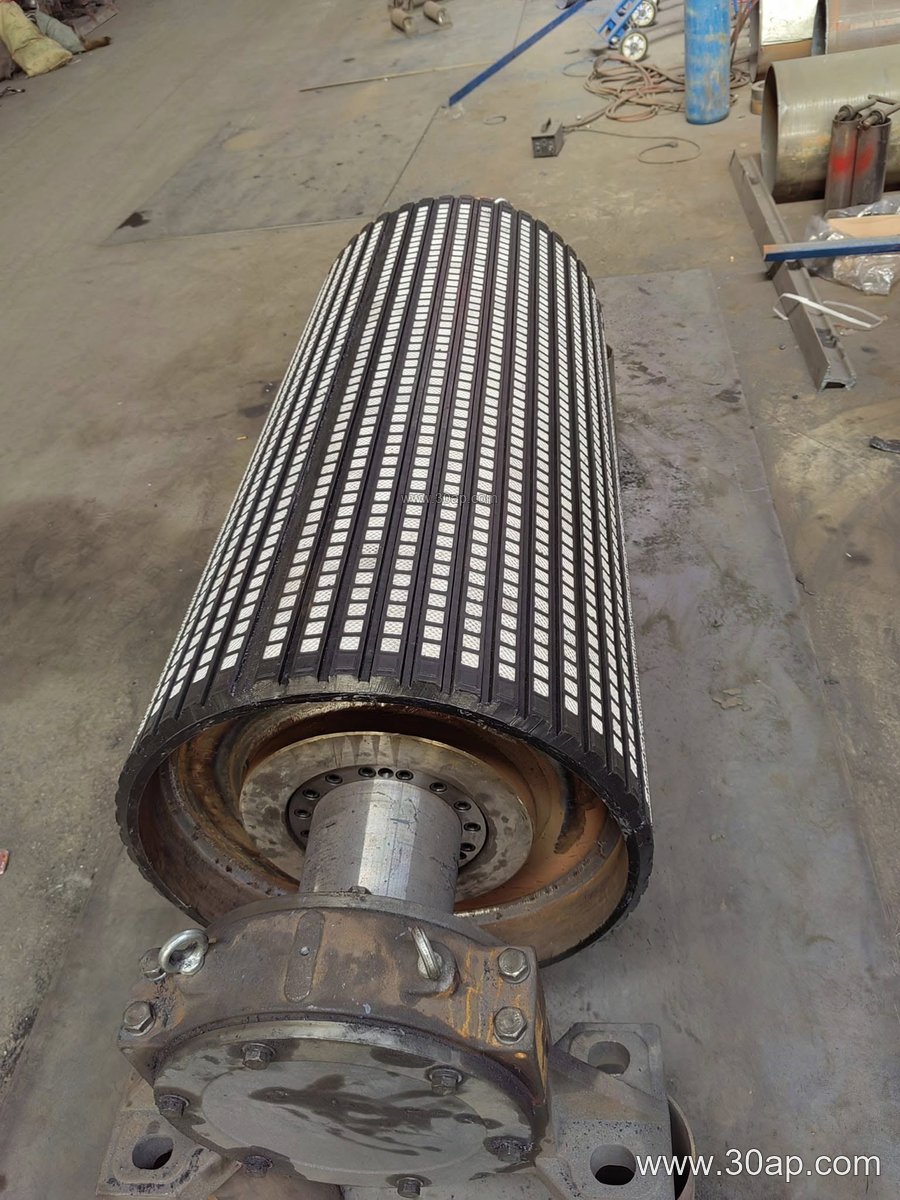
Key construction points a buyer can check:
- Shell diameter and face width, which must suit the belt and the conveyor duty
- Shaft diameter, determined by torque and load rather than by belt width alone
- Lagging type and thickness, often 8 mm to 20 mm depending on grip needs
- Voltage, frequency and insulation class of the built-in motor
- Mounting arrangement and how the pulley connects to the conveyor bracket
Where It Fits in a Conveyor
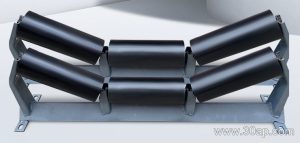
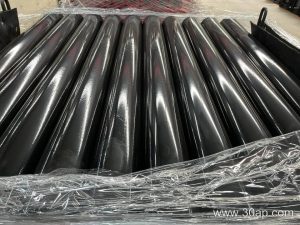
This type of pulley is generally installed at the head or discharge end, where it drives the belt forward. It can also be used at intermediate drive points on long conveyors, though that is less common. The return strand is supported by idler rollers, while the belt path is guided by other pulleys such as a bend pulley or a take-up pulley. These roles are not interchangeable, and a motor-driven pulley cannot replace a tail pulley that only redirects the belt.
Typical industries include quarrying, limestone and iron ore mines, washed coal plants, clinker handling in cement works, and bulk terminals. In each case the pulley works together with the conveyor belt, idler rollers and support brackets to keep material moving.
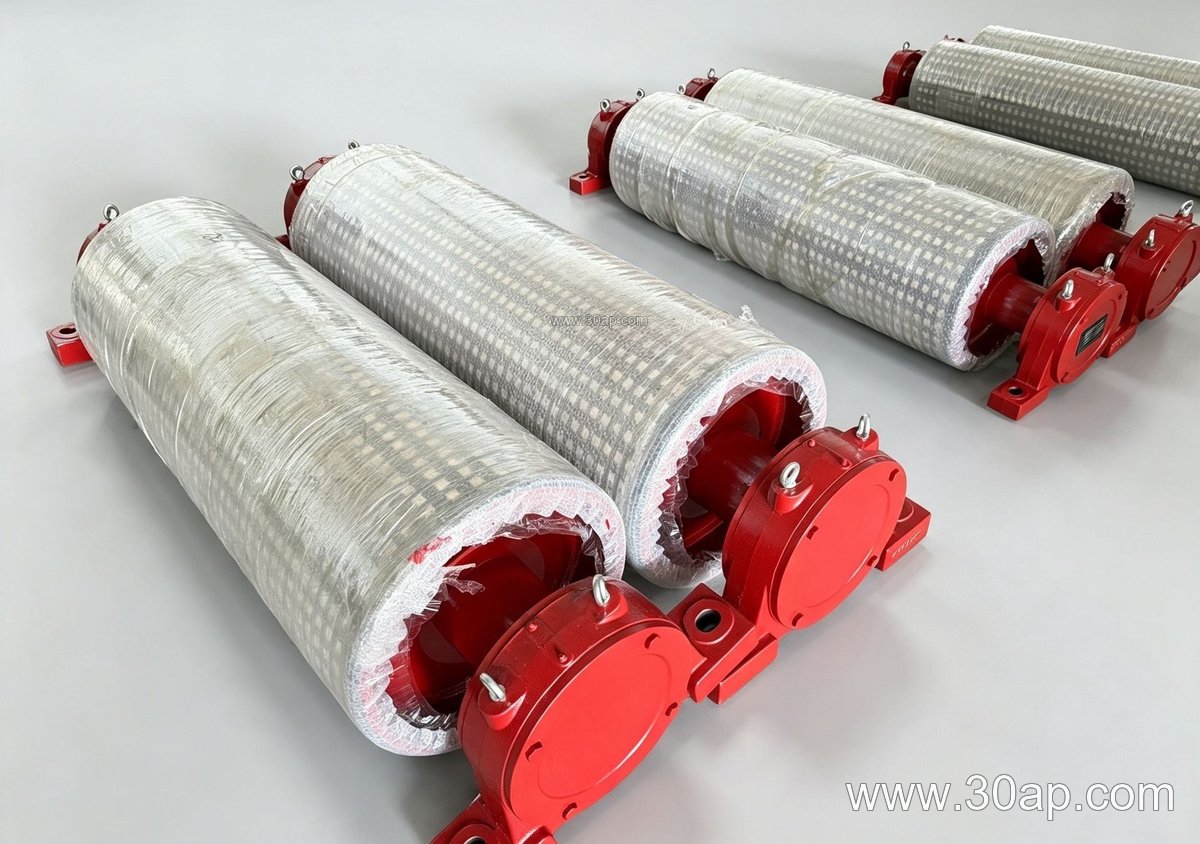
Common Size Ranges and Selection Notes
Sizes are chosen by the conveyor design, not by a single fixed rule. The table below shows reference ranges that appear in general practice; actual values should come from the conveyor calculation.
| Parameter | Typical reference values | Notes |
|---|---|---|
| Belt width | B400, B500, B650, B800, B1000, B1200, B1400, B1600, B1800, B2000 | Drum face width is usually a little wider than the belt |
| Drum diameter | Ø200, Ø250, Ø315, Ø400, Ø500, Ø630, Ø800, Ø1000, Ø1250 | One belt width can match several diameters |
| Face width examples | B800 about 950 mm, B1000 about 1150 mm, B1200 about 1400 mm | Confirm with the conveyor drawing |
| Shaft diameter | Ø50, Ø60, Ø70, Ø80, Ø90, Ø100, Ø120, Ø140 | Based on torque and load, not belt width alone |
| Lagging thickness | 8, 10, 12, 15, 20 mm | Choose according to grip and wear conditions |
When specifying, state the belt width, the required drum diameter, the shaft size and the lagging type. For example, a B800 belt might use a Ø500 drum, while a B1200 conveyor could call for a Ø1000 unit. These are examples of combinations, not fixed pairings.
Buyer Checklist
- Confirm the conveyor duty and starting torque before choosing the motor rating
- Check that the drum face width matches the belt and the frame
- Decide between plain, rubber lagged or ceramic lagged surface
- Verify the mounting interface with the conveyor bracket
- Ask about bearing type, sealing and lubrication access for maintenance
A motor-driven pulley can simplify a conveyor head end and reduce the number of exposed parts. The right choice depends on belt width, load, speed and the environment where the conveyor operates.