What a Heavy-Duty Conveyor Idler Does
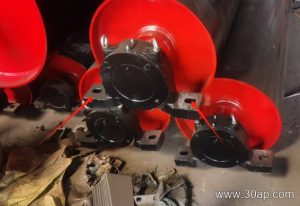
A heavy-duty conveyor idler is the rotating support that carries the conveyor belt and the material load along the carrying side or the return side of a bulk handling system. In practice, the same product is often called a heavy-duty idler roller, and the two names refer to the same component. It is not a drive pulley, a tail pulley, or a bend pulley. Those are conveyor pulleys that transmit power or change belt direction, while a heavy-duty idler roller simply supports and guides the belt.
The duty rating matters because a quarry, iron ore mine, or cement plant can run a belt continuously under abrasive rock, dust, and impact. A standard idler may be adequate for light packages, but a heavy-duty idler is built with thicker tube walls, larger bearings, and stronger sealing to survive that environment.
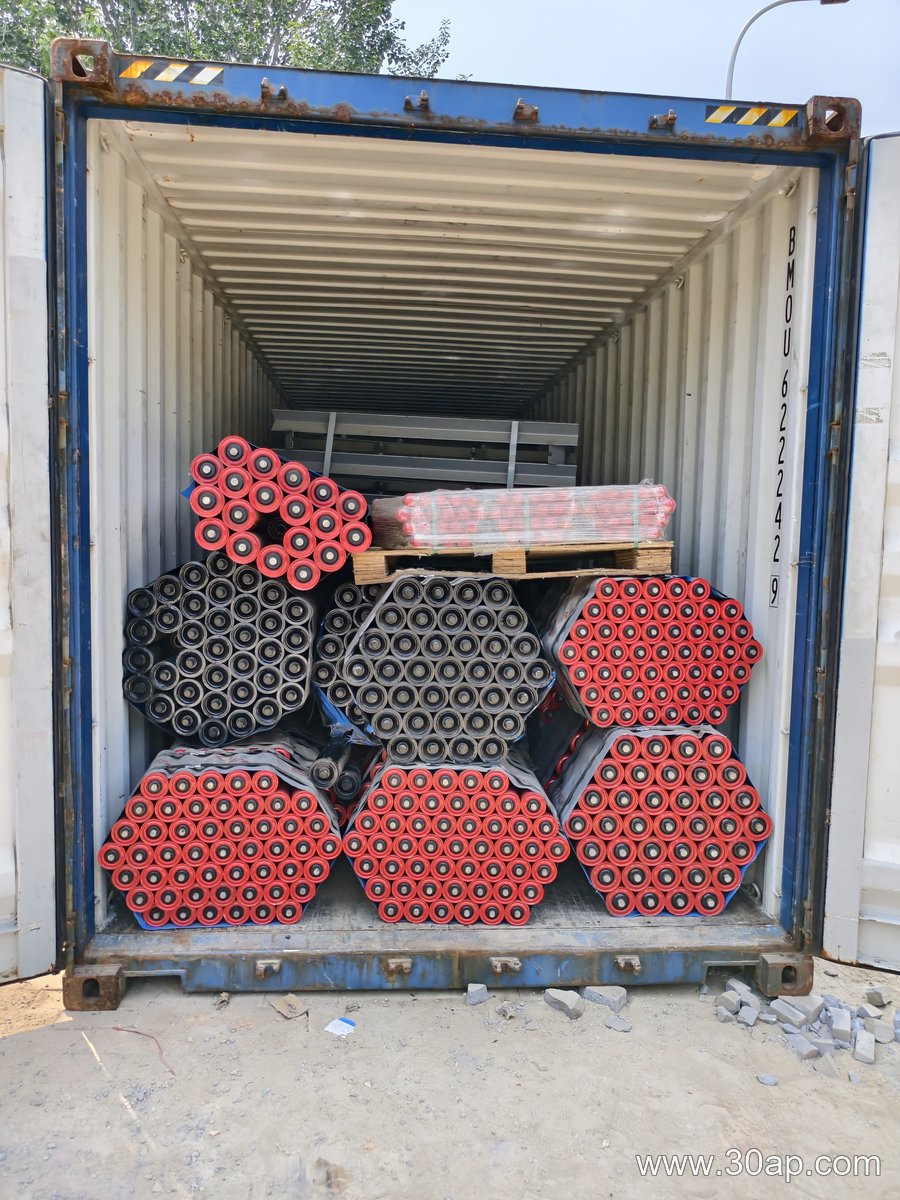
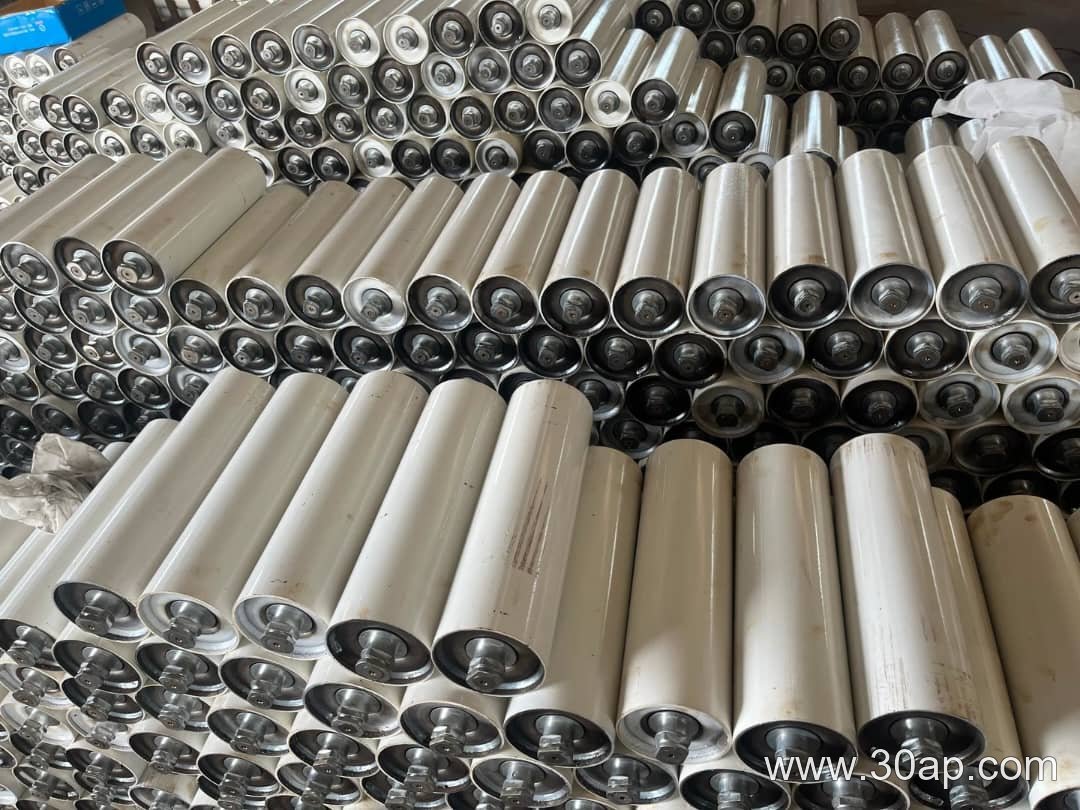
How a Heavy-Duty Idler Roller Is Built
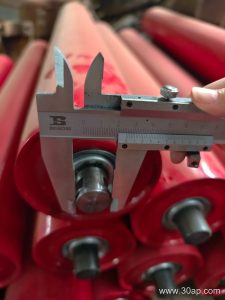
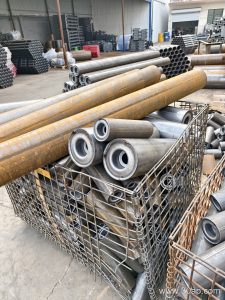
The main parts are the roller shell, the shaft, the bearing housing, the bearing, and the seal. The shell is usually a steel tube, though nylon, ceramic, or rubber-covered surfaces appear in specific roles. The bearing sits inside a housing that is welded or pressed into the tube end. Seal designs vary, but the goal is the same: keep fine dust and water away from the bearing while retaining grease.
Common bearing sizes for heavy-duty work include 6204, 6205, 6305, 6306, 6308, and 6310. These numbers are not tied to one roller diameter. A given roller diameter may be offered with different bearing options depending on load and speed. Typical roller diameters include Ø63, Ø76, Ø89, Ø102, Ø108, Ø127, Ø133, Ø159, Ø178, Ø194, and Ø219. Larger diameters generally suit higher loads or wider belts, but the final choice is made by the conveyor designer.
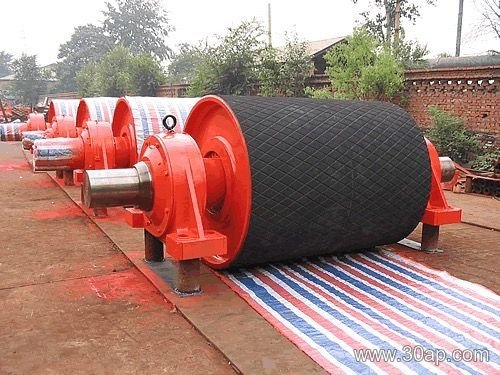
Where Heavy-Duty Conveyor Idlers Are Used
These idlers appear in coal washing plants, power station coal yards, copper concentrators, crushed stone lines, and tunnel muck removal. They also work in fertilizer plants and grain terminals where dust and continuous operation are concerns. In a crushing and screening circuit, a heavy-duty idler roller may be used on the coarse ore belt before the crusher, where impact and spillage are high. On the return run, a V-shaped return idler helps keep the belt centered.
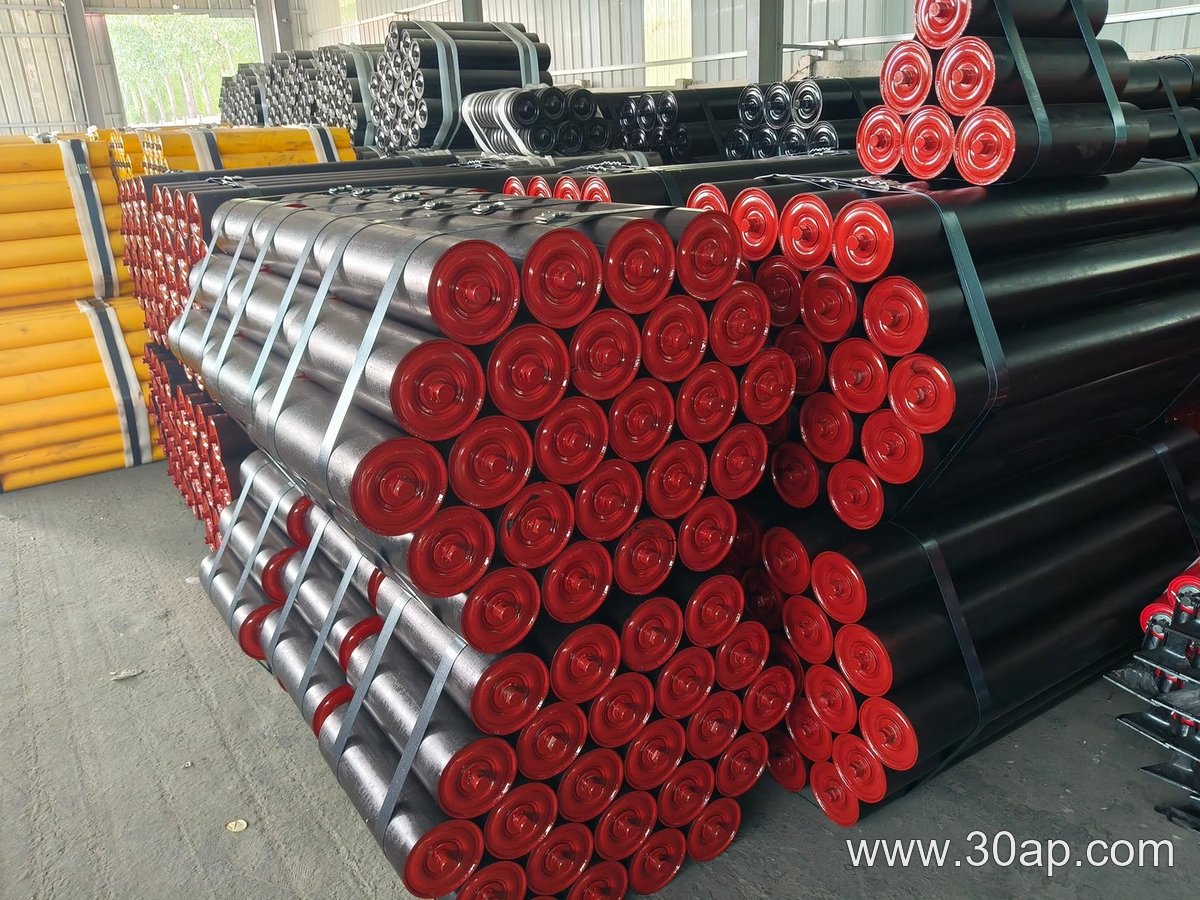
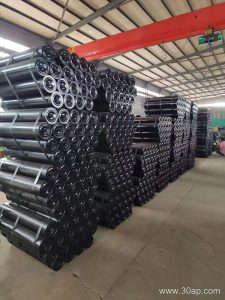
The carrying side often uses a three-roll troughing set with a 20, 30, 35, or 45 degree trough angle. The trough angle affects how the conveyor belt holds the material. A deeper trough contains more material but can increase belt stress. Transition idlers are placed near the head or tail pulley to gradually change the belt profile. Impact idlers with rubber rings are used at load points. Alignment idlers, including friction and tapered types, correct belt drift. A spiral idler can reduce material buildup on the return side. All of these are idler subtypes, not replacements for the main heavy-duty conveyor idler.
Matching Roller Size to Belt Width
Roller length changes with belt width, trough angle, and idler arrangement. For a three-roll troughing set, common roller lengths are roughly 200 mm for B500, 250 mm for B650, 315 mm for B800, 380 mm for B1000, 465 mm for B1200, 530 mm for B1400, 600 mm for B1600, 670 mm for B1800, and 750 mm for B2000. These are examples, not fixed pairings. The side rollers and center roller can differ. Belt widths from B400 to B2400 are available across the range, and a wider belt does not automatically mean one specific pulley diameter or shaft size.
| Belt width | Common roller length example | Typical trough angle |
|---|---|---|
| B500 | 200 mm | 20 to 35 degrees |
| B800 | 315 mm | 30 to 35 degrees |
| B1200 | 465 mm | 35 to 45 degrees |
| B1600 | 600 mm | 35 to 45 degrees |
| B2000 | 750 mm | 35 to 45 degrees |
What a Buyer Should Check
- Confirm the actual belt width and trough angle before ordering roller lengths.
- Ask which bearing size and seal type suit the dust and moisture level.
- Check whether impact, transition, or alignment idlers are needed at specific points.
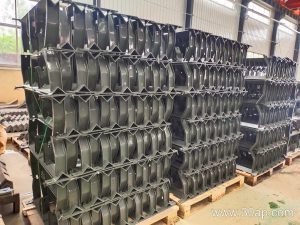
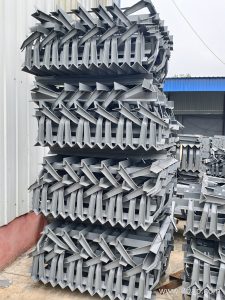
- Review the conveyor bracket and frame dimensions so the idler fits without modification.
- Keep spare idler rollers for high-wear zones such as load points and return runs.
A heavy-duty conveyor idler is a long-term wear component, so the right choice balances roller diameter, bearing capacity, seal quality, and the real operating conditions of the conveyor belt system.