What a Heavy-Duty Belt Conveyor Idler Does
A heavy-duty belt conveyor idler is the load-bearing rotating component that supports the conveyor belt along its carrying and return runs. In a quarry, limestone mine, or sand and aggregate line, the belt may carry sharp rock, wet fines, and heavy lumps hour after hour. The idler must keep the belt tracking smoothly while absorbing vibration, impact, and abrasive dust. Unlike a conveyor pulley, which drives or redirects the belt at the ends of the system, the idler roller works continuously along the line, and its condition directly affects belt life, energy draw, and downtime.
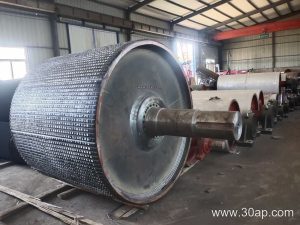
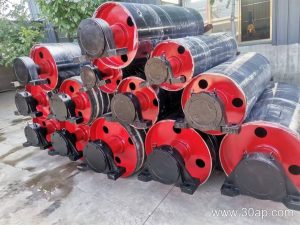
The same product is also called a heavy-duty conveyor idler roller or simply a heavy-duty carrying idler. These names describe the same component. Drive pulleys, tail pulleys, and bend pulleys are different parts of the conveyor and are not interchangeable with idlers.
Construction Details That Matter
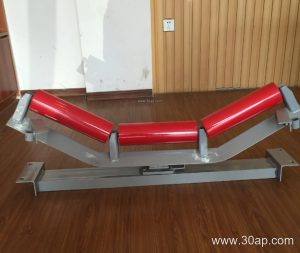
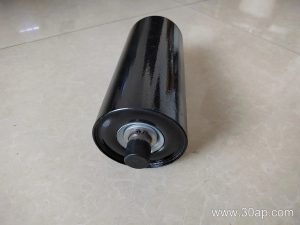
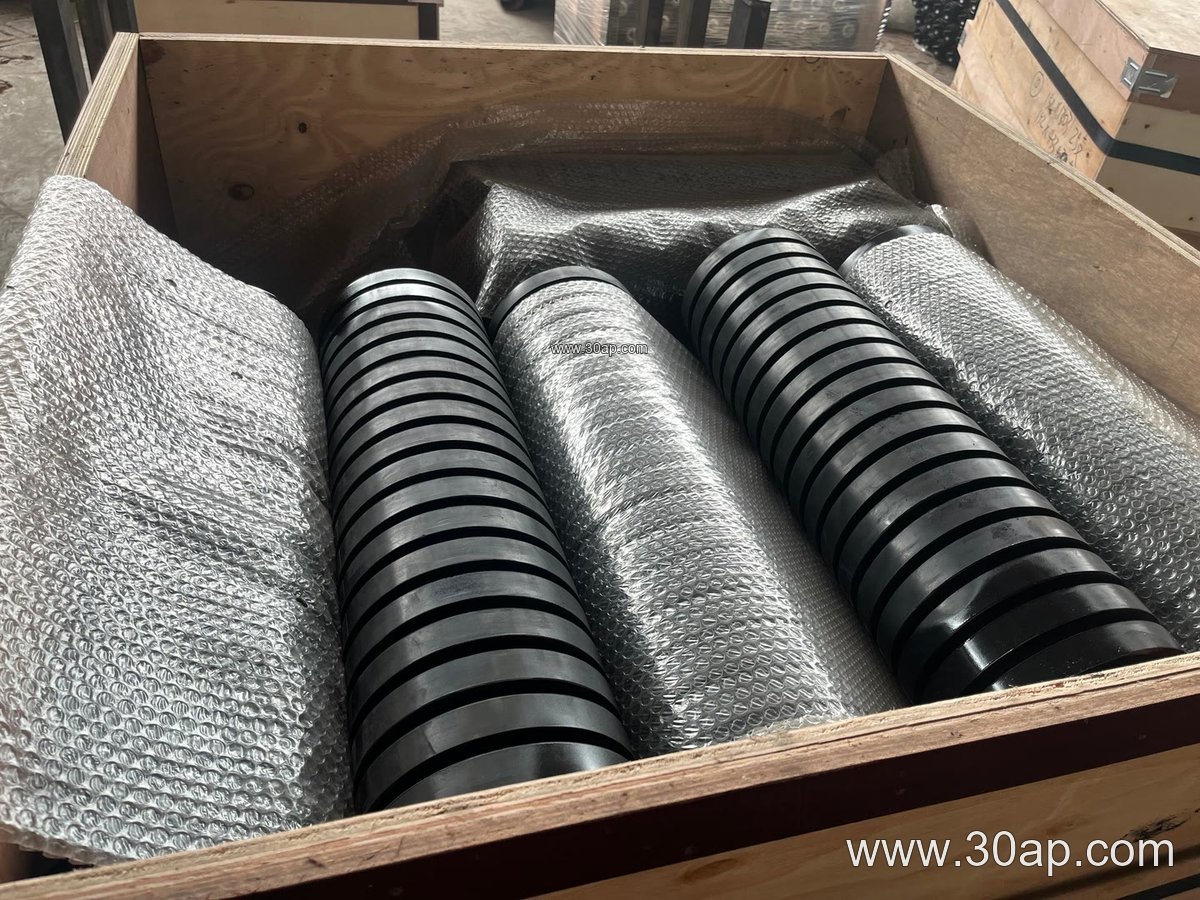
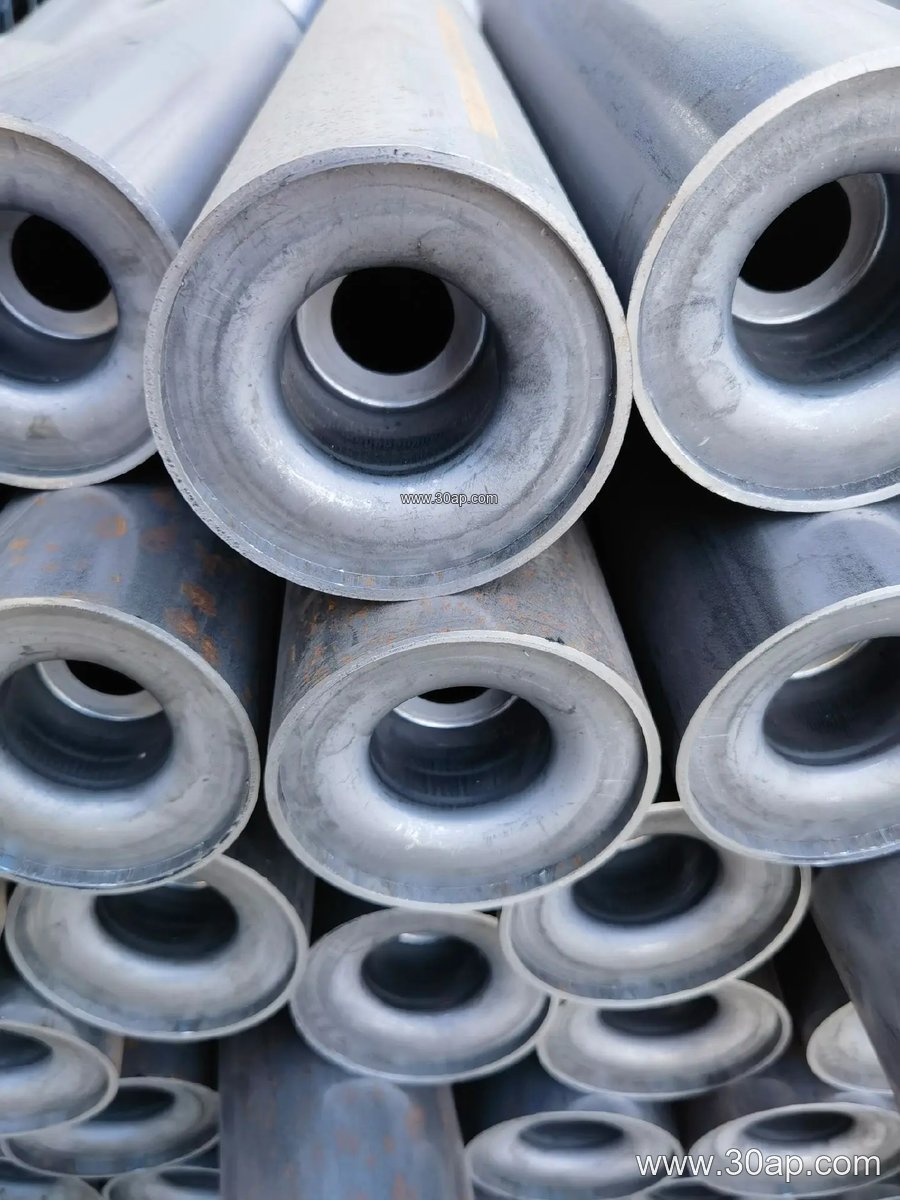
A typical heavy-duty belt conveyor idler uses a steel tube shell, welded end caps, a sealed bearing housing, and a shaft that fits into a conveyor bracket. Roller surfaces may be plain steel, nylon, ceramic, or covered with rubber rings. Rubber-ring impact idlers are common under crusher discharge points where lump size is large and drop height is significant. Sealing quality is often the deciding factor in dusty plants, because fine grit that reaches the bearing shortens service life quickly.
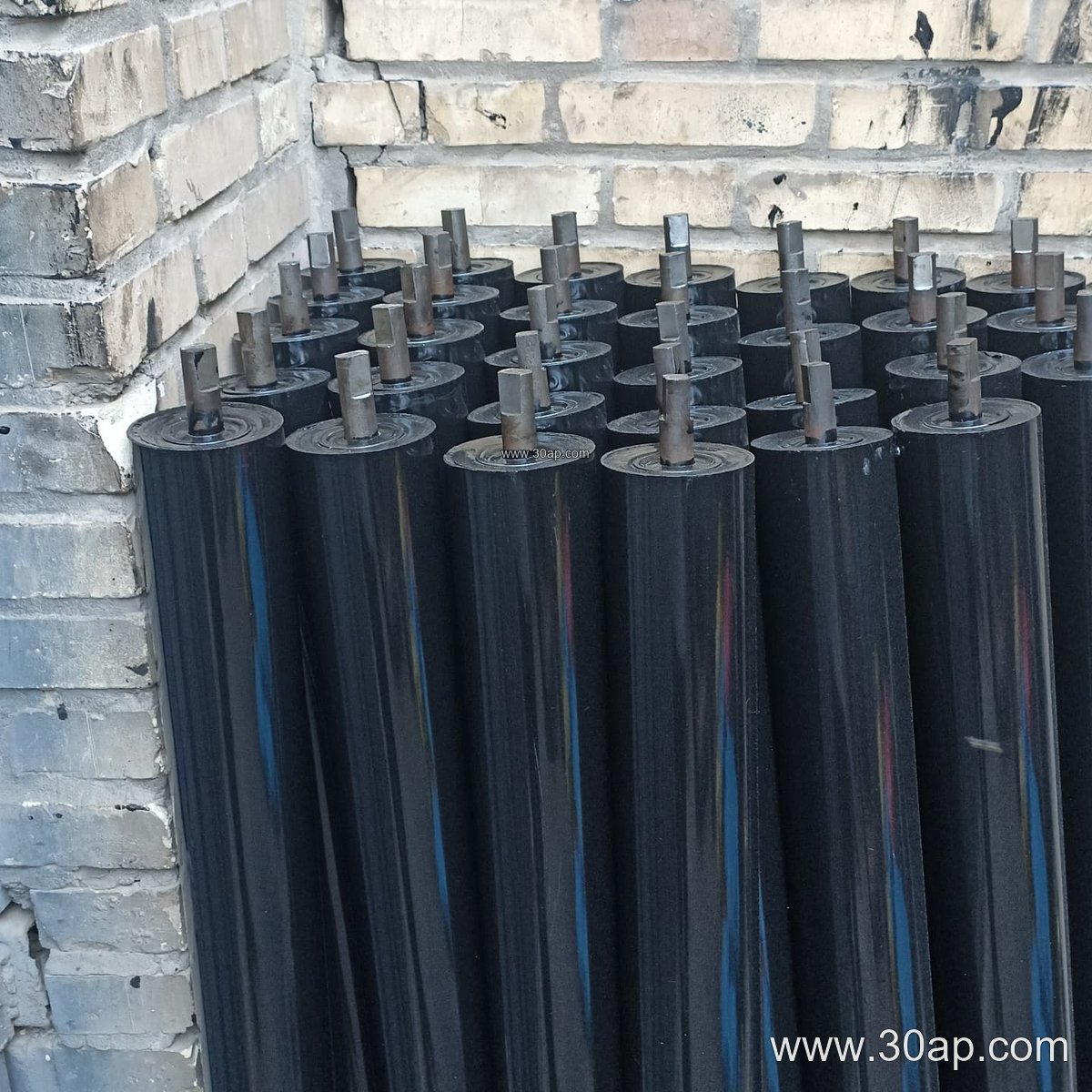
Common bearing sizes include 6204, 6205, 6305, 6306, 6308, and 6310. Bearing choice should follow the load, speed, and sealing arrangement rather than a single fixed rule. Shaft diameter likewise depends on the idler series and the calculated load, not on belt width alone.
Roller Diameter, Belt Width, and Trough Angle
Roller diameter and belt width are related through the conveyor design, but they are not locked into one-to-one pairs. A heavy-duty belt conveyor idler may use diameters such as Ø102, Ø108, Ø127, Ø133, Ø159, Ø178, Ø194, or Ø219 mm, depending on belt speed, load, and available space. Wider belts generally call for larger frames and longer rollers, yet the final selection comes from the conveyor calculation.
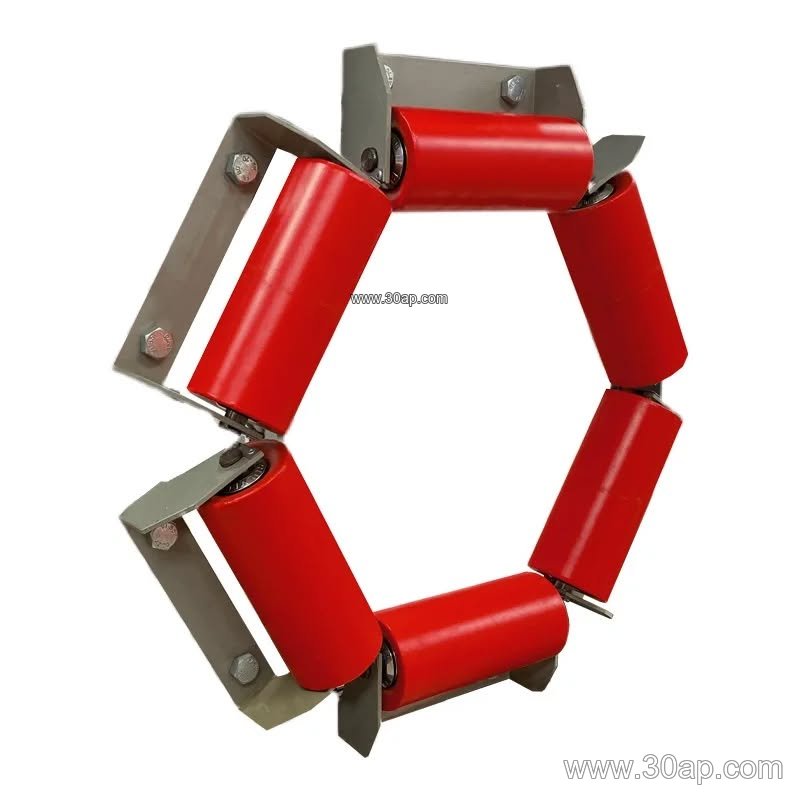
Trough angles of 20, 30, 35, and 45 degrees are common. A deeper trough helps contain bulk material on a fast belt, while a shallower angle suits certain materials or transition zones. Three-roll troughing sets are the usual arrangement, with two-roll and single-roll designs used where they fit the application.
| Belt width (common) | Typical three-roll idler length | Typical trough angle |
|---|---|---|
| B500 | about 200 mm | 20 to 35 degrees |
| B650 | about 250 mm | 20 to 35 degrees |
| B800 | about 315 mm | 30 to 35 degrees |
| B1000 | about 380 mm | 30 to 35 degrees |
| B1200 | about 465 mm | 30 to 35 degrees |
| B1400 | about 530 mm | 30 to 35 degrees |
| B1600 | about 600 mm | 30 to 35 degrees |
| B1800 | about 670 mm | 30 to 35 degrees |
| B2000 | about 750 mm | 30 to 35 degrees |
These figures are common examples only. Side rollers and center rollers can differ in length, and the final dimensions should be confirmed against the conveyor drawing.
Where Heavy-Duty Idlers Are Used
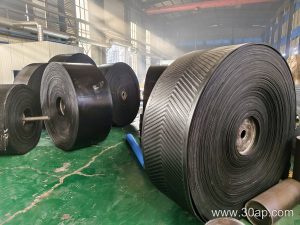
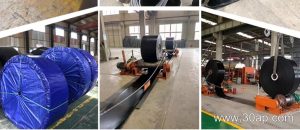
Heavy-duty belt conveyor idlers appear in limestone mines feeding a crusher, in coal washing plants where dust and moisture are constant, and in cement plants moving clinker and raw meal. In a power plant coal yard, idlers must tolerate abrasive coal dust and occasional spillage. The idler works together with the conveyor belt, the conveyor pulley at the head end, and the supporting conveyor bracket, so alignment across all three affects tracking and wear.
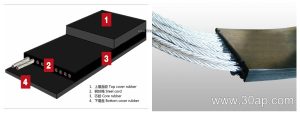
Belt selection also influences idler choice. An abrasion resistant conveyor belt on a quarry conveyor may run over rubber-ring impact idlers at the loading point and standard steel idlers further along. A flame retardant conveyor belt in an underground coal mining conveyor calls for idlers with suitable sealing and, where required, anti-static properties in the belt compound. The idler itself is selected for load and environment, not for the belt grade alone.
Buyer Checklist
- Confirm belt width, trough angle, and roll arrangement before ordering.
- State the material, lump size, and drop height so impact idlers can be considered.
- Check bearing size and sealing type against dust and moisture conditions.
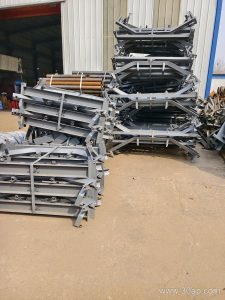
- Verify shaft ends and mounting dimensions match the existing conveyor bracket.
- Ask for the roller wall thickness and surface finish, since these affect wear life.
- Keep spare idlers for high-wear positions such as loading zones and curve sections.
For more information on matching idlers with conveyor belts, pulleys, and brackets, visit gsdconveyorbelt.com and review the conveyor idler range before finalizing a specification.