What the Pulley Does Underground
A coal mine belt conveyor pulley is the rotating drum that gives the conveyor belt its direction and its drive. In a typical underground coal mining conveyor, one pulley pulls, others guide, and at least one maintains tension. The drive pulley, sometimes called the head pulley when it sits at the discharge end, transmits torque through friction between its lagged surface and the belt. The tail pulley turns the belt around at the loading end, while bend pulleys route it through the take-up zone. These three roles are distinct and are not interchangeable; a bend pulley cannot replace a drive pulley, and a tail pulley cannot do the work of a tensioning drum.
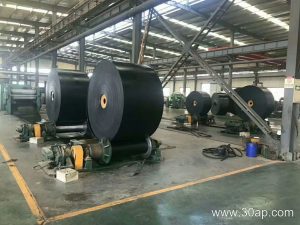
Because the environment is dusty, damp and often gassy, the assembly must be robust and, where required, flame retardant in its rubber components. It works alongside a flame retardant conveyor belt, carrying coal from the face to the shaft or the surface transfer point.
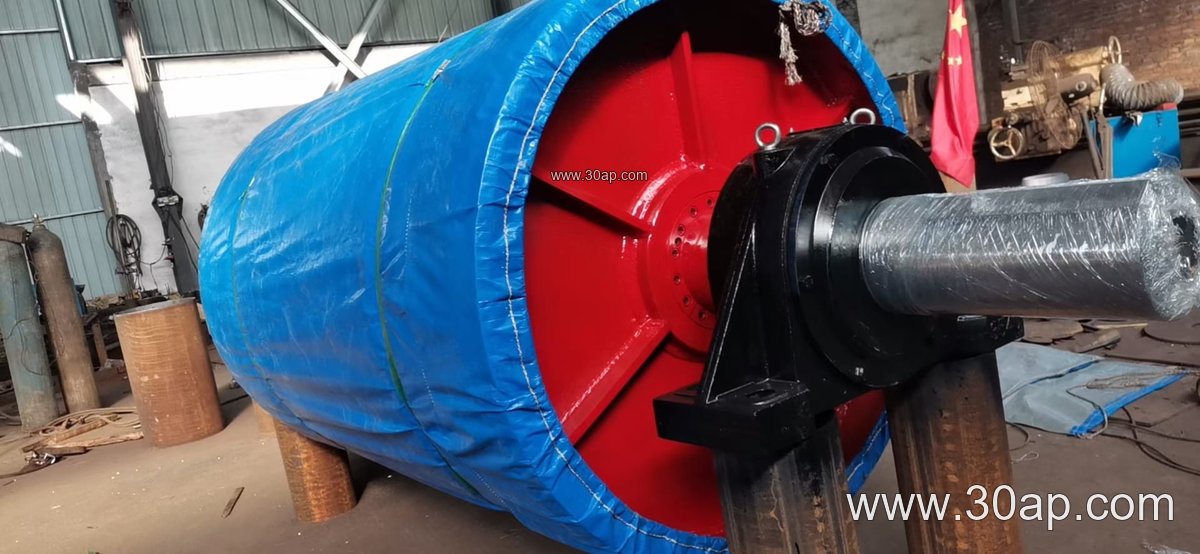
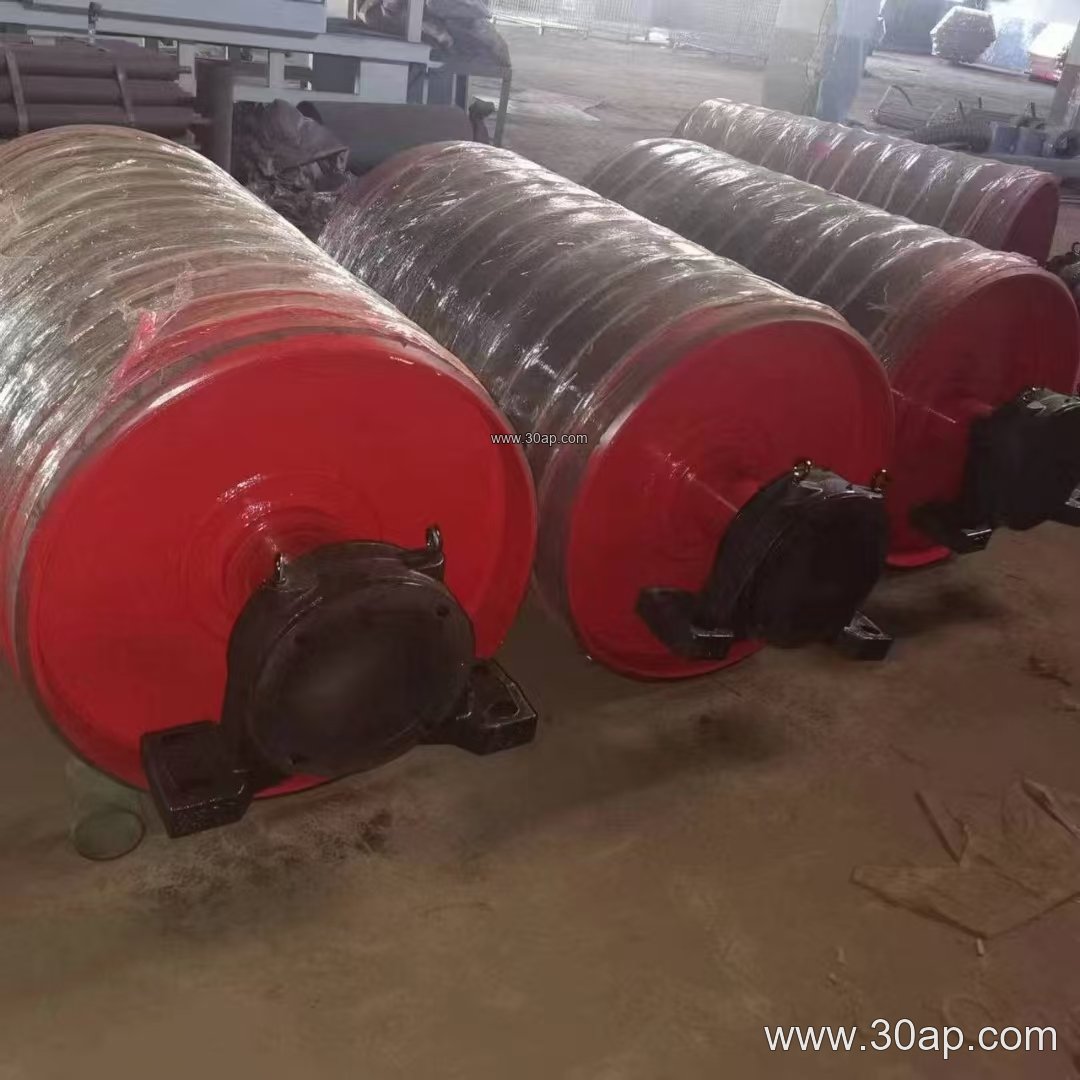
Construction and Surface Options
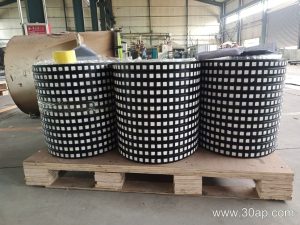
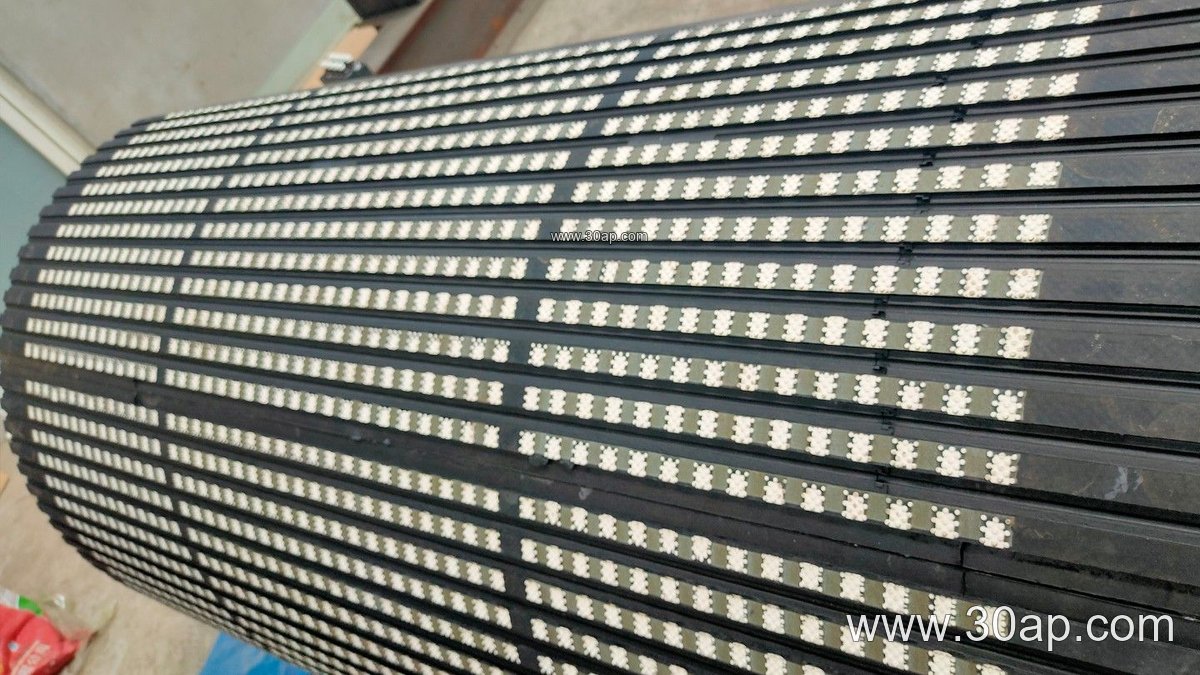
The core is usually a welded steel shell with a shaft pressed or keyed into end discs, supported by bearing housings mounted on a conveyor bracket. The shell surface determines grip and wear life. Common choices include plain finish, cast rubber, cold-bonded rubber, hot-vulcanized rubber, diamond lagging, herringbone lagging and ceramic lagging. Lagging thickness is often 8, 10, 12, 15 or 20 mm, selected according to torque and slip risk.
Shell width normally exceeds belt width so the belt is fully supported. Typical relationships include B800 with roughly 950 mm face width, B1200 with about 1400 mm, and B1400 with about 1600 mm. Diameter is a design decision, not a fixed match to width: B800 x Ø500 and B1200 x Ø1000 are both plausible, but so are other combinations. Shaft diameter is set by torque and bearing load, commonly falling between Ø50 and Ø200 depending on the duty.
Reference data for early planning
| Belt width | Typical pulley face width | Example diameter range | Typical lagging |
|---|---|---|---|
| B650 | about 750 mm | Ø315 to Ø630 | diamond rubber, 10 mm |
| B800 | about 950 mm | Ø400 to Ø800 | herringbone, 12 mm |
| B1000 | about 1150 mm | Ø500 to Ø1000 | ceramic, 15 mm |
| B1200 | about 1400 mm | Ø630 to Ø1250 | hot-vulcanized, 15 mm |
| B1400 | about 1600 mm | Ø800 to Ø1400 | diamond rubber, 20 mm |
These figures are reference values for discussion, not universal specifications. Final dimensions follow the conveyor design.
Where It Fits in the Plant
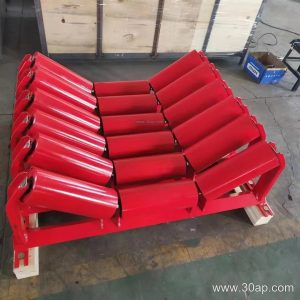
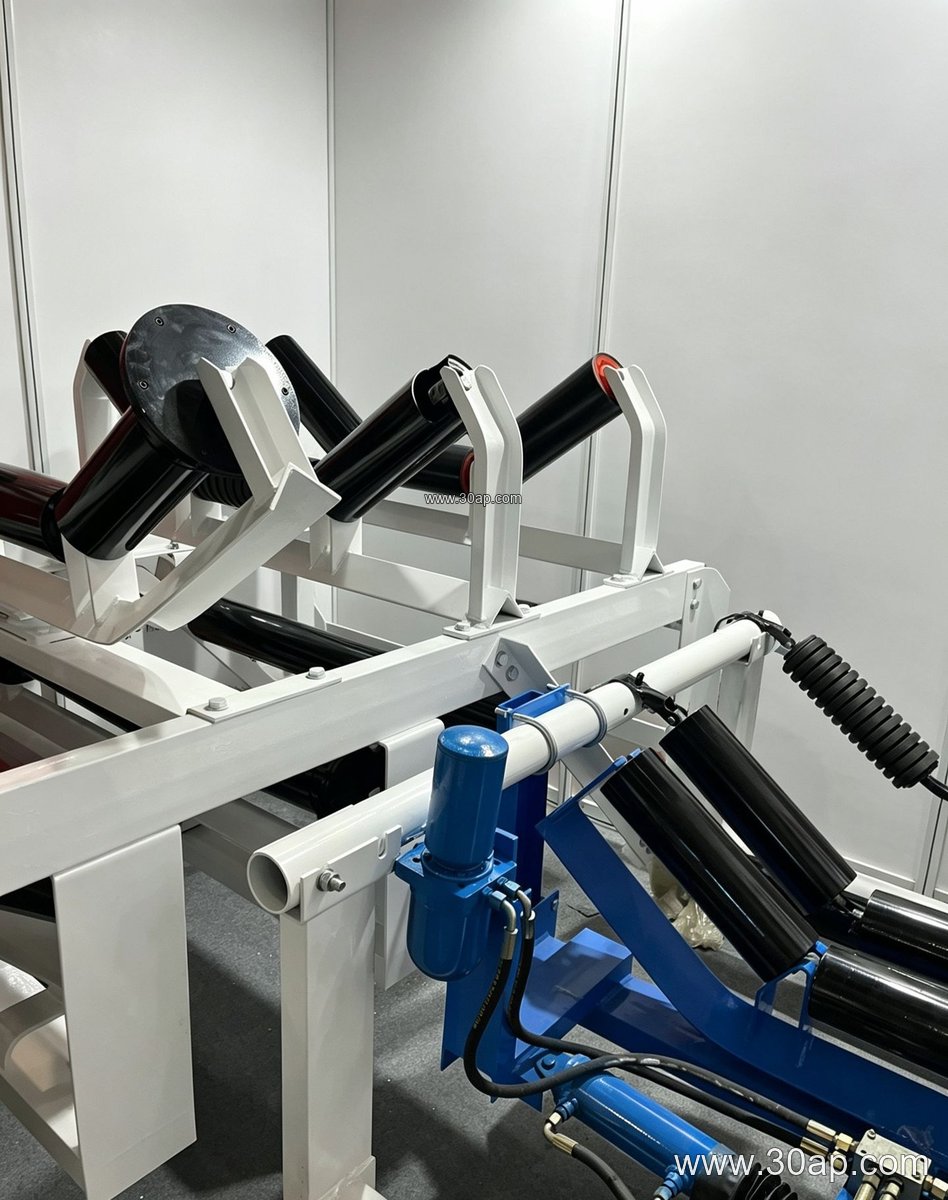
In a coal washing plant, the drive pulley at the head end often runs with a rubber conveyor belt that resists abrasion from wet fines, while a bend pulley near the take-up keeps wrap angle steady. In a power plant coal yard, the same drum type handles a steady stream from stockpile to boiler bunker. The surrounding line usually includes an idler roller set every few meters and a conveyor pulley at each transfer, all tied together by the conveyor bracket and frame.
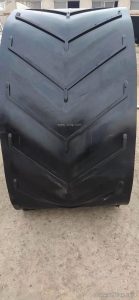
Selection should consider the belt: an EP conveyor belt or steel cord conveyor belt has different tension behavior, and a chevron conveyor belt or corrugated sidewall belt needs clearance around the drum face. A skirted conveyor belt may demand extra attention to pulley alignment so the skirt does not rub.
Buyer Checklist
- Confirm the pulley role: drive, tail, bend, take-up or snub, since each has different load and wrap requirements.
- State belt width and belt type, such as abrasion resistant conveyor belt or fire resistant conveyor belt, so lagging and clearance suit the application.
- Provide torque and belt tension so shaft size and bearing selection are correct.
- Choose lagging by slip risk and material: diamond or herringbone for wet coal, ceramic for high wear.
- Ask about balancing, bearing seals and inspection access before delivery.
A well-matched coal mine belt conveyor pulley protects the belt, reduces downtime and keeps the haulage cycle predictable.