What an Automatic Belt Tracking Idler Does
An automatic belt tracking idler is a self-adjusting roller assembly that steers a conveyor belt back toward the center line whenever it starts to wander. Instead of relying on a fixed bracket, this idler sits on a pivoting frame. When the belt drifts to one side, it contacts a vertical guide roller or a conical end, and the resulting force rotates the frame slightly. That small rotation changes the angle of the carrying rollers relative to the belt path, which nudges the belt back into alignment. The correction is continuous and mechanical, so no operator input or external power is needed.
This device is also known as a self-aligning idler or training idler. It is not a drive pulley, tail pulley, or bend pulley, and it should not be confused with those components. Its job is belt guidance, not power transmission or direction change.
How It Is Built
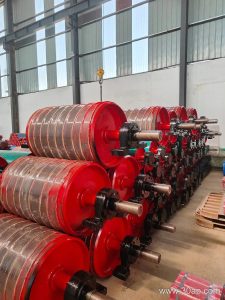
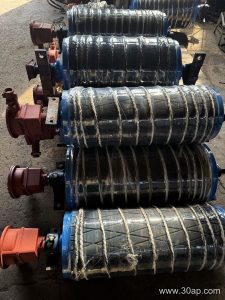
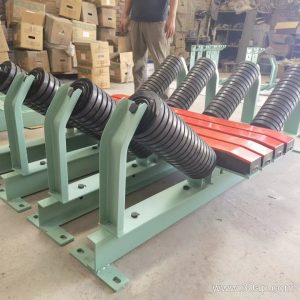
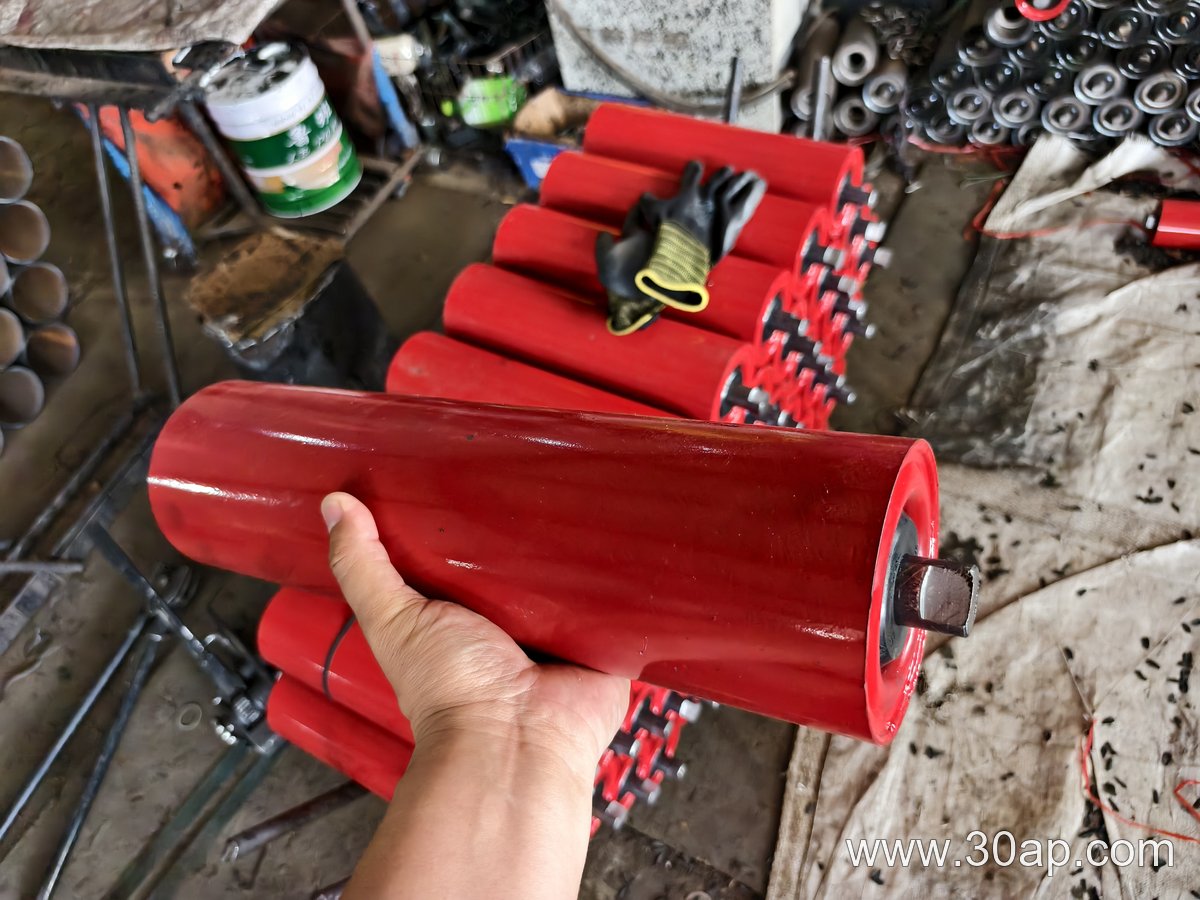
A typical unit combines a set of carrying rollers, a pivot base, and side guide rollers. The rollers may be plain steel, nylon, ceramic-coated, or rubber-covered, depending on the material being carried and the environment. Common roller diameters for this family include 89 mm, 108 mm, 133 mm, and 159 mm, though the right size depends on belt width, load, and frame design. Bearing sizes such as 6205, 6305, or 6308 are often selected to match the roller load and speed.
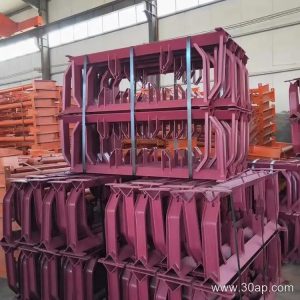
The pivot assembly is the heart of the tracking action. It usually includes a vertical shaft, a thrust bearing, and a return mechanism that keeps the frame centered when the belt runs true. Some designs use a friction disc or a spring to control how easily the frame moves. The side guide rollers are mounted on adjustable arms so the clearance to the belt edge can be set during installation.
Types and Variations
Automatic tracking idlers come in several forms. A friction self-aligning idler uses the belt edge to turn a vertical roller, which then rotates the frame. A conical self-aligning idler has tapered ends that create a sideways force when the belt contacts them. Some units are built as a two-roller V-return tracking idler for the return strand, while others are three-roller troughing assemblies for the carrying side. For comparison, a standard troughing idler has no pivot and cannot correct misalignment on its own.
Where It Is Used
These idlers are common in bulk material handling where belt misalignment causes spillage, edge damage, or premature wear. In a quarry or sand and gravel plant, a self-aligning idler is often placed after the loading point and before the head pulley. In a coal handling system at a power plant, it helps keep the belt centered through transitions and curves. Other applications include cement plants, iron ore concentrators, and port loading facilities.
The device is especially useful on long conveyors, reversible belts, and systems with uneven loading. It can be installed on the carrying side, the return side, or both. On the return strand, a V-return tracking idler is a frequent choice because it combines belt support with alignment control.
What a Buyer Should Know
- Belt width and roller length: The idler frame must match the conveyor belt width and the troughing angle. For example, a 35-degree three-roller set on a B1000 belt may use a center roller around 380 mm long, but side rollers can differ. Do not assume one belt width always pairs with one pulley diameter or one shaft size.
- Roller diameter and bearing: Common diameters range from 63 mm to 219 mm, and bearings from 6204 to 6310. Selection depends on load, speed, and available space, not on a fixed rule.
- Surface form: Steel rollers are standard for many dry materials. Rubber-covered rollers reduce impact and noise. Ceramic or nylon surfaces may be chosen for sticky or abrasive conditions.
- Mounting and adjustment: Check that the pivot base fits the conveyor bracket and that the guide rollers can be set with the correct clearance. A poorly adjusted tracking idler may fight the belt instead of guiding it.
- Maintenance: Keep the pivot free of dust and debris. Lubricate bearings according to the manufacturer’s schedule. Replace worn guide rollers before they lose their shape.
An automatic belt tracking idler is not a universal fix for poor conveyor design. It works best when the belt is already in reasonable condition and the structure is aligned. If misalignment comes from a seized idler roller, a worn conveyor pulley, or a damaged belt edge, those issues should be corrected first. When applied correctly, a self-aligning idler reduces downtime and extends belt life without adding complexity to the control system.