What a Conveyor Support Leg Does
A conveyor support leg is the vertical member that carries the weight of a belt conveyor’s idler frames and the material riding on them, transferring that load safely into the floor, foundation, or steel structure below. In many plants the leg is treated as a minor fabrication item, yet it controls frame height, alignment, and the ease of later maintenance. Whether the line runs in a limestone quarry, a coal preparation plant, or a power station coal yard, the support leg is what keeps the troughing assembly at the correct elevation along the whole run.
The leg is not the same part as a conveyor bracket, although the two work together. The bracket holds the idler roller or the pulley-side frame, while the leg provides the vertical support and the bolted connection to the ground or to a walkway structure. Confusing the two during procurement is a common source of fit-up problems on site.
Construction and Materials
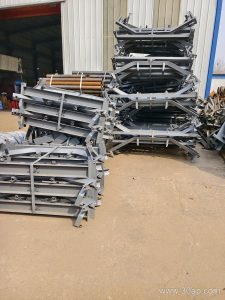
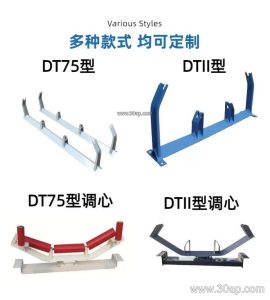
Most legs are fabricated from angle steel, channel steel, or folded steel plate. A simple fixed leg may be a single channel section with a welded base plate and slotted holes at the top. Heavier duty designs use a folded plate column with gussets for lateral stiffness. Adjustable legs add a telescopic section or a set of slotted holes so the frame height can be trimmed during installation and re-levelled after foundation settlement.
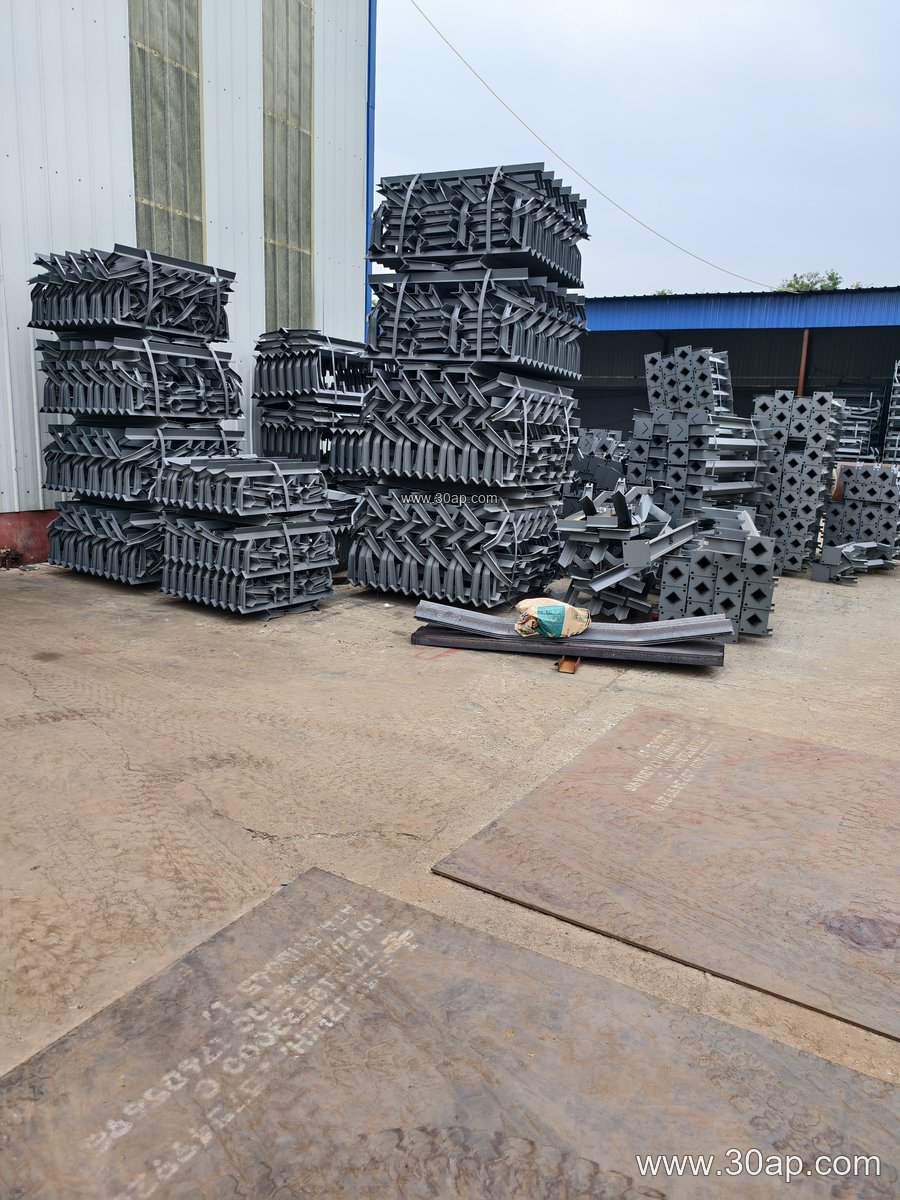
Typical reference dimensions, to be confirmed against the actual design, include:
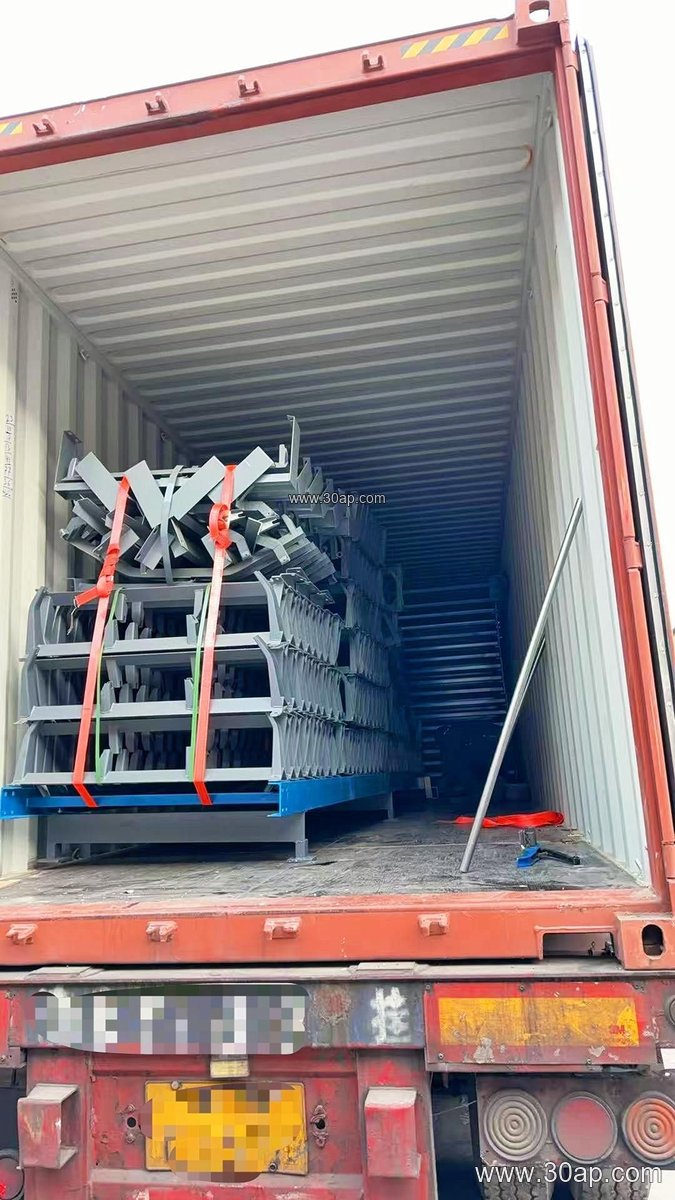
- Belt width range commonly covered: B500, B650, B800, B1000, B1200, B1400, B1600, B1800, B2000, B2200
- Troughing angle at the frame: 20, 30, 35, or 45 degrees, with adjustable legs able to move between these angles
- Idler diameter matched to the frame: Ø89, Ø108, Ø133, Ø159, Ø194
- Material: angle steel, channel steel, or folded steel plate
Installation hole spacing and crossbeam length change with belt width and trough angle, so they should always be taken from the approved drawing rather than assumed.
Where Support Legs Are Used
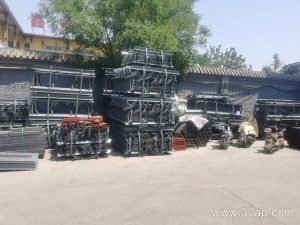
Support legs appear wherever a conveyor frame must stand above a floor or structure. In a sand and gravel line they are usually bolted to a concrete plinth beside the crusher discharge. In a cement plant they carry the clinker transport frames through transfer towers. In a steel plant sinter line, legs are often welded to embedded plates to resist vibration. Port and ship-loading conveyors use taller legs with bracing to suit elevated trestles.
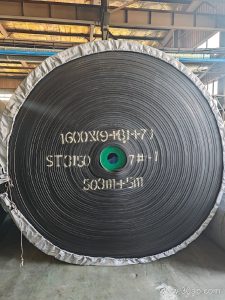
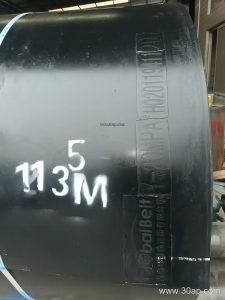
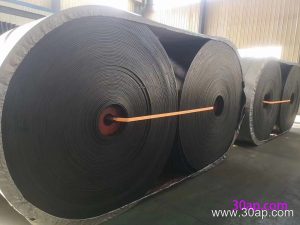
The leg must suit the belt it carries. A heavy-duty mining conveyor belt or a steel cord conveyor belt on an ore conveyor imposes higher frame loads than a light fabric core belt, and the leg section should be sized accordingly. On a coal mining conveyor belt with a flame retardant conveyor belt, the leg and its fixings should also be compatible with the fire protection scheme of the gallery.
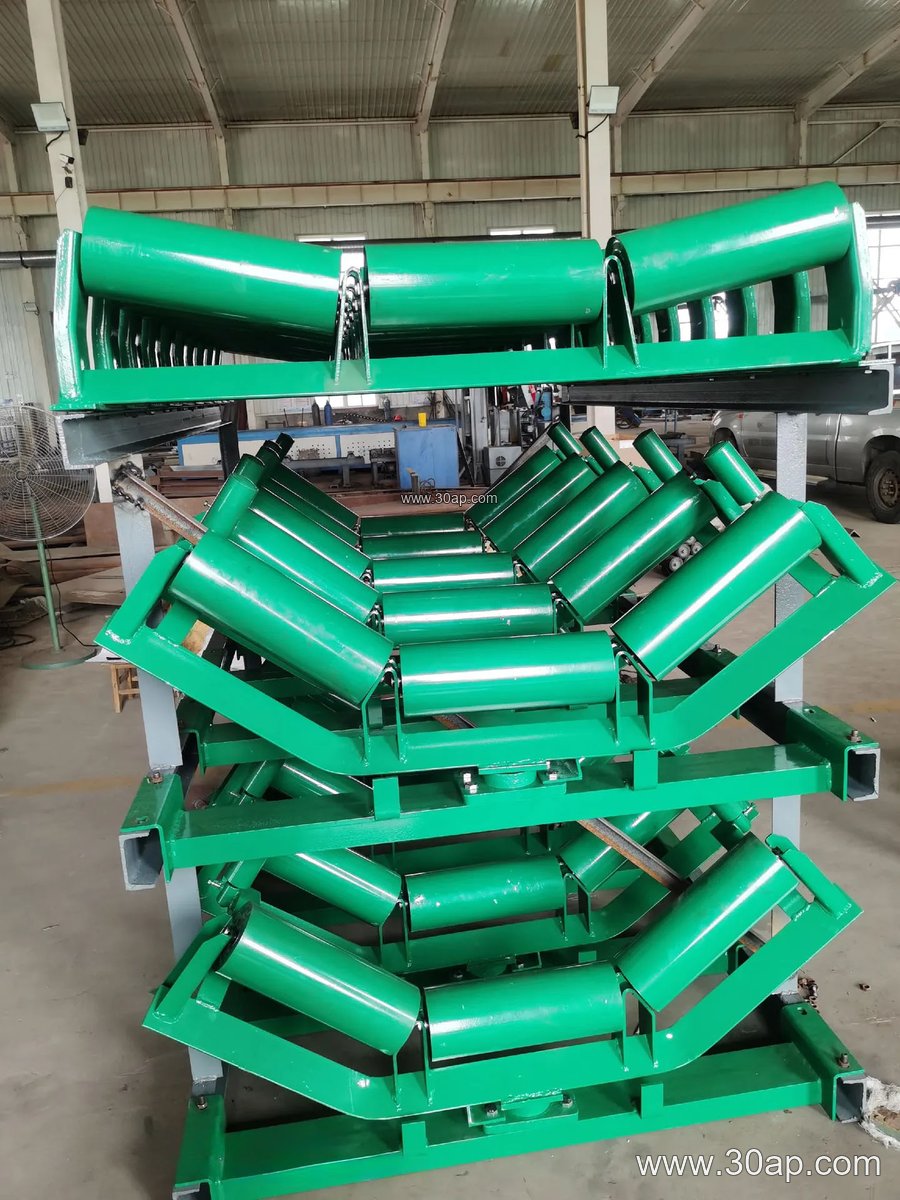
Matching the Leg to the Frame and Idlers
The leg is only one part of the support chain. A troughing frame with 35 degree rolls and Ø133 idlers needs a leg height that places the belt line at the design profile, and the top plate must match the frame’s bolt pattern. Return-side frames, V-return frames, and impact frames at the loading point each have their own leg heights and hole layouts. Adjustable legs are useful at transition zones and at the tail end, where small height corrections avoid belt misalignment.
When the conveyor uses a corrugated sidewall conveyor belt or a skirted conveyor belt, the frame is often wider and the leg spacing may need to change. The same applies to a pipe conveyor belt, where the support structure follows the pipe path rather than a flat trough. In all these cases the leg is designed around the frame, not chosen independently.
Buyer Checklist
- Confirm belt width, trough angle, and idler diameter before ordering; a B800, 35 degree, Ø108 combination is common but not universal.
- State whether the leg is fixed or adjustable, and give the required height range.
- Provide the frame bolt pattern and the base fixing detail, including anchor type.
- Specify surface treatment for the environment: dusty quarry air, wet coal handling, or coastal humidity.
- Ask for the leg to be supplied with its base plate and stiffeners as one welded item to reduce site work.
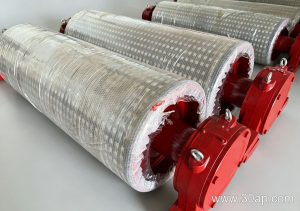
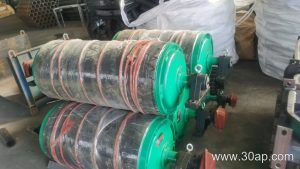
For related components such as the conveyor belt, idler roller, and conveyor pulley, keep the same drawing reference so that legs, frames, and rollers arrive as a matched set. A well-chosen conveyor support leg is a small item that decides how quickly a line can be aligned, re-levelled, and returned to service.