What a Rubber Lagged Pulley Does
A rubber lagged pulley is a conveyor pulley whose cylindrical shell is covered with a rubber layer, usually applied by hot vulcanization, cold bonding, or casting. The rubber covering, often called lagging, sits between the steel drum and the conveyor belt. Its main jobs are to raise friction at the drive point, protect the shell from wear, and help keep the belt tracking steadily under load.
In a conveyor pulley the lagging is not decoration. On a drive pulley, friction is what transfers torque from the drum to the belt. Without enough grip, a fully loaded belt can slip, especially when the surface is wet, dusty, or oily. A rubber covered drum improves that grip, which is why many head or drive pulleys in mines, cement plants, and coal handling systems are supplied with lagging.
How the Rubber Layer Is Built
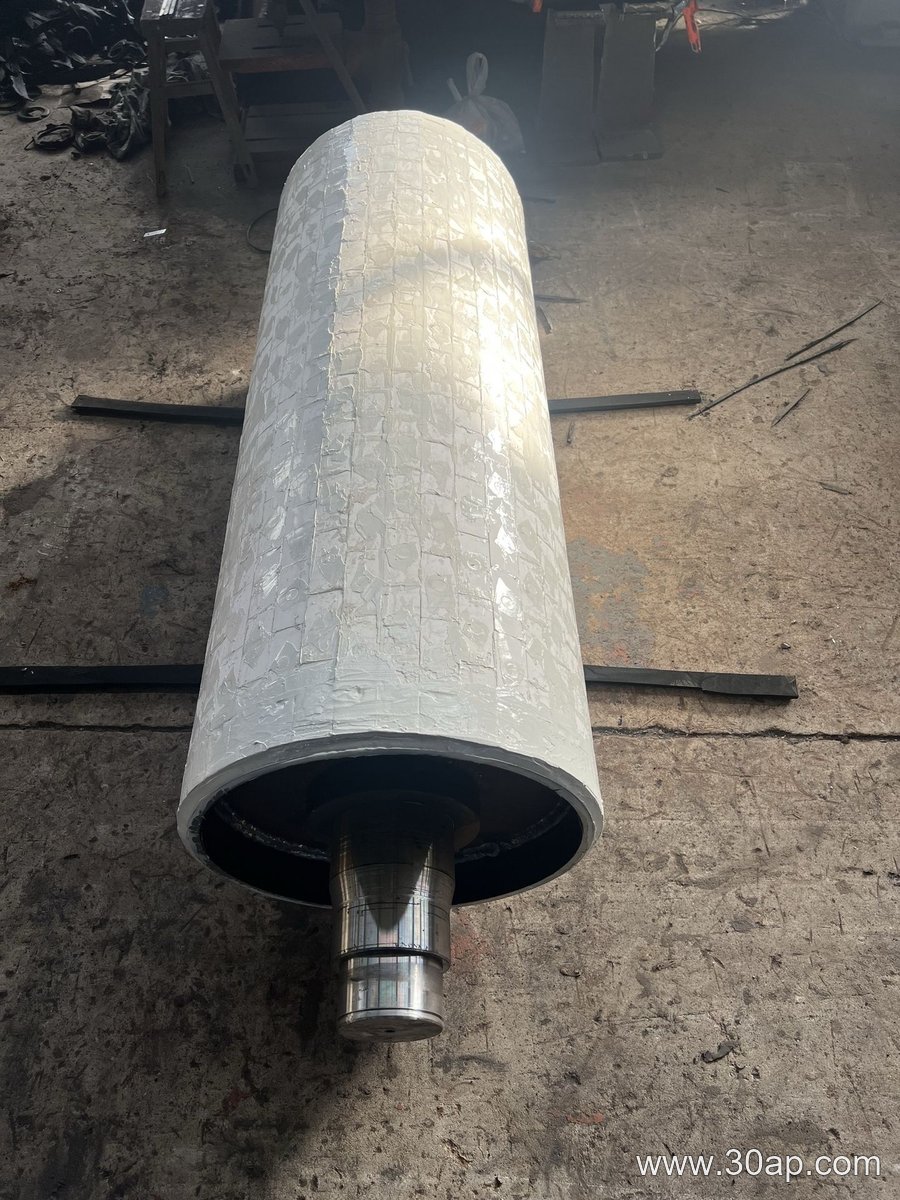
The construction usually starts with a machined steel shell, welded to end discs and a shaft. The rubber is then applied in one of several ways. Hot vulcanized rubber is bonded under heat and pressure and is common for heavy duty work. Cold bonded rubber uses an adhesive system and can be practical for repairs or smaller batches. Cast rubber is poured into a mold around the shell. The surface may be smooth, diamond patterned, herringbone, or ceramic embedded, depending on the grip and cleaning needs.
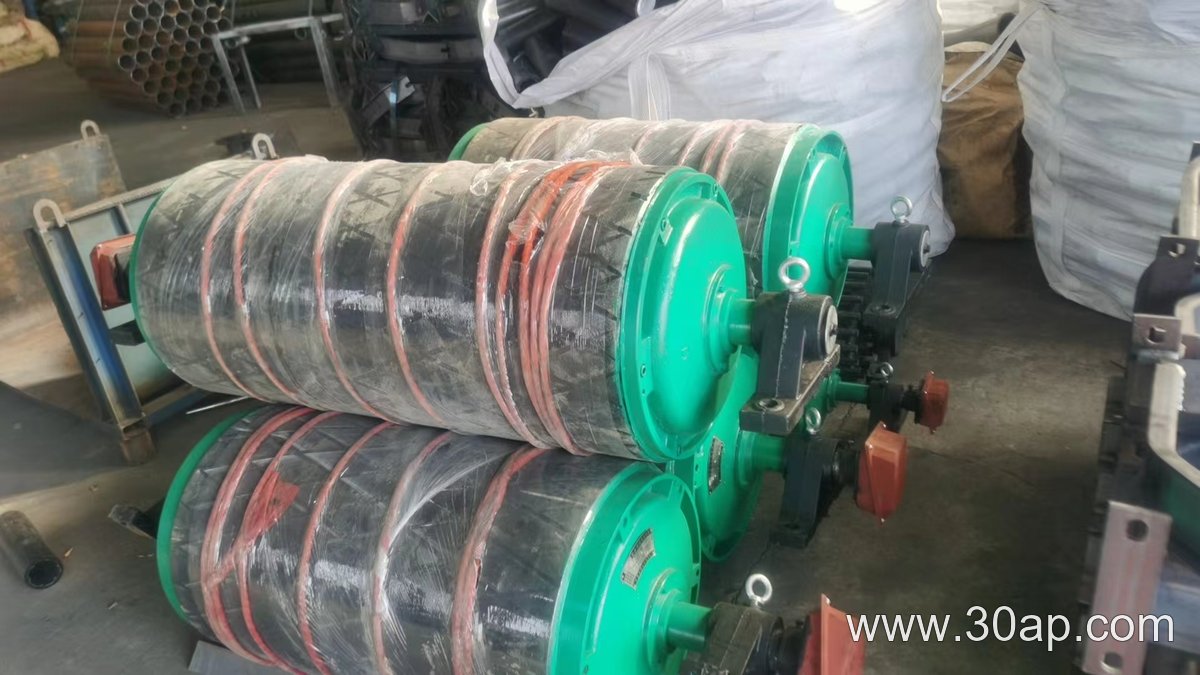
Common lagging thicknesses include 8 mm, 10 mm, 12 mm, 15 mm, and 20 mm. Thicker layers generally suit larger drums and higher torque, while thinner layers are used where space or weight is limited. The layer is often ground after bonding to keep the outside diameter concentric, which matters for belt tracking and for reducing vibration.
Where It Fits on the Conveyor
Lagging is most often specified on the drive or head pulley, because that is where slip risk is highest. It can also be used on a tail pulley to improve traction and reduce material build-up, or on a bend pulley where belt wrap and alignment matter. These positions are not interchangeable. A drive pulley transmits power, a tail pulley returns the belt, and a bend pulley changes direction without driving. Choosing the right position for lagging changes the friction and wear picture.
Typical industries include quarrying, iron ore and copper mines, washed coal plants, cement clinker lines, power station coal conveying, port bulk terminals, and sand and gravel aggregate lines. In these settings the belt may carry sharp rock, wet fines, or hot clinker, so the rubber compound and surface pattern are selected for the material and the environment.
Matching Dimensions to the Conveyor
Buyers usually start with belt width, then work out shell diameter and shaft size from torque, belt tension, and the space available. Belt width does not dictate a single diameter. A B800 belt, for example, might run on a Ø500 drum in one conveyor and a Ø630 drum in another, depending on load and speed. Face width is normally a little wider than the belt, so a B800 pulley often has a face around 950 mm, while a B1200 unit may be about 1400 mm.
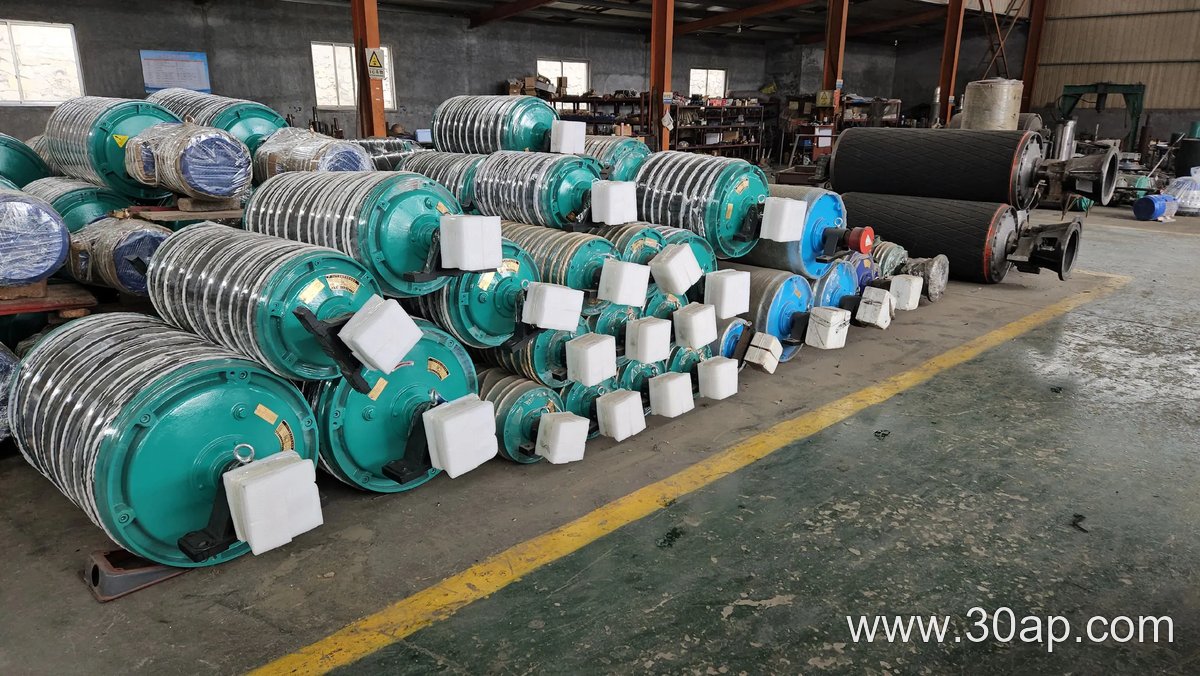
Some reference combinations that appear in design work include B800 × Ø500, B1200 × Ø1000, and B1400 × Ø800. These are examples, not fixed rules. Shaft diameter is set by torque and load, with common values such as Ø80, Ø100, Ø120, and Ø160, but the final size should come from the conveyor designer.
What to Check Before Ordering
- Confirm the pulley position: drive, tail, bend, or tension. Each has different demands.
- State the belt width, shell diameter, face width, and shaft diameter the design requires.
- Choose the lagging type and thickness for the material and moisture level. Diamond or herringbone patterns help with water drainage; ceramic may suit high wear.
- Decide between hot vulcanized, cold bonded, and cast rubber based on duty and repair needs.
- Check balance, concentricity, and bearing fit, since these affect belt life and noise.
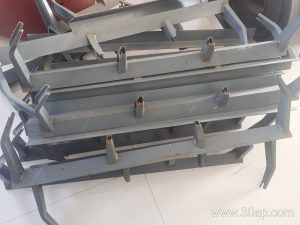
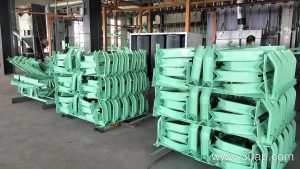
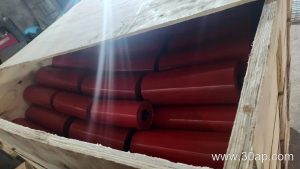
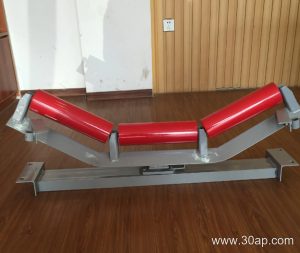
It also helps to review the conveyor bracket and idler roller arrangement at the same time, because alignment of the whole frame affects how well the lagged drum performs. When the belt is misaligned or the take-up is uneven, even a well-made rubber covered pulley will wear quickly.
Maintenance Notes
Inspect the rubber surface for cuts, glazing, and missing chunks. A polished or oily surface loses grip, and a torn edge can catch the belt. Keep the drum clean and check that the belt is not running off-center. If the lagging is worn down to the shell, re-lagging is usually better than replacing the whole pulley. For high traffic plants such as a coal preparation facility or a cement clinker line, a planned inspection interval keeps unplanned stops lower.
Rubber lagging is a practical way to improve traction and extend pulley life, but it works best when the drum is sized correctly, the compound matches the site, and the conveyor is kept in alignment.