What a Trough Idler Bracket Does on a Conveyor
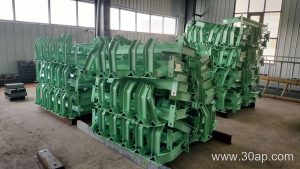
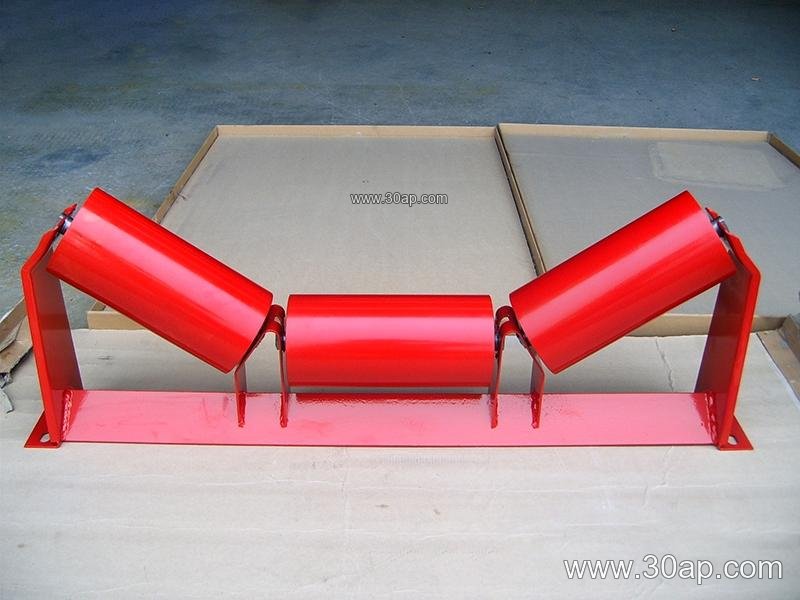
A trough idler bracket is the steel support that holds the angled idler rollers in a troughed carrying run. It sets the trough angle of the conveyor belt, keeps the idler roller shafts at the right spacing, and transfers the load of the belt and material into the conveyor frame. On a quarry or crushing and screening line, this bracket is often the part that decides whether the belt tracks cleanly or drifts against the structure.
The same item is also called a troughing idler bracket or a troughing bracket. These names describe the same product. It should not be confused with a return bracket, which supports the belt on the return side, or with a transition bracket, which is used near a conveyor pulley where the belt changes from flat to troughed.
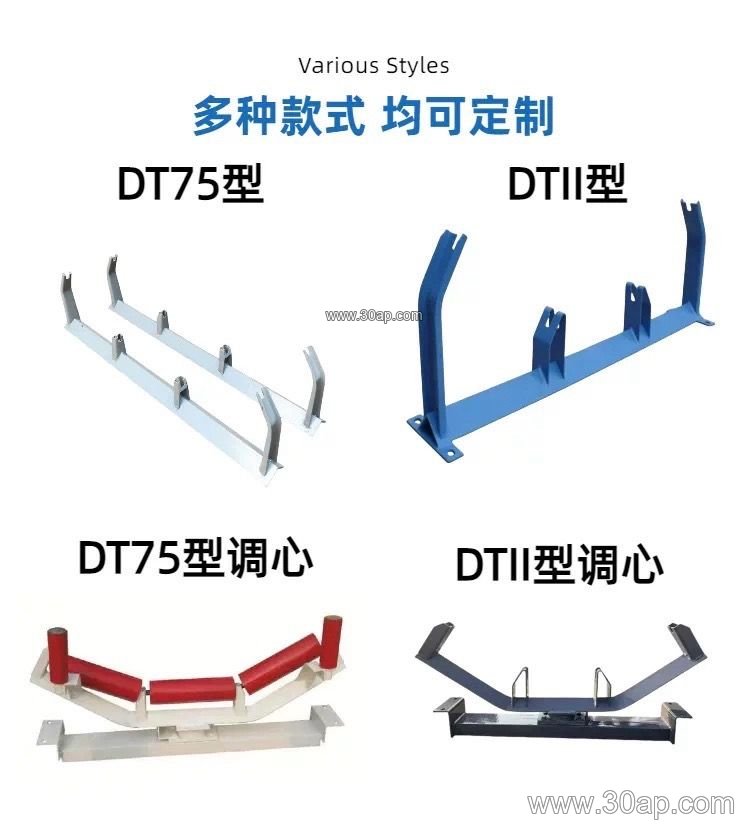
Construction and Common Forms
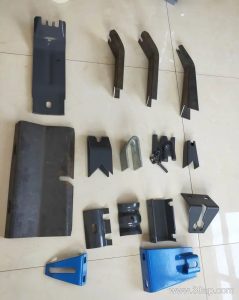
Most trough idler brackets are fabricated from angle steel, channel steel, or folded steel plate. The roller seats are punched or drilled to match the shaft ends of the idlers, and the bracket is bolted or welded to the conveyor stringer. A fixed bracket holds one trough angle, while an adjustable bracket allows the angle to be set during installation or changed later.
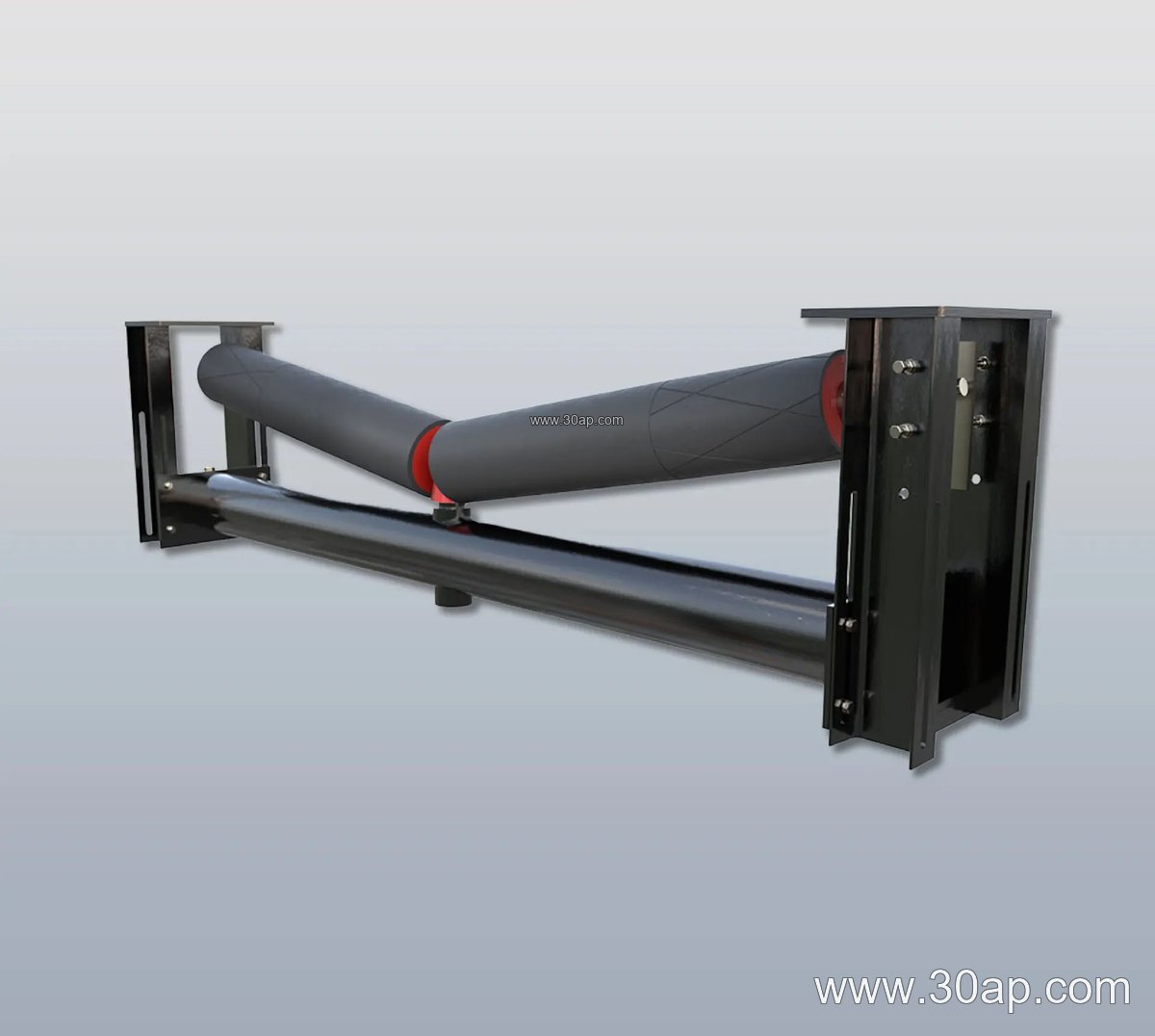
Common trough angles are 20, 30, 35, and 45 degrees. A forward-tilted bracket, often about 1.5 to 2 degrees, is used where belt training is a concern. The bracket length and hole spacing change with belt width and trough angle, so these dimensions are normally confirmed from the conveyor drawing rather than taken as a fixed value.
Typical Reference Data
The table below gives common reference values for trough idler brackets. These are examples for orientation, not a fixed match between one belt width and one idler diameter.
- Belt width: B500, B650, B800, B1000, B1200, B1400, B1600, B1800, B2000, B2200
- Trough angle: 20, 30, 35, 45 degrees
- Idler diameter: Ø89, Ø108, Ø133, Ø159, Ø194
- Material: angle steel, channel steel, folded steel plate
Example combinations that appear in practice include B800 with 35 degrees and Ø108, B1200 with 45 degrees and Ø133, and B650 with 30 degrees and Ø89. Each of these is a design choice, not a rule. A wider belt may use a larger idler for load capacity, and a smaller belt may use a larger angle for material depth.
Where It Fits in the Conveyor
Trough idler brackets are used on the carrying side of a belt conveyor, usually spaced at regular intervals along the stringers. They are common in coal washing plants, cement plants, power station coal handling, iron ore mines, limestone quarries, port bulk terminals, and tunnel spoil lines. In a crushing and screening circuit, they keep the conveyor belt stable under uneven lump sizes; in a cement plant, they support the belt through long transfer runs.
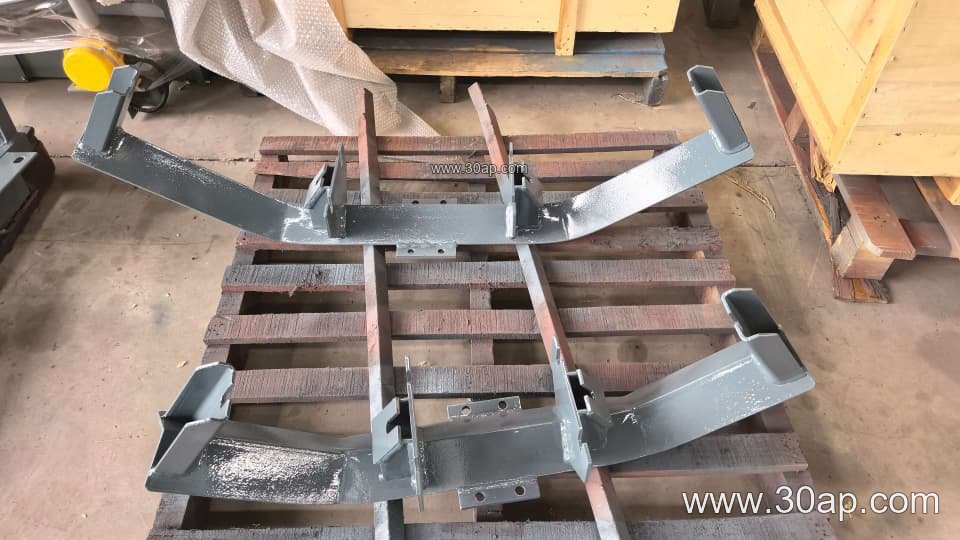
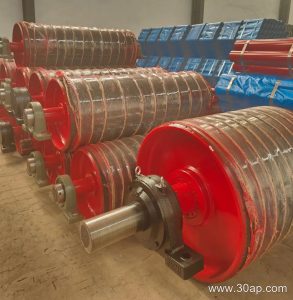
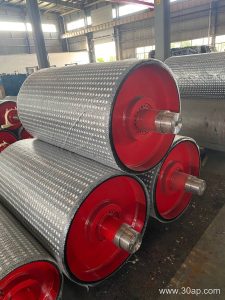
They work together with the conveyor belt, the idler roller, the conveyor pulley, and the conveyor bracket system. The drive pulley, tail pulley, and bend pulley each have a different role, and none of them replaces a troughing bracket. Near a pulley, a transition bracket is often used instead, because the belt must flatten before it reaches the pulley face.
Selection and Maintenance Notes
A buyer should confirm the belt width, the required trough angle, the idler shaft size, and the mounting hole pattern before ordering. The bracket should match the idler roller to be used, and the frame bolt holes should line up with the stringer. For dusty or wet conditions, check that the bracket design does not trap material around the idler seats.
During service, look for bent roller seats, loose bolts, and wear at the mounting points. A misaligned bracket can cause the belt to run off center, so alignment should be checked when idlers are replaced. Adjustable brackets are useful where the trough angle may need fine tuning after startup.