What a Conveyor Belt Support Frame Does
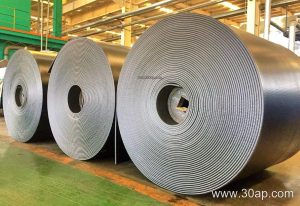
A conveyor belt support frame is the structural element that holds the idlers in position and keeps the belt profile consistent along the entire run. Without it, even a well-specified conveyor belt would sag, mistrack, and spill material. In a quarry, a cement plant, or a coal handling system, the frame is the part that transfers the load from the belt and idlers into the conveyor stringer or foundation.
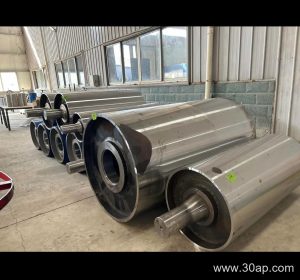
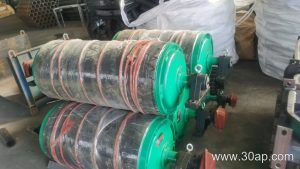
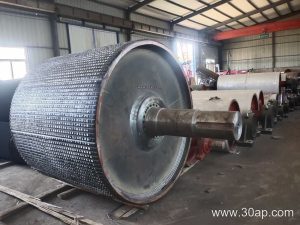
The frame is often called a conveyor idler frame or idler support bracket, and these names describe the same product. It is not a drive pulley, nor a tail pulley, nor a bend pulley; those components transmit power or change belt direction, while the support frame simply carries and positions the idlers. Buyers should keep that distinction clear when comparing quotations.
How the Frame Is Built
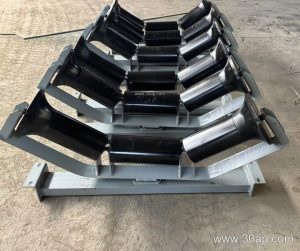
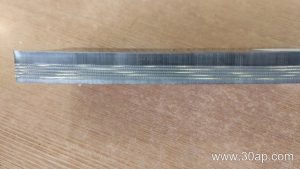
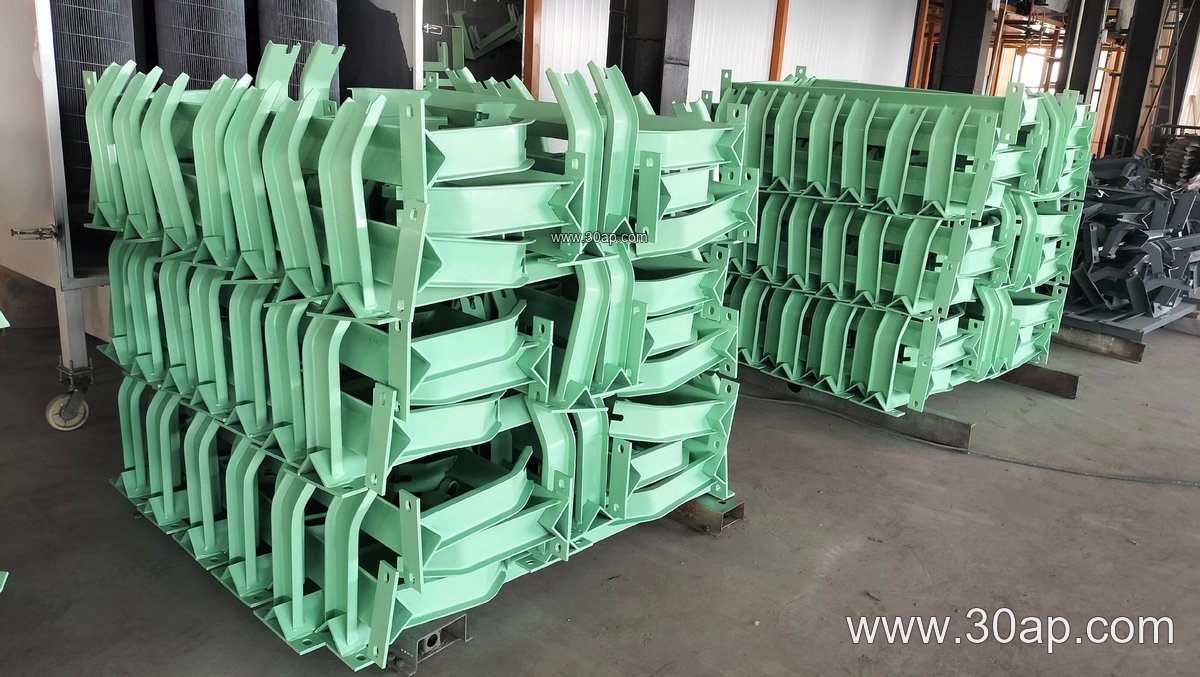
Most frames are fabricated from angle steel, channel steel, or folded steel plate. The fabrication method affects stiffness and corrosion behavior more than appearance. A typical troughing frame carries three idlers at a fixed or adjustable trough angle, while a return frame holds one flat idler or a pair of V-return idlers.
Common structural details include:
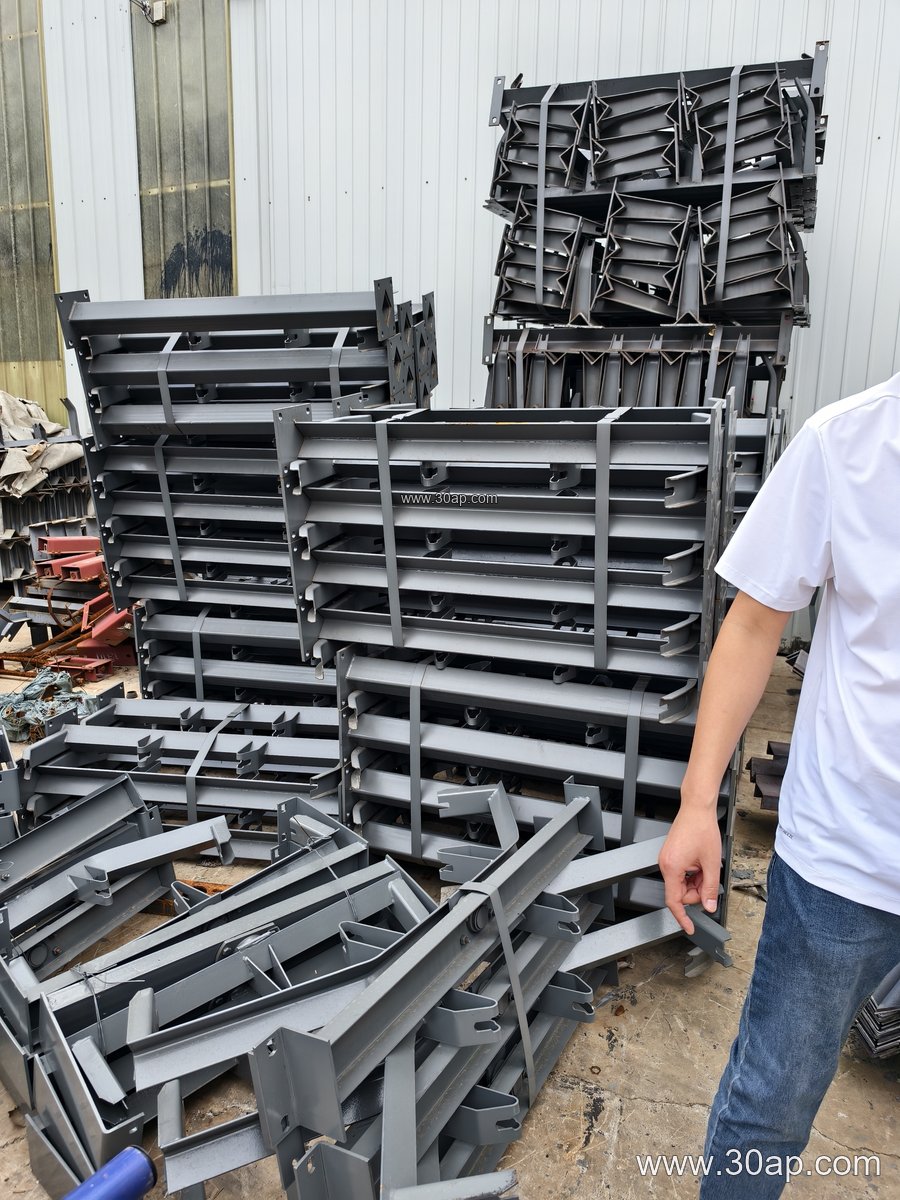
- Welded or bolted cross beams sized to the belt width
- Slotted mounting holes that allow idler spacing adjustment
- Bracket plates for attaching to the conveyor stringer
- Reinforced gussets at high-load points
For a heavy-duty mining conveyor belt carrying iron ore or coarse rock, the frame usually needs thicker section steel and closer idler spacing. In a power plant coal yard, a lighter frame may be sufficient, but corrosion protection still matters.
Troughing, Return, and Transition Arrangements
Troughing frames are the most visible type. They support the carrying side of the belt and set the trough angle, commonly 20, 30, 35, or 45 degrees. The angle influences how much bulk material the belt can hold and how the belt behaves at the loading point. A 35 degree frame is common on medium-width lines, while a 45 degree frame is often chosen where capacity is tight.
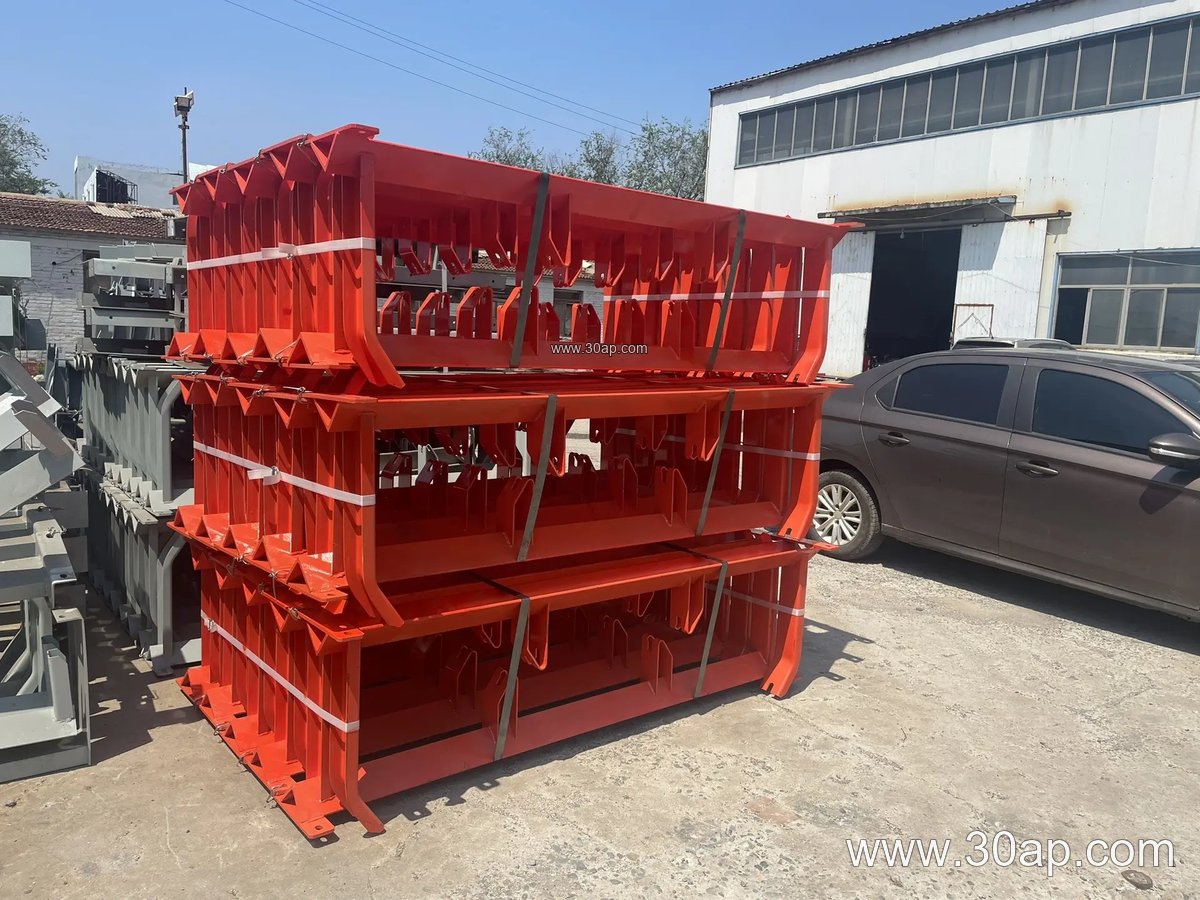
Return frames support the empty side. A flat return frame with a single idler is simple, while a V-return frame helps center the belt on long runs. Transition frames sit between the pulley and the first full troughing station, gradually changing the belt from flat to troughed. Impact frames with cushioning idlers are used under crusher discharge points, where a rock conveyor belt receives large lumps.
Adjustable frames allow the trough angle to be changed on site, which is useful during commissioning or when material characteristics change. Fixed frames are simpler and usually more rigid.
Matching Frame, Idler, and Belt Width
Frame dimensions follow the belt width and the idler diameter. Common belt widths include B500, B650, B800, B1000, B1200, B1400, B1600, B1800, and B2000. Idler diameters such as Ø89, Ø108, Ø133, Ø159, and Ø194 are selected according to load and belt speed, not by a single fixed rule. A B800 frame may be supplied with Ø108 idlers in one plant and Ø133 idlers in another, depending on the design.
The table below shows reference combinations only; actual values are determined by the conveyor design.
| Belt width | Trough angle | Idler diameter | Typical use |
|---|---|---|---|
| B650 | 30 degrees | Ø89 | Aggregate, sand line |
| B800 | 35 degrees | Ø108 | Cement plant, stone crushing |
| B1000 | 35 degrees | Ø133 | Coal handling, power plant |
| B1200 | 45 degrees | Ø133 | Iron ore, heavy bulk |
| B1400 | 35 degrees | Ø159 | Port loading, large tonnage |
| B1600 | 45 degrees | Ø159 | Mining primary haul |
Installation hole spacing and cross beam length change with belt width and trough angle, so a frame drawing should always be checked against the actual stringer layout.
Where These Frames Are Used
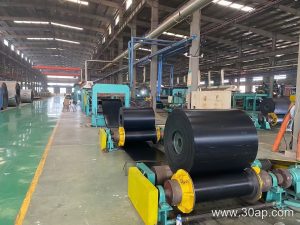
In a limestone quarry, support frames keep the belt aligned through the crushing and screening circuit. In a coal washing plant, flame retardant conveyor belt and anti-static properties matter, but the frame still has to resist vibration and wet conditions. In a cement plant, heat resistant conveyor belt may be used near the kiln area, and the frame beneath it must tolerate thermal movement. In a port, a wide conveyor belt on a long jetty depends on properly spaced frames to prevent edge damage.
Other related components, such as the conveyor pulley and conveyor bracket, work together with the frame, but they serve different functions and should not be treated as substitutes.
Buyer Checklist
- Confirm belt width and idler diameter before ordering
- Decide between fixed and adjustable trough angles
- Check material and coating for the site environment
- Verify mounting hole spacing against the stringer
- Plan spare frames for impact and transition zones
For more information on compatible conveyor belt and idler roller selections, visit our site and review the technical pages before finalizing the frame specification.