What a V-Type Idler Bracket Does on a Conveyor
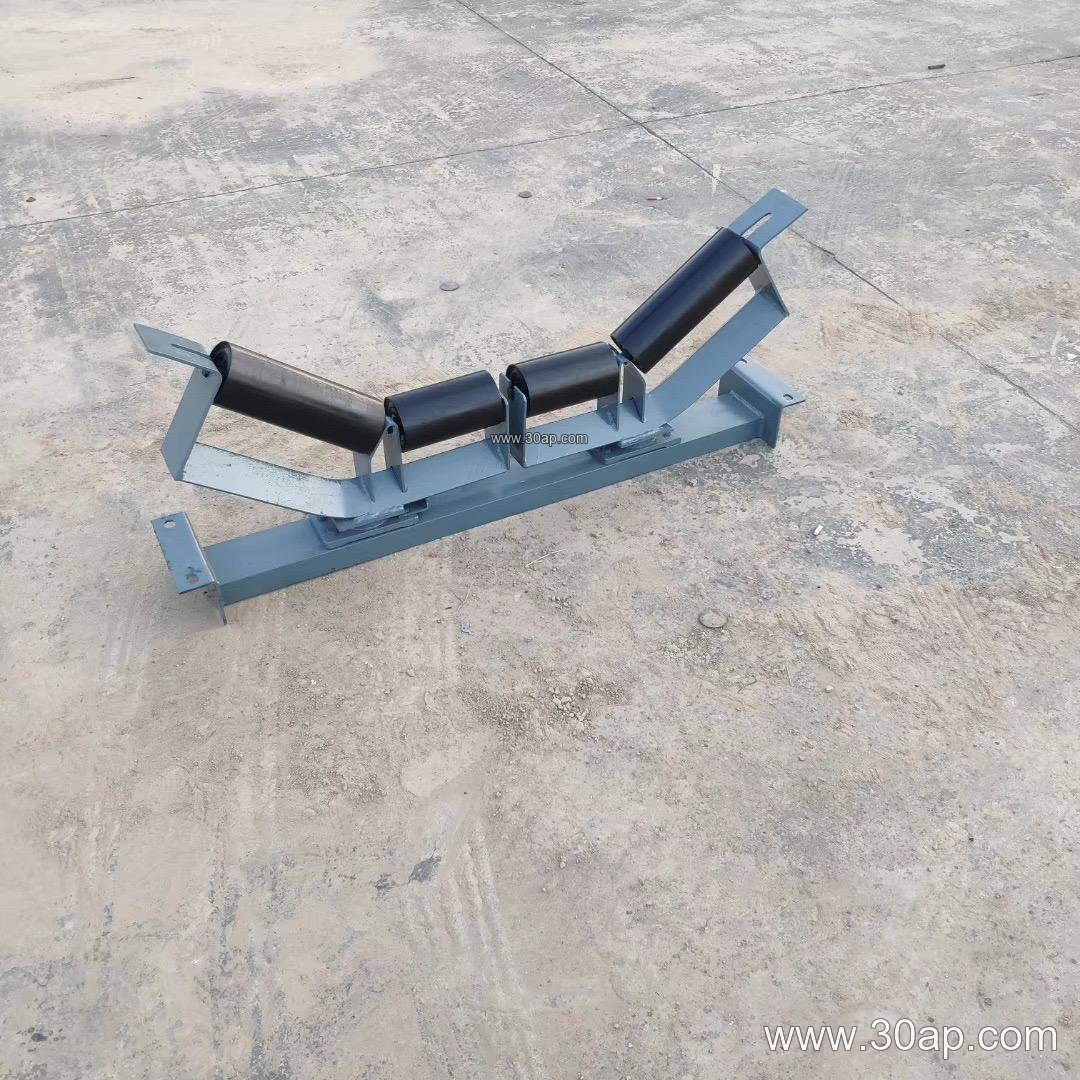
A V-Type Idler Bracket is a return-side support component that holds two idler rollers in a V-shaped configuration. It is mounted under the returning conveyor belt, typically between the head and tail pulleys, to support the belt’s empty strand and help maintain proper belt tracking. Unlike a flat return bracket that carries a single roller horizontally, this bracket uses two angled rollers to create a trough that centers the belt and reduces material spillage on the return run.
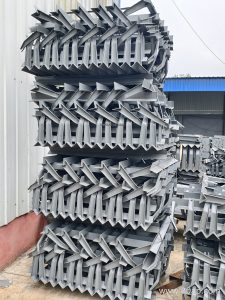
The bracket itself is usually fabricated from angle steel, channel steel, or folded steel plate. The V-angle is fixed at the time of manufacture, though adjustable versions allow the roller positions to be fine-tuned during installation. Common roller diameters used with these brackets include Ø89, Ø108, Ø133, Ø159, and Ø194 mm, selected according to belt width and load conditions.
Construction and Mounting Details
A typical V-Type Idler Bracket consists of a crossbeam, two inclined roller seats, and mounting feet that bolt to the conveyor frame. The inclined seats are welded or bolted at an angle that forms the V profile. The bracket may be fixed or adjustable; adjustable designs permit small changes to the roller spacing and angle to accommodate belt sag or alignment issues.
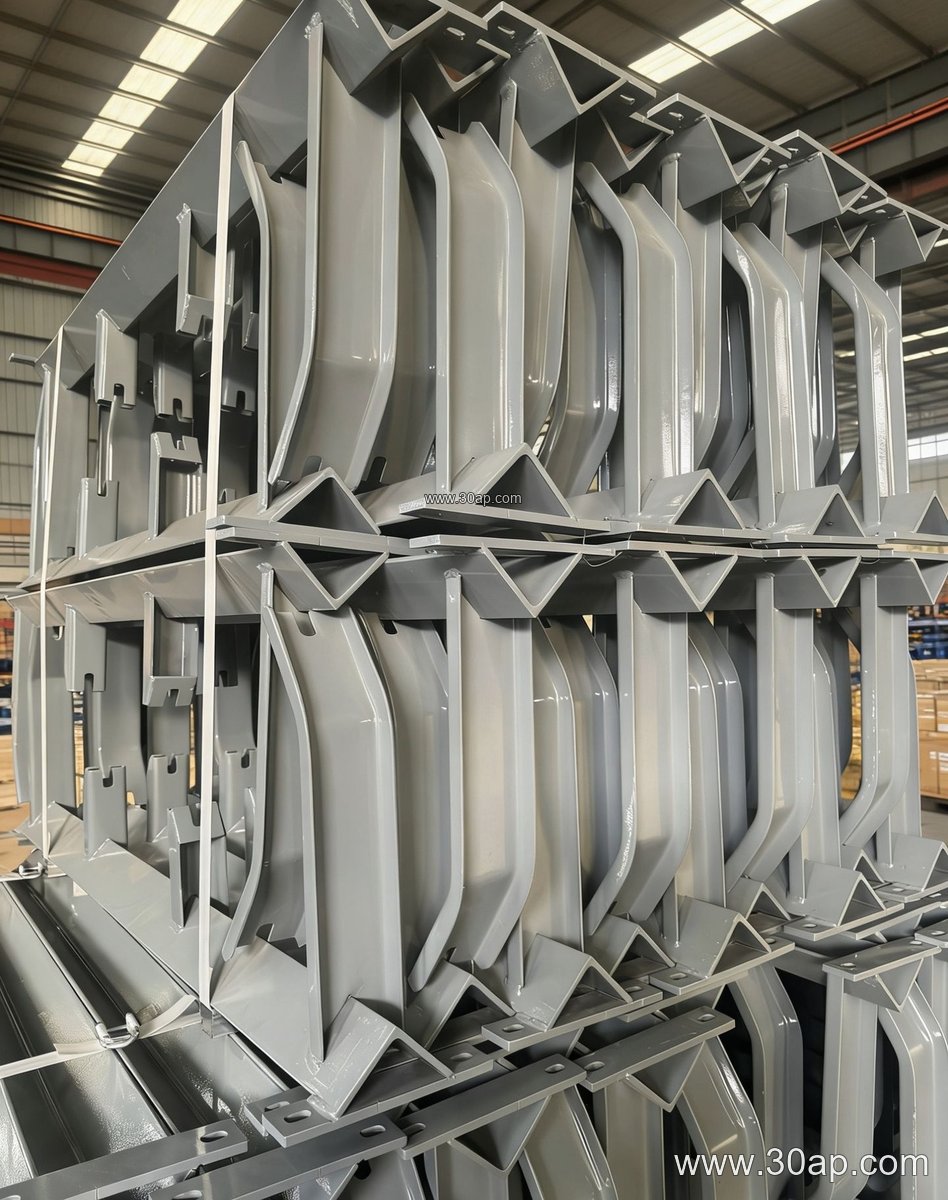
Installation is straightforward: the bracket is fastened to the return strand frame, and the idler rollers are dropped into the seats. Proper alignment with the conveyor pulley and adjacent brackets is important to avoid belt edge wear. In dusty environments such as a limestone quarry or a coal washing plant, the bracket should be positioned so that fines do not accumulate in the V trough.
Where This Bracket Fits in Bulk Handling
V-Type Idler Brackets are widely used in mining, cement plants, power station coal handling, and aggregate processing lines. They are particularly effective on long overland conveyors and in tunnels where belt training is critical. For example, a quarry conveyor carrying crushed rock on a 1200mm wide Rubber Conveyor Belt may use V-Type return brackets with Ø133mm rollers to keep the belt centered on the return run.
In a coal preparation plant, a flame retardant conveyor belt may be paired with V-Type return brackets to reduce the risk of belt misalignment near transfer points. The bracket also finds use in iron ore and copper ore handling, where heavy loads demand robust support. It is not a substitute for a bend pulley or a tail pulley; those components serve different functions in the conveyor drive and tensioning system.
Matching Bracket, Belt, and Roller
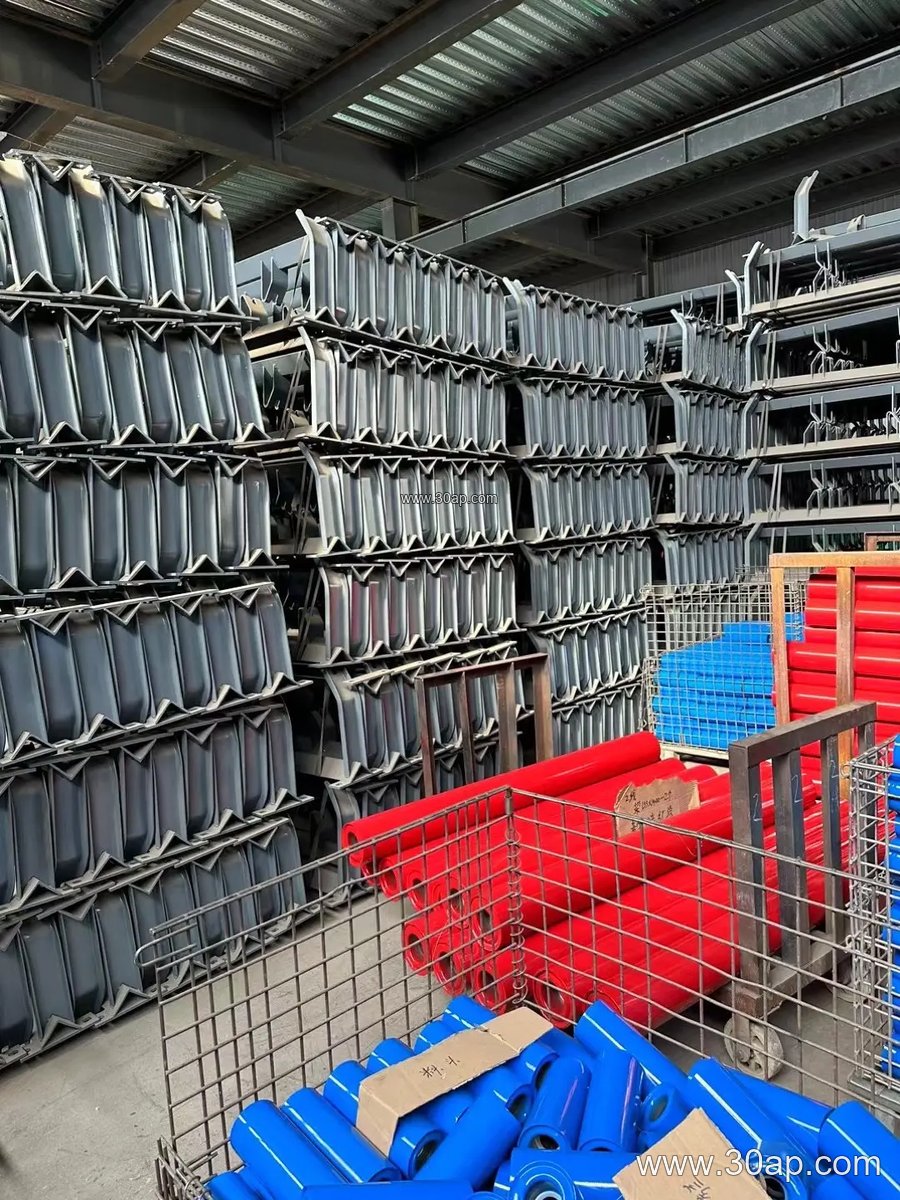
Selecting the right V-Type Idler Bracket involves matching the bracket’s load rating and mounting dimensions to the belt width and roller diameter. Common belt widths for this bracket include B500, B650, B800, B1000, B1200, B1400, B1600, B1800, B2000, B2200. The bracket’s crossbeam length and mounting hole spacing vary with belt width and V-angle; they are not fixed values.
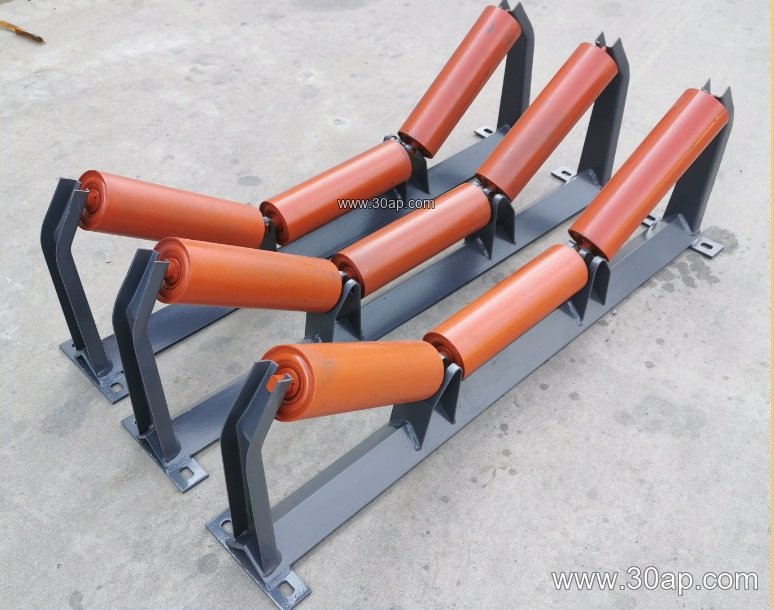
For a B800 conveyor with a 35-degree troughing angle on the carrying side, the return V-bracket might use Ø108 rollers. A B1200 system with a 45-degree carrying trough could use Ø133 rollers on the return V-bracket. These are examples only; the final choice depends on belt speed, material weight, and the conveyor designer’s specification. The bracket should be compatible with the conveyor frame and the selected idler roller series.
Buyer Checklist for V-Type Return Brackets
- Confirm the belt width and the required V-angle (common angles are 20, 30, 35, and 45 degrees).
- Specify the roller diameter (Ø89, Ø108, Ø133, Ø159, or Ø194) based on load and belt speed.
- Decide between fixed and adjustable designs; adjustable brackets help with field alignment.
- Check the bracket material and finish for the environment—painted steel for general use, galvanized for wet or corrosive conditions.
- Verify mounting hole spacing against the existing conveyor frame or the conveyor bracket drawing.
- Ensure the bracket is designed to work with the chosen conveyor pulley and belt type, such as an EP conveyor belt or a steel cord conveyor belt.
For abrasive materials like sinter or coke, a heavy-duty bracket with thicker steel may be advisable. In food or grain handling, smooth surfaces and easy cleaning matter more than extreme thickness. Always request dimensional drawings before ordering to avoid mismatches with the return strand frame.
Maintenance and Long-Term Reliability
V-Type Idler Brackets have no moving parts, so maintenance mainly involves checking for bent or corroded members, loose bolts, and worn roller seats. In a power plant coal yard or a cement kiln feed line, periodic inspection during shutdowns helps prevent belt tracking problems. If the bracket becomes misaligned after a belt jam, realign it before replacing rollers. Keeping the return strand clean and the bracket free of buildup extends service life and protects the conveyor belt from edge damage.