What an Aggregate Conveyor Pulley Does
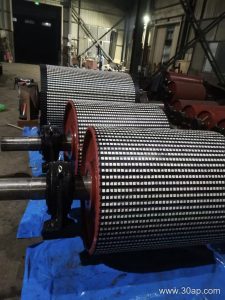
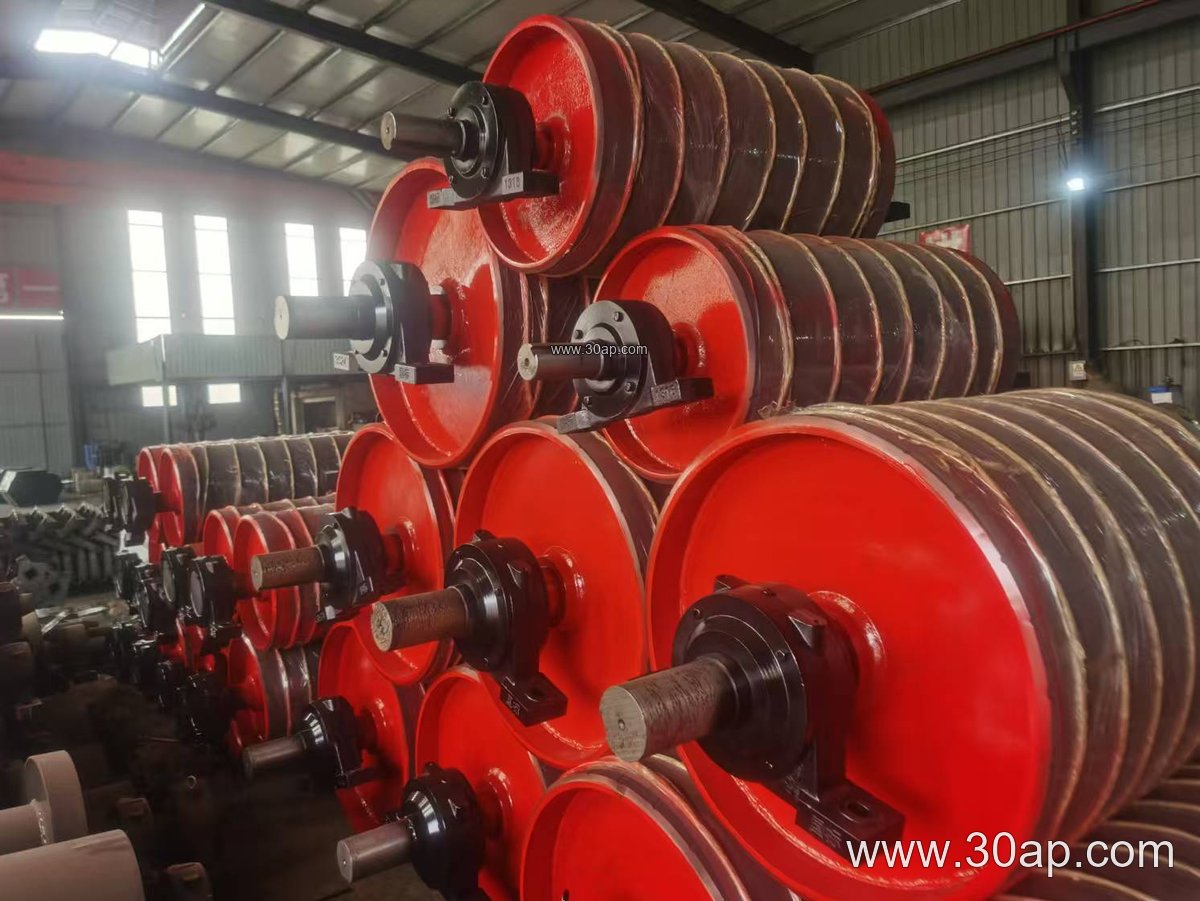
In a sand and gravel plant, the belt that carries crushed stone from the primary crusher to the screening deck depends on a reliable aggregate conveyor pulley to keep moving. This pulley is the cylindrical drum that drives, tensions, or redirects the conveyor belt. It is not a roller or an idler; it is a larger, load-bearing component that transfers power and maintains belt alignment. A typical pulley for aggregate duty is built with a heavy steel shell, welded end discs, a shaft, and a lagging surface that grips the belt. The design must handle abrasive rock, dust, and constant tension.
At the head of the conveyor, the drive pulley is connected to a gearbox and motor, pulling the belt forward. At the tail, the tail pulley provides the return path and can be adjusted for tension. Bend pulleys guide the belt around curves or into the tensioning system. These three roles are distinct, and they are not interchangeable. A drive pulley needs high friction and torque capacity; a tail pulley often has a wing or self-cleaning design to shed material; a bend pulley is typically smaller and may be smooth. When selecting an aggregate conveyor pulley, match the subtype to its position and duty.
Construction and Surface Options
Most aggregate pulleys use a welded steel shell with a machined face. The shaft is sized by torque and radial load, not by belt width alone. Common shaft diameters include Ø50, Ø60, Ø70, Ø80, Ø90, Ø100, Ø120, Ø140, Ø160, Ø180, and Ø200 mm, but the final choice depends on the conveyor’s power and belt tension. The pulley face width is usually slightly wider than the belt; for example, a B800 belt often runs on a pulley with about 950 mm face width, and a B1200 belt on roughly 1400 mm. These are typical references, not fixed rules.
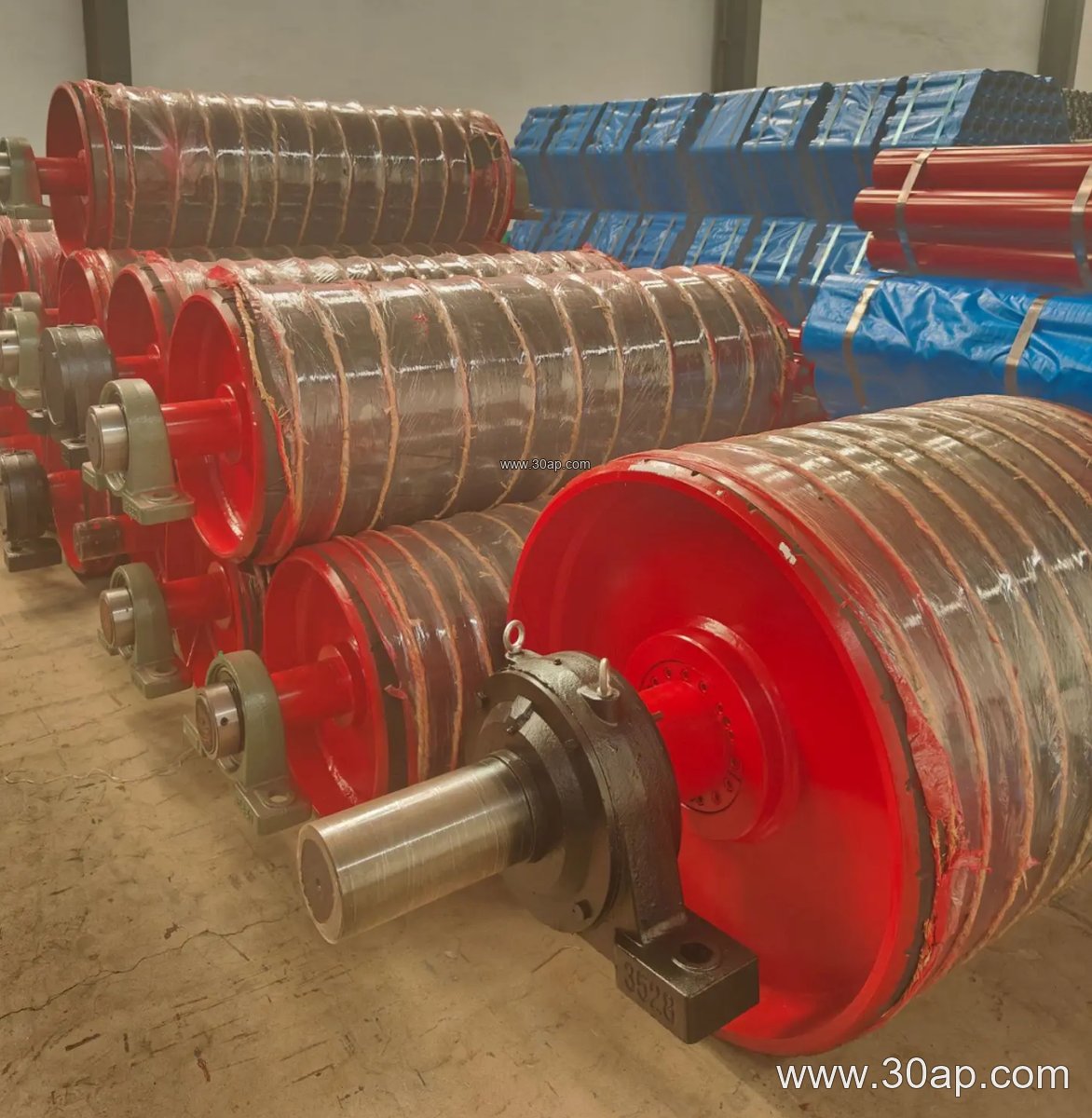
Lagging is critical for grip and wear life. Options include plain steel, rubber lagging applied by cold bonding or hot vulcanizing, diamond groove, herringbone, and ceramic lagging. Rubber thickness commonly ranges from 8 mm to 20 mm. In a quarry or aggregate line, diamond or herringbone lagging helps shed water and fines, while ceramic lagging suits high-torque drive pulleys where slip is a concern. The right surface depends on belt speed, load, and environmental conditions.
Matching the Pulley to the Conveyor Belt
The pulley must work in harmony with the conveyor belt. A heavy, abrasion-resistant belt such as an Aggregate Conveyor Belt or a multi-ply fabric core belt like EP200 will require a drive pulley with enough lagging friction to avoid slip. For long overland conveyors in a limestone mine, a steel cord belt may be used, and the pulley diameter must be large enough to limit bending stress in the cord. As a general guide, larger diameters reduce belt flex fatigue. Common pulley diameters for aggregate service include Ø400, Ø500, Ø630, Ø800, Ø1000, and Ø1250 mm. A B800 conveyor might use a Ø500 tail pulley, while a B1400 main drive could use Ø800 or larger. Always confirm with the belt manufacturer’s recommended minimum pulley diameter.
Belt width and pulley diameter are not locked in a one-to-one relationship. A B1000 belt can run on different pulley diameters depending on tension and belt construction. Avoid assuming that a given width automatically dictates a shaft size or diameter.
Installation Positions and Maintenance
In a typical aggregate plant, the drive pulley sits at the head end, often above the discharge chute. The tail pulley at the feed end may be equipped with a wing pulley to prevent material buildup. Bend pulleys are used in the take-up system to increase belt wrap around the drive pulley. Each position has different bearing loads and access requirements. Regular maintenance includes checking lagging wear, verifying shaft alignment, and lubricating bearings. A worn lagging surface can cause belt slip, especially in wet or dusty conditions. Inspecting the pulley during scheduled shutdowns helps avoid unplanned downtime.
Buyer Checklist
Before ordering an aggregate conveyor pulley, gather the belt width, belt type, maximum tension, pulley position, and required lagging. Confirm the shaft diameter based on torque calculations, not just belt width. Consider the environment: a coal mining conveyor or a cement plant may need fire-resistant or heat-resistant belting, and the pulley lagging should be compatible. Ask for the pulley face width, shell thickness, bearing type, and balancing grade. For high-abrasion rock, specify adequate lagging thickness. Keep spare tail and bend pulleys on hand for critical circuits. A well-matched pulley extends belt life and keeps the aggregate line running smoothly.