What a Heavy-Load Conveyor Pulley Does
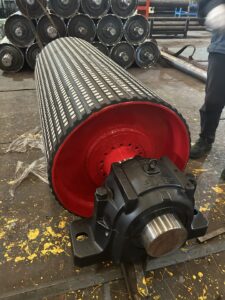
A heavy-load conveyor pulley is the rotating drum that transmits torque to the belt and keeps the belt path under control when tonnage, belt tension, and shock loads are high. In a typical drive station, the pulley shell grips the belt while the shaft carries the bending load into the bearings. The same product family also appears at the tail, at take-up points, and at bend positions, but each position does a different job. For example, a drive pulley transmits power, while a bend pulley only changes the belt direction. Those roles are not interchangeable, and a buyer should never treat a tail pulley as a substitute for a drive pulley.
Construction and Surface Choices
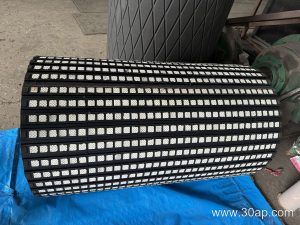
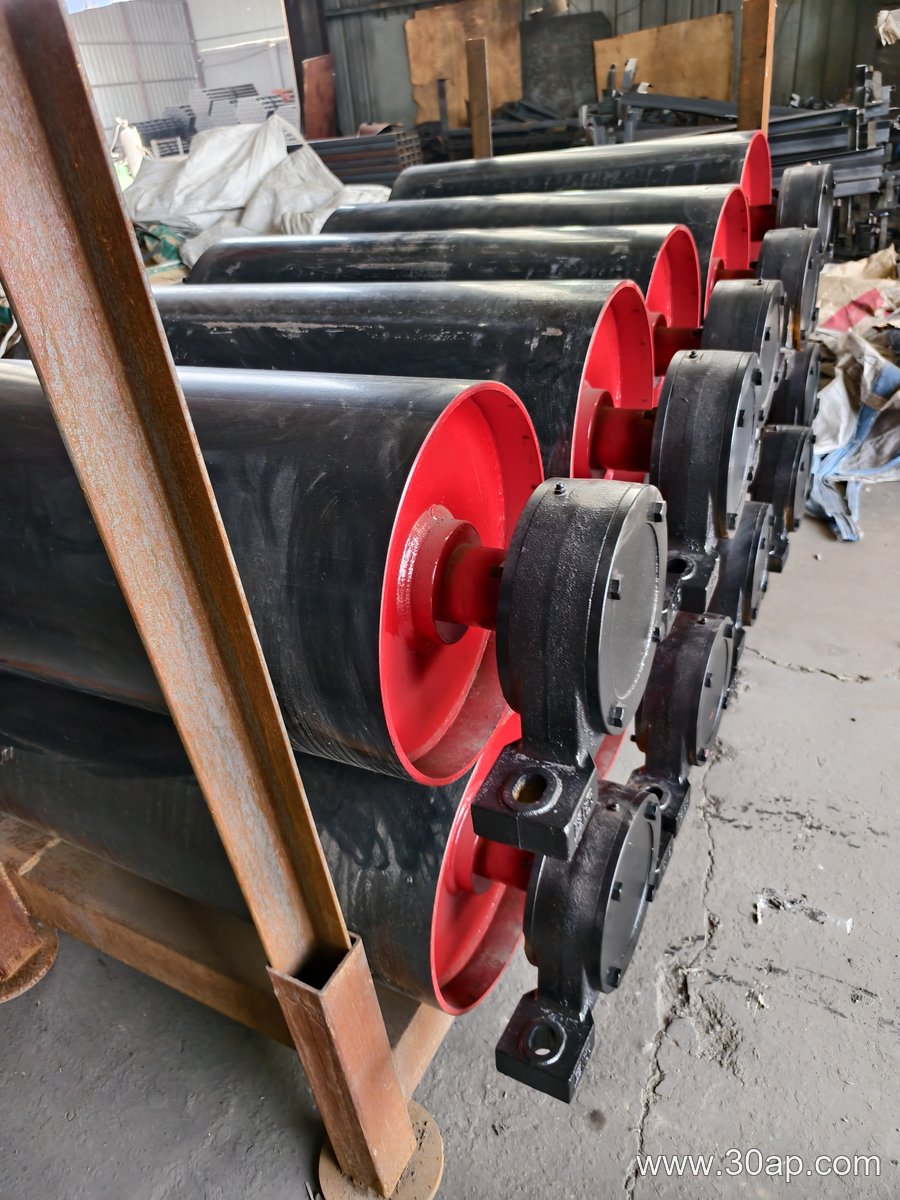
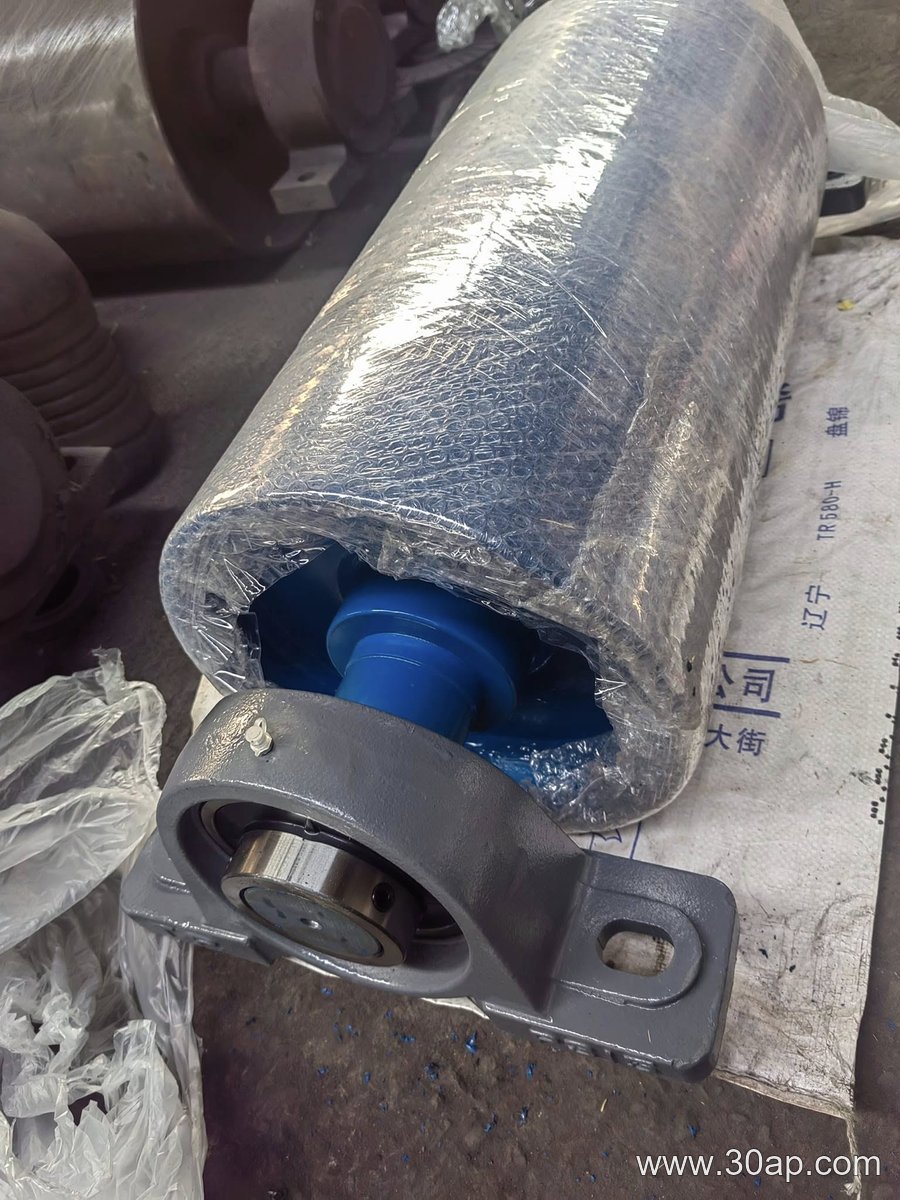
The shell is usually a rolled steel cylinder with welded end discs, a hub, and a shaft. For abrasive or wet duty, the shell may be covered with rubber. Common surface forms include plain, hot vulcanized rubber, cold bonded rubber, diamond grooved, herringbone, and ceramic lagging. Lagging thickness is often 8, 10, 12, 15, or 20 mm, selected by slip risk and material buildup rather than by habit.
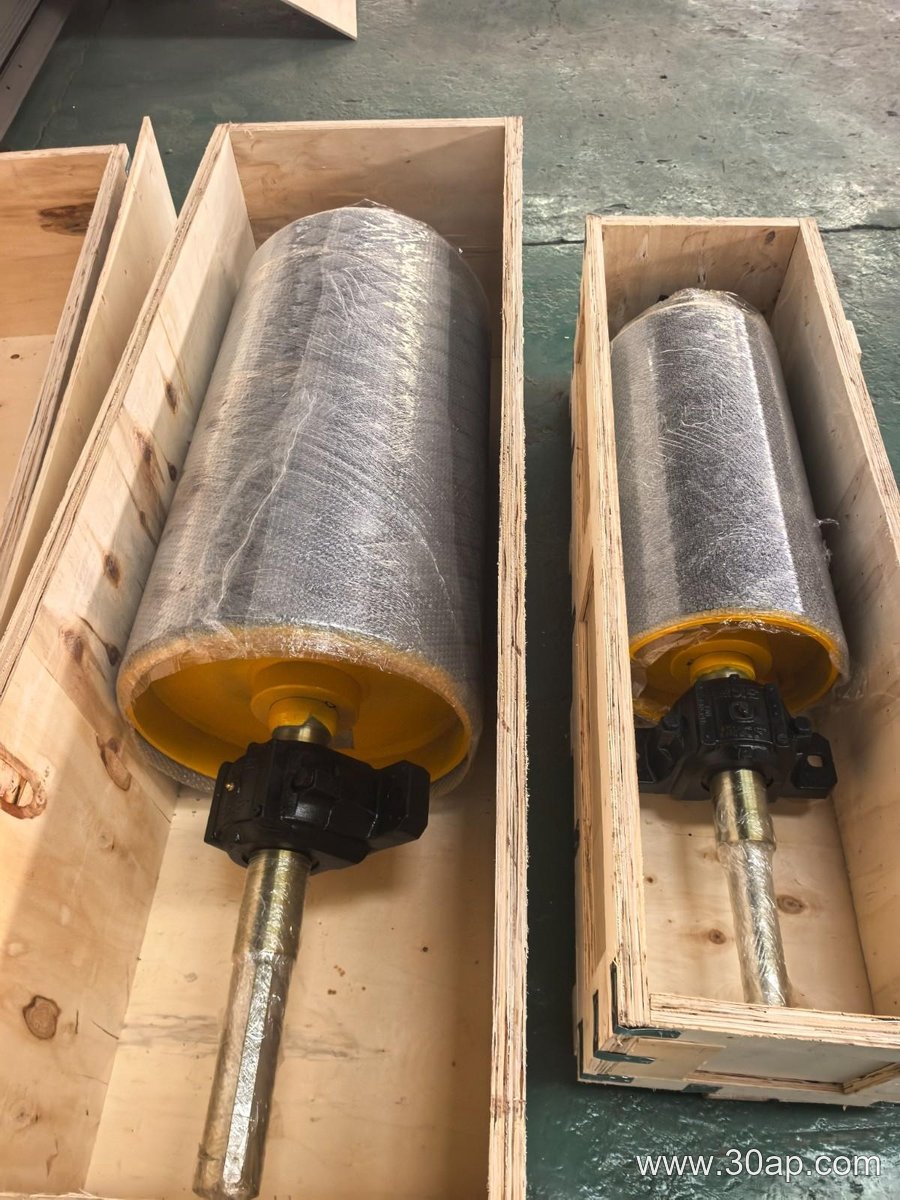
Balance, weld quality, and shaft fit matter more than a single dimension. The shaft diameter is determined by torque and load, not by belt width alone. Common shaft sizes include Ø50, Ø60, Ø70, Ø80, Ø90, Ø100, Ø120, Ø140, Ø160, Ø180, and Ø200, but the final value is always a design decision.
Where Heavy-Duty Units Are Used
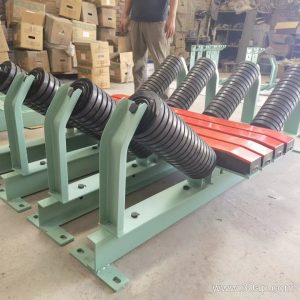
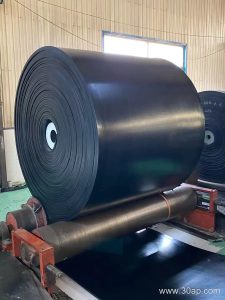
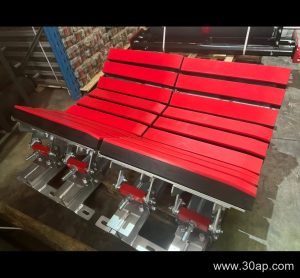
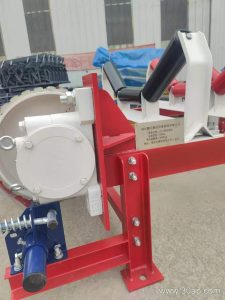
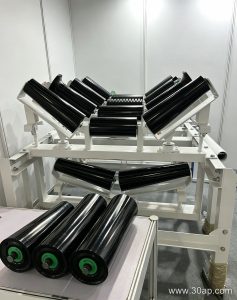
These pulleys are common in a limestone quarry, an iron ore dressing plant, and a coal preparation plant where the conveyor belt runs continuously under high tension. They also appear in cement clinker lines and port bulk terminals. In these places, a heavy-load conveyor pulley must resist impact from large lumps and the constant pull of a fully loaded belt. A conveyor bracket and the idler roller set nearby must be aligned with the pulley so the belt does not drift. Poor alignment shortens lagging life even on a well-made drum.
Sizes and Configuration Reference
The table below shows typical combinations. Values are reference data, not a fixed supply promise, and one belt width can match several pulley diameters.
| Belt width | Typical shell face | Possible pulley diameter | Example |
|---|---|---|---|
| B400 | about 500 mm | Ø200 to Ø400 | B400 x Ø250 |
| B500 | about 600 mm | Ø250 to Ø500 | B500 x Ø315 |
| B650 | about 750 mm | Ø315 to Ø630 | B650 x Ø400 |
| B800 | about 950 mm | Ø400 to Ø800 | B800 x Ø500 |
| B1000 | about 1150 mm | Ø500 to Ø1000 | B1000 x Ø630 |
| B1200 | about 1400 mm | Ø630 to Ø1250 | B1200 x Ø1000 |
| B1400 | about 1600 mm | Ø800 to Ø1400 | B1400 x Ø800 |
| B1600 | about 1800 mm | Ø1000 to Ø1600 | B1600 x Ø1250 |
| B1800 | about 2000 mm | Ø1250 to Ø1800 | B1800 x Ø1400 |
Other belt widths such as B2000, B2200, and B2400 also exist in heavy duty projects. Shell face is usually wider than the belt, so a B650 drum may have a face near 750 mm. Do not assume that a given belt width locks in one diameter. The angle of wrap, belt speed, and starting torque all shift the result.
What Buyers Should Check Before Ordering
- Confirm the pulley position: drive, tail, take-up, or bend. Each has a different load case.
- State the belt width, belt speed, and material type so lagging can be matched to the duty.
- Give the required shaft diameter and bearing center distance. These are not derived from belt width alone.
- Decide on the surface: plain, rubber lagging, diamond, herringbone, or ceramic, with the thickness you need.
- Ask how the drum will be balanced and how the lagging is bonded, since a heavy-load conveyor pulley lives or dies on those details.
A well-chosen drum keeps the belt centered, protects the conveyor belt from slip, and holds up under constant load. When the application is truly heavy, the pulley is not a generic spare part, and the specification should be written for the actual duty.