What the Head Pulley Assembly Does
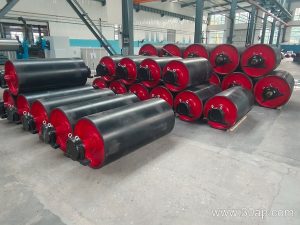
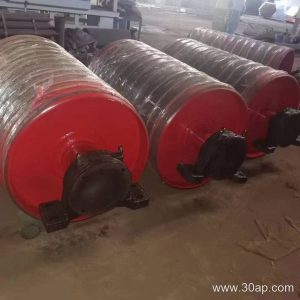
A head pulley assembly is the discharge-end group of a belt conveyor, mounted at the point where the belt turns around and releases its load. It combines the pulley shell, shaft, hub and locking elements, bearings and bearing housings, and the supporting frame, so that the whole unit can transmit drive torque, carry belt tension and run true under load. In many plants the head pulley is also the drive pulley, which is why the assembly is often treated as the power end of the conveyor rather than just a rotating drum.
The belt itself is only part of the picture. A quarry conveyor handling coarse rock may run a heavy-duty abrasion resistant conveyor belt, while a cement plant clinker line might use a heat resistant belt; in both cases the head pulley assembly must match the belt width, the tension level and the duty cycle.
Construction and Main Components
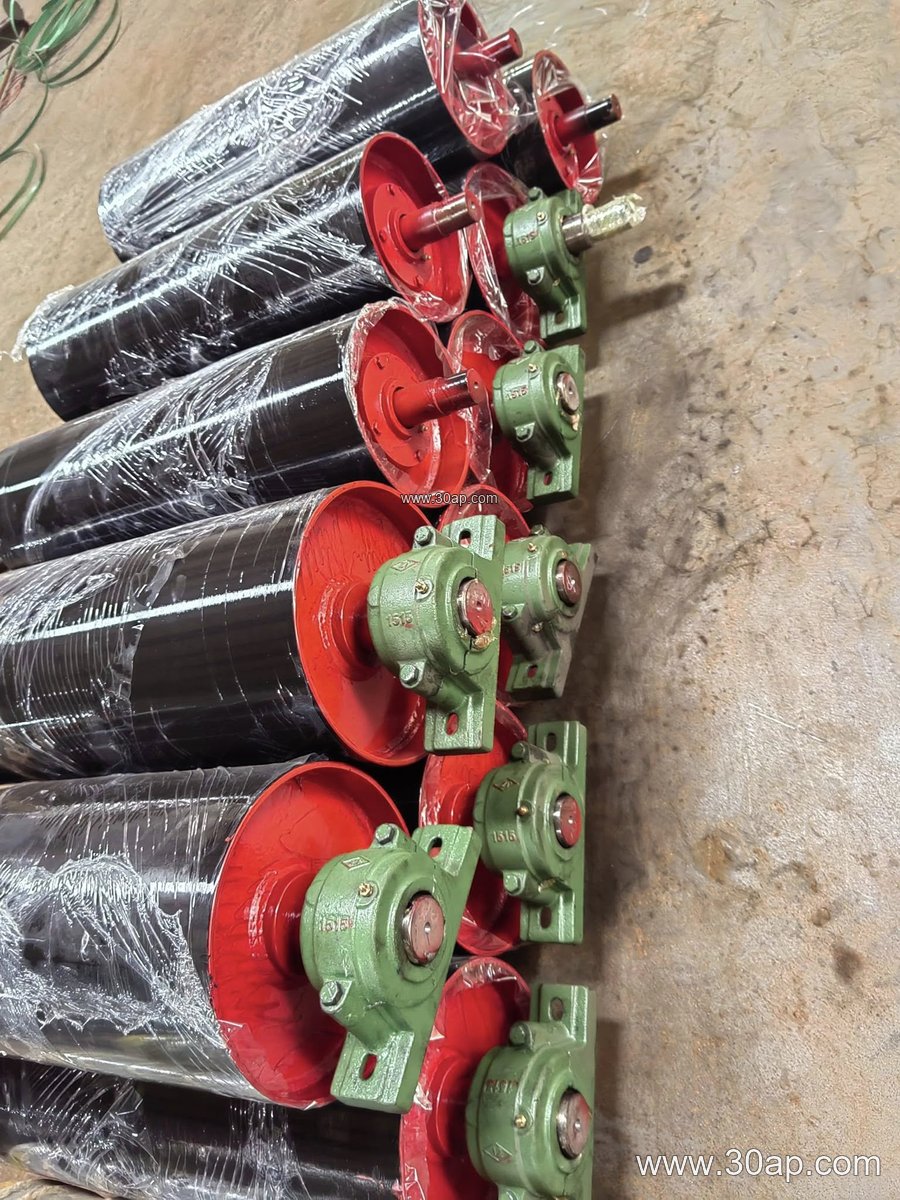
The shell is normally welded steel, machined at the ends, and fitted with a lagging surface where grip matters. The shaft is sized by torque and bending load, not by belt width alone. Bearings sit in housings that are bolted to a frame or to a conveyor bracket, and the frame ties the assembly into the conveyor structure.
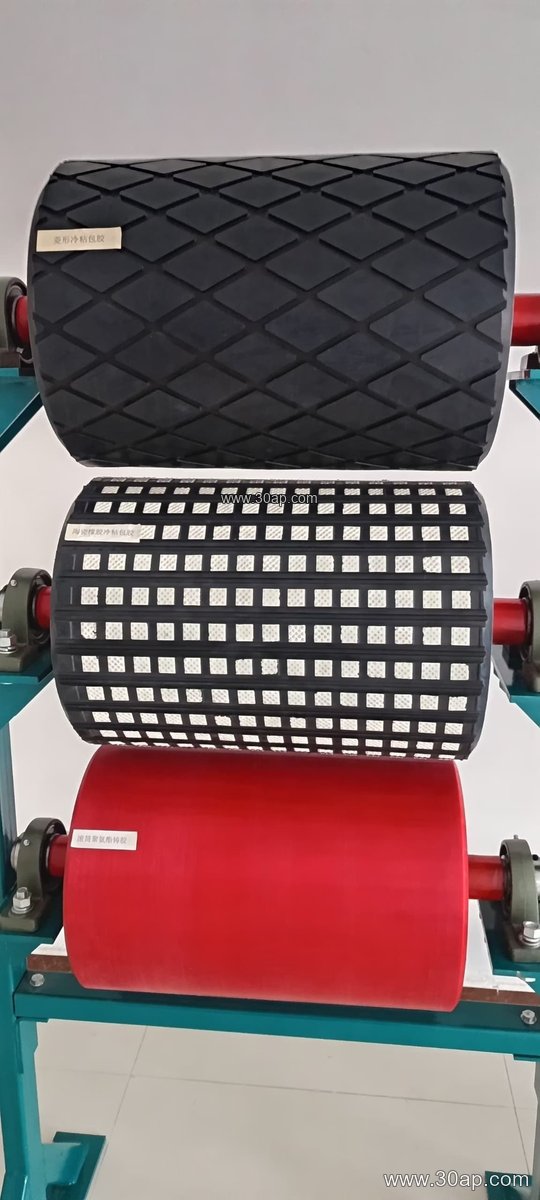
- Pulley shell with plain, rubber-lagged or ceramic-lagged face
- Shaft, hubs and key or shrink-disc connections
- Bearing housings with seals and lubrication points
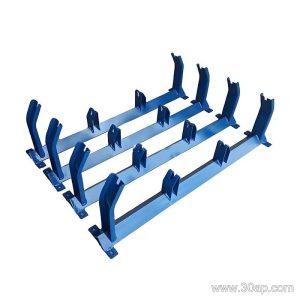
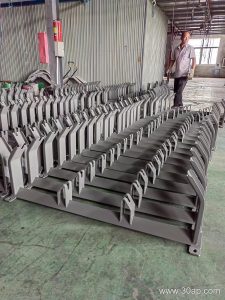
- Support frame, mounting plates and fasteners
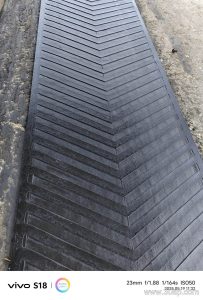
- Optional lagging types: diamond, herringbone, flat rubber, ceramic
Typical Sizes and Surface Options
Reference dimensions vary by project. Common belt widths run from B400 to B2400, and common pulley diameters from Ø200 to Ø1800. The shell face is usually wider than the belt, for example B800 with a face around 950 mm, or B1200 with a face around 1400 mm. A B1200 × Ø1000 assembly is a common combination for medium-duty service, but it is not the only valid match.
| Reference item | Common range | Notes |
|---|---|---|
| Belt width | B500 to B2000 | Face width usually exceeds belt width |
| Pulley diameter | Ø250 to Ø1400 | Selected by belt tension and wrap angle |
| Lagging thickness | 8, 10, 12, 15, 20 mm | Plain face also available |
| Shaft diameter | Ø60 to Ø200 | Determined by torque and load |
Surface form matters. Diamond lagging sheds water and fines; herringbone lagging helps centre the belt; ceramic lagging suits high-torque drives where slip is a risk. On a coal mining conveyor belt line, flame retardant grades of lagging and belt are often specified together for underground service.
Where It Fits in the Plant
The assembly appears at transfer points in limestone mines, iron ore plants, coal preparation facilities and aggregate crushing circuits. It is also found in power plant coal handling, port bulk terminals and cement plant raw-material conveying. At the discharge end the material leaves the belt in a trajectory shaped by belt speed and pulley diameter, so the assembly position affects chute design and dust control.
Do not confuse it with other pulley positions. A tail pulley tensions and returns the belt at the feed end; a bend pulley changes belt direction without driving. Each has a different job, and they are not interchangeable with the head unit.
Buyer Checklist
- Confirm belt width, pulley diameter, face width and shaft size from the conveyor drawing.
- State the drive arrangement: motorised, gearbox-driven or non-driven.
- Choose lagging type and thickness for the material and moisture level.
- Check bearing type, sealing and lubrication access.
- Verify frame dimensions and bolt pattern against the existing conveyor bracket.
- Match belt grade, for example EP conveyor belt or steel cord conveyor belt, to the pulley load.
Maintenance is mostly about lagging wear, bearing temperature and shaft alignment. Re-lagging a worn shell restores grip more cheaply than replacing the whole assembly. Keep spare idler roller sets and belt splicing materials on hand so a pulley change does not stall the line.