What the V-Type Idler Bracket Does
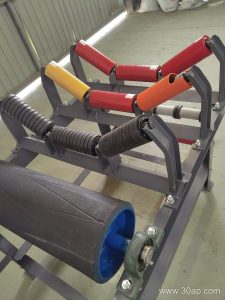
A V-Type Idler Bracket is a return-side support assembly that holds two idler rollers in a shallow V arrangement. Instead of allowing the return strand of a conveyor belt to run flat, this bracket lifts the belt edges slightly and forms a gentle trough. The result is better belt tracking, less material spillage, and reduced risk of the belt wandering off the frame.
Designers often call this same component a V-return idler bracket or V-shaped return bracket. The name describes the geometry, not a different function. It belongs to the return run, not to the carrying side, so it should not be confused with troughing brackets, transition brackets, or impact brackets that support the loaded belt.
How It Is Built
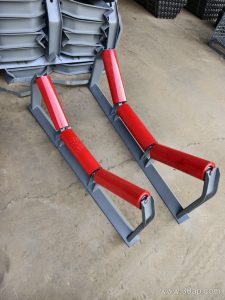
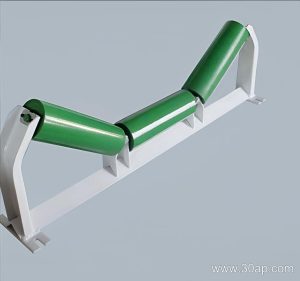
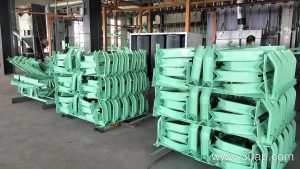
Most V-Type Idler Brackets are fabricated from angle steel, channel steel, or folded steel plate. Two inclined arms meet at a central low point, and each arm carries a mounting slot or bolt hole for an idler roller. The arms are welded to a base plate or cross member that bolts to the conveyor stringer.
A typical bracket includes:
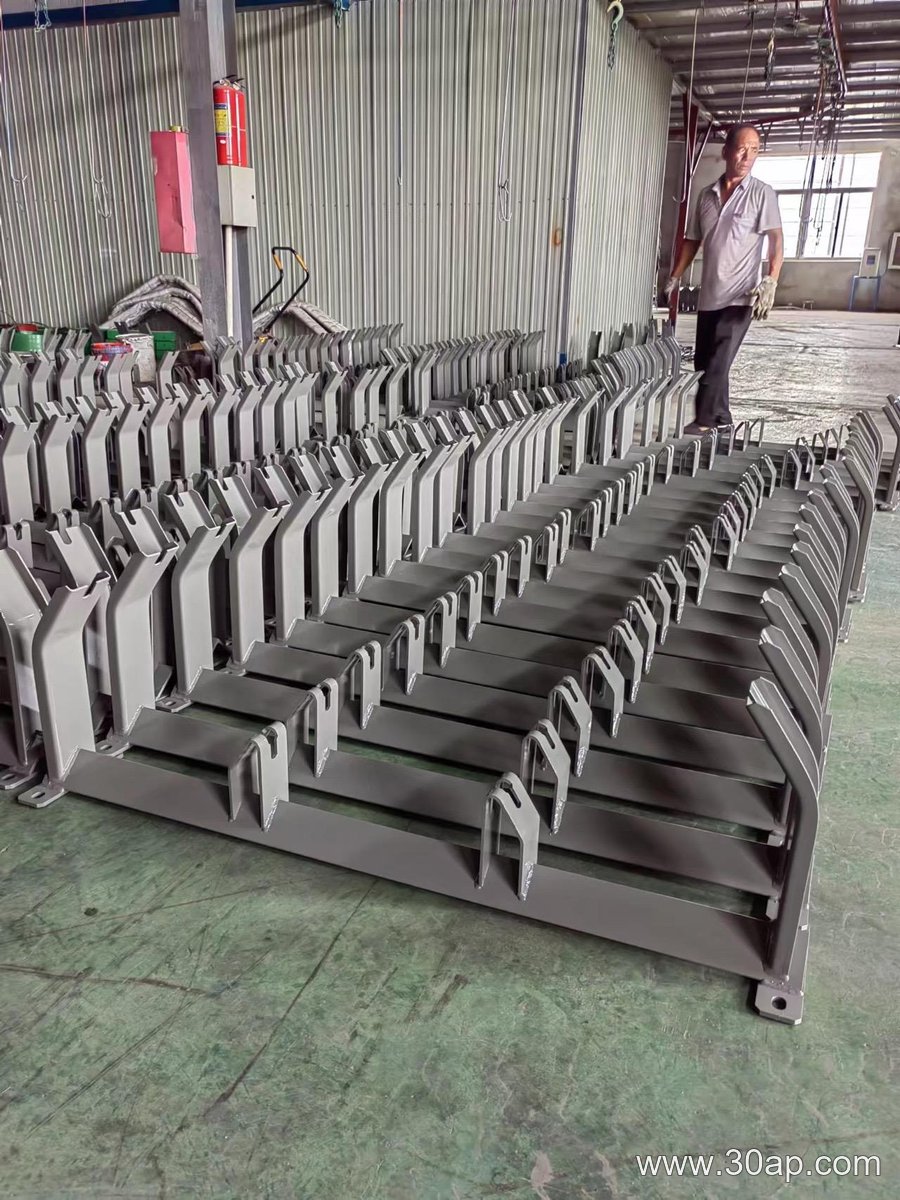
- Two inclined support arms set at a fixed or adjustable V angle
- Mounting holes sized for the chosen idler shaft
- A base plate with holes for frame attachment
- Reinforcing ribs or gussets on heavier-duty units
Some versions are fixed, while adjustable brackets allow the V angle to be changed on site. The V angle is usually modest, enough to center the belt without pinching it.
Where It Fits on a Conveyor
The bracket is installed on the return strand, usually between the head pulley and the tail pulley. It is common in aggregate plants, coal preparation facilities, cement kilns, power station coal handling, and quarry crushing circuits. In these environments, a flat return belt can sag or misalign, especially when the conveyor is long or the belt is heavy.
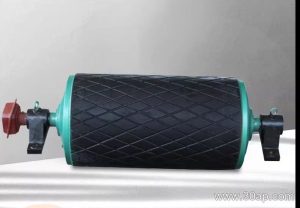
A V-Type Idler Bracket works together with the conveyor belt, the idler roller, and the conveyor bracket system. It does not replace the drive pulley, tail pulley, or bend pulley. Those pulleys transmit power or change belt direction, while the V-return bracket only supports and guides the belt on its return path.
Common Sizes and Configurations
Bracket dimensions follow the belt width, the roller diameter, and the required V angle. The table below shows common reference values, not a fixed supply list. Actual mounting hole spacing and cross member length are determined by the conveyor design.
| Belt Width | Typical Roller Diameter | Common V Angle |
|---|---|---|
| B500 | Ø89 | 20 degrees |
| B650 | Ø89 or Ø108 | 20 to 30 degrees |
| B800 | Ø108 | 30 degrees |
| B1000 | Ø108 or Ø133 | 30 to 35 degrees |
| B1200 | Ø133 | 35 degrees |
| B1400 | Ø133 or Ø159 | 35 degrees |
| B1600 | Ø159 | 35 to 45 degrees |
| B1800 | Ø159 or Ø194 | 35 to 45 degrees |
| B2000 | Ø194 | 45 degrees |
These pairings are common in the field, but they are not mandatory. A B800 belt may use a 30 degree V angle with Ø108 rollers, while a different conveyor with the same belt width might use a different roller diameter. The correct combination depends on belt tension, material load, and the existing frame.
Buyer Checklist
Before ordering a V-Type Idler Bracket, confirm the following:
- Belt width and the return idler roller diameter
- Required V angle and whether it must be adjustable
- Mounting hole pattern and cross member length
- Material of construction and surface treatment for the site environment
- Compatibility with the existing conveyor bracket and stringer
For dusty or wet conditions such as a coal preparation plant or a limestone quarry, a bracket with good drainage and corrosion protection is often preferred. In a sand and gravel line or a mixing plant, a fixed bracket may be sufficient if the belt tracks well.
A V-Type Idler Bracket is a small but useful component. When selected to match the belt, the roller, and the frame, it helps the return belt run centered and stable, reducing maintenance calls and extending belt life.