What a Spiral Return Idler Does on a Conveyor
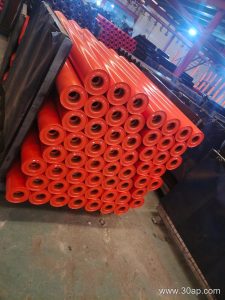
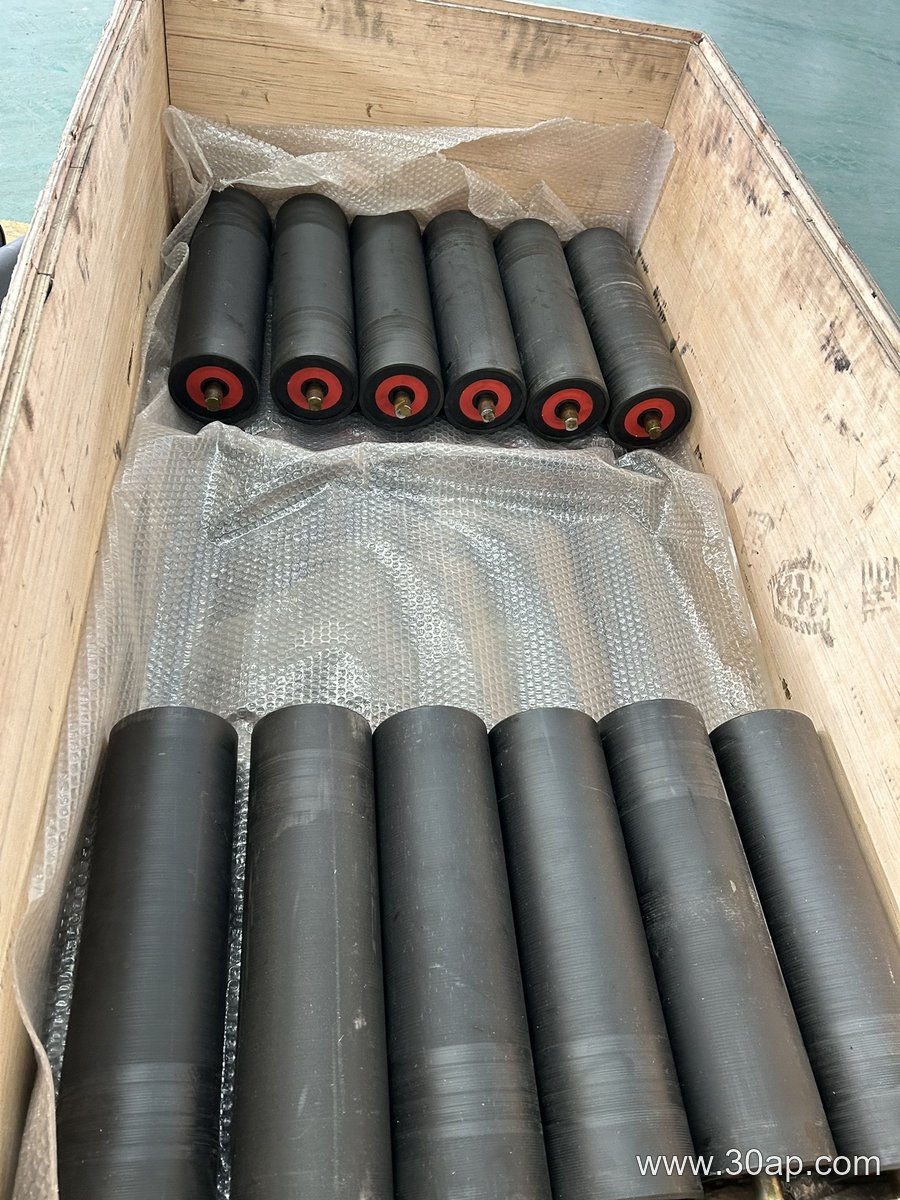
A spiral return idler is a rotating roller placed under the carrying side of a conveyor belt, on the return strand. Its surface carries a continuous helical wrap, often formed from rubber or a similar resilient material, that contacts the belt as it moves. Unlike a plain flat return roller, the spiral design serves two practical jobs: it helps shed sticky material that clings to the belt, and it encourages the belt to stay centered as it travels back toward the tail. In a quarry, a coal preparation plant, or a cement plant, this combination can reduce build-up on the return path and lower the chance of belt misalignment.
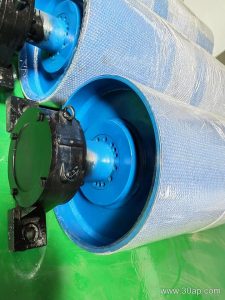
The product is also called a helical return roller or a spiral rubber return idler. These names describe the same component, and they are not interchangeable with drive pulleys, tail pulleys, or bend pulleys, which perform different duties at the ends and bends of a conveyor.
How the Spiral Return Idler Is Built
A typical unit starts with a steel tube body, fitted with bearing housings at each end. Common bearing sizes include 6204, 6205, 6305, 6306, 6308, and 6310, selected according to load and speed rather than matched to one roller diameter. The shaft runs through the bearings and mounts into a conveyor bracket or frame. Around the tube, a spiral profile is applied, often as a rubber wrap or molded ribs. The spiral may be a single start or multiple start, and the pitch and thickness are chosen for the belt width and the material being carried.
Roller diameters for return idlers often fall in the range of Ø63, Ø76, Ø89, Ø102, Ø108, Ø127, Ø133, Ø159, Ø178, Ø194, and Ø219 mm. Belt widths commonly range from B400 to B2400. The roller length is not fixed by belt width alone; it depends on the belt width, the trough angle, and the idler arrangement. For a three-roll troughing set, common roller lengths might be around 200 mm for B500, 250 mm for B650, 315 mm for B800, 380 mm for B1000, 465 mm for B1200, 530 mm for B1400, 600 mm for B1600, 670 mm for B1800, and 750 mm for B2000, but side rollers and center rollers can differ.
Where Spiral Return Idlers Are Used
These rollers appear in bulk handling lines where the belt carries wet, sticky, or dusty material. Examples include sand and gravel lines, limestone mines, iron ore operations, coal washing plants, power station coal conveyors, and tunnel mucking systems. In these settings, a standard flat return idler may allow material to cake on the roller or on the belt, while the spiral pattern helps break the bond and direct fines away from the belt surface.
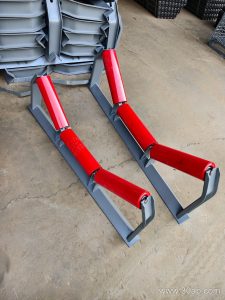
The spiral return idler is not a replacement for a drive pulley, tail pulley, or bend pulley. Those pulleys transmit power or change belt direction. The spiral roller simply supports and cleans the return belt. It may be used alongside troughing idlers, impact idlers, and training idlers, but each has its own role.
Selection Points for Buyers
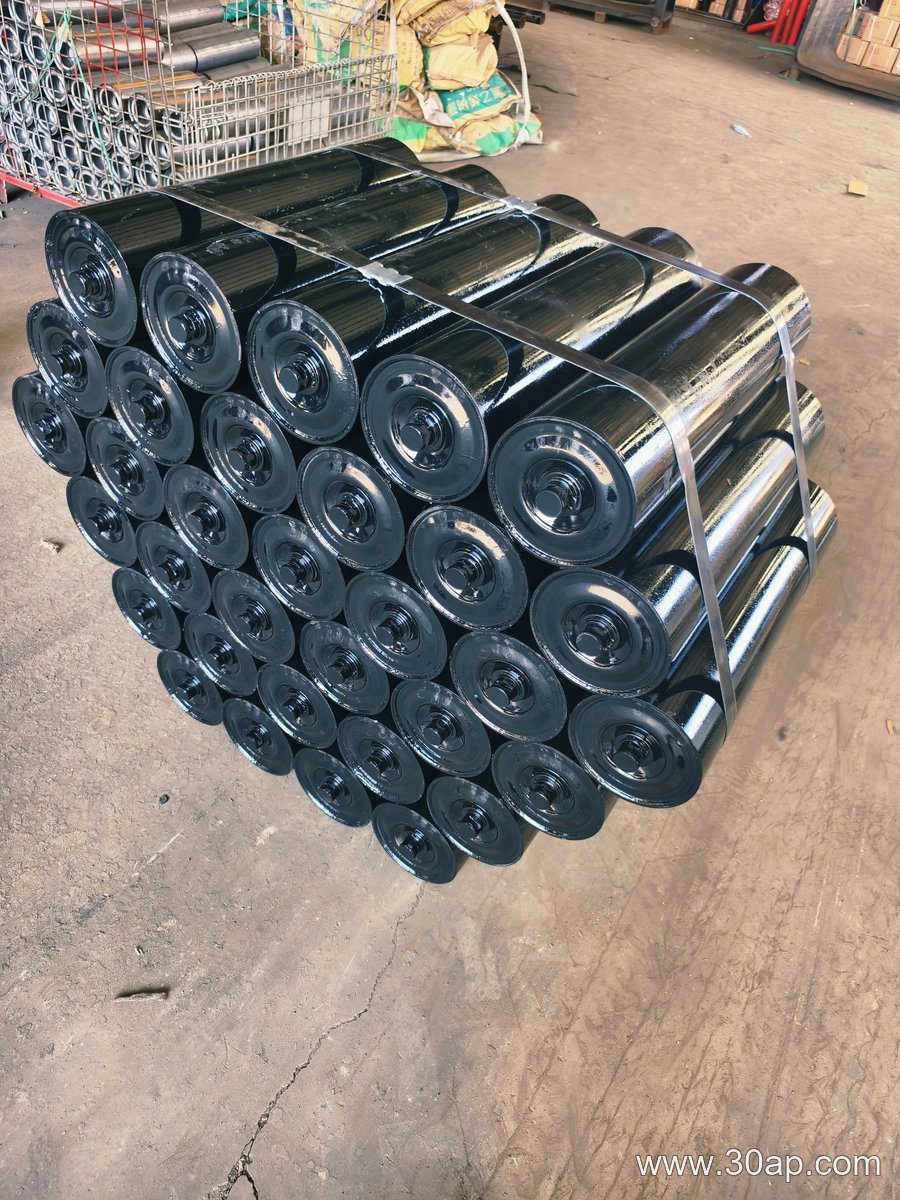
When specifying a spiral return idler, buyers should confirm the belt width, the return strand load, the available mounting space, and the environment. A dusty cement plant may call for a different seal and bearing protection than a wet sand and gravel operation. The roller diameter should be chosen with the belt speed and the load in mind, not simply copied from a neighboring conveyor. The shaft diameter is a design decision based on the bracket and the load, not a fixed value taken from belt width.
Useful reference data can be organized as follows:
| Parameter | Common range or example |
|---|---|
| Roller diameter | Ø63, Ø76, Ø89, Ø102, Ø108, Ø127, Ø133, Ø159, Ø178, Ø194, Ø219 mm |
| Belt width | B400, B500, B650, B800, B1000, B1200, B1400, B1600, B1800, B2000, B2200, B2400 |
| Bearing sizes | 6204, 6205, 6305, 6306, 6308, 6310 |
| Surface form | Spiral rubber wrap, helical ribs |
| Mounting | Conveyor bracket or frame, return side |
Spiral return idlers are available in several surface forms, including steel tube with a rubber spiral, and in designs that combine a spiral wrap with a flat center section. The choice depends on the material and the cleaning goal. A buyer should ask for the roller length, shaft size, bearing type, and spiral pitch to be confirmed for the specific conveyor, because these values vary with the application.
Maintenance and Tracking Notes
Inspect the spiral return idler for worn rubber, damaged bearings, and material build-up between the spiral and the tube. A worn spiral may lose its cleaning effect, while a seized bearing can flat-spot the belt. Keep the bracket bolts tight and check alignment with the belt path. If the belt mistracks, check the entire return run, including training idlers and pulleys, rather than adjusting only the spiral roller. Properly applied, the spiral return idler supports the belt, helps keep the return strand cleaner, and contributes to steadier tracking in demanding bulk handling environments.