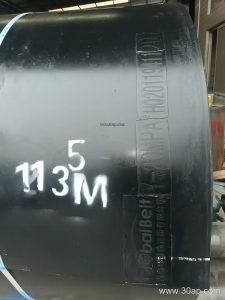
What an Anti-Slip Lagged Pulley Does
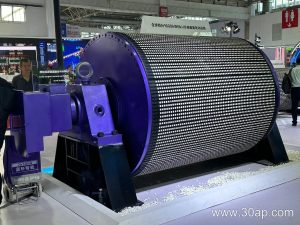
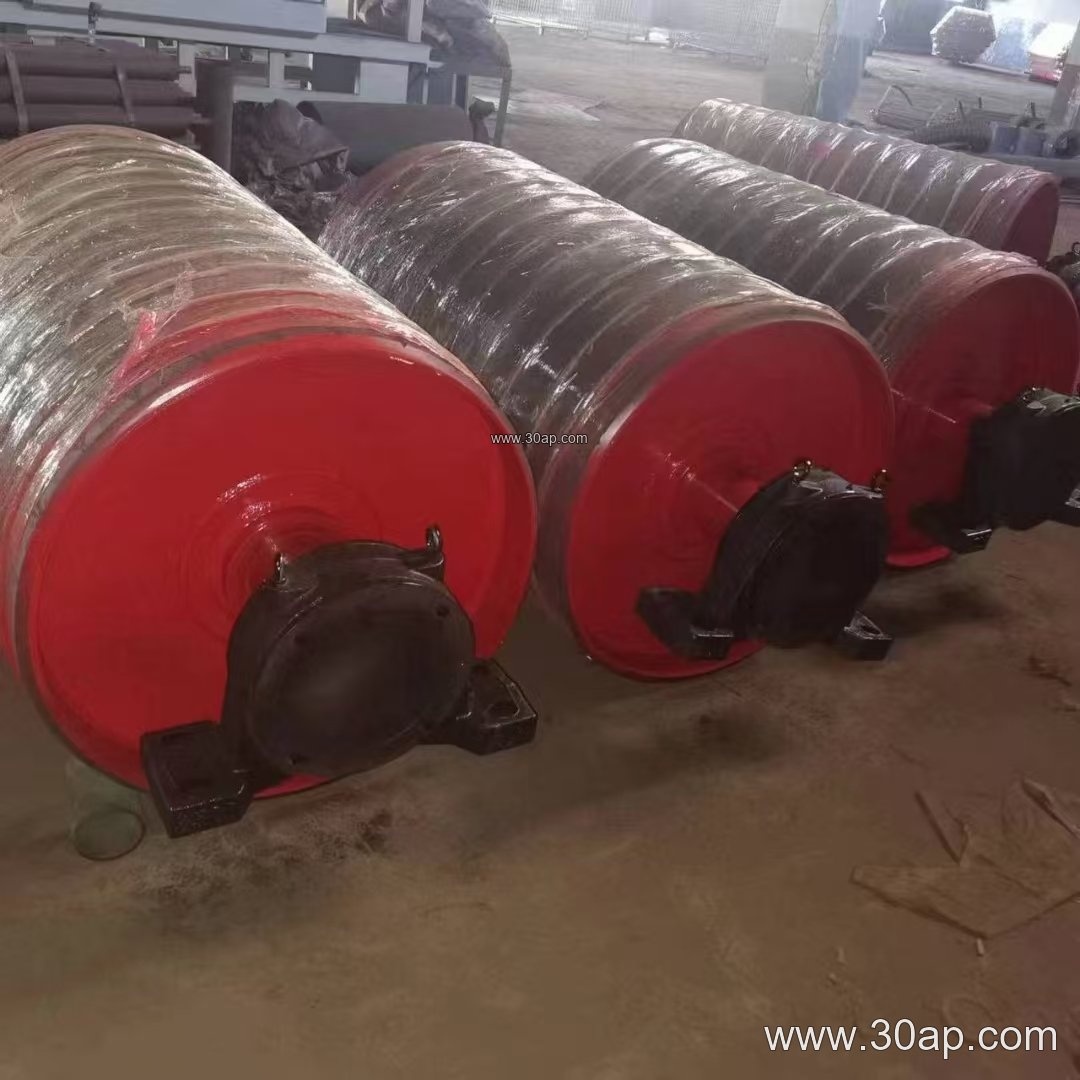
An anti-slip lagged pulley is a conveyor pulley whose shell is covered with a rubber or ceramic lagging layer designed to raise friction between the pulley face and the conveyor belt. This added grip reduces belt slippage at the drive point, which is especially important when the belt carries heavy loads or works in wet, dusty conditions. In a typical bulk handling line, this pulley is often the drive pulley, but the same anti-slip principle can be applied to other positions where traction matters.
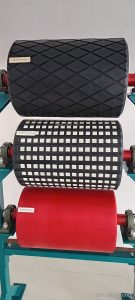
The lagging itself may be cast rubber, cold-bonded rubber, hot-vulcanized rubber, diamond pattern, herringbone pattern, or ceramic tile. Each surface form changes how the pulley interacts with the belt. For example, diamond lagging helps shed water and fine particles, while ceramic lagging offers high wear resistance in abrasive service.
Construction and Surface Options
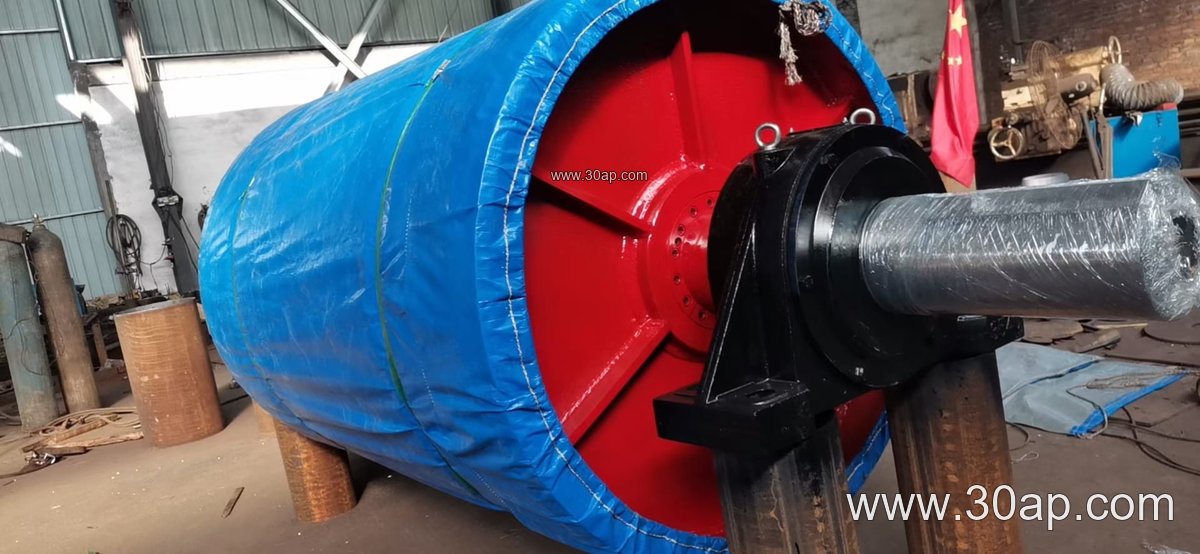
A lagged pulley starts with a steel shell, hub, and shaft. The lagging is bonded to the shell and then finished to the required profile. Common lagging thicknesses are 8, 10, 12, 15, and 20 mm, selected according to belt tension, load, and environment. The pulley diameter and face width are usually matched to the belt width and the conveyor design. For reference, a B800 belt may use a pulley face around 950 mm, and a B1200 belt may use a face around 1400 mm, but these are common examples rather than fixed rules.
| Parameter | Common reference values |
|---|---|
| Belt width | B400, B500, B650, B800, B1000, B1200, B1400, B1600, B1800, B2000 |
| Pulley diameter | Ø200, Ø250, Ø315, Ø400, Ø500, Ø630, Ø800, Ø1000, Ø1250, Ø1400 |
| Lagging thickness | 8, 10, 12, 15, 20 mm |
| Surface form | Plain rubber, diamond, herringbone, ceramic, hot-vulcanized rubber |
| Shaft diameter | Ø50 to Ø200, determined by torque and load |
Belt width and pulley diameter are not locked together. A B1200 belt can be paired with different pulley diameters depending on the required wrap angle, belt speed, and tension. Shaft diameter should be calculated from the actual torque and load, not guessed from belt width alone.
Where It Fits in the Plant
In a coal preparation plant or a power plant coal yard, an anti-slip lagged pulley on the drive station helps keep the belt moving when coal dust and moisture reduce friction. In a quarry or sand and aggregate line, the same pulley type is often used at the head drive of a crusher feed conveyor, where the belt may be wide and the load uneven. The lagging also protects the pulley shell from wear, extending service life in abrasive conditions.
The pulley should be selected together with the conveyor belt, idler roller, and conveyor bracket. A heavy-duty mining conveyor belt or a flame retardant conveyor belt may require a different lagging profile than a smooth EP conveyor belt. In underground coal mining, for instance, flame retardant and anti-static properties of the belt are critical, and the pulley lagging must not compromise those safety features.
Buyer Checklist
- Confirm the pulley position: drive, tail, bend, or tension. The anti-slip lagging is most often specified for the drive pulley, but tail and bend pulleys have different design priorities.
- Match the lagging surface to the material: ceramic for high abrasion, diamond or herringbone for wet and dusty conditions, plain rubber for general service.
- Check belt width and pulley face width together; face width is usually greater than belt width.
- Provide the actual belt tension and torque data so the shaft diameter and bearing size can be verified.
- Consider the conveyor environment: coal mining, cement plant, steel plant, or port bulk handling each brings different demands on lagging and belt cover.
Because the anti-slip lagged pulley works directly with the conveyor belt, small differences in lagging thickness or surface pattern can affect belt tracking and wear. A buyer should ask for the lagging specification, the pulley drawing, and the recommended belt width range before ordering. For related conveyor components such as the idler roller and conveyor bracket, the same dimensional check applies.