What a Four-Roll Trough Idler Is
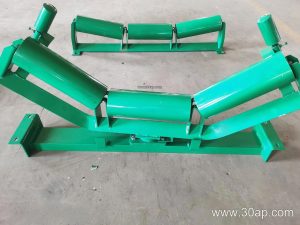
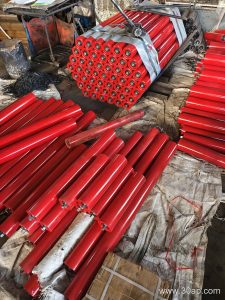
A four-roll trough idler is a carrying idler assembly in which four separate idler rollers are arranged in a trough profile to support the loaded run of a conveyor belt. Instead of the familiar three-roll arrangement, this design splits the belt support into more contact points, which can help on wide belts or where the material load is heavy and the belt needs a smoother, more continuous cradle. It is an idler roller assembly, not a pulley, and it works together with the conveyor belt, conveyor bracket and frame rather than replacing any drive, tail or bend pulley in the system.
How the Assembly Is Built
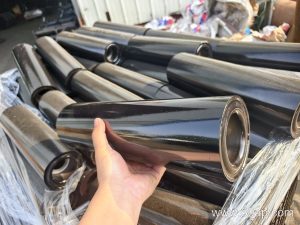
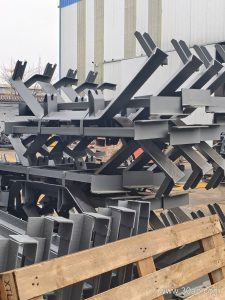
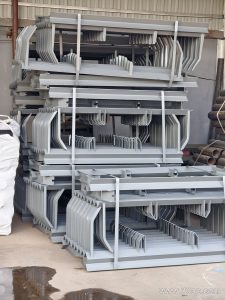
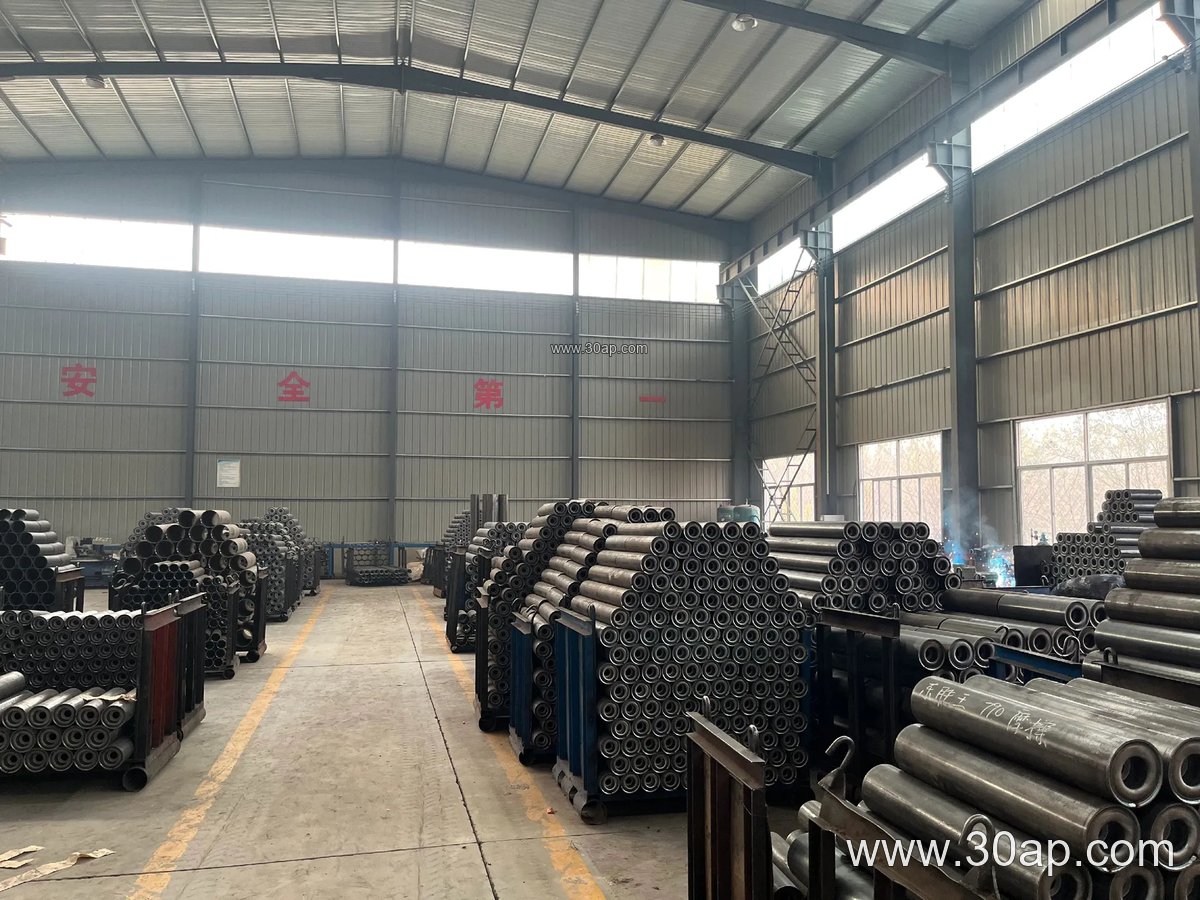
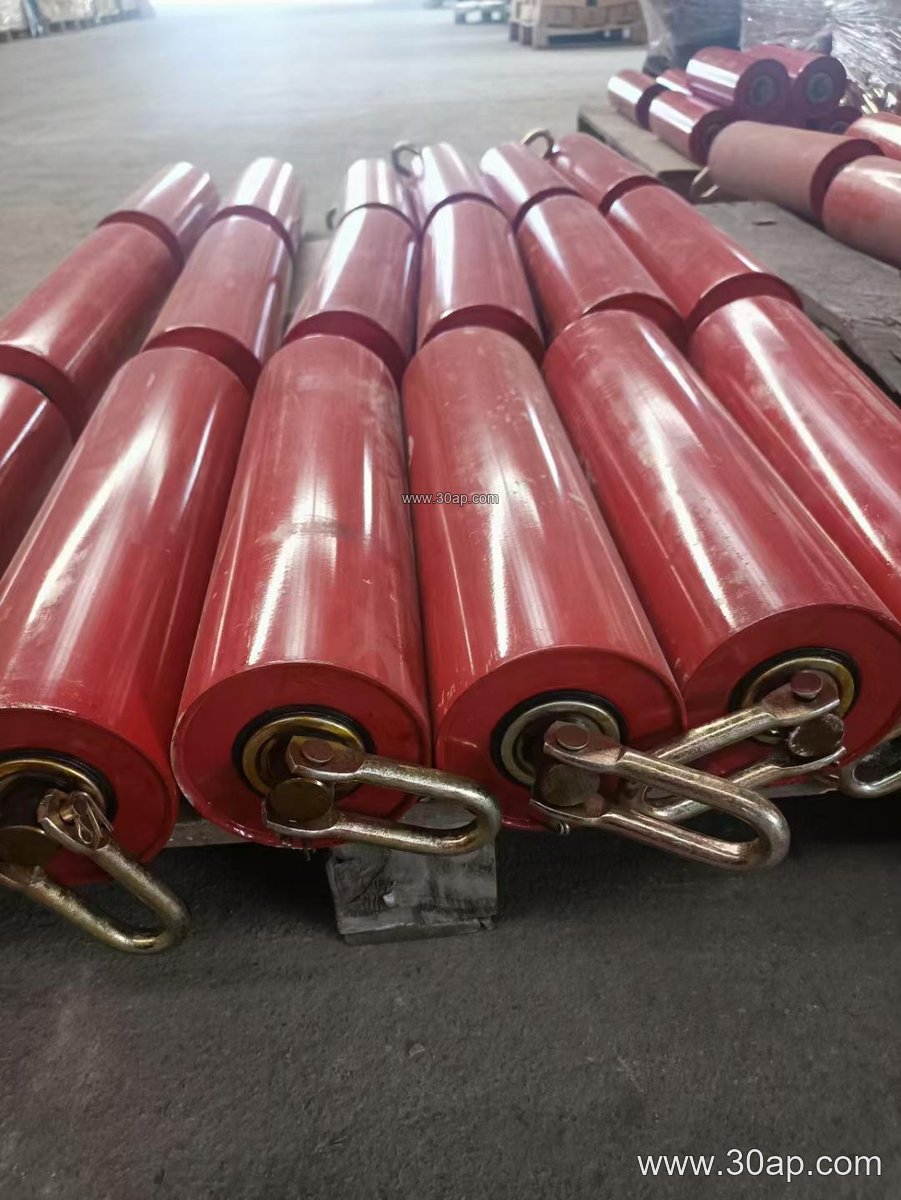
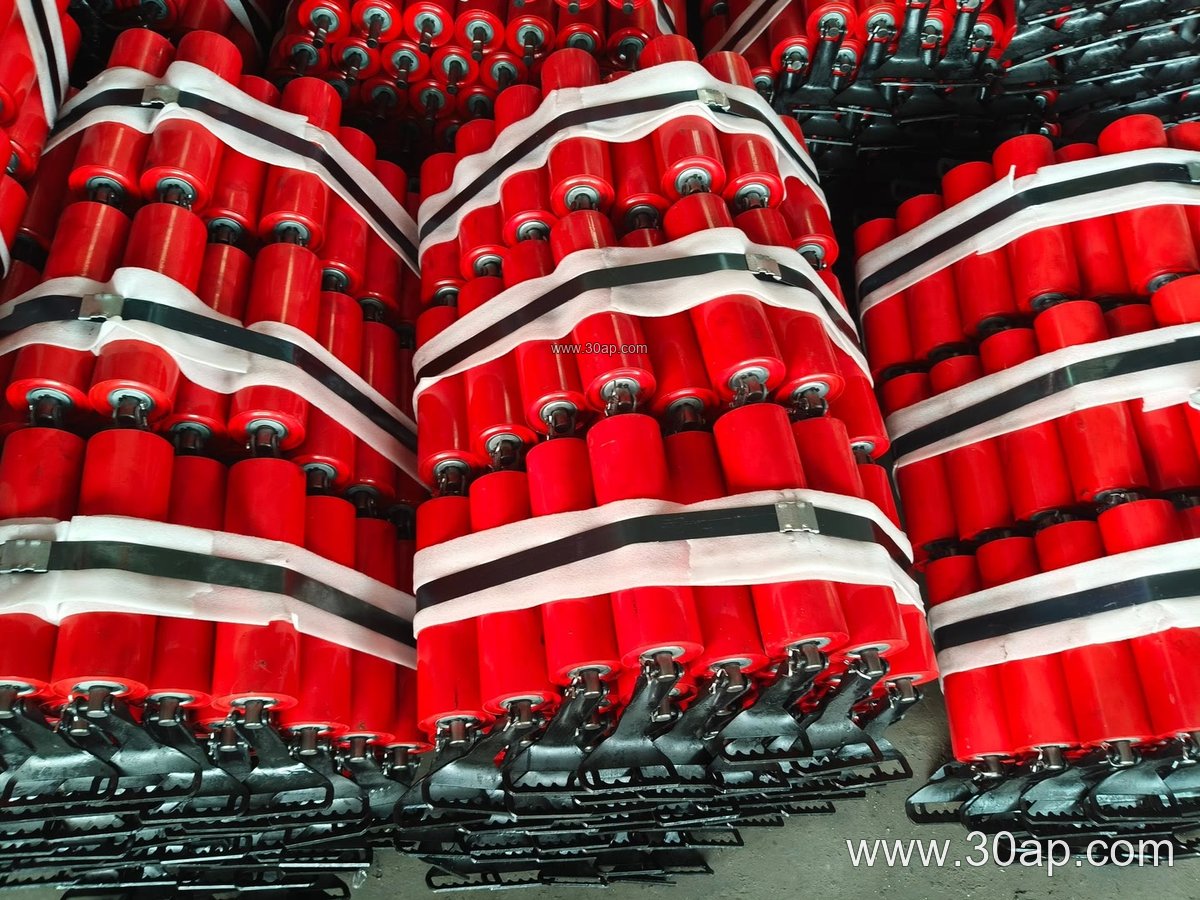
The typical construction uses a set of steel tubes fitted with end caps, sealed bearings and a stationary or rotating shaft, mounted in brackets that hold the rollers at the required trough angle. Four-roll sets are often used where the belt is wide enough that two side rollers per side make sense, giving a flatter central section and gradual transition toward the edges. Common roller surfaces include plain steel tube, nylon, ceramic and rubber rings, and the rubber-ring version is often chosen where impact or wear is a concern.
Bearings are usually selected to suit the load and speed of the conveyor; common sizes in this class of idler include 6204, 6205, 6305, 6306, 6308 and 6310. The bearing choice is a design decision, not a fixed match to any one roller diameter.
Where It Fits on the Conveyor
The four-roll trough idler belongs on the carrying side of the conveyor, in the section that supports the loaded belt between the loading point and the discharge end. It is not an interchangeable name for a drive pulley, tail pulley or bend pulley, and it is not a return idler. In a long overland or plant conveyor, these assemblies may appear in the main carrying run, while transition idlers and impact idlers handle the approach to pulleys and the loading zone.
Typical settings include a coal preparation plant, a cement plant, a power station coal yard, a crushed stone aggregate line and a copper or iron ore concentrator. In each case the idler works under a moving conveyor belt that may carry abrasive, damp or heavy material, so seal quality and roller balance matter as much as raw tube thickness.
Common Dimensions and Arrangements
The table below gives common reference values for trough idlers of this family. These are examples used for planning discussion, not fixed combinations, and the final roller length, diameter and bearing are set by the conveyor design.
| Item | Common reference values |
|---|---|
| Roller diameter | Ø63, Ø76, Ø89, Ø102, Ø108, Ø127, Ø133, Ø159, Ø178, Ø194, Ø219 mm |
| Belt width | B400, B500, B650, B800, B1000, B1200, B1400, B1600, B1800, B2000, B2200, B2400 |
| Trough angle | 20°, 30°, 35°, 45° |
| Roller surface | Steel tube, nylon, ceramic, rubber ring |
| Bearing | 6204, 6205, 6305, 6306, 6308, 6310 |
Roller length changes with belt width, trough angle and the number of rollers in the set. As a rough guide, a three-roll trough set might use a roller length of about 200 mm at B500, 250 mm at B650, 315 mm at B800, 380 mm at B1000, 465 mm at B1200, 530 mm at B1400, 600 mm at B1600, 670 mm at B1800 and 750 mm at B2000. Side rollers and centre rollers can differ, and a four-roll layout will have its own proportions, so these figures should not be treated as a fixed rule. Belt width alone does not determine pulley diameter or shaft diameter.
What a Buyer Should Check
- Confirm the belt width, trough angle and whether the frame is designed for a four-roll or three-roll set, since the brackets differ.
- Ask for the roller diameter and bearing size together, because the bearing must suit the actual load and speed rather than the tube size alone.
- Check the seal and lubrication arrangement for dusty or wet service, especially in a quarry, coal yard or cement plant.
- Review the roller surface: rubber rings for impact areas, ceramic or nylon where wear and material build-up are concerns.
- Verify mounting dimensions against the existing conveyor bracket and frame before ordering a replacement set.
A four-roll trough idler is a support component chosen for belt stability and load distribution, and its value comes from matching the assembly to the conveyor rather than from any single dimension.