What a Five-Roll Idler Bracket Does
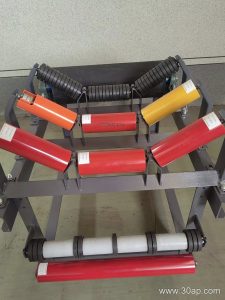
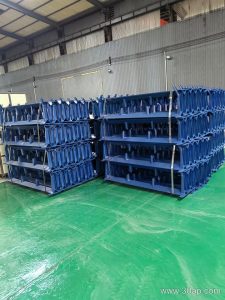
A five-roll idler bracket is a support frame that holds five idler rollers in a troughed arrangement under a conveyor belt. On high-capacity belts, especially where the belt is wide and the load is heavy, five rolls spread the belt support across more contact points than a conventional three-roll set. This bracket is often used on the carrying side of a conveyor in a quarry, a limestone mine, an iron ore operation, or a crushing and screening line where the belt carries coarse, dense material.
In plain terms, the five-roll idler bracket is the steel structure that positions the idler rollers at the correct trough angle so the conveyor belt keeps its shape and tracks properly. It works together with the belt, the idler rollers, and the conveyor pulley at each end of the system.
How the Bracket Is Built
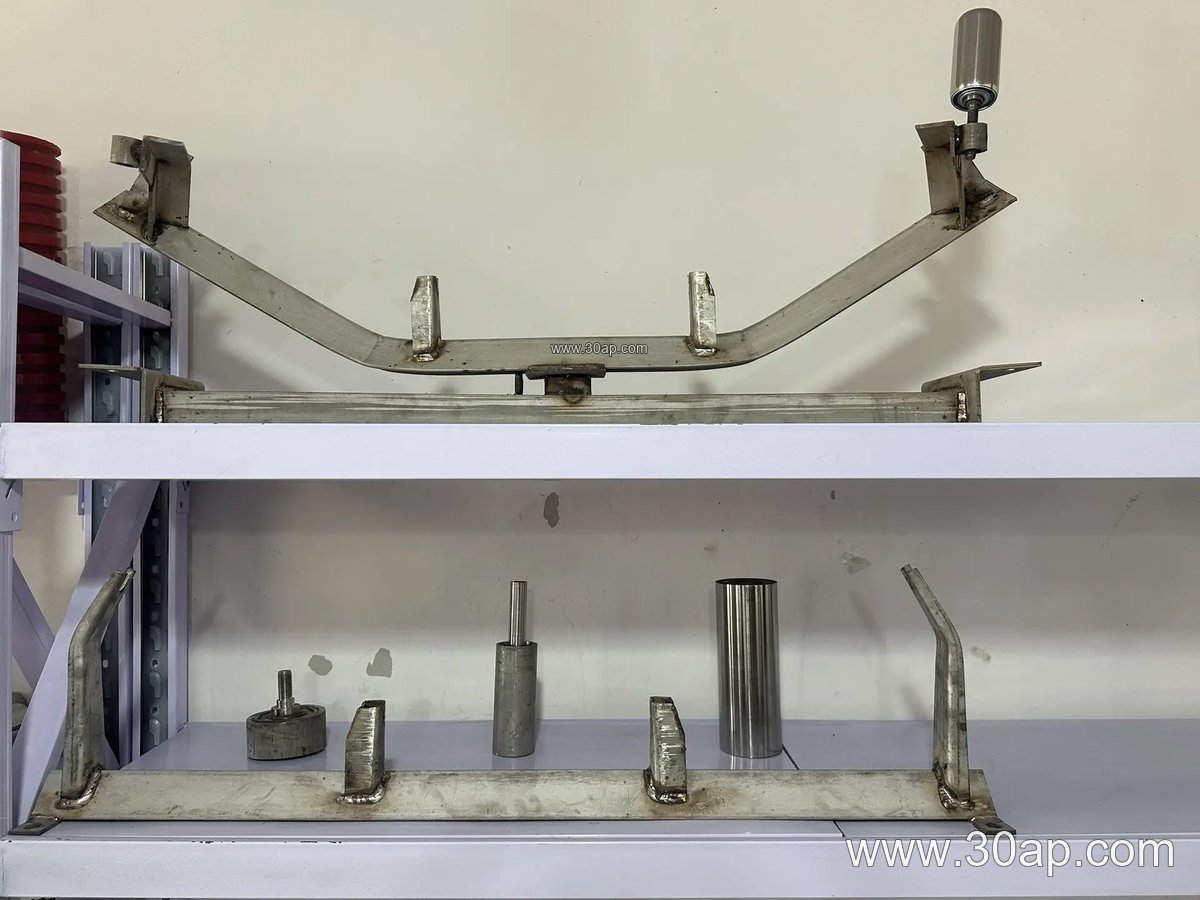
Most five-roll idler brackets are fabricated from angle steel, channel steel, or folded steel plate. The frame carries mounting slots or holes for each idler roller, and the roll positions are set to form a shallow central trough with two outer rolls on each side. The structure needs enough rigidity to hold the rolls in line under load without twisting.
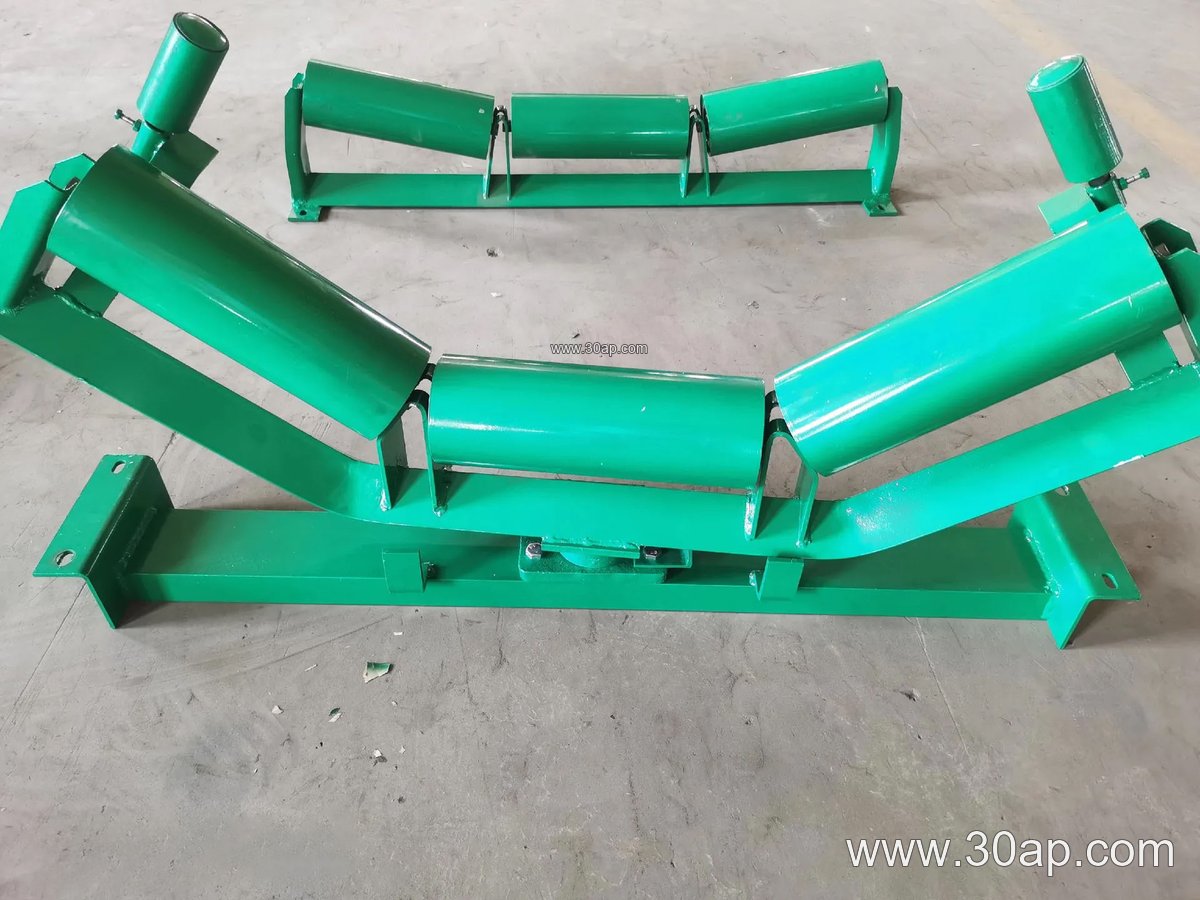
Typical build details include:
- Frame material: angle steel, channel steel, or bent steel plate
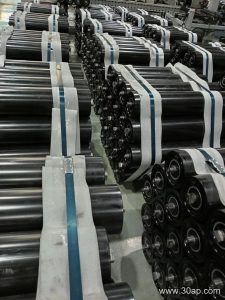
- Roll positions: one center roll, two intermediate rolls, two outer rolls
- Trough angles: commonly 20, 30, 35, or 45 degrees, depending on belt width and material
- Mounting: bolt-on or welded crossbeam, with hole spacing set by belt width and trough angle
Because the five rolls share the load, each idler roller carries less weight than in a three-roll arrangement. That can help on wide belts where a single center roll would otherwise be heavily loaded.
Where Five-Roll Brackets Are Used
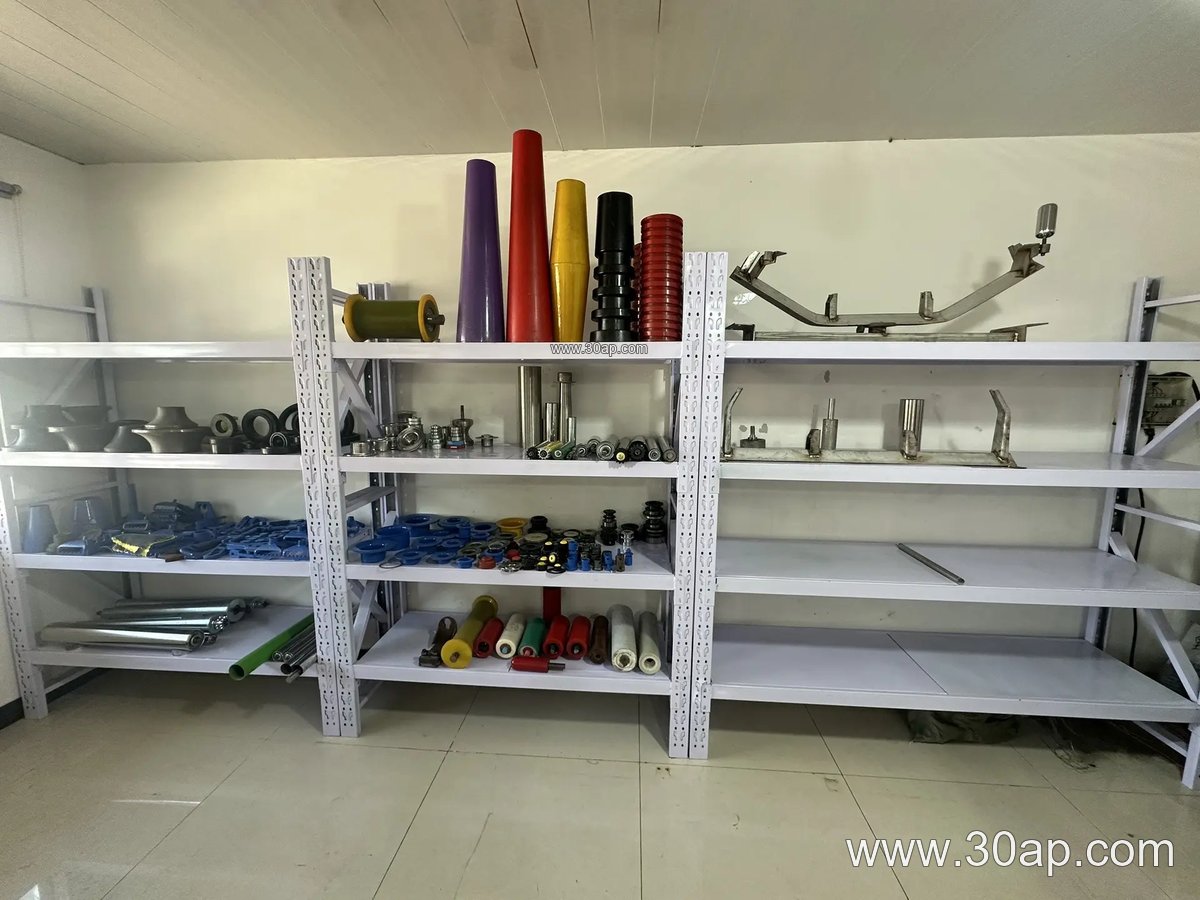
These brackets appear in bulk material handling where belt widths and tonnages are large. A cement plant handling clinker, a coal washing plant, a power station coal yard, or a sand and gravel line may use five-roll carrying idler brackets on the main belt. The bracket is not a substitute for a conveyor pulley; it is a carrying-side support component that sits between the drive pulley and the tail pulley.
It is also common to see a five-roll idler bracket paired with a return bracket or V-type return bracket on the same conveyor. The carrying side does the troughing work, while the return side simply supports the empty belt.
Matching Belt Width, Trough Angle, and Roll Diameter
Buyers should treat belt width, trough angle, and roll diameter as a set of related choices, not as fixed pairs. A wide belt does not automatically mean one specific roll diameter, and a given belt width can be matched with more than one trough angle. The table below shows common reference combinations, but final values should follow the conveyor design.
| Belt width | Common trough angle | Common roll diameter |
|---|---|---|
| B650 | 30 degrees | Ø89 |
| B800 | 35 degrees | Ø108 |
| B1000 | 35 to 45 degrees | Ø108 or Ø133 |
| B1200 | 35 to 45 degrees | Ø133 |
| B1400 | 35 to 45 degrees | Ø133 or Ø159 |
| B1600 to B2000 | 35 to 45 degrees | Ø159 or Ø194 |
Installation hole spacing and crossbeam length change with belt width and trough angle, so they should be confirmed against the drawing rather than assumed.
What to Check Before Ordering
Before selecting a five-roll idler bracket, confirm the belt width, the required trough angle, the idler roller diameter, and the mounting pattern on the conveyor stringer. Ask whether the bracket is fixed or adjustable; an adjustable five-roll bracket can be set among several trough angles during installation. Check that the frame material suits the environment, since a wash plant or port terminal may need more corrosion protection than a dry crushing circuit.
Also confirm how the bracket joins the conveyor frame and whether it is designed for the same roller shaft ends used elsewhere on the line. A five-roll idler bracket works best when it is matched to the conveyor belt, the idler rollers, and the surrounding conveyor brackets as one system.