What an Impact Idler Bracket Does at the Load Point
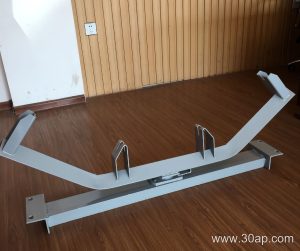
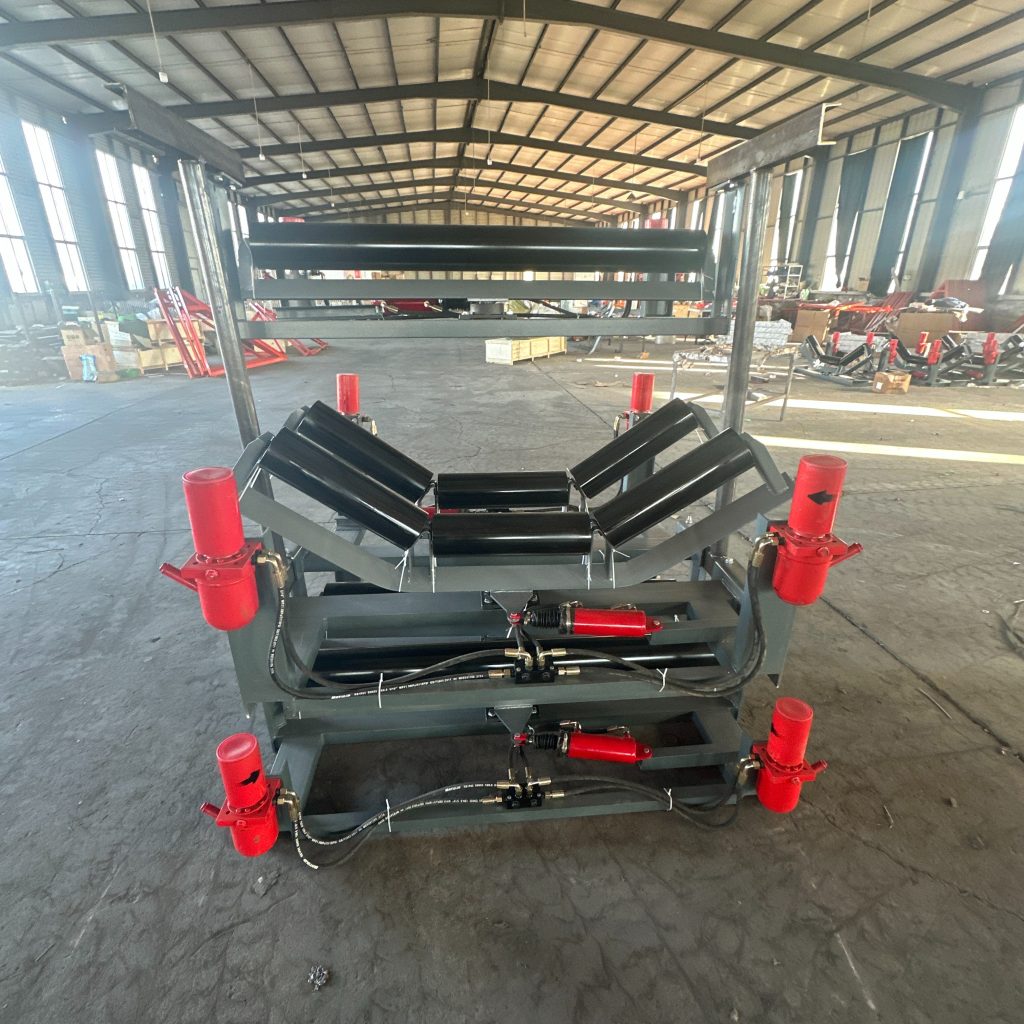
An impact idler bracket is the support frame that holds impact idler rollers directly beneath the loading chute of a belt conveyor. In a quarry, a coal preparation plant, or a cement clinker line, material falls onto the conveyor belt with considerable force. The bracket absorbs that force and keeps the rollers in position so the belt does not sag excessively or suffer local damage. This kind of conveyor bracket is sometimes called a buffer idler bracket or a shock-absorbing idler frame, but it performs the same core job: carry the rollers that cushion the belt at the point of impact.
The bracket itself is not a moving part. It is a structural interface between the conveyor stringer and the impact idler roller. Its stiffness and geometry determine how well the rollers stay aligned under repeated shock loading.
Construction and Common Materials
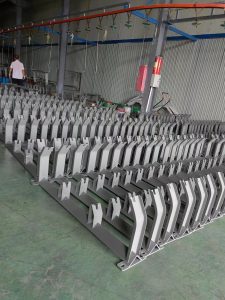
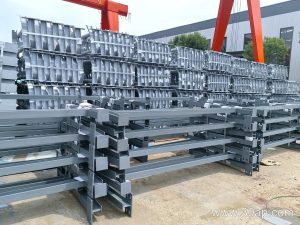
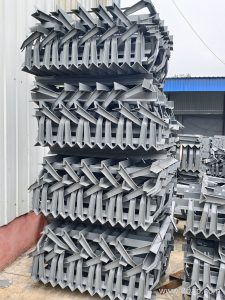
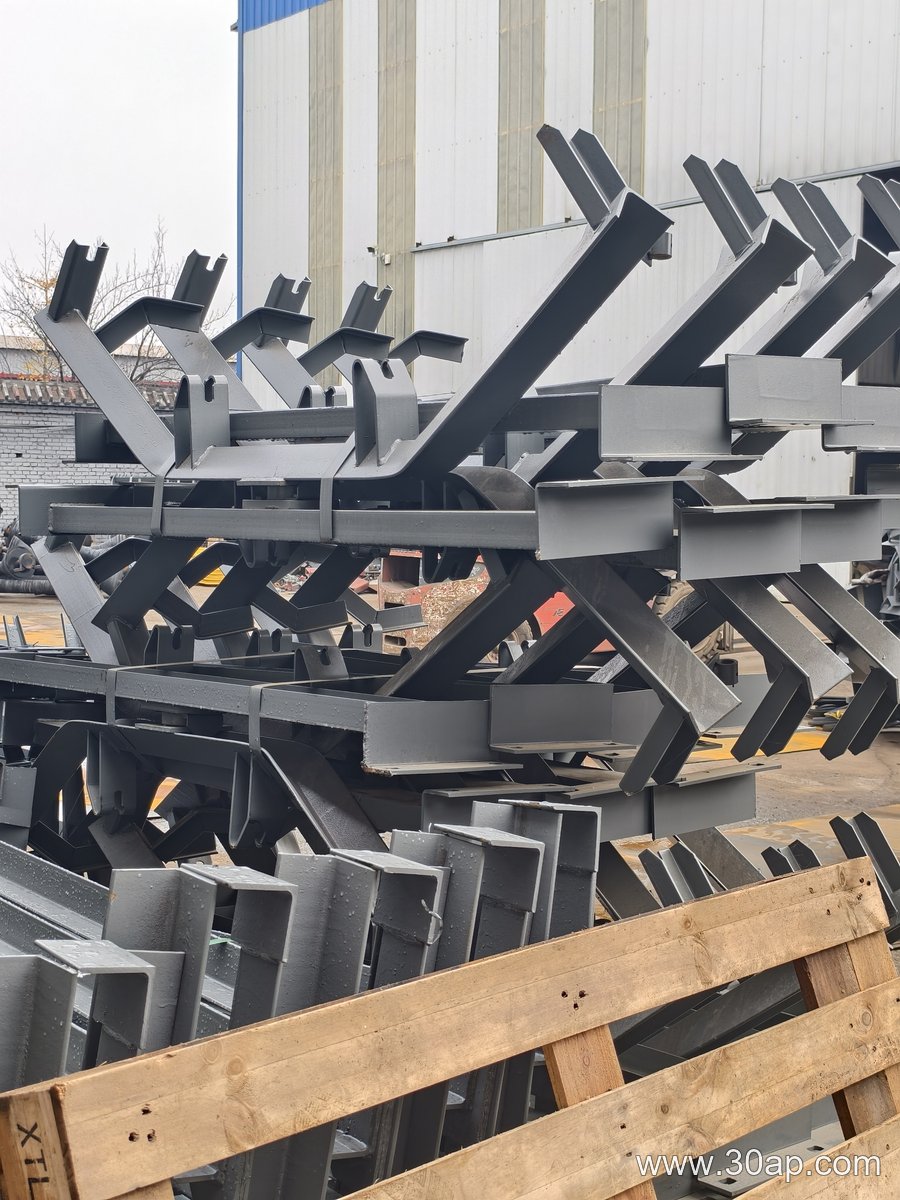
Most impact idler brackets are fabricated from angle steel, channel steel, or bent steel plate. The choice depends on the belt width, the lump size, and the drop height at the transfer point. A heavier bracket may use thicker channel sections, while a lighter duty frame might use folded plate with reinforcing ribs. The bracket usually includes mounting holes or slots that match the conveyor frame spacing. Because impact zones see vibration and occasional rock strikes, welds and bolt connections need to be robust.
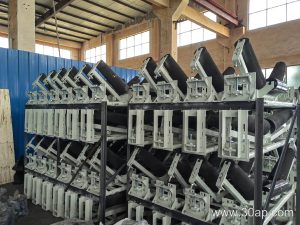
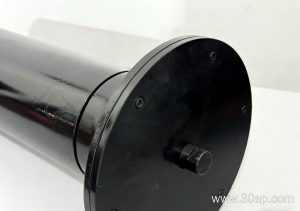
The bracket does not itself include the roller; it is the holder. Buyers should confirm that the bracket’s roller seat spacing matches the shaft ends of the impact idler roller they intend to use. A mismatch here is a common installation problem.
Where It Fits in a Conveying System
Impact idler brackets are installed at the loading point, typically just after the tail pulley or under the material transfer chute. In a sand and gravel line, they sit below the crusher discharge. In a power plant coal yard, they appear under the tripper or the bunker outlet. They are not used along the entire conveyor; they are concentrated where the belt receives the falling stream. For comparison, a training idler bracket is used to steer the belt, and a return bracket supports the empty side. Those are different functions and cannot replace the impact bracket at the load zone.
Some operators also use a transition bracket to guide the belt from the tail pulley into the trough. That is a separate component and should not be confused with the impact frame.
Matching the Bracket to Belt Width and Roller Diameter
There is no single universal size. The bracket’s crossbeam length and mounting hole distance change with belt width, trough angle, and roller diameter. Common belt widths include B500, B650, B800, B1000, B1200, B1400, B1600, B1800, B2000, and B2200. Trough angles are often 20, 30, 35, or 45 degrees. Impact roller diameters commonly include Ø89, Ø108, Ø133, Ø159, and Ø194. A typical combination for a medium-duty aggregate conveyor might be B1000 with a 35-degree trough and Ø133 rollers, but this is an example, not a rule. The same belt width can work with different trough angles and different roller diameters depending on the load and belt tension.
When adjusting a bracket, make sure the impact rollers sit slightly higher than the adjacent carrying idlers so the belt is supported before it settles onto the normal trough. The exact height difference is determined by the belt sag and the material load, not by a fixed number.
Selection and Maintenance Tips
- Check the bracket material thickness against the lump size and drop height. A bracket that is too light will deform.
- Confirm the roller shaft diameter and seat type. A bracket for a Ø108 roller will not correctly hold a Ø159 roller without an adapter.
- Use slotted holes or adjustable brackets where belt alignment may need fine-tuning after installation.
- Inspect for cracked welds, elongated bolt holes, and corrosion, especially in washdown or fertilizer environments.
- Replace a bent bracket rather than trying to straighten it under load; a deformed frame will misalign the impact idler roller and shorten belt life.
For harsh duty in an iron ore terminal or a tunnel muck conveyor, a reinforced impact idler bracket with thicker channel steel is often chosen. For lighter service in a grain silo or a small sand line, a folded plate bracket may be sufficient. The key is to match the bracket to the actual impact energy and the roller it carries, not to a generic catalog number.
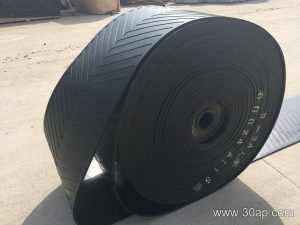
Finally, remember that the impact idler bracket works together with the conveyor belt, the idler roller, and the conveyor pulley. It is one part of the load zone system, and its condition directly affects how smoothly the belt runs after the material hits.