What a Return Idler Does on a Conveyor
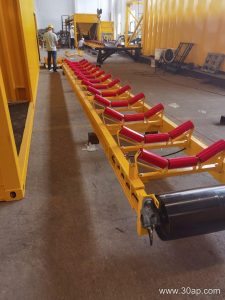
A return idler is the roller that supports the empty side of a conveyor belt on its way back to the tail end. While the carrying run uses troughing sets to shape the belt around the material, the return run only needs a stable, low-friction surface so the belt tracks straight and wears evenly. In a quarry, a coal preparation plant, or a cement kiln feed line, these lower rollers are easy to overlook, yet they influence belt alignment, energy draw, and the life of the belt itself.
The term return idler roller covers several lower-run designs, including the flat return roller, the V-shaped return idler, spiral or helical rollers, and rubber-disc impact versions. Each is a subtype of the same family and is chosen according to what the belt carries and how much debris falls onto the return strand.
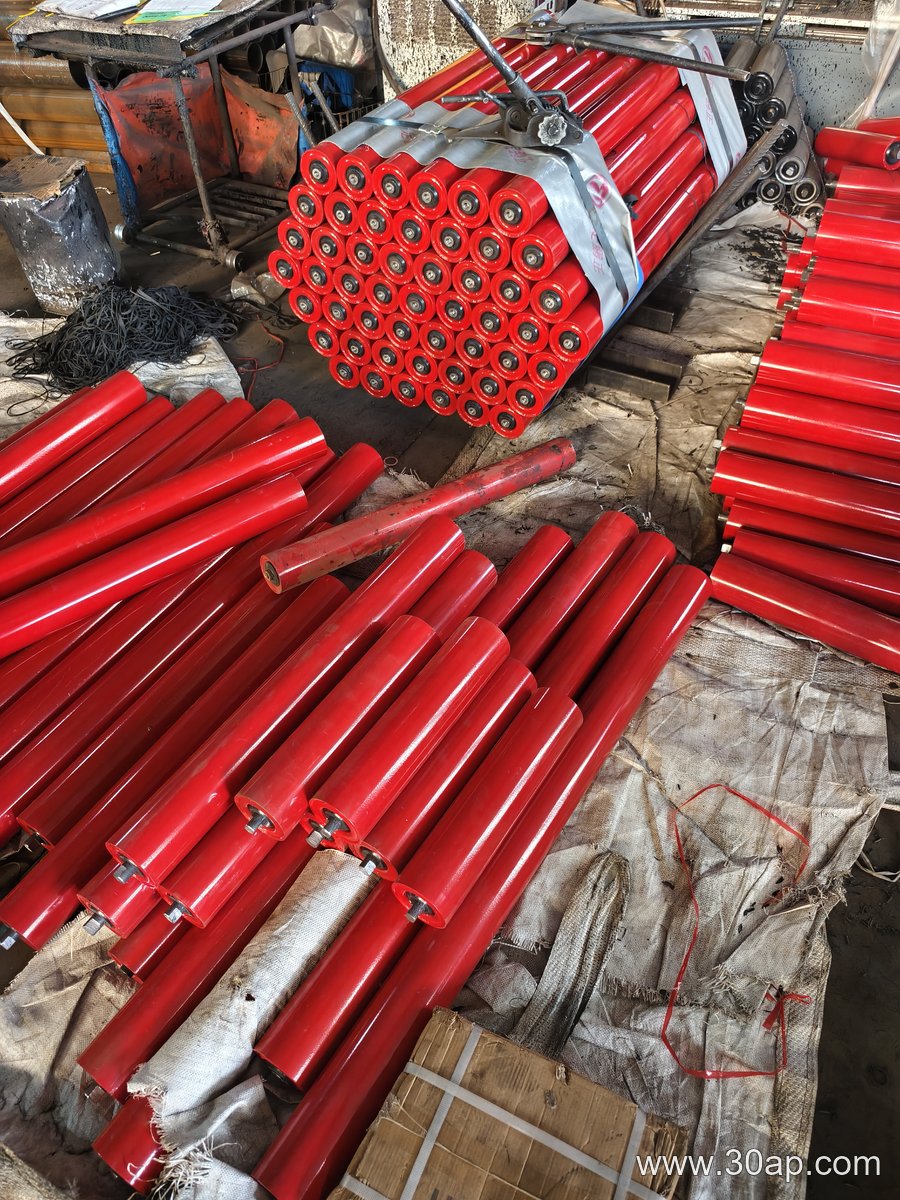
Construction Details That Matter
A typical return idler uses a steel tube shell, a shaft, sealed bearing housings, and end caps. The shell can be plain steel, nylon-coated, ceramic-covered, or fitted with rubber discs. Bearings are commonly 6204, 6205, 6305, 6306, 6308, or 6310 depending on the roller diameter and load, although bearing size is not tied to a single roller diameter.
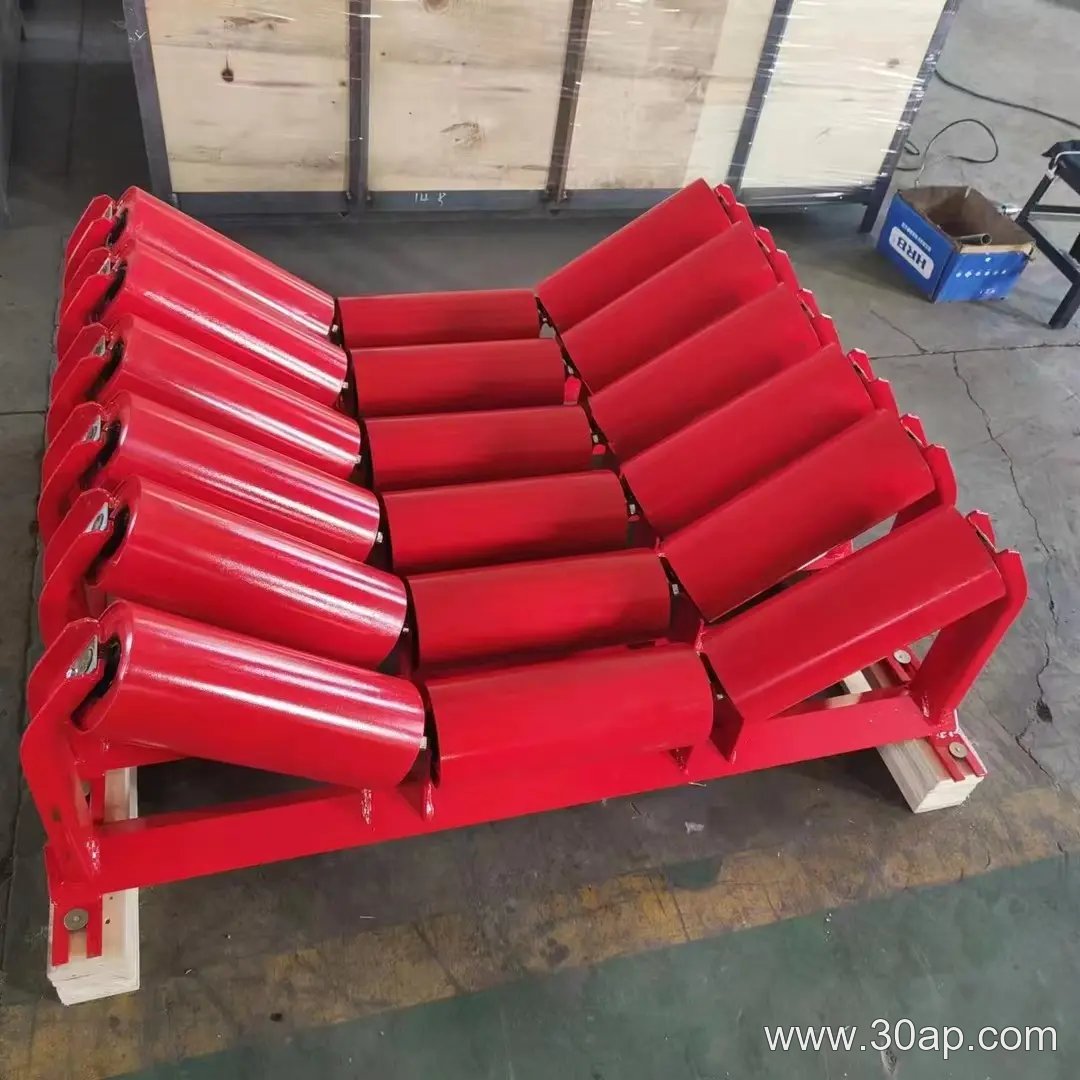
Common roller diameters include Ø63, Ø76, Ø89, Ø102, Ø108, Ø127, Ø133, Ø159, Ø178, Ø194, and Ø219 mm. The roller length is set by belt width, trough angle, and the number of rollers in the set. For a three-roll troughing station, side rollers and the center roller can differ, so the following values are only common examples:
| Belt width | Typical roller length (three-roll troughing) |
|---|---|
| B500 | about 200 mm |
| B650 | about 250 mm |
| B800 | about 315 mm |
| B1000 | about 380 mm |
| B1200 | about 465 mm |
| B1400 | about 530 mm |
| B1600 | about 600 mm |
| B1800 | about 670 mm |
| B2000 | about 750 mm |
These figures are reference data, not universal specifications. The return idler itself is usually a single roller, but V-type and spiral versions change the contact pattern rather than the basic support function.
Where Return Idlers Are Used
Lower rollers appear under the belt in most bulk handling circuits. In an iron ore or copper mine, they run beneath a loaded conveyor belt that may carry sharp, heavy lumps. In a sand and gravel line or a crushing and screening plant, fine dust and small spillage tend to stick to the belt and drop onto the return strand, which is why spiral or self-cleaning rollers are often preferred there.
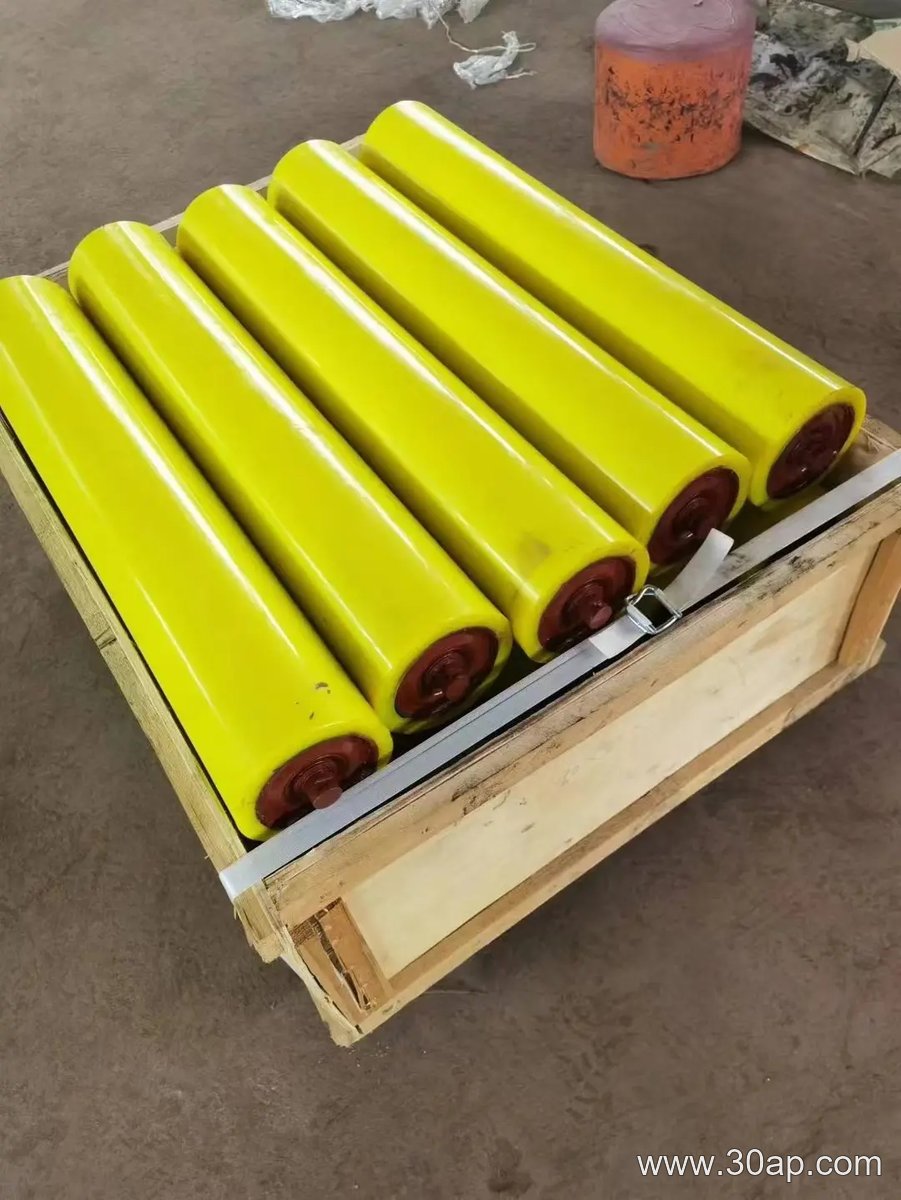
Coal washing plants, power station coal handling, and port bulk terminals also use them, sometimes with rubber-disc versions where material falls from the carrying side. A conveyor bracket or frame holds each return idler in place, and the complete assembly often includes a conveyor pulley at the drive or tail end for power transmission and belt tensioning. Drive, tail, and bend pulleys are separate components and are not interchangeable with a return idler.
Selection and Maintenance Notes
- Match roller diameter and shaft to the conveyor frame and bearing housing, not to belt width alone.
- Choose a flat return roller for clean, well-centered belts; a V-return or spiral roller when tracking and self-cleaning matter.
- Use rubber-disc or impact-rated rollers where lumps fall onto the return strand.
- Check that the roller turns freely and that seals keep out dust and water.
- Replace a seized or badly worn idler before it damages the conveyor belt.
A buyer should confirm the belt width, roller diameter, shaft size, mounting dimensions, and bearing type before ordering. For a quarry, a coal plant, or a cement works, the same return idler roller may look similar, but the shell material and sealing arrangement should suit the local dust and moisture. Keeping a small stock of the most common sizes reduces downtime when a lower roller fails.