What an EP Conveyor Belt Is
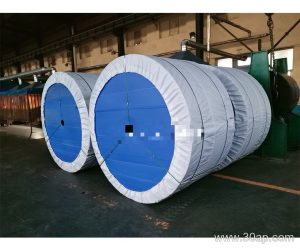
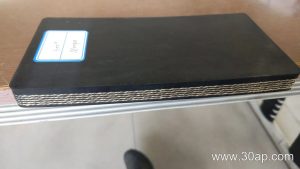
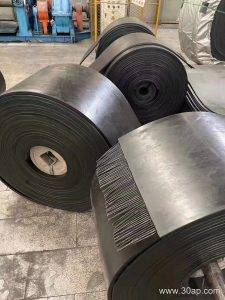
An EP conveyor belt is a fabric-reinforced rubber belt built on polyester (E) and nylon (P) carcass plies. In the trade it is also called a polyester-nylon conveyor belt, and that equivalent name describes the same product: synthetic fabric layers that carry the load while rubber protects them from abrasion, moisture and heat. Because the carcass stretches little under tension, this belt type suits long runs and heavy bulk handling in mines, coal preparation plants, cement works, power stations and sand and gravel yards.
How the Belt Is Built
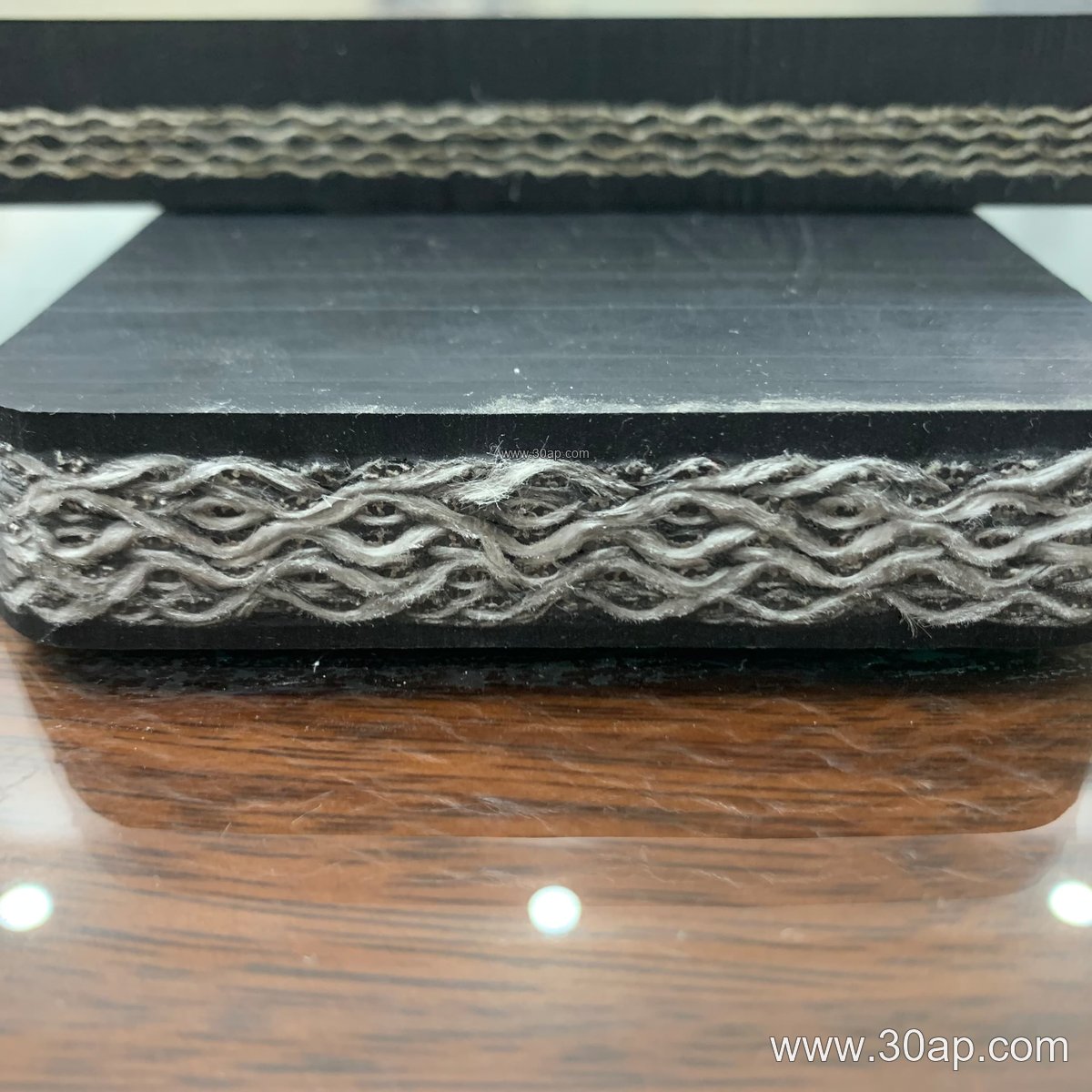
The carcass is the working heart. EP fabric plies are bonded with rubber skim and friction layers, then covered on both faces with rubber that determines the belt’s resistance to wear, heat, oil or flame. A typical construction is described by the cover thickness on the top and bottom plus the number of plies, for example 4+2 mm covers over three plies. Buyers should treat such figures as common reference values rather than fixed catalog promises, because each manufacturer lays up belts to its own design.
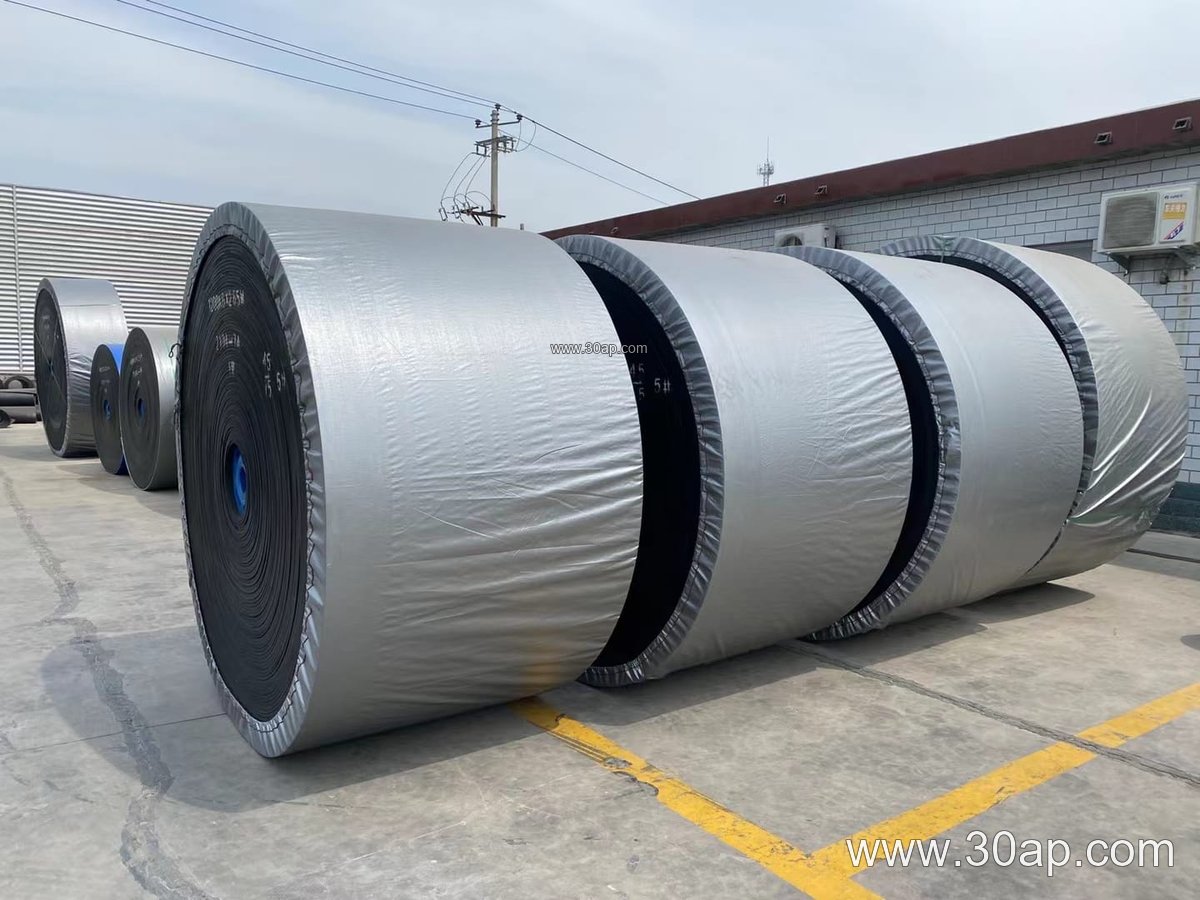
Common Cover and Carcass Configurations
| Cover (top + bottom) | Typical use |
|---|---|
| 3 + 1.5 mm | Light to medium duty, smaller lumps |
| 4 + 2 mm | General bulk conveying in sand and gravel plants |
| 5 + 2 mm | Coal handling and cement raw materials |
| 6 + 2 mm | Abrasive ore and heavy impact points |
| 8 + 3 mm | Primary crushing discharge, high wear zones |
Carcass plies usually run from two to six layers. More plies raise tensile strength but also add stiffness, which affects troughability and pulley diameters.
Strength Grades and Belt Widths
EP belts are graded by nominal tensile strength per unit width. Common grades include EP200, EP315, EP400, EP500, EP630, EP800, EP1000, EP1250, EP1600 and EP2000. Standard widths include B500, B650, B800, B1000, B1200, B1400, B1600, B1800 and B2000. The grade and width together determine whether the belt can pull a given load over a given length; they do not dictate a single pulley size, and a qualified engineer should always check the drive, tail and bend pulleys against the selected carcass.
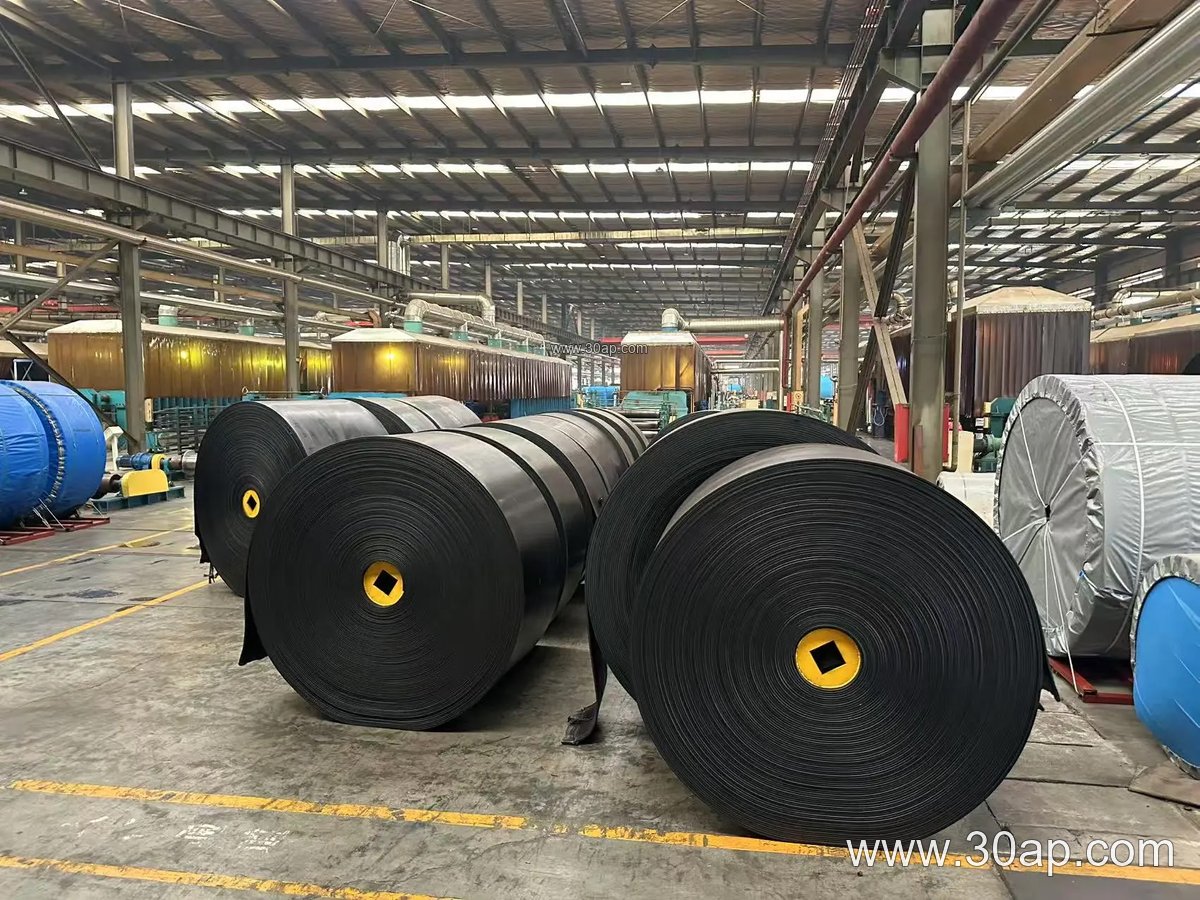
Where It Fits in a Conveyor
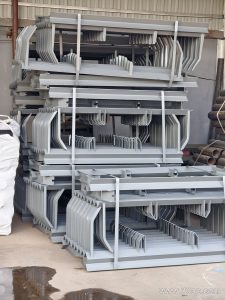
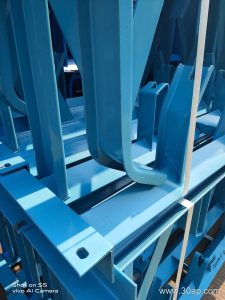
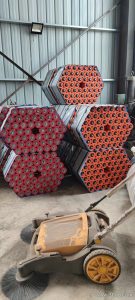
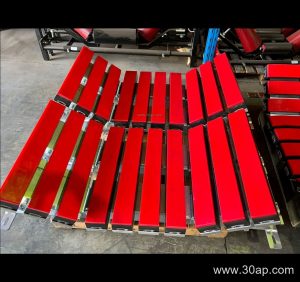
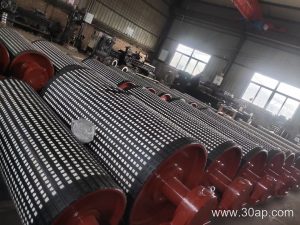
On a bulk handling line the belt runs over idler rollers that support the load, around a conveyor pulley at each end, and through a conveyor bracket frame that holds the structure together. In a coal mine the belt may need flame resistance and antistatic properties; in a cement plant heat-resistant covers help at clinker transfer points; in a power plant oil-resistant grades can suit coal and ash handling. Variants include abrasion-resistant, heat-resistant, oil-resistant, flame-retardant, antistatic, cold-resistant and acid-alkali-resistant compounds, plus patterned surfaces such as herringbone or chevron belts for inclined sections and corrugated sidewall belts for steep, space-limited routes.
Buyer Checklist
- Confirm the material being carried, lump size, moisture and temperature before choosing a cover grade.
- State the required tensile grade and belt width, and let the conveyor designer verify pulley and shaft loads.
- Choose a cover thickness that matches the wear zone; impact points may justify a thicker top cover.
- For inclined routes, compare a patterned EP belt with a smooth belt rather than assuming one will grip.
- Ask how the belt ends will be joined, since splice method affects belt life.
- Check storage and handling advice, because fabric belts can absorb moisture before installation.
Operation and Maintenance Notes
Alignment matters. A belt that runs off-centre wears its edges and overloads the pulley bearings. Keep idler rollers turning freely, inspect the conveyor pulley lagging for build-up, and check the skirt rubber and chute liners so material does not lodge against the belt. Track cover wear at transfer points and repair small cuts before they reach the carcass. In cold climates, a cold-resistant grade helps prevent cracking at start-up.
An EP conveyor belt is rarely the only decision on a conveyor project, but it is often the one that decides how long the line runs between stoppages. Matching fabric grade, cover compound and surface form to the actual duty gives the best balance of life and cost in mining, cement, power and aggregate operations.