What the Ø89 Rubber Disc Idler Is
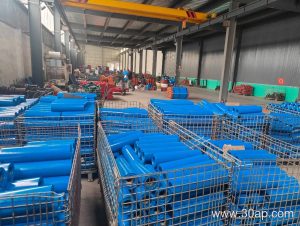
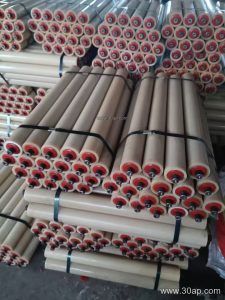
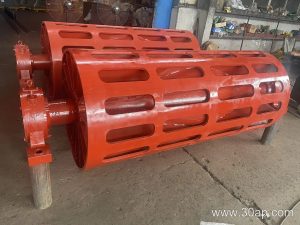
The Ø89 rubber disc idler is a impact-absorbing roller used on the loading section of a conveyor belt. The 89 mm roller diameter refers to the steel tube body, while the rubber discs wrapped around it form a flexible, shock-absorbing surface. This idler is often called a rubber disc impact idler or rubber ring buffer roller, but it remains a distinct subtype: it is not a drive pulley, tail pulley, or bend pulley, and it should not be interchanged with those components.
In a quarry, a coal washing plant, or a cement plant, the conveyor belt receives material with significant drop energy. The rubber disc idler softens that impact, protecting the belt carcass and reducing the chance of cover damage at the loading point. It is also a common sight in power plant coal handling and sinter plants where lumpy material is transferred.
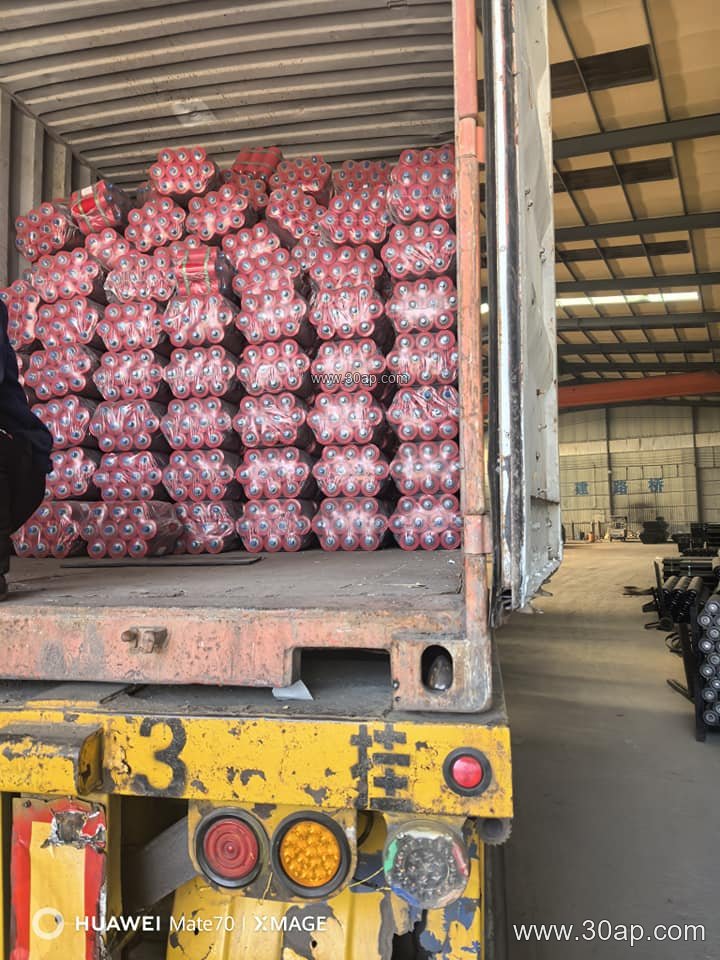
How It Is Built
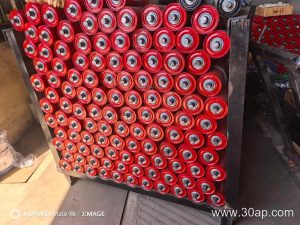
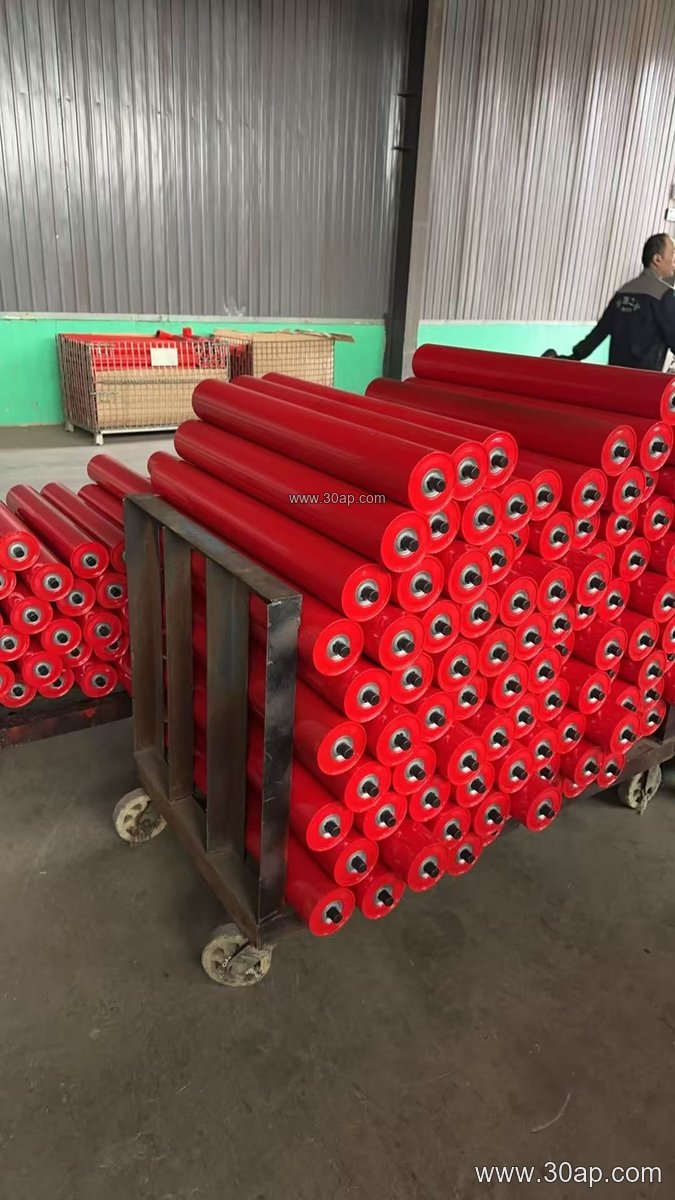
The core is a steel tube with a nominal diameter of Ø89 mm. Rubber discs are pressed onto the tube at intervals, creating a series of resilient rings. The ends are fitted with bearing housings, typically using deep-groove ball bearings such as 6204 or 6205, though the exact bearing is selected by the manufacturer according to load and speed. Seals on both sides keep dust and water out, which matters in dusty aggregate or coal environments.
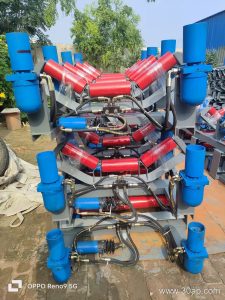
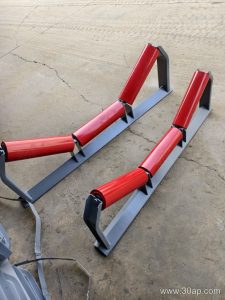
The idler is mounted in a conveyor bracket or frame, usually as part of a three-roll impact set or a two-roll arrangement. The rubber discs can be flat or slightly profiled, and the surface form is chosen to match the material being handled. The roller length depends on the belt width and the idler set configuration. For example, a three-roll troughing set on a B800 belt commonly uses rolls around 315 mm long, while a B1000 belt may use 380 mm rolls. These are reference examples, not fixed rules, and side rolls can differ from the center roll.
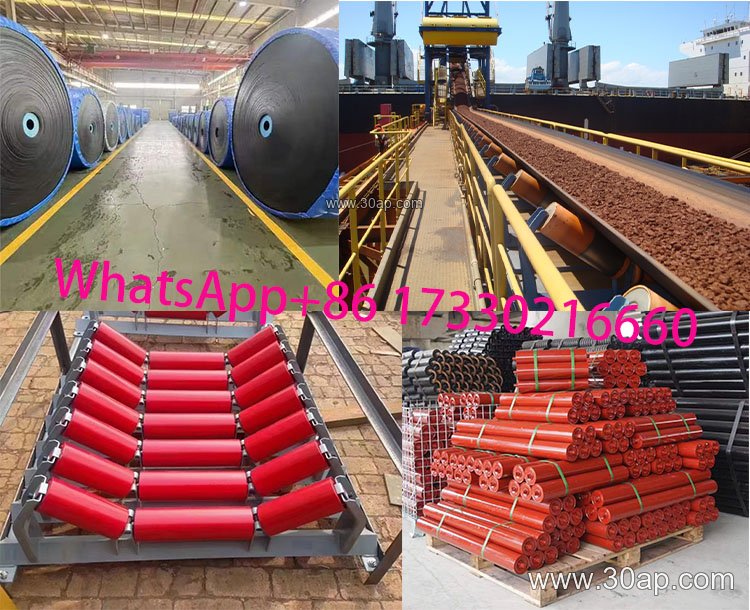
Where It Fits on the Conveyor
This idler belongs at the transfer point, directly under the chute or loading skirt. It is not a substitute for a troughing idler along the carrying run, nor for a return idler on the empty strand. Its job is to absorb the initial impact and support the belt as material lands. In a crushing and screening line, it often sits just after the primary crusher discharge. In a tunnel excavation project, it helps manage the shock of broken rock falling onto the belt.
For comparison, a standard steel troughing idler is rigid and better suited to steady carrying loads, while a rubber disc buffer roller is designed for the first few meters of the loading zone. A return roller or a V-type return idler serves the empty belt and should not be used as a replacement here.
Common Sizes and Configurations
The table below lists common reference values for the Ø89 rubber disc idler family. Actual dimensions are confirmed by the supplier for each application.
| Item | Common Reference |
|---|---|
| Roller diameter | Ø89 mm |
| Belt width examples | B500, B650, B800, B1000, B1200 |
| Roll length examples | 200 mm, 250 mm, 315 mm, 380 mm, 465 mm |
| Trough angle | 20°, 30°, 35°, 45° |
| Bearing examples | 6204, 6205, 6305 |
| Surface form | Rubber disc / rubber ring |
These values are illustrative and should be matched to the conveyor design, belt speed, and material lump size.
What a Buyer Should Check
- Confirm the belt width and the idler set type, since a three-roll impact set and a two-roll set require different roll lengths.
- Ask for the rubber disc hardness and bond quality, as these affect impact absorption and service life.
- Check the bearing size and seal type for the site conditions, especially in dusty or wet plants.
- Verify that the idler frame or conveyor bracket matches the mounting dimensions.
- Do not assume a fixed shaft diameter from belt width alone; the shaft is specified by the idler manufacturer.
When selected correctly, the Ø89 rubber disc idler protects the conveyor belt at its most vulnerable point and keeps material flowing in mining, aggregate, and bulk handling operations.