What a High-Strength Idler Is
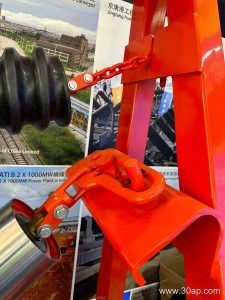
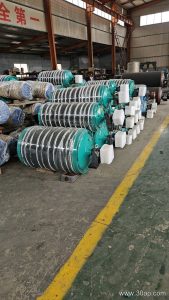
A high-strength idler is a carrying or return roller built to survive the loads that ordinary idlers cannot. On a conveyor belt moving crushed rock, coal, clinker, or sinter, the idler roller must hold up the belt and the material on it while turning thousands of times per shift. The high-strength version uses heavier tube walls, reinforced bearing housings, and a sturdier shaft so the roller keeps its shape under impact and continuous load. It is still a standard conveyor component, mounted on a conveyor bracket or frame, but its construction is aimed at the tough end of the duty range.
In practice, the term is used for the same product as a heavy-duty idler or severe-duty idler. Those names describe construction and application, not a different kind of roller.
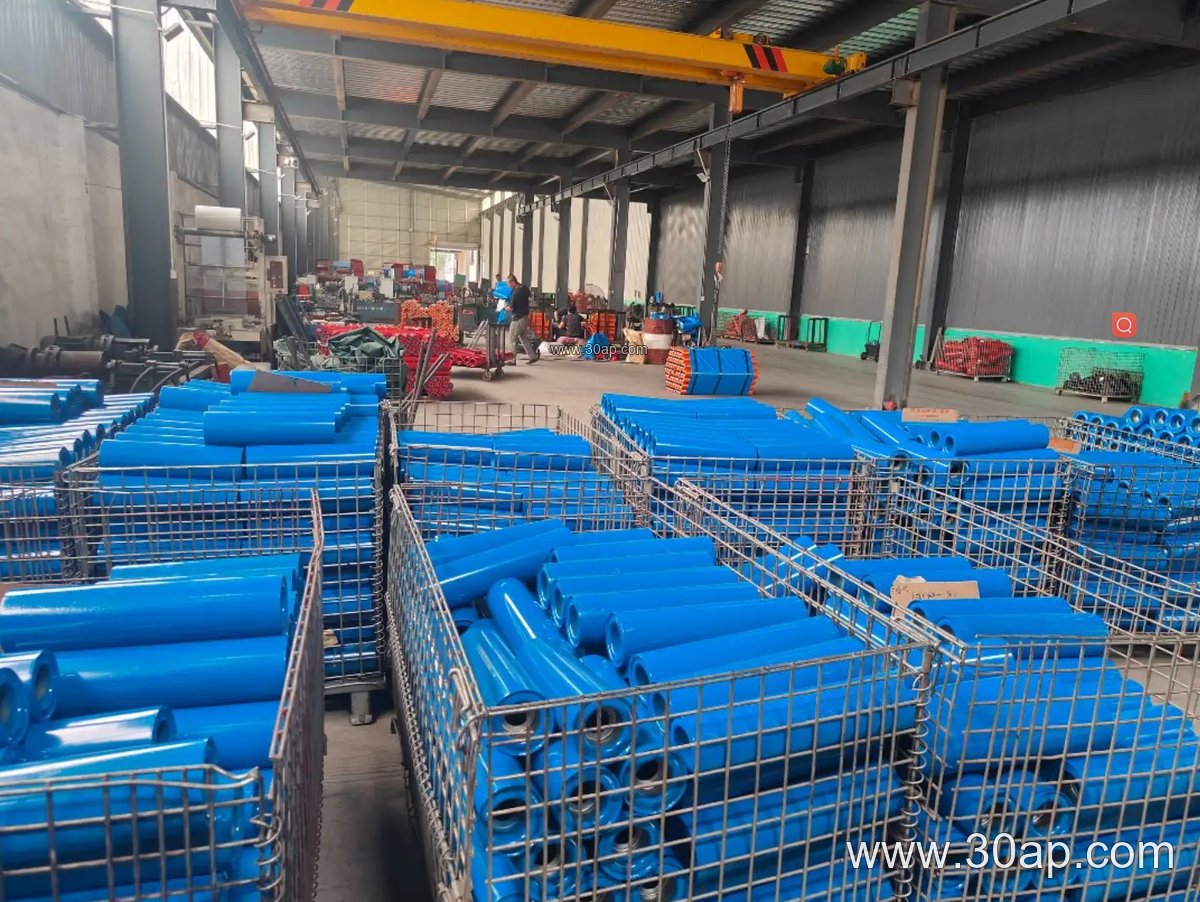
How the Roller Is Built
The shell is usually a steel tube with a wall thickness above the light-duty norm. The end caps are welded or pressed in and machined to seat the bearing. Inside, the bearing is protected by a multi-stage seal, often a labyrinth plus a contact lip, because dust and water are what kill idlers in a quarry or a coal handling plant. The shaft is machined from round bar and sized to the load, not simply matched to the belt width.
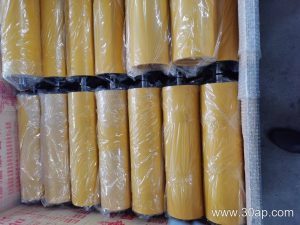
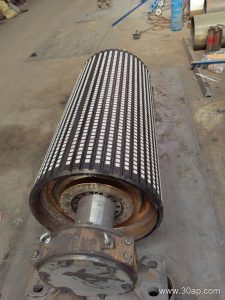
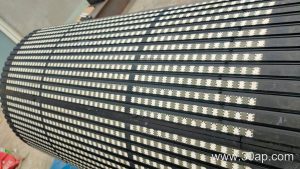
Surface form follows the job. A plain steel shell suits clean, dry material. A rubber ring or ceramic-covered shell gives grip and wear resistance where the belt slips or the material is abrasive. Roller diameter is chosen from the load and belt speed; the shell length depends on belt width, trough angle, and whether the station is a single-roll, two-roll, or three-roll trough set.
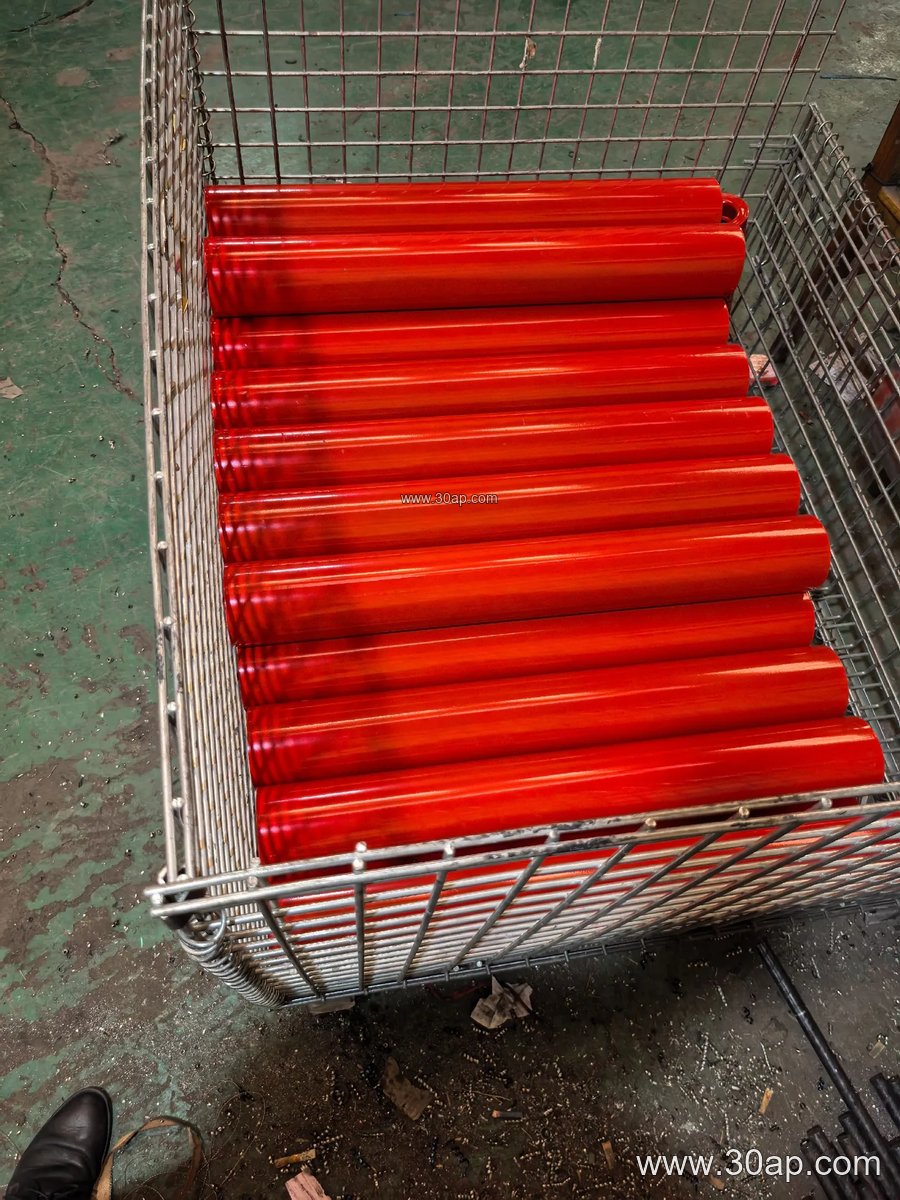
Where It Fits on the Conveyor
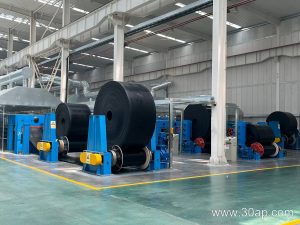
High-strength idlers appear where the belt takes its hardest hits. At a transfer point in a limestone mine or a crushing and screening line, impact rollers absorb the fall of large lumps. On the carrying side of a long overland conveyor at a cement plant or power station coal yard, trough sets support the loaded belt. On the return side, flat or V-return rollers keep the belt aligned and stop it from sagging between frames.
They are not a substitute for a conveyor pulley. Drive pulleys, tail pulleys, and bend pulleys transmit or redirect belt tension and are separate components. An idler only supports the belt and lets it roll. Likewise, a high-strength idler is not the same as a self-aligning idler, though a heavy frame can carry a training roller where belt wander is a problem.
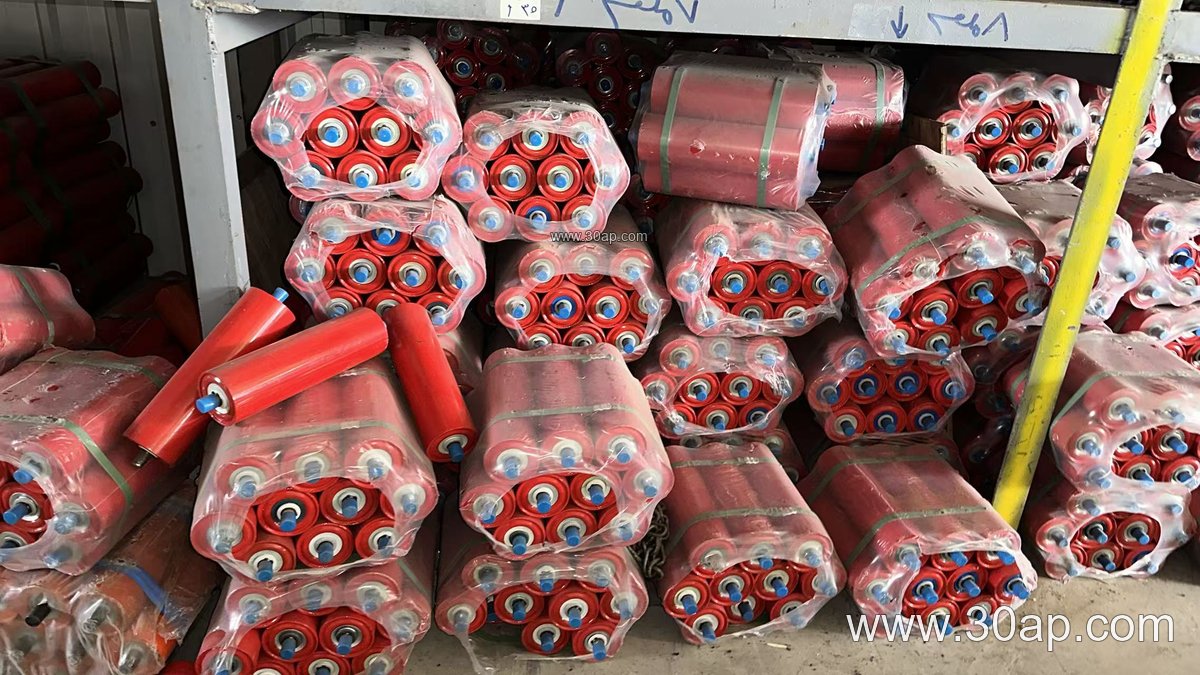
Common Reference Dimensions
The values below are typical reference data, not fixed rules. Final dimensions are set by the conveyor design.
| Parameter | Common reference values |
|---|---|
| Roller diameter | Ø89, Ø102, Ø108, Ø127, Ø133, Ø159, Ø178 mm |
| Belt width | B650, B800, B1000, B1200, B1400, B1600 mm |
| Trough angle | 20°, 30°, 35°, 45° |
| Station form | single roll, two-roll, three-roll trough |
| Bearing | 6205, 6305, 6306, 6308, 6310 |
| Shell surface | steel, nylon, ceramic, rubber ring |
For a three-roll trough set, side and center roll lengths differ, and a common example is about 315 mm rolls on a B800 belt or 465 mm on B1200. These are examples only; a wider belt does not force one specific pulley diameter, and a given belt width does not fix the shaft size.
What Buyers Should Check
- Confirm the actual load per station and the lump size at the load point, since impact is often the limiting factor.
- Match the seal type to the environment: dust, moisture, and washdown all change the choice.
- Check that the bearing and shaft are sized for the duty, not copied from a light-duty catalogue.
- Verify mounting dimensions against the existing conveyor bracket and frame before ordering.
- Ask how the roller is balanced and tested for runout, because vibration shortens bearing life.
A high-strength idler earns its cost when downtime is expensive. In a sinter plant, a port terminal, or a tunnel spoil line, one failed roller can stop the belt. Choosing the right shell, seal, and bearing for the site is more useful than picking the largest size available.